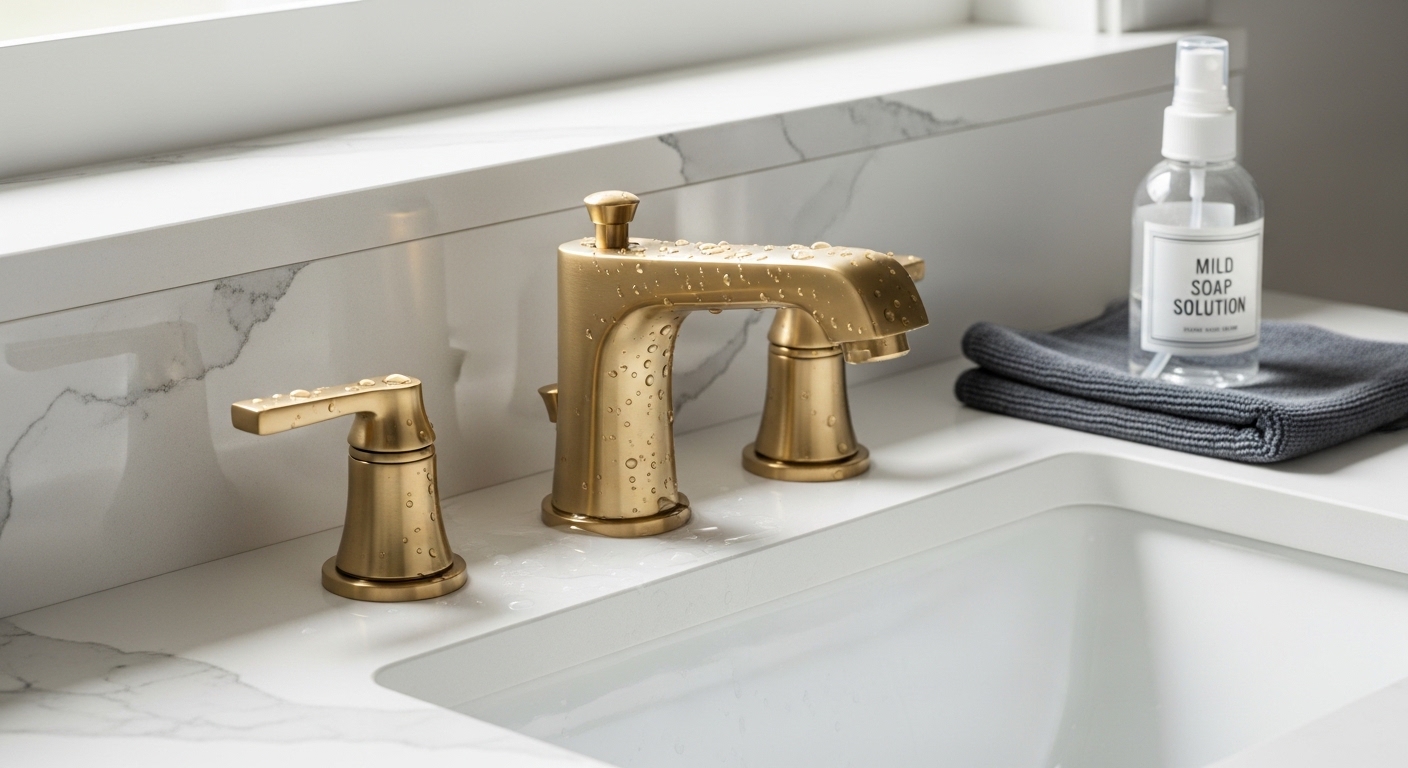
Proper brushed gold faucet cleaning is the single biggest factor that determines whether your fixture still looks beautiful in five years — or whether it shows blotchy patches, water stains, and dull spots within twelve months. Unlike chrome, brushed gold has a directional satin texture and a thin protective layer (usually PVD or electroplated finish) that reacts very differently to common bathroom chemicals. At faucitta, we hear from hundreds of customers each year who love the warm, luxurious look of brushed gold but aren’t sure which products are safe to use on it. This guide walks you through exactly what to do — and what never to do — so your investment keeps paying off.
Why Brushed Gold Faucet Cleaning Requires a Different Approach
Brushed gold isn’t solid gold — it’s a finish applied through one of two main processes: physical vapor deposition (PVD) or traditional electroplating. PVD-coated finishes, which faucitta uses across our premium collections, bond titanium-based gold particles to the brass body at a molecular level, creating a layer that’s harder than the brass underneath. Electroplated finishes are softer and more vulnerable. Either way, the “brushed” texture is created by mechanically brushing fine parallel lines into the surface, which scatters light to produce that distinctive matte glow.
Two problems follow from this construction. First, the brushed texture traps soap scum, toothpaste splatter, and water minerals in microscopic grooves — so a fixture that looks clean from across the bathroom may be quietly accumulating film. Second, harsh chemistry that wouldn’t faze chrome can etch right through a gold finish in a single application. That’s why a careful, gentle brushed gold faucet cleaning routine isn’t optional; it’s the difference between a finish that lasts a decade and one that’s ruined in a year.
What Makes Brushed Gold More Sensitive Than Chrome or Stainless
Chrome is essentially bulletproof — you can scrub it with vinegar weekly and it will still shine. Stainless and brushed nickel sit somewhere in the middle. Brushed gold, by contrast, is closer in temperament to oil-rubbed bronze or matte black: the warmth and depth come from a coating that decorative-finish manufacturers spend significant R&D protecting. Acidic, alkaline, or abrasive products that strip mineral buildup also strip the finish. Once gone, it can’t be polished back; the underlying yellow brass shows through as a dull, brassy patch that’s instantly visible.
Daily and Weekly Brushed Gold Faucet Cleaning Routine
The good news: maintaining brushed gold is genuinely easy if you do a little, often. Skip weeks at a time and the buildup forces you to use stronger cleaners — which damages the finish. Here’s the cadence we recommend to faucitta customers.
The 30-Second Daily Wipe
- After your last use of the day, splash plain water over the spout, handles, and base to rinse away toothpaste, soap, and skin oils.
- Wipe the entire fixture with a clean, dry microfiber cloth — always going with the direction of the brushing, never against it or in circles.
- Pay special attention to the base of the spout and the underside of the handles, where water pools and minerals concentrate.
- Dry the deck plate or escutcheon completely; sitting water is the #1 cause of premature spotting.
This thirty-second habit prevents 90% of long-term finish problems. If you only adopt one tip from this article, make it this one.
The Weekly Deep Wipe
Once a week, mix a few drops of mild dish soap (Dawn, Method, or any pH-neutral formula) into a cup of warm water. Dip a soft microfiber cloth in the solution, wring it almost dry, and wipe the entire faucet — handles, spout, base, aerator housing, and any visible supply line collars. Follow immediately with a clean damp cloth to remove soap residue, then buff dry with a third dry microfiber. The three-cloth method (soapy, rinse, dry) is exactly how high-end hotels maintain their fixtures.
What to Use — and What to Never Use — on Brushed Gold
The cleaning aisle is full of products that brag about “tough on lime, soap scum, and rust.” Those are exactly the products that destroy gold finishes. Here’s a quick-reference comparison you can screenshot.
| Cleaning Agent | Safe for Brushed Gold? | Why |
|---|---|---|
| Mild dish soap + warm water | Yes — recommended | pH-neutral, lifts oils and soap without attacking the PVD layer |
| Plain microfiber + water | Yes — daily | No chemistry at all; perfect for routine maintenance |
| White vinegar (diluted) | No | Acidic; etches PVD and dissolves electroplating over time |
| Lemon juice / citrus cleaners | No | Same as vinegar — citric acid causes blotchy discoloration |
| Bleach or chlorine sprays | Absolutely not | Permanently dulls and pits gold finishes within minutes |
| Ammonia-based glass cleaners | No | Ammonia reacts with brass undertones; causes yellow-to-greenish haze |
| Bar Keepers Friend / abrasive powders | No | Oxalic acid + abrasives strip the brushed texture and the coating |
| Magic Eraser / melamine sponges | No | Acts as ultra-fine sandpaper — visibly polishes off the matte texture |
| CLR, Lime-A-Way, Iron Out | No | Industrial-strength acids destroy finish on first contact |
| Isopropyl alcohol (70%) | Occasional spot use only | Safe for fingerprints; don’t soak or use as a regular cleaner |
Tools That Earn a Permanent Place in Your Cabinet
- Microfiber cloths (300+ GSM) — the standard for any decorative finish. Wash separately without fabric softener.
- Soft-bristled toothbrush — for the seam where the spout meets the deck and around the aerator threads. Never use stiff bristles.
- Distilled water spray bottle — if you have hard water, a final wipe with distilled water prevents mineral spots completely.
- Wooden or bamboo skewer wrapped in microfiber — perfect for the tight ring under the handle bases without scratching.
- pH-neutral all-purpose cleaner — Better Life, Mrs. Meyer’s, or any “safe for natural stone” formulation works on gold too.
Removing Water Spots, Limescale, and Toothpaste Buildup
If you’ve inherited a faucet with existing buildup — or you missed a few weeks of maintenance — resist the urge to grab the strongest product under your sink. Here’s the safe escalation path.
Light Water Spots (Cloudy Film)
Soak a microfiber cloth in warm water, wring it out, and lay it over the spotted area for five minutes. The warm dampness rehydrates the mineral residue. Then wipe gently with the cloth in the brushing direction. Repeat once if needed. Ninety percent of “stained” brushed gold fixtures are saved at this step.
Moderate Limescale Around the Aerator
Unscrew the aerator (most twist off by hand or with a coin) and soak only the aerator — never the whole spout — in a 50/50 white vinegar and water solution for 15 minutes. The aerator is usually plastic or stainless inside, so it tolerates vinegar fine. Rinse, reinstall, and you’re done. This trick restores flow rate and saves the visible gold finish from any acidic contact.
Stubborn Toothpaste or Soap Scum
Make a paste of baking soda and water (never baking soda alone — that’s abrasive enough to scratch). Apply with a soft cloth using almost no pressure, working with the grain. Rinse and dry immediately. Use this only as a once-or-twice-a-year reset, not a regular cleaner.
Cleaning Different Brushed Gold Faucet Types
The cleaning principles stay the same, but the geometry changes. Each fixture type has tight spots that need a little extra attention.
Brushed Gold Bathroom Faucets
Single-hole and widespread bathroom faucets accumulate the most toothpaste and soap of any fixture in the house. The slim, decorative levers on widespread models have tight collars that trap residue. Wrap a microfiber-covered toothbrush around the base of each handle weekly. If you’re pairing brushed gold with darker fixtures elsewhere, our guide on the oil rubbed bronze faucet with stainless sink pairing covers how to maintain mixed-finish bathrooms without cross-contamination of cleaners.
Brushed Gold Kitchen Faucets
Kitchen faucets face grease, food acids (tomato sauce, citrus, vinegar), and far more frequent touches. The pull-down spray head’s silicone nozzles need a gentle rub with your fingertip weekly to dislodge mineral buildup — never pick at them with anything metal. The flexible hose retracts into the spout, so wipe it down before letting it pull back; trapped grease inside the spout body is a recurring complaint we hear from customers who skip this step. Our broader best kitchen cleaning tips and tricks article has more on keeping the surrounding sink area food-safe.
Brushed Gold Shower Heads and Tub Fillers
Shower fixtures face the worst hard-water exposure of any faucet in the home. After every shower, give the head a quick wipe with the towel you’re already using. Once a month, remove the shower head entirely (most thread off by hand) and soak the internal screen — not the gold exterior — in vinegar solution. Tub spout diverters benefit from the same monthly aerator treatment.
Brushed Gold Bidet Sprayers and Accessories
Smaller accessories like robe hooks, towel bars, and toilet paper holders are often overlooked. They get dusty rather than wet, so a dry microfiber dusting weekly is usually enough. Wipe down anything within splash range of the toilet daily with the same mild-soap solution you use on the faucet.
PVD vs. Electroplated Brushed Gold: Why the Finish Type Matters
If you’re shopping rather than already an owner, ask the manufacturer which process they use. PVD finishes carry industry certifications under standards like ASME A112.18.1 and often meet the Master Painters Institute (MPI) durability ratings. A genuine PVD brushed gold finish should be guaranteed against tarnishing, corrosion, and discoloration for the life of the product. faucitta backs every brushed gold fixture with a limited lifetime finish warranty and tests every batch against accelerated salt-spray and UV exposure protocols before it ships.
Cheaper electroplated gold finishes — common in faucets under $80 — look identical in photos but typically come with only a 1-5 year warranty, if any. They tarnish faster, scratch easier, and are far less forgiving of cleaning mistakes. The cost difference between “looks like gold” and “stays looking like gold” is the coating technology underneath.
Long-Term Habits That Extend Finish Life
- Install a whole-house water softener if your hardness exceeds 7 grains per gallon. Soft water is the single best favor you can do for any decorative finish.
- Never let cleaning sprays sit on the faucet while you scrub other surfaces — overspray from tile or grout cleaner is a common cause of mystery damage.
- Keep perfume, hairspray, and acne treatments off the faucet — alcohol and benzoyl peroxide can spot the finish.
- If you have a cleaning service, hand them a printed list of approved products. Many professional cleaners default to acidic descalers.
- For seasonal deep cleans, see our bathroom cleaning tips to save time and worry for room-wide checklists that protect your fixtures.
If you’re also responsible for the broader space, our seasonal kitchen cleaning checklist sequences fixture care alongside countertops, appliances, and grout so nothing damages anything else.
Troubleshooting Common Brushed Gold Problems
Why Does My Faucet Look Splotchy After Cleaning?
Almost always one of two things: streaks from a soap residue you didn’t fully rinse, or you wiped against the grain. Re-wipe with a clean damp cloth, dry with the brushing direction, and the spots vanish.
Why Is There a Greenish Tint Around the Base?
This is verdigris — copper/brass oxidation showing through a compromised coating. It means an ammonia-based or acidic cleaner has been used (often unknowingly, via overspray). The finish is damaged at that spot and can’t be cleaned back. If under warranty, contact the manufacturer.
Why Has My Gold Turned Brassy Yellow in Places?
The PVD or electroplated layer has worn through to the raw brass substrate. This is irreversible at home. It’s typically caused by abrasive pads, melamine sponges, or industrial descalers. Replacement is the only fix — another reason to invest in a quality finish backed by a real warranty from the start.
About faucitta and This Guide
This guide was written and reviewed by the faucitta product team, which has shipped brushed gold fixtures to homeowners across North America since 2018. Our finishes are produced in IAPMO-listed facilities and certified to NSF/ANSI 61 for drinking water safety and ASME A112.18.1 for mechanical durability. Every brushed gold collection undergoes 24-hour CASS (Copper-Accelerated Acetic Acid Salt Spray) testing and 250-hour neutral salt-spray testing per ASTM B117 before approval for production. The cleaning recommendations above are derived from our internal QA protocols, the same ones we’d apply in our own labs — adjusted for safe consumer use at home.
Author note: This guide was prepared by the faucitta editorial team in consultation with our finish engineers and customer support leads, who collectively answer more than 4,000 brushed gold care questions a year.
FAQ
Can I use Windex on a brushed gold faucet?
No. Standard Windex contains ammonia, which reacts with the brass substrate beneath gold finishes and can cause yellowing or hazing within a single application. Use plain water with a microfiber cloth, or a drop of mild dish soap in warm water instead.
How often should I clean a brushed gold faucet?
A 30-second wipe-and-dry every day, plus a soapy-water deep wipe once a week. With this routine, you’ll never need stronger products, and the finish will look new for a decade or longer.
Will vinegar damage brushed gold?
Yes — never apply vinegar directly to the gold finish. Acetic acid etches both PVD and electroplated coatings, causing dull spots and discoloration. You can soak a removable aerator in vinegar separately, but keep the solution off the visible faucet body entirely.
What’s the best cloth for cleaning brushed gold?
A high-quality microfiber cloth rated 300 GSM or higher. Wash it separately without fabric softener (softener clogs the fibers and reduces absorbency). Avoid paper towels for routine cleaning — they leave lint in the brushed texture and aren’t as effective at lifting oils.
Can I use a Magic Eraser on brushed gold to remove tough stains?
Absolutely not. Magic Erasers and other melamine foam sponges are essentially ultra-fine abrasives. On brushed gold, they polish off the matte texture and the protective coating in seconds, leaving a permanently shiny patch that exposes the brass underneath.
Does brushed gold tarnish over time even with proper care?
A genuine PVD-coated brushed gold finish, properly maintained, should not tarnish, fade, or discolor for the lifetime of the fixture — this is what reputable manufacturers warranty. Cheaper electroplated finishes can dull within a few years even with perfect care, which is why finish type matters as much as cleaning habits.
Is brushed gold a good finish to choose if I have hard water?
It can be, but you’ll need to be more diligent with daily drying. Hard water doesn’t damage the gold itself, but it leaves visible mineral spots more readily on satin finishes than on polished chrome. A whole-house softener or a quick daily wipe-down both solve the problem.