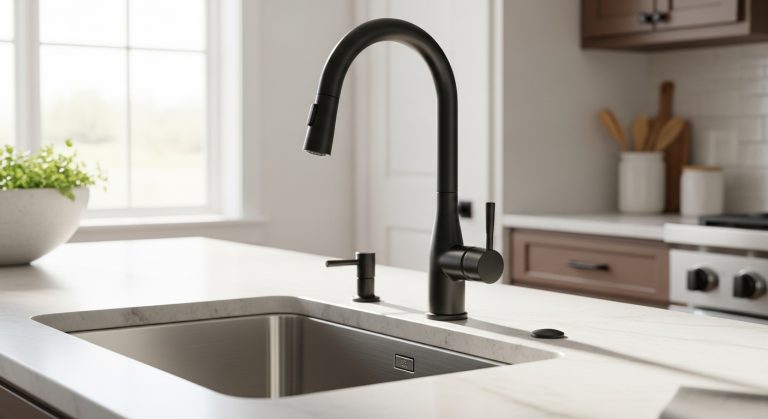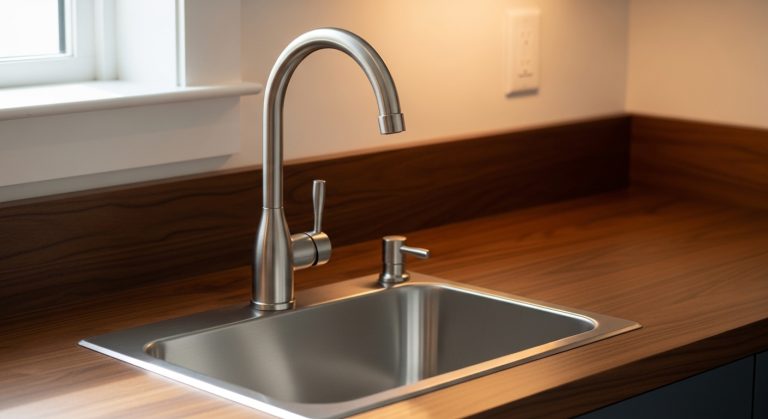
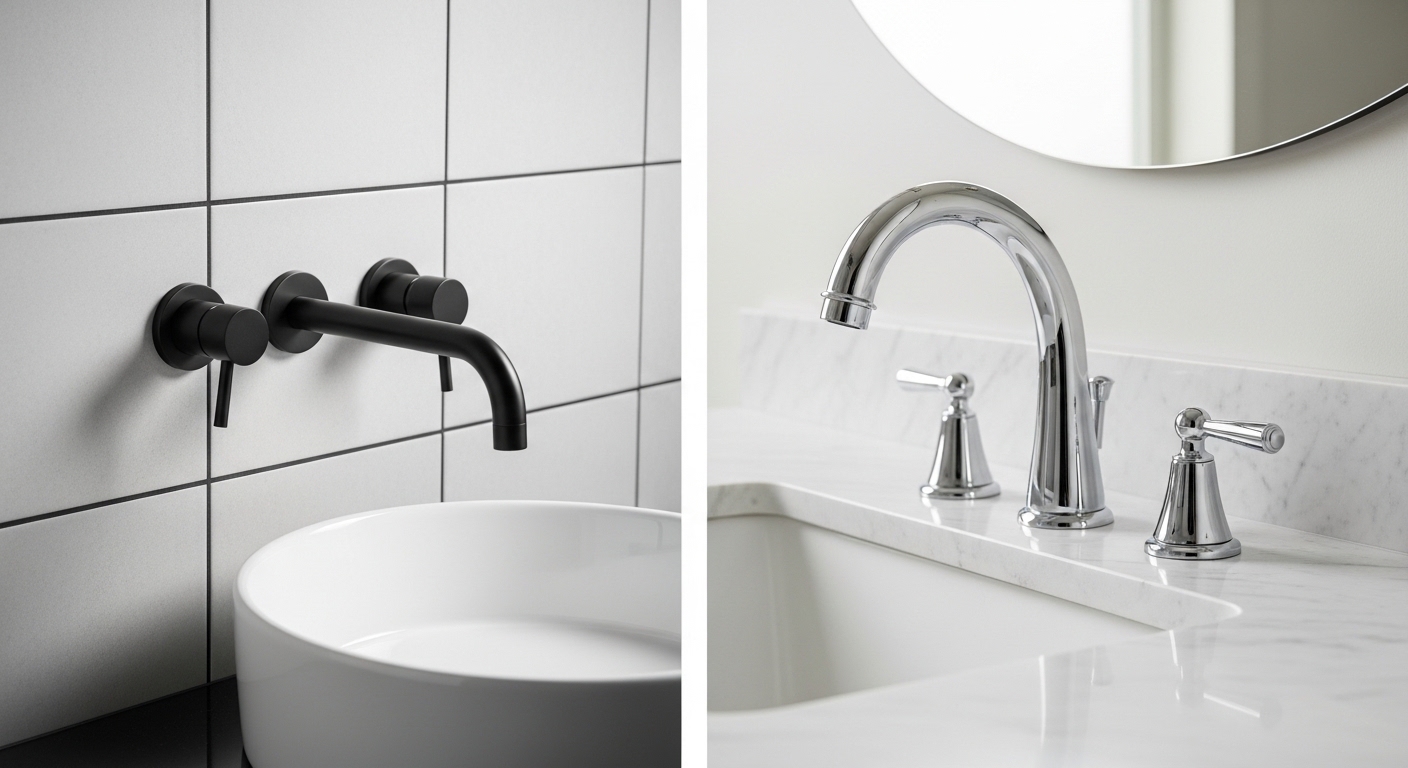
If you’re weighing a wall mount faucet vs regular deck-mounted faucet, the honest answer is that neither is universally “better” — they solve different problems. A wall mount puts the spout and handles on the wall above the basin; a regular deck-mount faucet sits on the countertop or the sink’s faucet holes. The right pick comes down to your sink type, whether your plumbing is roughed into the wall or the floor, your budget, and how much you care about the high-end look. Below, we’ll walk through every real decision point so you can buy once and not regret it.
What’s the actual difference between a wall mount faucet and a regular faucet?
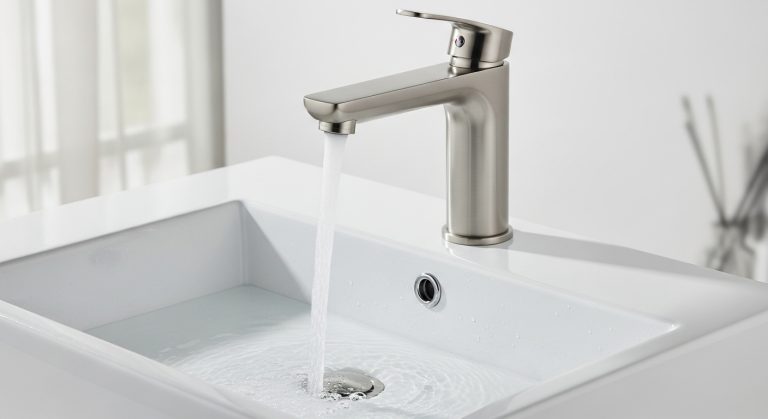
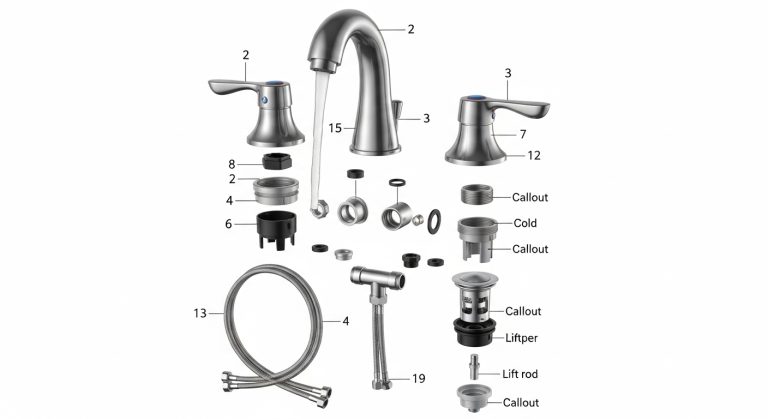
The core difference is where the water and the mounting hardware come from. A regular (deck-mount) faucet’s body, handles, and supply connections all pass up through holes in the sink or counter, and the plumbing lives in the cabinet below. A wall mount faucet’s spout and valves are anchored inside the wall, so the supply lines and the mixing valve are hidden behind tile and drywall.
That single structural difference drives everything else — cost, installation difficulty, cleaning, spout reach, and which sinks each one works with. Here’s the quick version:
- Plumbing location: Wall mount = plumbing roughed into the wall. Regular = plumbing under the sink in the cabinet.
- Counter/sink holes: Wall mount = no holes needed in the deck. Regular = requires 1 to 3 faucet holes.
- Spout reach spec matters more on wall mounts because the spout has to clear the wall and the sink rim to land water in the drain.
- Replacement ease: Regular faucets are usually a swap; wall mounts often mean opening the wall.
If you want to see exactly how spout reach plays into a wall-mounted setup, our deep dive on what a 6″ spout reach wall mount faucet really means breaks down the geometry so you don’t end up with water splashing behind the basin.
Which is better for a vessel sink or a trough sink?
For a tall vessel sink or a wide trough sink, a wall mount faucet is usually the better choice — and often the only one that looks and works right. Vessel sinks sit high on top of the counter, so a standard deck faucet often isn’t tall enough to arch over the rim, and a wall mount cleanly clears the bowl from above.
With a vessel sink you have two workable options: a very tall “vessel” deck faucet, or a wall mount that pours down into the bowl. The wall mount tends to win on looks because it keeps the counter around the vessel completely clear, which is exactly the minimalist statement most people install a vessel sink to make. For long trough sinks with two users, wall-mount faucets let you place spouts precisely where each basin needs them without drilling a crowded deck.
Regular deck faucets still dominate for standard drop-in and undermount sinks, though. If your basin is a normal depth and set below or into the counter, a deck faucet is simpler, cheaper, and gives you a huge selection. We compare picks for that scenario in our guide to the best bathroom faucet for an undermount sink.
Wall mount faucet vs regular: full comparison table
Here’s the head-to-head at a glance. Use it to spot the deal-breakers for your specific bathroom or kitchen before you shop.
| Factor | Wall Mount Faucet | Regular (Deck-Mount) Faucet |
|---|---|---|
| Typical faucet price | $120–$500+ (valve often sold separately) | $45–$350 |
| Installation difficulty | High — needs in-wall rough-in, often a pro | Low to moderate — DIY-friendly swap |
| Best sinks | Vessel, trough, freestanding, tub fillers | Drop-in, undermount, standard 3-hole/1-hole |
| Counter cleaning | Easiest — nothing on the deck to wipe around | Wipe around base and handles |
| Spout reach planning | Critical — must clear wall + land in drain | Simpler — spout is centered over basin |
| Freeze risk (exterior walls) | Higher — pipes sit inside the wall cavity | Lower — pipes in heated cabinet |
| Best time to install | New build or full remodel (open walls) | Anytime, including quick replacement |
How much more does a wall mount faucet cost to install?
Expect a wall mount faucet to cost noticeably more to install than a regular one — often $150 to $600+ more in labor, plus the price of a separate rough-in valve. The faucet trim itself may be similar in price, but the in-wall valve, the rough-in work, and the wall repair are what add up.
With a regular deck faucet, the supply lines are right there in the cabinet, so a straightforward replacement can take under an hour and cost little or nothing if you DIY. A wall mount is a different animal: unless the wall is already roughed in with a valve at the correct depth, a plumber has to open the wall, set the valve, connect supplies, pressure-test, and then you patch and re-tile. That’s why wall mounts make the most financial sense during a new build or a full remodel when the wall is already open.
Three cost drivers to budget for on a wall mount:
- The rough-in valve — frequently sold separately from the visible trim, so read the listing carefully.
- Correct valve depth — set too deep or too shallow and the trim won’t seat; this mirrors the fussiness of shower valves, which we cover in our Moen shower valve rough-in depth guide.
- Wall repair and finish — tile, grout, or drywall patching after the plumbing passes inspection.
Can I replace a deck faucet with a wall mount one (or vice versa)?
Usually not without opening the wall or covering old holes — swapping between the two isn’t a like-for-like replacement. Going from a regular deck faucet to a wall mount means running or relocating supply lines into the wall and setting a valve; going from wall mount to deck mount means capping the in-wall plumbing and drilling the counter or using a sink with faucet holes.
If your goal is a quick upgrade without construction, stay in the same category. Deck-to-deck swaps are simple — match the hole count and spread (single-hole, centerset 4-inch, or 8-inch widespread) and you’re set. Our walkthrough on choosing the best single-handle faucet for a sink is a good starting point if you’re replacing a deck faucet and want to simplify to one lever.
One more thing people forget: matching finish and configuration is easier deck-to-deck. If you already have a coordinated look and just want the same layout in a new finish, you’re not fighting the plumbing at all — only the trim. That’s the whole appeal of staying with a regular faucet when a wall isn’t already prepped.
Is a wall mount faucet harder to keep clean and maintain?
The counter around a wall mount faucet is easier to clean, but the faucet’s in-wall valve is harder to service if something goes wrong. There’s a genuine trade-off here, and it’s worth understanding before you commit.
On the plus side, a wall mount leaves the deck totally open — no faucet base collecting grime, no gunk trapped where the handles meet the counter, and one continuous wipe clears the whole surface. That’s a real daily-life win, especially in a busy kitchen or a shared bathroom. Wall spouts also keep the sink’s back edge clear of hard-water crust.
The downside is access. When a deck faucet’s cartridge wears out or drips, you shut off the under-sink valves and swap the cartridge in minutes — the same kind of job as a bathtub faucet valve cartridge replacement. With a wall mount, the working valve is behind tile, so a leak inside the wall can go unseen and repairs may mean opening the wall. The fix: buy a quality in-wall valve from a brand with strong parts availability, and make sure there’s an access panel or removable trim so a future cartridge swap doesn’t require demolition.
Which faucet is right for my situation? A quick decision guide
Pick based on your sink and your walls, not just the look. Here’s the shortcut most of our customers land on after talking it through:
- Choose a wall mount faucet if: you have a vessel or trough sink, you’re building new or fully remodeling with open walls, you want a filler for a freestanding tub, or you’re chasing that clean, hotel-style deck with nothing in the way.
- Choose a regular deck faucet if: you have a standard drop-in or undermount sink, you’re replacing an existing faucet, you’re on a budget, you live in a cold climate with exterior sink walls, or you simply want the widest selection and easiest DIY.
Deciding between two faucet categories is a lot like sorting out the difference between two rooms’ fixtures. If you’re also unsure how faucet types diverge by room, our explainer on kitchen faucet vs bathroom faucet untangles spout height, reach, and flow so you don’t buy the wrong body style.
Do wall mount faucets have any real downsides I should know about?
Yes — the three biggest are freeze risk on exterior walls, harder repairs, and unforgiving spout-reach math. None are dealbreakers, but you should plan around them.
First, freeze risk. If your sink sits on an exterior wall in a cold climate, the supply lines running inside that wall cavity are more exposed to freezing than pipes in a heated cabinet. Insulate the cavity properly or keep the plumbing on an interior wall. Second, repairs — as covered above, in-wall valves are less forgiving to service, so parts quality and an access panel matter. Third, spout reach: because the spout projects from the wall, you must confirm it reaches far enough to land water squarely in the drain, not against the back of the basin or off the front rim. Measure the wall-to-drain distance and match it to the faucet’s published reach before you buy.
Author note & why you can trust this guide
This guide was written by the faucitta product team — plumbing-fixture specialists who spec, test, and sell faucets for kitchens and bathrooms every day. We evaluate faucets against real-world install scenarios, not just spec sheets, and we pressure-test valve bodies and check flow rates for compliance with U.S. standards. Look for faucets certified to NSF/ANSI 61 and 372 (lead-free) and meeting ASME A112.18.1/CSA B125.1, and favor models backed by a limited lifetime warranty on finish and function — that warranty coverage is your best signal that a manufacturer stands behind the cartridge and valve for the long haul. At faucitta.net, every faucet we recommend is chosen with that durability-and-serviceability lens, because the cheapest faucet is the one you never have to open the wall to fix.
FAQ
Is a wall mount faucet better than a regular faucet?
Neither is universally better. A wall mount faucet is better for vessel/trough sinks, tub fillers, and a clutter-free counter, while a regular deck faucet is better for standard sinks, tight budgets, easy DIY replacement, and cold-climate exterior walls. Match the faucet to your sink and plumbing, not to a trend.
Do wall mount faucets leak more than regular faucets?
They don’t leak more often, but a leak is harder to catch and fix because the valve sits inside the wall. Buy a certified valve from a brand with good parts support and insist on an access panel or removable trim so cartridge service doesn’t require opening the wall.
How far should a wall mount faucet spout reach over the sink?
Far enough to land water in the drain, not the back or front rim. Measure from the wall to the drain and pick a spout reach that clears the basin edge and centers over the drain — often around 5 to 7 inches for bathroom vessels, more for kitchen sinks. Check the faucet’s published reach spec before buying.
Can I install a wall mount faucet myself?
Only if the wall is already roughed in with a valve at the correct depth; otherwise it’s a job for a plumber. Setting the in-wall valve, connecting and pressure-testing supplies, and repairing the wall are beyond a typical DIY swap. A regular deck faucet, by contrast, is very DIY-friendly.
Are wall mount faucets more expensive than regular ones?
The trim can be similar in price, but total installed cost is higher — often $150 to $600+ more — because of the separate rough-in valve, in-wall labor, and wall repair. Regular deck faucets are cheaper to buy and to install, especially as a straight replacement.
Which faucet is best for a vessel sink?
A wall mount faucet or a tall dedicated vessel deck faucet. Standard-height deck faucets usually can’t clear a tall vessel bowl, so you need extra height from a wall spout or a purpose-built tall faucet that arcs over the rim and pours cleanly into the basin.