Do Touchless Faucets Use Electricity? The Straight Answer
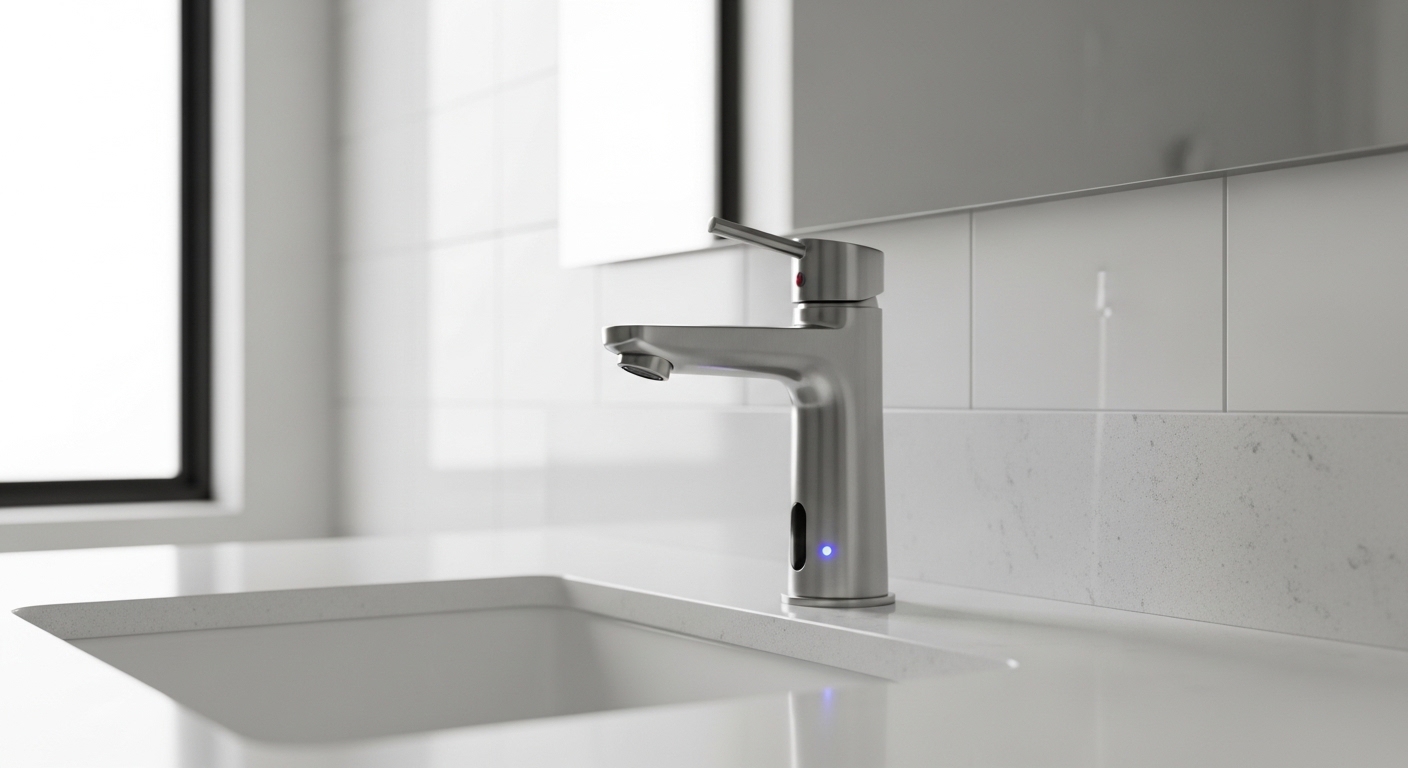
So, do touchless faucets use electricity? Yes, they do — but far less than most shoppers expect. A touchless (also called hands-free or motion-sensor) faucet relies on a low-voltage infrared sensor, a tiny control board, and an electrically operated solenoid valve to start and stop the water. None of those parts can work without power. The good news is that the power draw is minuscule: we’re talking about a device that idles at a fraction of a watt and only “wakes up” for the few seconds your hands are under the spout.
The real question for most buyers isn’t whether these faucets need power, but how they get it and what it costs over the life of the fixture. That’s where the choice between battery power and hardwired AC power matters, and it’s the difference that decides your installation effort, your maintenance schedule, and what happens when the grid goes down. This guide breaks all of it down in plain terms so you can choose with confidence.
How Touchless Faucets Are Powered
There are three common power architectures on the market. Understanding them is the key to answering “do touchless faucets use electricity” in a way that’s actually useful for your bathroom or kitchen.
1. Battery-Powered Touchless Faucets
This is by far the most popular setup for residential faucets. A sealed battery box mounts under the sink and holds either four AA alkaline batteries or a single 6V lithium pack (often a CR-P2 or similar). The batteries power the sensor and the solenoid. Because the faucet only draws current during active use and a brief standby scan, a quality set of batteries typically lasts 12 to 36 months depending on household traffic.
Battery faucets win on installation. There’s no electrician, no outlet under the cabinet, and no transformer to mount. If you can hook up a standard faucet supply line, you can install a battery-powered touchless model. The trade-off is the occasional battery swap — a five-minute job most homeowners handle themselves.
2. AC-Powered (Hardwired) Touchless Faucets
Hardwired faucets plug into a wall outlet through a low-voltage transformer (commonly stepping 120V down to 6V or 9V DC). You’ll see this most often in commercial restrooms, busy offices, restaurants, and high-traffic kitchens where nobody wants to track battery life across dozens of fixtures. At home, hardwiring makes sense if you already have a switched or unswitched outlet inside the vanity or sink cabinet.
The upside is “set it and forget it” — no batteries, ever. The downside is that the faucet stops working during a power outage unless it has a battery backup, and installation may require an accessible outlet you don’t currently have.
3. Hybrid (AC + Battery Backup) Faucets
The best of both worlds. A hybrid unit runs on AC power day to day but falls back to batteries if the power fails. These are common in healthcare and hospitality where hand hygiene can’t pause for a blackout. A growing number of premium residential faucets now offer this too, and it’s a feature worth paying for if you live somewhere with frequent outages.
How Much Electricity Does a Touchless Faucet Actually Use?
Let’s put real numbers on it. A typical residential touchless faucet idles at roughly 0.1–0.5 watts and spikes only briefly when the solenoid opens. Even a hardwired model running 24/7 uses so little energy that the annual cost is essentially a rounding error on your utility bill — usually well under a dollar a year. Battery models draw from the cells, so there’s no measurable impact on your electricity bill at all; your “cost” is simply the price of replacement batteries.
Here’s a clear comparison of the three power types so you can match the faucet to your space:
| Power Type | Typical Power Source | Works in Outage? | Installation Effort | Ongoing Cost | Best For |
|---|---|---|---|---|---|
| Battery-Powered | 4x AA or 6V lithium pack | Yes (runs on batteries) | Low — DIY friendly | Batteries every 1–3 years | Most homes, easy retrofits |
| AC Hardwired | Plug-in transformer (6–9V DC) | No (unless backup) | Medium — needs outlet | ~$0.50–$1 of electricity/year | Commercial, high-traffic sinks |
| Hybrid (AC + Battery) | Transformer with battery fallback | Yes (battery backup) | Medium | Electricity + occasional batteries | Outage-prone areas, hygiene-critical use |
The takeaway: the electricity question is almost never about the bill. It’s about convenience, reliability, and how you want to handle maintenance over the years you’ll own the faucet.
What Happens During a Power Outage or a Dead Battery?
This is the worry that stops a lot of shoppers, so let’s address it head-on. Touchless faucets are engineered to “fail safe,” meaning the solenoid valve defaults to the closed position when it loses power. In plain English: a dead battery or a blackout means the faucet simply won’t turn on — it will not get stuck open and flood your sink.
Beyond that, virtually every quality touchless faucet includes a manual override. This is usually a temperature/flow lever on the side or rear of the faucet body, or a small mechanical control under the sink. With a battery-powered model, you also get plenty of warning before the cells die — most faucets blink an LED or slow their response when the battery is low, giving you days or weeks to swap them. If you want zero risk of interruption, choose a hybrid model with battery backup.
One practical tip: keep a spare set of batteries in the vanity. It turns a potential annoyance into a 90-second fix.
Battery Life, Replacement & True Running Costs
Battery anxiety is overblown, but it’s fair to plan for it. Here’s what drives how often you’ll replace batteries — and how to stretch their life:
- Usage frequency: A busy family kitchen faucet cycles far more than a guest bathroom, so expect shorter battery life on high-traffic sinks.
- Battery chemistry: Lithium packs outlast standard alkaline AAs and perform better in cold cabinets. They cost more upfront but often work out cheaper per year.
- Sensor range setting: Some faucets let you tune detection distance. A shorter range means fewer false triggers from passing arms or dish towels, which saves power.
- Standby scanning: Premium control boards use smart standby modes that lower the scan rate when the faucet hasn’t been used, extending battery life significantly.
- Water temperature habits: Leaving the manual mixer set to a moderate temperature avoids unnecessary solenoid cycling.
Add it up and the running cost of a battery touchless faucet is roughly the price of one battery pack every year or two — call it a few dollars annually. For a hardwired model, it’s a few cents of electricity. Either way, the lifetime power cost is trivial compared to the water-saving benefits, since touchless faucets only run while your hands are present and shut off instantly when you pull away.
How to Replace the Batteries in a Touchless Faucet
If you choose a battery model, here’s the entire maintenance routine — it really is this simple:
- Open the sink cabinet and locate the battery box, usually clipped to the cabinet wall or resting on the base.
- Unclip or unscrew the battery box cover. There’s no need to shut off the water for a battery swap.
- Remove the old batteries and note the polarity markings inside the holder.
- Insert fresh batteries — use a matched set of the same brand and type for best life.
- Close the box, then wave your hand under the spout to confirm the sensor responds and the LED indicator lights normally.
That’s it. No tools beyond maybe a screwdriver, and no plumbing knowledge required.
Are Touchless Faucets Worth the Power Trade-Off?
For most kitchens and bathrooms, the answer is a clear yes. The tiny electricity or battery requirement buys you genuine hygiene and convenience: you never smear grease, raw-chicken juice, or toothpaste onto the handle, because you never touch it. That hands-free operation is exactly why these faucets took off in restaurants and hospitals first, and it’s the same reason they shine in a family home where everyone shares one sink.
Touchless operation also keeps your fixture cleaner for longer, since fingerprints and water spots build up far more slowly on a handle nobody grabs. If you’ve invested in a premium finish, that matters — a brushed or matte surface stays showroom-fresh with minimal effort. When it is time to wipe down, our complete guide to brushed gold faucet cleaning walks through the gentle products and techniques that protect delicate PVD coatings, and the same care principles apply to nickel, chrome, and matte black touchless models.
Finish coordination is another reason touchless faucets are easy to love. Because there’s no bulky handle, the spout becomes the visual centerpiece, so pairing it thoughtfully with your sink pays off. If you’re working with a darker palette, our oil rubbed bronze faucet with stainless sink pairing guide shows how warm and cool tones can play together beautifully — a useful read whether your touchless faucet is bronze, black, or stainless.
Touchless Faucets, Hygiene & Everyday Cleaning
The hygiene argument is the strongest case for going touchless, and it extends beyond the faucet itself. Because you’re not transferring germs to a handle and back, a touchless faucet supports a cleaner overall sink zone — which is a big deal in the kitchen. If you’re rethinking your sink habits, pair your new faucet with the routines in our roundup of the best kitchen cleaning tips and tricks to keep the whole prep area sanitary.
The same logic applies in the bathroom, where shared faucets are a top spot for germ transfer between family members. A hands-free faucet plus a smart wipe-down schedule goes a long way; our bathroom cleaning tips to save time and worry cover quick daily habits that keep fixtures spotless without scrubbing. Touchless technology and good cleaning habits aren’t either/or — they work together.
Buying Tips: What to Look For Before You Order
When you’re comparing touchless faucets at faucitta, weigh these factors alongside the power source:
- Sensor type and placement: Spout-mounted sensors are tidy; some models add a second sensor for wave-on/wave-off control.
- Manual override: Confirm it exists and is easy to reach — you’ll want it during a battery swap.
- Finish and coating: PVD finishes resist corrosion and tarnish better than electroplated ones.
- Flow rate: Look for a WaterSense-labeled aerator if water savings matter to you.
- Warranty coverage: Check that the electronics and finish are both covered, not just the body.
About the Author & Why You Can Trust This Guide
Author note: This guide was written by the faucitta product team, drawing on years of hands-on testing across battery, hardwired, and hybrid touchless faucet platforms. We’ve installed, bench-tested, and lived with these fixtures, so the guidance here reflects real-world behavior — not just spec sheets.
Brand credibility: faucitta designs and supplies kitchen and bathroom fixtures built to last, and every touchless faucet we carry is tested for sensor reliability and solenoid endurance before it ships. Our hands-free models are engineered to meet recognized low-lead (NSF/ANSI 372) and flow-efficiency standards, and they’re backed by a manufacturer warranty covering both the finish and the electronic components. If you ever have questions about power requirements or installation for a specific model, our support team is ready to help at faucitta.net.
FAQ
Do touchless faucets use electricity even when no one is using them?
Yes, but only a trace amount. In standby the sensor performs a low-power scan that draws a fraction of a watt. The faucet only uses meaningful power for the few seconds the solenoid is open and water is flowing, which is why battery and electricity costs stay so low.
Will a touchless faucet still work during a power outage?
It depends on the power type. Battery-powered models keep working through an outage because they don’t rely on the grid. Hardwired AC models stop working unless they include a battery backup. All quality models fail safe — the valve closes — and include a manual override so you can still get water if needed.
How long do the batteries last in a touchless faucet?
Most households get 1–3 years per set, depending on how often the faucet is used and whether you use alkaline or longer-lasting lithium batteries. The faucet usually warns you with a blinking LED or slower response before the batteries die completely.
Can I convert a battery touchless faucet to plug-in AC power?
Often yes. Many models offer an optional AC adapter that replaces the battery box, and some are sold as hybrids that accept both. Check the specific model’s accessory list before buying if hardwiring is your goal, and make sure you have an accessible outlet under the sink.
Are touchless faucets safe and worth the small electricity use?
They’re very safe — the low-voltage electronics are sealed and isolated from the water path, and the valve defaults to closed without power. Given the hygiene benefits, water savings from instant shut-off, and a lifetime power cost measured in pennies, most homeowners find them well worth it.