If you’ve landed here, something in your tub is misbehaving — a slow drip you can hear at 2 a.m., scalding water when someone flushes a toilet, or a handle that spins without doing anything. The fix is almost always a bathtub faucet valve cartridge replacement, and the good news is it’s one of the most cost-effective plumbing repairs you can do, usually under $40 in parts and 30–60 minutes of work. The hard part isn’t the swap; it’s knowing exactly which cartridge to buy. This guide, written by the product team at faucitta, walks you through the types, how to identify yours, and how to make sure the replacement actually lasts.
What does a bathtub faucet valve cartridge actually do?
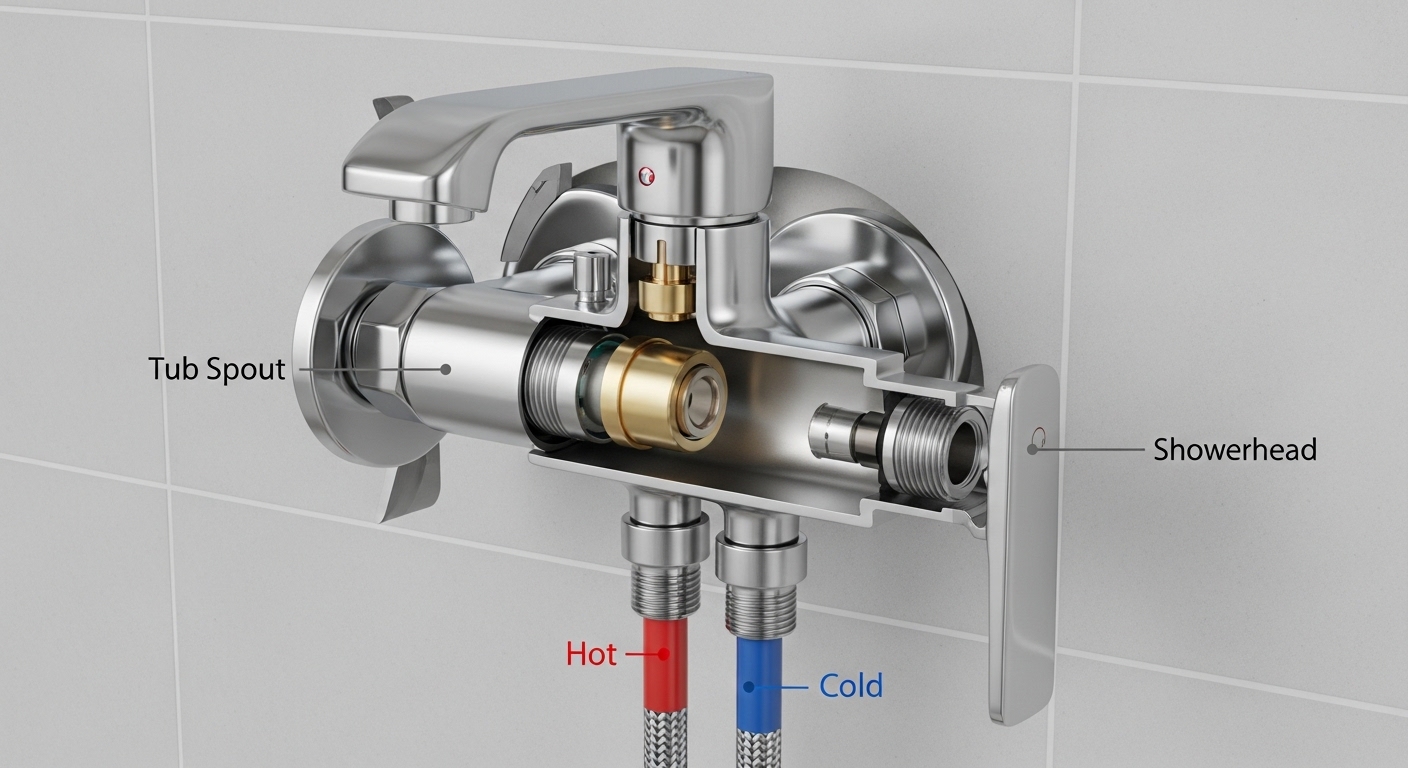
The cartridge is the brain of your tub valve. It sits inside the brass valve body in the wall and physically opens, closes, and mixes the hot and cold water that reach your tub spout and showerhead. When you turn or pull the handle, you’re not moving water directly — you’re rotating or sliding the cartridge, which lines up internal ports to let the right amount of hot and cold through.
There are three jobs a modern cartridge does: regulate flow (how much water comes out), regulate temperature (the ratio of hot to cold), and on pressure-balance and thermostatic models, protect you from scalding when pressure drops elsewhere in the house. When any of those jobs fail — drip, weak flow, temperature swings — the cartridge has worn O-rings, mineral-scaled internal parts, or a cracked plastic body. Replacing it restores the valve to factory performance without opening the wall.
How is it different from the valve body?
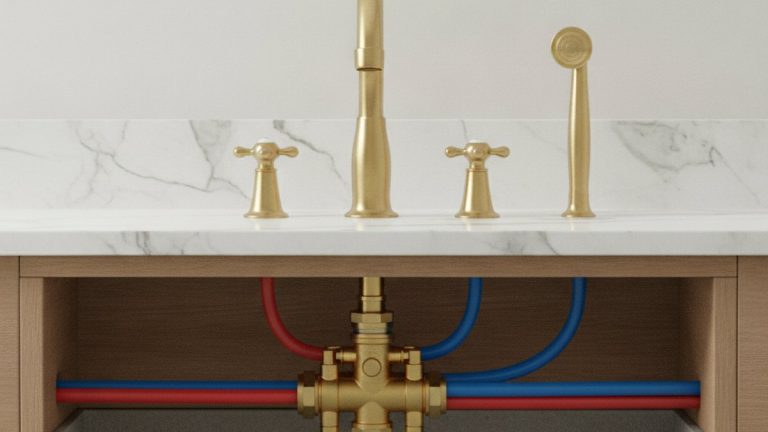
The valve body is the brass housing soldered or threaded to your copper or PEX supply lines inside the wall. That part is meant to last 25+ years and almost never gets replaced. The cartridge is the wear part that lives inside it, designed to be swapped out without cutting tile. If your valve body is intact and not cracked, a new cartridge is all you need.
What are the main types of bathtub faucet valve cartridges?
There are four cartridge styles you’ll encounter in a typical American bathroom. The one in your wall depends on the age of the house and the brand of trim on it.
| Cartridge Type | How It Works | Common Brands | Lifespan | Typical Cost |
|---|---|---|---|---|
| Pressure-Balance (single-handle) | Built-in piston balances hot/cold pressure to prevent scalding | Moen, Delta, Kohler, faucitta, Pfister | 10–15 years | $25–$60 |
| Thermostatic (single or dual control) | Wax or bi-metal sensor holds a precise set temperature | Grohe, Hansgrohe, Kohler, high-end faucitta | 15–20 years | $80–$220 |
| Ceramic Disc (single-handle) | Two polished ceramic discs slide to open/close ports | American Standard, Glacier Bay, many imports | 15–25 years | $20–$45 |
| Compression / Stem (two or three-handle) | Rubber washer compresses against a brass seat | Older Price Pfister, Sayco, Central Brass | 3–7 years | $8–$20 per stem |
Since 1995, U.S. building codes (ASSE 1016) have required new tub-shower installations to use pressure-balance or thermostatic cartridges for scald protection — so if your house was built or renovated after that, you almost certainly have one of the top two types.
How do I know which cartridge I need without pulling it out first?
Look at the front of your valve. The fastest way to identify the correct replacement is the brand logo on the trim plate (escutcheon) and the handle shape. Then cross-reference with the model number, which is usually stamped on the back of the trim or printed on the original install paperwork. If neither is available, you’ll need to pull the trim and read the cartridge itself — every major manufacturer prints a part number on the cartridge body or stem.
Here’s the field-tested order of operations we recommend:
- Identify the brand. Check the logo on the handle or trim plate. Moen, Delta, Kohler, Pfister, American Standard, and faucitta all stamp their name visibly.
- Count the handles. One handle = pressure-balance, thermostatic, or ceramic disc. Two or three handles = almost always compression stems (one per temperature, plus possibly a diverter).
- Look up the trim line. Moen has the 1222 (Posi-Temp) and 1225 cartridges; Delta uses RP series numbers (RP19804, RP46074); Kohler uses GP series. Once you know the trim line, the cartridge is fixed.
- Pull the handle and trim plate. One Phillips or hex screw under the handle cap, then the escutcheon. The cartridge model is now visible — often printed in raised lettering on the brass or plastic body.
- Measure if all else fails. Note the cartridge length, diameter, stem shape (broached/splined), and number of O-rings. A plumbing supply counter can match by dimensions.
What if my faucet has no visible brand?
Builder-grade and older imported tubs sometimes have no logo. In that case, pull the cartridge and bring it to a plumbing supply house (not a big-box store — they have limited SKUs). A good supplier can identify a cartridge by sight in seconds, because the broach pattern on the stem is essentially a fingerprint.
Why is my bathtub faucet leaking even though I just replaced the cartridge?
Nine times out of ten, it’s one of three things: wrong cartridge, the valve body itself is scaled or pitted, or the new cartridge wasn’t seated correctly. A correct cartridge will drop in with light pressure and seat fully — if you’re forcing it, stop, because you can crack the housing or damage the new part.
The other common culprit is mineral buildup inside the valve body. After 10–15 years in hard water, the seats where the cartridge O-rings ride get rough. A new cartridge with perfect O-rings will still weep because the sealing surface is no longer smooth. Two fixes: deep-clean the inside of the valve body with a vinegar-soaked rag and a soft brass brush, or install a new cartridge along with new seats and springs (Delta tubs are famous for this — RP4993 seat-and-spring kits are the matching part). If your supply water has more than 7 grains per gallon of hardness, your cartridge will fail sooner. Our guide on rusty water out of a faucet covers how mineral and corrosion issues upstream of the valve can dramatically shorten cartridge life.
How long should a bathtub faucet valve cartridge last?
A quality cartridge from a reputable brand should last 10 to 20 years. Pressure-balance cartridges average 10–15 years; ceramic disc cartridges often go 20+. Compression stems are the shortest-lived because the rubber washer wears every time you close the valve — expect 3 to 7 years before they need rebuilding.
Three factors decide where you fall in that range:
- Water hardness. Above 10 grains per gallon (171 ppm), cartridges scale up and bind. A whole-house softener can double cartridge life.
- Water pressure. Pressure above 80 psi accelerates O-ring fatigue. Code allows up to 80 psi at the fixture — anything above means you need a pressure-reducing valve at the main.
- Cycling frequency. A guest bath cartridge used twice a week lasts decades. A primary tub used by a family of five lives a much harder life.
Can I replace a bathtub faucet valve cartridge myself?
Yes — for the vast majority of homeowners, this is a confident DIY job that takes 30 to 60 minutes with basic tools. You don’t need to solder, cut tile, or open the wall in a normal cartridge swap. You do need to shut off the water supply, and you need the exact correct replacement part in hand before you start.
The tools list is short: a Phillips screwdriver, an Allen/hex set, channel-lock pliers, a cartridge puller for your specific brand (about $15, mandatory for Moen and Delta), plumber’s grease, and a clean rag. Here is the standard procedure for a single-handle pressure-balance valve:
- Shut off the water. Use the dedicated stops behind the access panel if you have them; otherwise shut off the house main. Open the tub spout to drain pressure.
- Remove the handle. Pop off the index cap, remove the screw, pull the handle straight off.
- Remove the trim/escutcheon plate. Two screws typically; cut any silicone caulk with a utility knife.
- Remove the retaining clip or nut. Pressure-balance valves have a small horseshoe clip; thermostatic and some ceramic disc valves have a threaded brass nut.
- Pull the old cartridge. Use the brand-specific puller. If it’s stuck (common in hard water), apply white vinegar around the stem for 20 minutes first, then pull with steady pressure — never side-to-side rocking.
- Clean the valve body. Wipe out scale with a vinegar rag. Inspect for cracks.
- Lubricate the new cartridge. Apply silicone-based plumber’s grease (never petroleum) to all O-rings.
- Install in the correct orientation. Pressure-balance cartridges have a “hot side” mark — install backwards and your hot and cold will be reversed.
- Reassemble and test. Turn water back on slowly, run for two minutes, check for drips before reinstalling trim.
When should I call a plumber instead?
Call a pro if (1) you can’t shut off the water, (2) the cartridge won’t come out after vinegar soak and a proper puller, (3) the valve body is cracked or the threads are stripped, or (4) you see water staining on the ceiling below indicating a slow leak inside the wall. A licensed plumber typically charges $150–$350 for a cartridge replacement, and significantly more if the wall has to be opened.
Are aftermarket bathtub faucet valve cartridges as good as OEM?
Sometimes yes, sometimes no — and the difference shows up in year three, not week one. A top-tier aftermarket cartridge from a brand like faucitta, Danco, or LASCO uses the same forged brass body, ceramic discs, and EPDM O-rings as the OEM part, and often costs 40–60% less. A bargain-bin cartridge from an unknown seller may use cast zinc, nylon discs, or NBR rubber that hardens in hot water within 18 months.
What to look for in a quality aftermarket cartridge:
- Forged brass body, not pot-metal or thin-walled cast.
- Ceramic discs on the sealing surfaces (not rubber washers in modern designs).
- NSF/ANSI 61 certification for drinking-water safety.
- EPDM or silicone O-rings, rated for 180°F+ continuous service.
- Manufacturer warranty of at least 5 years on the cartridge itself (faucitta cartridges carry a lifetime functional warranty against drips on our tub-shower trim lines).
If you’re picking out new trim along with the cartridge, a finish discussion matters too — see our complete brushed gold faucet care guide for what finishes hold up best near tub conditions, and the oil-rubbed bronze pairing guide for design context that translates to bathroom fixtures too.
What does a bathtub faucet valve cartridge cost in 2026?
Expect to pay between $15 and $220 depending on type and brand. Most homeowners replacing a standard pressure-balance cartridge will spend $25 to $60 for the part. Here’s a realistic price breakdown:
| Scenario | Parts | Pro Labor | Total Range |
|---|---|---|---|
| DIY single-handle cartridge swap | $25–$60 | $0 | $25–$60 |
| DIY two-handle stem rebuild (both sides) | $20–$45 | $0 | $20–$45 |
| Plumber single-handle cartridge swap | $30–$70 | $150–$300 | $180–$370 |
| DIY thermostatic cartridge | $80–$220 | $0 | $80–$220 |
| Plumber + wall access needed | $40–$220 | $400–$900 | $440–$1,100 |
How do I know if I should replace just the cartridge or the whole tub faucet?
Replace just the cartridge if the valve body is sound, the trim still matches your bathroom, and the leak is isolated to drip/temperature symptoms. Replace the whole tub faucet (trim + sometimes valve body) if the finish is failing, you want a different style, or you’ve already replaced the cartridge twice and the valve body is pitted.
One scenario that pushes people toward a full replacement: an older two- or three-handle tub valve. ASSE 1016 scald protection became mandatory in most jurisdictions, and modernizing to a single-handle pressure-balance valve is both safer (especially with kids or elderly users) and easier to find parts for long-term. That said, switching from three-handle to one-handle usually requires opening the wall, so the cost jumps from a $40 cartridge to a $600–$1,200 valve replacement.
FAQ
Why does my tub faucet drip only when the shower is running?
That’s the diverter inside the tub spout or, on some valves, a diverter cartridge separate from the main mixing cartridge. The pressure-balance cartridge itself is fine; the diverter rubber gasket has worn. Replace the tub spout (on pull-up diverter tubs) or the dedicated diverter cartridge.
Are all Moen 1222 and 1225 cartridges interchangeable?
No. The 1222 is for Posi-Temp single-handle tub/shower valves and the 1225 is for kitchen and bath sink faucets. They look similar but the broach and length differ. Always match by trim/model line, not by appearance.
Can hard water permanently ruin a cartridge?
Yes — calcium scale can fuse a cartridge into the valve body and pit ceramic discs. Annual flushing with white vinegar and a whole-house softener (if your water is above 7 gpg) dramatically extends life. See our notes on water-quality issues that affect fixtures for more.
Do I need to turn off water to the whole house to replace the cartridge?
Only if you don’t have dedicated stops behind the tub access panel. Newer installations (post-2010 in most areas) include integral service stops on the valve itself — a small flat-blade screwdriver turns them off so the rest of the house keeps water.
What’s the warranty on a faucitta cartridge?
faucitta tub-shower cartridges carry a lifetime functional warranty against drips and a 5-year warranty on internal ceramic discs and O-rings, provided the valve is installed per ASSE 1016 and IAPMO guidelines. We test every cartridge to 500,000 actuation cycles before shipping a production run.
Will a generic universal cartridge work in my Moen or Delta valve?
“Universal” cartridges almost never work properly in brand-name pressure-balance valves. The broach, length, and pressure-balance piston geometry are brand-specific. Buy a cartridge made for your exact valve model — either OEM or a verified brand-matched replacement.
How often should I preventively replace my cartridge?
You don’t need to — replace when symptoms appear. But if you’re already opening the valve for any reason past year 10, swap the cartridge while you’re in there. A $30 part and 20 extra minutes beats a second teardown two years later.
About the author: This guide was written by the faucitta product engineering team, drawing on more than a decade of designing, testing, and warrantying tub-shower valves to ASSE 1016, ASME A112.18.1, and NSF/ANSI 61 standards. faucitta manufactures pressure-balance and thermostatic tub-shower trim sold in North America with a lifetime functional warranty. For specific cartridge identification help, our support team can match parts from a photo at faucitta.net.