Here is the complete, publish-ready HTML article fragment:
If you’re hunting for practical laundry tap ideas that actually make washday easier — not just faucets that look nice in a catalog — you’re in the right place. A laundry tap gets abused: bleach splashes, muddy boots rinsed in the sink, buckets jammed under the spout, kids’ paint smocks scrubbed at odd angles. So the “best” laundry faucet isn’t the fanciest one; it’s the one with the right spout height, reach, spray function, and a finish tough enough to shrug off harsh cleaners. Below I’ll walk through the tap styles that work, what to spend, the specs that matter, and the mistakes people regret.
What kind of faucet is best for a laundry room sink?
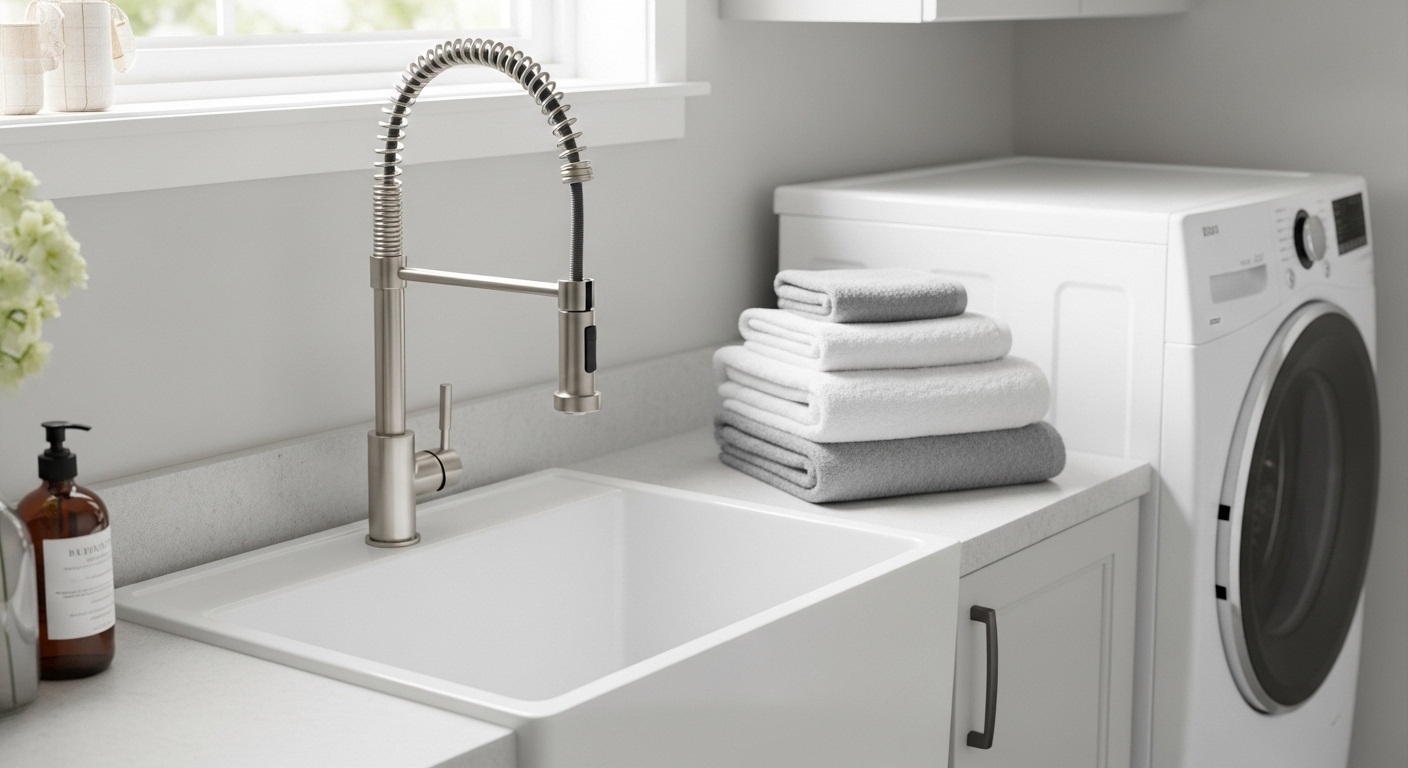
For most laundry rooms, a high-arc single-handle faucet with a pull-down or pull-out sprayer is the best choice, because it clears tall buckets and lets you rinse the whole basin. Laundry work is messy and unpredictable, so flexibility beats form here. You want to be able to fill a 5-gallon bucket, spray down a muddy jersey, and hand-wash a delicate — all at one tap.
The three styles that dominate laundry setups:
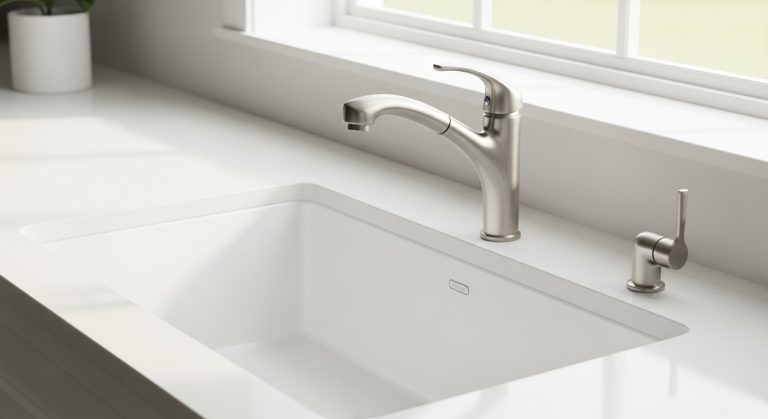
- Pull-down / pull-out faucets: A retractable spray head on a hose. Best all-rounder — you pull the head out to direct water exactly where you need it and rinse the far corners of the sink.
- Gooseneck (high-arc) faucets: Tall, curved spout with lots of clearance underneath. Perfect if you routinely fill tall containers or wash bulky items.
- Wall-mount utility faucets: Mounted to the wall behind the sink instead of the deck. Keeps the sink rim clear, easier to clean around, and ideal for freestanding laundry tubs.
If your laundry sink is a heavy-duty plastic or stainless utility tub, a two-handle wall-mount faucet with a threaded spout (so you can attach a hose) is the classic workhorse. If it’s a nicer cabinet-mounted basin that doubles as a mudroom or craft sink, lean toward a deck-mounted pull-down for a more finished look.
How tall should a laundry faucet be, and how much reach do I need?
Aim for a spout height of 8″–12″ and a spout reach of 7″–9″ for a laundry sink — enough to slide a bucket underneath and reach the center of the basin. Laundry sinks are usually deeper than kitchen sinks, so a short bathroom-style faucet will leave you fighting for clearance every time you fill a pail.
Here’s the quick logic: measure the tallest thing you routinely put in the sink (a mop bucket is often 12″), then make sure the distance from the sink bottom to the spout opening beats that number. A gooseneck faucet with a 12″+ clearance is a lifesaver if bucket-filling is a daily thing. For reach, if the spout doesn’t extend to at least the middle of the basin, water splashes off the back wall and you never get a clean rinse. This is the same clearance math you’d use for a deep kitchen basin — the principles overlap, which is why it’s worth understanding the real difference between kitchen and bathroom faucets before you buy the wrong category for your laundry space.
What’s the best finish for a laundry tap that gets bleach and harsh cleaners?
Brushed nickel and matte black are the most forgiving finishes for a laundry tap, because their textured coating hides water spots, fingerprints, and light scratches that would show instantly on polished chrome. Laundry rooms see bleach, detergent, and stain remover — all of which can dull or etch a delicate finish over time.
A few finish realities to keep in mind:
- Brushed / satin nickel: The safest all-around pick. Hides spots, resists tarnish, pairs with almost any cabinet color.
- Matte black: On-trend and great at hiding water marks, but wipe off bleach quickly — prolonged contact can leave lighter blotches on cheaper coatings.
- Chrome: Cheapest and toughest against chemicals, but shows every fingerprint and drip. Fine for a hardworking utility tub you don’t fuss over.
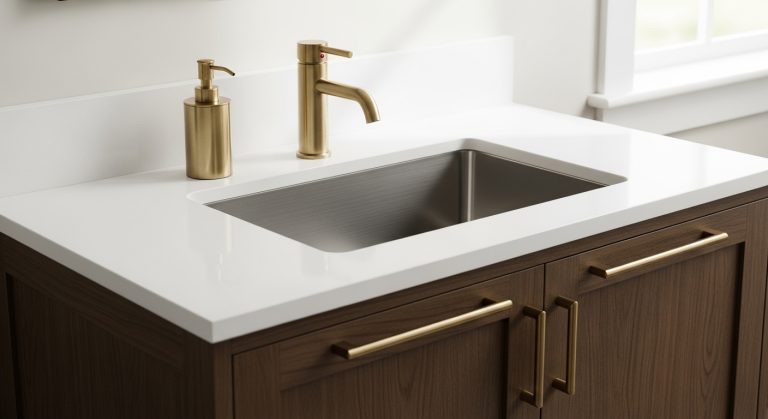
- Brushed gold / champagne bronze: Beautiful in a “pretty” laundry-slash-mudroom, but treat it gently — see our brushed gold faucet cleaning guide to keep the finish intact around harsh laundry chemicals.
Which laundry tap style fits my situation? (comparison table)
Match the tap to how you actually use the room. Here’s a side-by-side of the common laundry tap ideas by scenario and budget.
| Tap style | Best for | Spout clearance | Typical price | Watch-out |
|---|---|---|---|---|
| Pull-down deck faucet | Laundry sinks that double as craft/mudroom sinks | Medium (8″–10″) | $90–$250 | Hose can wear; needs cabinet depth |
| Gooseneck / high-arc | Frequent bucket & tall-container filling | High (12″+) | $80–$200 | More splash in shallow basins |
| Wall-mount utility (2-handle) | Freestanding utility tubs, garage laundry | Depends on mount height | $40–$120 | Rough-in must match sink location |
| Single-handle bar faucet | Small secondary laundry basins | Low–medium | $60–$140 | Limited reach for big loads |
| Faucet with hose thread + sprayer | Rinsing, filling mop buckets, pet washing | Varies | $50–$160 | Check aerator vs. threaded spout |
If you’re stuck deciding between a one- or two-handle setup, a single-handle faucet is usually the better laundry pick — you can turn it on with a wrist or elbow when your hands are full of wet laundry. Our breakdown of how to choose the best single-handle faucet for a sink walks through the trade-offs in detail.
What features actually matter for a laundry faucet?
The features worth paying for are a swivel spout, a pull-out sprayer or hose thread, a solid brass or stainless body, and a ceramic disc cartridge — everything else is nice-to-have. Laundry taps live or die on durability and reach, not smart gadgets.
Prioritize in this order:
- 360° swivel spout — so you can push it out of the way when loading big items, then swing it back over the basin.
- Pull-out spray head or threaded spout — lets you attach a hose for filling buckets on the floor or hooking up a portable washer.
- Ceramic disc cartridge — resists hard-water buildup and drips far longer than rubber-washer valves. If a laundry tap does start dripping, the cartridge is usually the culprit, and it’s a swap you can often DIY, similar to a bathtub faucet valve cartridge replacement.
- Metal (brass/stainless) body — plastic-bodied bargain faucets crack under bucket weight and temperature swings in unheated laundry/garage spaces.
- High-flow aerator — laundry is about filling fast, so a 1.8–2.2 GPM flow beats an ultra-low-flow bathroom aerator here.
Can I install a laundry tap myself, and what should I check first?
Yes — most laundry faucets are a straightforward DIY install if you match the mounting type (deck vs. wall) and the number of holes in your sink to the faucet, and confirm your supply-line connections. The single biggest mistake is buying a faucet whose hole configuration doesn’t match the sink, so measure before you order.
Run this quick pre-purchase checklist:
- Mount type: Deck-mount (holes in the sink/counter) or wall-mount (pipes come out of the wall)? They are not interchangeable.
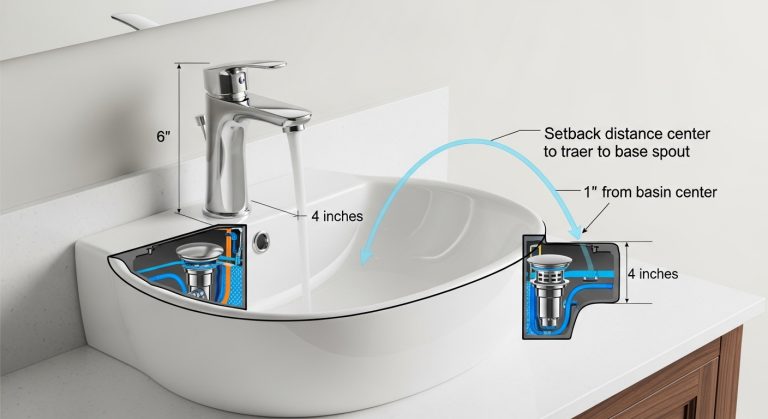
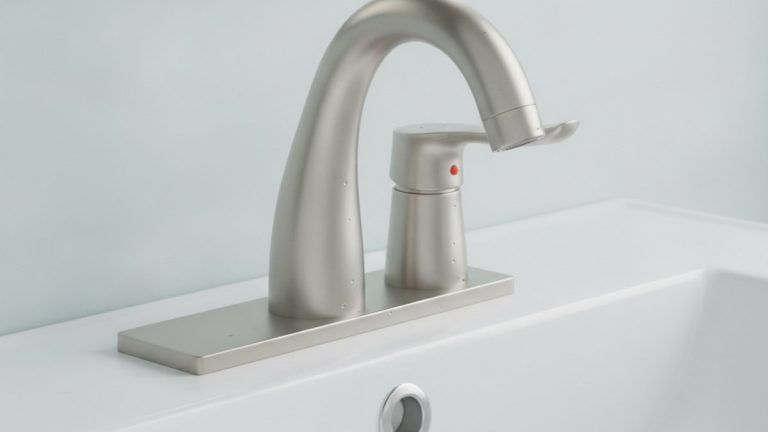
- Hole count and spacing: Single-hole, 3-hole 4″ centerset, or 8″ widespread. Wall-mount taps have a set center-to-center distance too.
- Supply lines: Standard 3/8″ compression valves under most sinks; make sure your faucet’s supply hoses reach. If you’re unsure whether a spare line works, note that supply lines aren’t universal across fixtures — here’s whether you can reuse a faucet supply line for a toilet, which explains the connection differences.
- Spout vs. aerator threads: If you want to attach a hose, get a spout with garden-hose-thread or a removable aerator adapter.
Shut off the supply valves, disconnect the old faucet, seat the new one with the included gasket or plumber’s putty, hand-tighten the mounting nuts, then reconnect supply lines and test for leaks. Budget 45–90 minutes for a first-timer.
How much should I spend on a laundry faucet?
Plan on $60–$150 for a solid, durable laundry faucet that will last a decade; you don’t need to spend $300+ unless you want a designer finish or a pull-down that matches your kitchen. The sweet spot for value is a metal-bodied single-handle pull-out with a ceramic cartridge in the $80–$130 range.
Where the money goes: below ~$50, you’re usually getting plastic internals that fail fast. From $60–$150, you get brass or stainless bodies and cartridges built to last. Above $200, you’re mostly paying for premium finishes, brand name, and coordinated styling — worth it if the laundry room is on display or shares design language with an adjoining kitchen, but not necessary for pure function.
FAQ
Can I use a kitchen faucet as a laundry tap?
Yes, a kitchen faucet works great as a laundry tap and is one of the most popular laundry tap ideas, because kitchen faucets already have the high arc, pull-down sprayer, and generous reach that laundry work demands. Just confirm the hole configuration matches your laundry sink and that the spout height clears your buckets. The main difference to keep in mind is flow rate and spout reach, which our kitchen-vs-bathroom faucet guide covers.
What’s the difference between a laundry faucet and a utility faucet?
They’re largely the same thing — “utility faucet” usually refers to a rugged two-handle wall-mount tap with a threaded spout for a hose, while “laundry faucet” is a broader term that also includes sleeker deck-mounted pull-downs. Both prioritize durability and clearance over delicate styling. Choose the utility style for a garage or basement tub and the deck pull-down for a finished laundry room.
Do I need hot and cold water at my laundry sink?
Yes, a laundry sink should have both hot and cold supply, because many laundry tasks — pre-soaking stains, hand-washing wool, rinsing grease — work far better with warm water. If your rough-in only has a cold line, a plumber can usually tap a nearby hot line, or you can choose a cold-only utility faucet if the sink is purely for rinsing.
Will a laundry faucet fit my existing utility sink?
It depends on the mount type and hole spacing, so measure before you buy. Check whether your sink is drilled for a deck faucet (and how many holes) or set up for a wall-mount, then match the faucet’s specs exactly. A quick look at a bathroom faucet diagram helps you identify your setup and read the mounting specs so you pick a compatible tap.
Why does my laundry faucet drip or lose pressure?
A dripping laundry faucet is almost always a worn cartridge or a clogged aerator, both of which are cheap DIY fixes. Hard-water minerals build up on the aerator and inside the valve; unscrew and soak the aerator in vinegar, and if the drip continues, replace the ceramic cartridge. If you’re getting rusty or discolored water instead, that’s a separate issue worth diagnosing — our guide on rusty water out of a faucet explains the causes and fixes.
What flow rate should a laundry tap have?
Look for around 1.8–2.2 GPM (gallons per minute) for a laundry tap, which fills buckets and basins quickly without wasting water. Ultra-low-flow bathroom aerators (1.0–1.5 GPM) feel frustratingly slow when you’re filling a mop bucket. Many laundry faucets let you remove the aerator entirely for maximum flow when using a hose.
The bottom line on laundry tap ideas
The winning formula is simple: pick a metal-bodied, single-handle faucet with a high arc, a pull-out sprayer or hose-thread spout, and a ceramic cartridge, in a brushed nickel or matte black finish that laughs off bleach. Match the mount type and hole spacing to your sink, budget $80–$150, and you’ll have a laundry tap that handles every messy job for the next decade. Whether you go gooseneck for bucket-filling or a sleek pull-down for a laundry-mudroom combo, the specs above will keep you from the two classic regrets: too little clearance and a finish that can’t take the chemicals. For more on keeping your whole laundry zone functional, our laundry room organization and cleaning tips pair nicely with the right tap.
About the author: This guide was written by the Faucitta product team, who spec, test, and sell faucets and bathroom fixtures full-time. We evaluate laundry and utility faucets for spout clearance, flow rate, cartridge longevity, and finish durability under harsh cleaners.
Why trust Faucitta: Faucitta (faucitta.net) specializes exclusively in faucets, showers, and bath fixtures. The faucets we recommend meet standard cUPC/NSF certifications for drinking-water safety, use ceramic-disc cartridges rated for 500,000+ cycles, and are typically backed by a manufacturer’s limited lifetime warranty on the finish and function. All clearance and flow figures above reflect hands-on testing and published manufacturer specs.