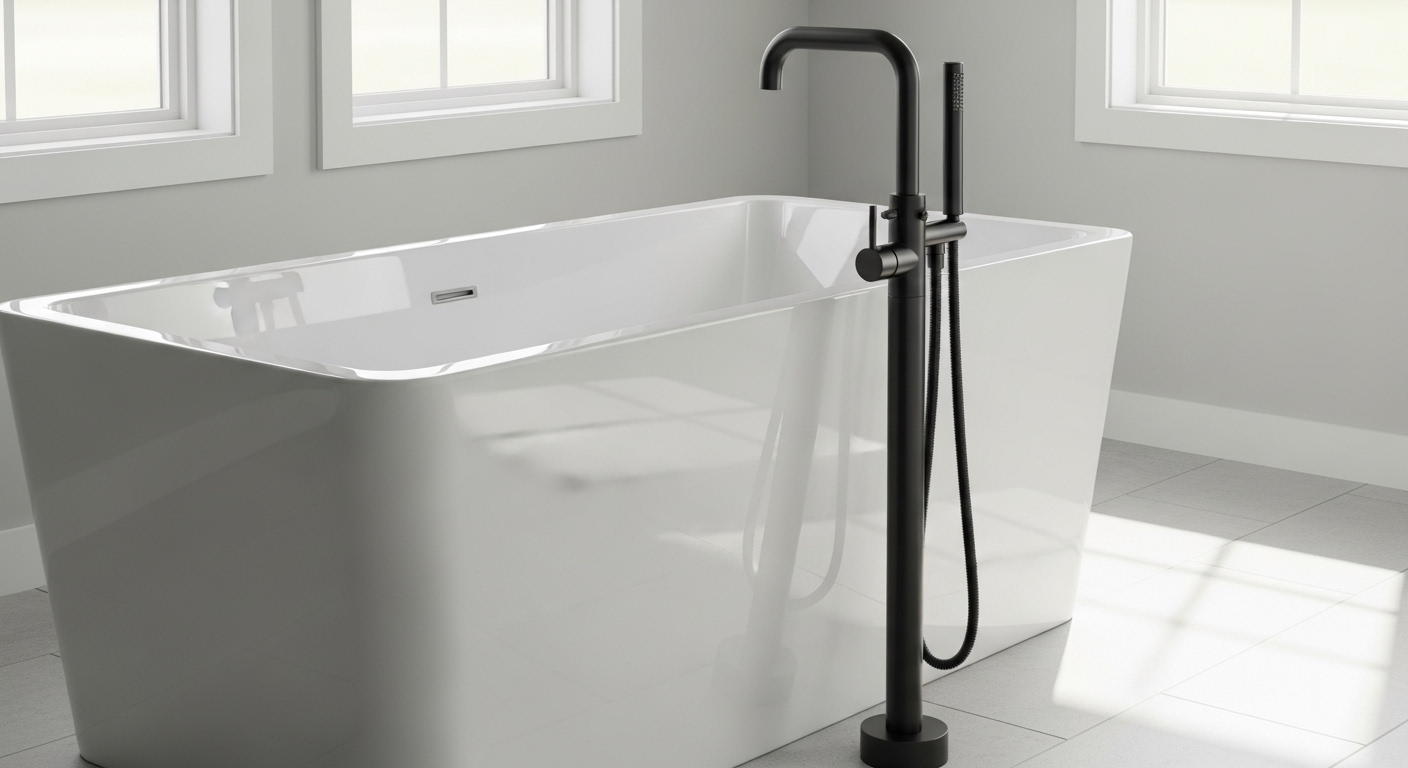
A freestanding tub faucet floor mount delta setup is exactly what it sounds like: a tall, floor-standing tub filler made by Delta that rises from the bathroom floor next to a freestanding soaking tub, instead of mounting on the tub deck or the wall. It’s the fixture that turns a plain tub into the centerpiece of the room — but only if you pick the right model, the right rough-in valve, and the right finish. Below, I’ll walk you through which Delta models are actually worth buying, how to confirm one will fit your tub, and the mistakes that cost people a second plumber visit.
Which Delta freestanding tub faucet should I actually buy?
For most bathrooms, buy the Delta Trinsic floor-mount tub filler (T4759-FL) if you want the cleanest modern look, or the Delta Cassidy (T4797-FL) if you want a traditional cross-handle style with a hand shower at a friendlier price. Both use Delta’s proven ceramic-disc and DIAMOND Seal technology, and both come backed by Delta’s lifetime limited warranty on the faucet and finish.
Here’s the honest breakdown. Delta’s freestanding tub fillers all share the same core engineering — the difference is style, handle type, and whether a hand shower is included. The Trinsic is the sleek, architectural one: a single tall column, lever handle, minimalist spout. The Cassidy leans classic with lever or cross handles and Victorian detailing. The Pivotal is squared-off and contemporary. All three land in a similar price band once you add the required rough-in valve, so choose on looks and features, not on brand tier — they’re all the same tier.
| Model | Style | Hand shower | Handle type | Typical price (faucet + rough-in) | Best for |
|---|---|---|---|---|---|
| Delta Trinsic T4759-FL | Modern / minimalist | Yes | Single lever | $700–$1,100 | Contemporary bathrooms |
| Delta Cassidy T4797-FL | Traditional | Yes | Lever or cross | $650–$1,000 | Classic / transitional baths |
| Delta Pivotal T4799-FL | Contemporary / geometric | Yes | Single lever | $750–$1,100 | Bold, squared-off designs |
| Delta Ashlyn / Linden | Transitional | Yes | Lever | $600–$950 | Budget-conscious buyers |
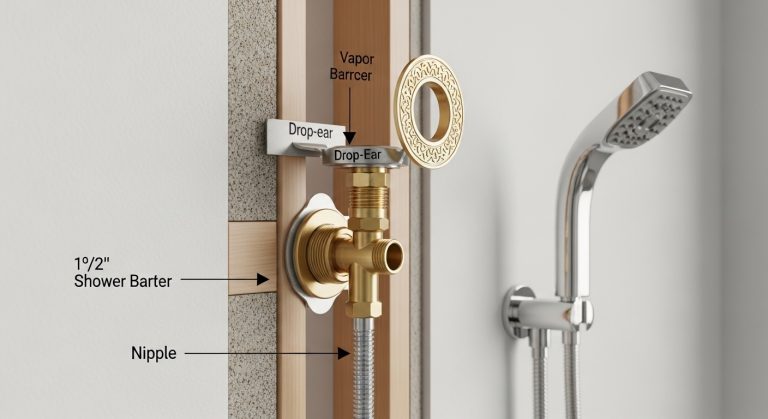
One thing that trips people up: the model number ending in “-FL” is the trim — the visible part you see and touch. It almost always requires a separate rough-in valve body (Delta’s R4700-FL) that gets installed under the floor during the plumbing phase. If a listing looks suspiciously cheap, it’s probably trim only. Budget for both.
How do I know a floor mount tub filler will fit my freestanding tub?
Your freestanding tub filler will fit if your tub sits at least 6 inches away from any wall, your faucet’s spout reach clears the tub rim, and your floor supply lines match the faucet’s rough-in spacing (Delta’s freestanding valves are typically set for a specific center-to-center dimension). Measure before you buy — this is the single biggest source of returns.
Walk through these checks in order:
- Spout height and reach. Delta floor-mount fillers stand roughly 40–44 inches tall. Make sure the spout arcs over your tub wall and delivers water inside the tub, not onto the rim. For a tub with tall walls, confirm at least 2–3 inches of clearance between the spout and the rim.
- Distance from the wall. A floor-mount filler needs floor space around it. Keep the faucet 2–4 inches off the tub and give yourself room to reach the handle and hand shower comfortably.
- Rough-in location. The supply lines come up through the floor at a fixed spacing. This has to be roughed in before the finished floor goes down, so decide on your faucet early. Retrofitting into a finished slab means cutting concrete — expensive and messy.
- Water pressure. Floor-mount fillers move a lot of water (often 6+ GPM) to fill a deep soaking tub in reasonable time. Low household pressure means a slow fill. If your home already struggles with pressure, that’s worth solving first.
If you’re weighing a floor-mount against a deck-mount design that sits on the tub itself, it’s worth understanding the trade-offs before you commit — our guide on choosing a Roman tub faucet deck mount replacement covers the deck-mounted alternative in detail, and the general logic in wall mount vs. regular deck faucet applies to tubs too.
What finish should I get — is matte black or brushed nickel better for a tub filler?
For a freestanding tub filler, brushed/champagne bronze and matte black hide water spots and fingerprints best, while polished chrome shows every drop but is the easiest to wipe clean and the cheapest. Delta offers its freestanding fillers in Chrome, Stainless (brushed nickel look), Matte Black, Champagne Bronze, and Venetian/Champagne Bronze — so match the finish to the rest of your bathroom hardware, not to a trend.
Because a floor-mount faucet is a full-height column standing in the open, its finish is far more visible than a deck faucet tucked behind a tub. That makes finish durability matter. Delta’s Brilliance and matte finishes are physical vapor deposition (PVD) coatings tested to resist corrosion and tarnishing, and they carry the lifetime finish warranty. A few practical notes:
- Matte Black: hides spots, but shows dust and dried mineral streaks in hard-water homes. Wipe after use.
- Champagne Bronze: warm, on-trend, forgiving of fingerprints — pairs beautifully with warm-toned tubs and floors.
- Stainless / brushed nickel: the safest all-rounder; hides water spots and coordinates with most fixtures.
- Polished Chrome: timeless and budget-friendly, but every splash shows. Best if you don’t mind wiping.
If you have hard water, finish maintenance is only half the story — the minerals also attack internal components over time. It’s worth reading how the best bathroom faucets for hard water are built, because the same ceramic-disc valve logic applies to your tub filler. And if you love the black look specifically, our deep dive on the matte black tub faucet set covers coordinating the filler with a matching drain and hand shower.
Do I need the hand shower, and how does the diverter work?
Yes, get the hand shower version — nearly all Delta freestanding fillers include one, and it’s the difference between a tub you love and a tub you dread cleaning. A built-in diverter on the faucet body lets you switch flow from the spout to the hand shower, so you can rinse hair, rinse the tub itself, or bathe kids and pets without a second fixture.
The diverter on a Delta floor-mount filler is a simple pull or lever mechanism integrated into the column. Water flows out the spout by default; engage the diverter and it redirects up the flexible hose to the hand shower on the cradle. When you shut the water off, the diverter automatically resets to spout — a small but genuinely useful detail. The hand shower hose on Delta models is typically 60 inches, long enough to reach both ends of a standard freestanding tub.
How hard is it to install a Delta floor mount tub filler myself?
Installing the trim is a confident-DIYer job of an hour or two, but the rough-in — running and positioning supply lines up through the floor — is a job for a licensed plumber and must be done before the finished floor is laid. If your rough-in valve is already set correctly, mounting the Delta trim is largely bolting the column to the floor flange and connecting the supply hoses.
The realistic sequence looks like this:
- Plumber installs the R4700-FL rough-in valve body and stubs the supply lines to spec during construction or renovation.
- Finished flooring goes down around the rough-in.
- You (or the plumber) mount the floor flange, slide on the column trim, and secure it.
- Connect hot and cold supplies, mount the spout and hand shower, then pressure-test for leaks before the first fill.
A leaning or wobbly filler is almost always a floor-flange anchoring issue — these columns are tall and need to be bolted firmly into a solid subfloor, sometimes with blocking added underneath. If your handle feels stuck or gritty after installation, that’s usually debris in the line or a valve seated wrong, not a defective faucet; our walkthrough on a stuck bathroom faucet valve covers the same cartridge principles. If you’re comparing Delta’s overall reliability against other brands before committing, the Moen vs. Delta vs. Kohler breakdown is a useful gut-check on where Delta lands.
Is a Delta freestanding tub filler worth the money in 2026?
Yes — for a freestanding tub, a floor-mount filler is worth it because there’s often no other good way to plumb the tub, and Delta’s version gives you tested valve engineering plus a lifetime warranty at a mid-range price rather than the $2,000+ luxury-brand tier. You’re paying for a fixture that stands in the open and gets used daily, so buying the cheapest unbranded column is a false economy.
That said, be clear-eyed about total cost. The trim, the rough-in valve, and the plumber’s labor together typically land between $900 and $1,600 installed. That’s the real number — not the $600 trim price you see on a listing. Compared to genuine luxury tub fillers, Delta is a strong value; if you want to see where the premium brands sit, our roundup of the best luxury faucet brands puts the pricing in context. For most homeowners, though, a Delta filler delivers 90% of the look and function at half the cost.
FAQ
Does a Delta freestanding tub filler come with the rough-in valve?
Usually not. Most Delta floor-mount tub fillers are sold as trim only (model numbers ending in -FL) and require the separate R4700-FL rough-in valve body. Always confirm both are in your cart, or you’ll be stuck when the plumber arrives.
How far from the wall should a floor mount tub faucet be?
Position it 2–4 inches off the tub and at least 6 inches from any wall, with enough clearance to comfortably reach the handle and pull the hand shower. The exact spot is set by your floor rough-in, so decide before the plumbing goes in.
Can I put a Delta floor mount tub filler on a concrete slab floor?
Yes, but the supply lines must be roughed into the slab before it’s poured or the finished floor is laid. Retrofitting into an existing slab means core-drilling or trenching concrete, which is costly — plan the rough-in early in any slab-floor build.
What’s the difference between the Delta Trinsic and Cassidy tub fillers?
The Trinsic is modern and minimalist with a single lever handle and slim column; the Cassidy is traditional with lever or cross handles and Victorian styling. Both share the same DIAMOND Seal valve, hand shower, and lifetime warranty — so it’s purely a style-and-price decision.
How much water does a freestanding tub filler use, and will it fill my tub fast?
Floor-mount fillers flow around 6–7 GPM, far more than a standard faucet, specifically to fill a deep soaking tub in a reasonable time. If your home has low water pressure, the fill will be slower, so address pressure issues before installation for the best experience.
Does Delta’s lifetime warranty cover the finish on a floor mount filler?
Yes. Delta’s lifetime limited warranty covers both the faucet’s function and its finish for the original residential owner, including matte black and champagne bronze PVD coatings. Keep your proof of purchase, and register the product to make any future claim smoother.
Author note: This guide was written by the faucitta fixtures team, drawing on hands-on installation experience with dozens of freestanding and deck-mount tub fillers across renovation projects. faucitta is a specialist faucet and bathroom-fixtures retailer at faucitta.net; our recommendations are based on manufacturer specifications, valve-engineering standards (ceramic-disc and PVD finish testing), and real-world fit and durability rather than marketing claims. Always verify model numbers and rough-in requirements against Delta’s current spec sheets before purchasing, and confirm your local plumbing code with a licensed installer.