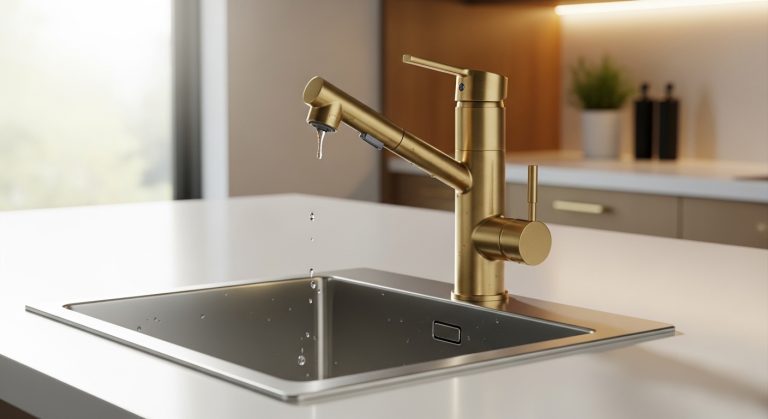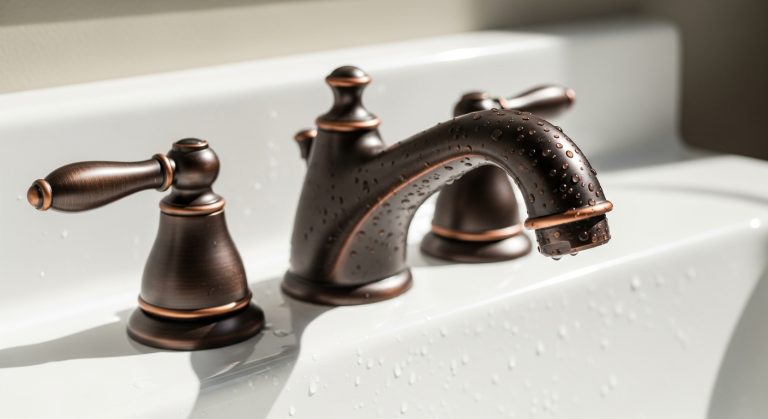
If you’ve been searching for a brushed nickel faucet Rona carries — either in-store or on rona.ca — you’re really asking two questions at once: is brushed nickel the right finish for me, and is Rona the right place to buy it? The short version is that brushed nickel is one of the most forgiving, longest-lasting finishes you can put on a sink, and Rona is a legitimate place to shop it in Canada. But the smart move is to know exactly what separates a good brushed nickel faucet from a mediocre one before you stand in the aisle or click “add to cart.” That’s what this guide is for. We’ll cover pricing, brands, durability, how it compares to chrome and satin nickel, and how to make sure the one you pick actually fits your sink.
What exactly is a brushed nickel faucet, and why do people buy it?
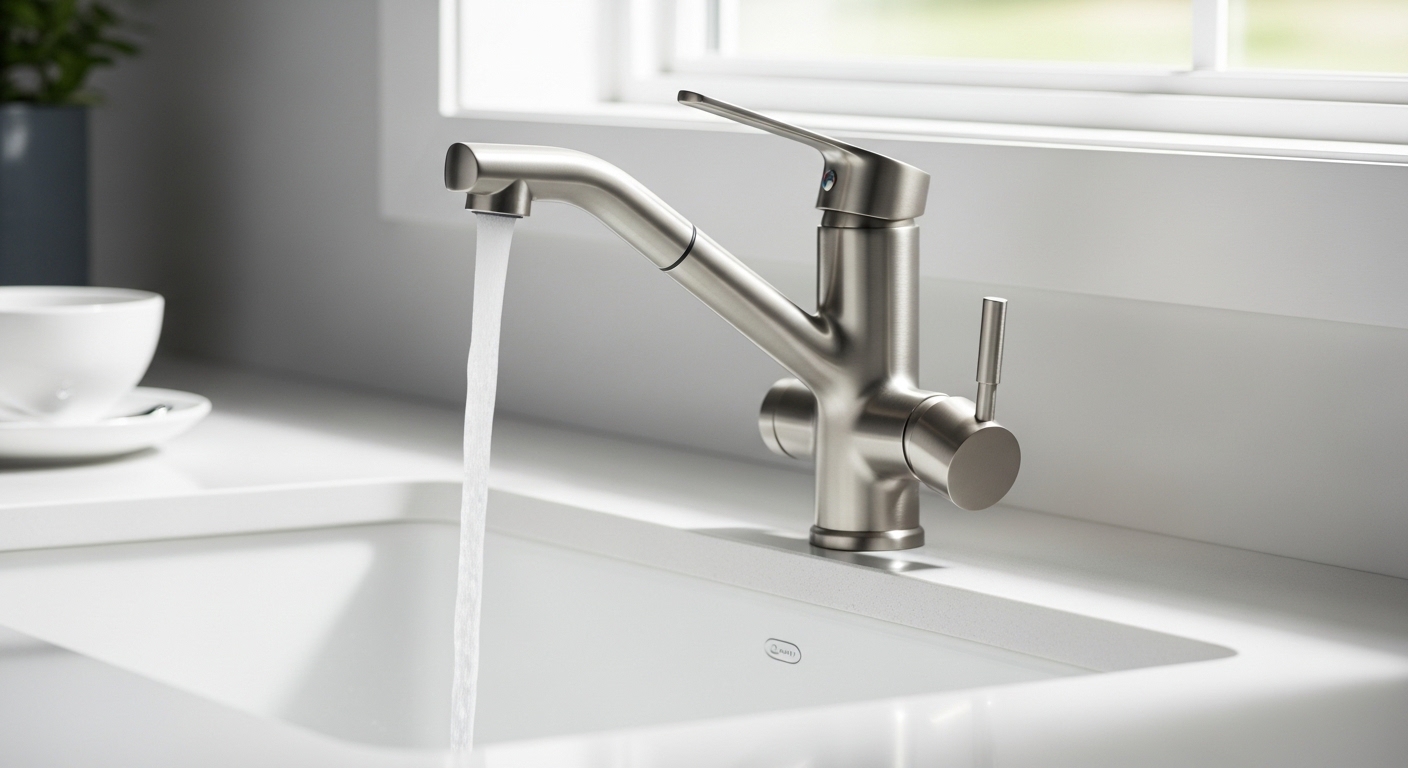
Brushed nickel is a faucet finish made by coating brass or zinc hardware with nickel, then brushing it to create a soft, low-gloss, slightly warm silver-gray surface. People buy it because it’s the “just works” finish: it hides fingerprints, water spots, and light scratches far better than shiny chrome, and it pairs with almost any color scheme.
Here’s the practical reasoning. Chrome is a mirror — every water droplet and every kid’s fingerprint shows up on it, so you’re wiping it constantly. Brushed nickel scatters light instead of reflecting it, so the same smudges basically disappear. That single property is why it’s the most-requested finish for family bathrooms and busy kitchens. It also has a warm undertone, which makes it feel a little softer and cozier than the cold blue-white of chrome — a small thing that matters when the faucet is the visual centerpiece of a sink.
The trade-off? Brushed nickel usually costs a bit more than chrome for the same model, and cheaper versions use a coating (PVD or a lacquer) that can wear at high-touch points over many years. The good news is that most reputable brands now use PVD (physical vapor deposition), which bonds the finish at a molecular level and is extremely hard-wearing.
How much does a brushed nickel faucet cost at Rona in 2026?
At Rona, expect to pay roughly CA$80–CA$150 for a basic brushed nickel bathroom faucet, CA$150–CA$300 for a mid-range kitchen faucet, and CA$300–CA$500+ for a premium pull-down or touchless model. Rona stocks its own value-oriented house brands alongside the big names, so the price spread is wide.
To make that concrete, here’s how the tiers typically break down:
- Budget (CA$80–CA$140): Rona/house-brand and entry Pfister or Peerless faucets. Often zinc bodies with ceramic-disc cartridges. Perfectly fine for a rental, a powder room, or a quick refresh.
- Mid-range (CA$150–CA$280): Moen, Delta, and Pfister mainstream lines. Better cartridges, real metal spouts, and warranties that actually mean something. This is the sweet spot for most homeowners.
- Premium (CA$300–CA$500+): Kohler, higher-end Moen/Delta pull-downs, touchless and voice-activated models, solid-brass construction. Worth it for a primary kitchen you use hard every day.
One thing to watch: Rona runs frequent seasonal and clearance sales, and prices on rona.ca sometimes differ from in-store. If you find a specific model number, it’s worth comparing it against other Canadian retailers and the manufacturer’s own site — the exact same faucet can swing CA$40–CA$60 depending on where and when you buy.
Which brands of brushed nickel faucet does Rona carry, and which is best?
Rona carries Moen, Delta, Pfister, Kohler, Peerless, and its own house/value brands in brushed nickel. For most buyers, Moen and Delta offer the best balance of price, parts availability, and warranty in Canada, while Kohler wins on design and Pfister wins on value.
The reason brand matters more than you’d think comes down to two boring-but-critical things: the cartridge (the part that actually controls water and eventually wears out) and parts availability. A faucet is only as good as your ability to fix a drip five years from now. Moen’s 1255 cartridge and Delta’s DIAMOND-seal and ceramic cartridges are widely stocked across Canadian hardware stores, so repairs are cheap and easy. Off-brand faucets can leave you hunting for a replacement cartridge that no longer exists.
| Brand | Typical price at Rona (brushed nickel) | Warranty | Best for |
|---|---|---|---|
| Moen | CA$130–CA$400 | Limited lifetime | Easy repairs, huge parts network in Canada |
| Delta | CA$120–CA$420 | Limited lifetime | Touch/touchless tech, MagnaTite docking |
| Kohler | CA$180–CA$550 | Limited lifetime | Design-forward looks, solid-brass builds |
| Pfister | CA$90–CA$260 | Limited lifetime | Best value, good mid-range features |
| Rona / house brand | CA$70–CA$150 | 1–5 years typical | Rentals, budgets, quick refreshes |
If you want a deeper breakdown of how the major names stack up beyond just the nickel finish, our guide to the best faucet brands for a kitchen in 2026 walks through cartridge quality, spray heads, and long-term reliability in detail. And if you’ve specifically got your eye on a brushed nickel Moen for the kitchen, we tested that scenario head-on in is a brushed nickel Moen kitchen setup worth it.
Brushed nickel vs chrome vs satin nickel — what’s the difference and which should I pick?
Brushed nickel and satin nickel are nearly identical (brushed is a slightly more textured version of the same warm, matte silver look), while chrome is the shiny, cool-toned, mirror-like option. Pick brushed/satin nickel if you hate cleaning fingerprints and want warmth; pick chrome if you want a crisp modern look and the lowest price.
People get confused because “brushed nickel” and “satin nickel” are often used interchangeably by manufacturers, and honestly the visual difference is minor. Both are matte, both hide smudges, both have a warm undertone. If you’re matching an existing satin nickel towel bar or cabinet pull, a brushed nickel faucet will look right at home — the eye reads them as the same family. If you want to go a shade cooler and glossier, satin nickel leans that way slightly. For a fuller look at how that finish behaves on a smaller fixture, our write-up on the best bar faucet in satin nickel shows the finish in a real prep-sink setting.
| Finish | Look | Hides fingerprints? | Relative cost | Best room |
|---|---|---|---|---|
| Chrome | Shiny, cool, mirror-like | No — shows everything | Lowest | Modern bath, low-traffic |
| Brushed nickel | Matte, warm, textured | Yes — very well | Medium | Family bath & kitchen |
| Satin nickel | Soft sheen, warm-neutral | Yes — well | Medium | Transitional spaces |
Will a brushed nickel faucet hold up in hard water areas?
Yes — brushed nickel is actually one of the best finishes for hard water because its matte texture hides the white mineral scale that would be glaringly obvious on chrome. But hold up: the finish surviving and the faucet working are two different things, and hard water attacks the internal parts, not the coating.
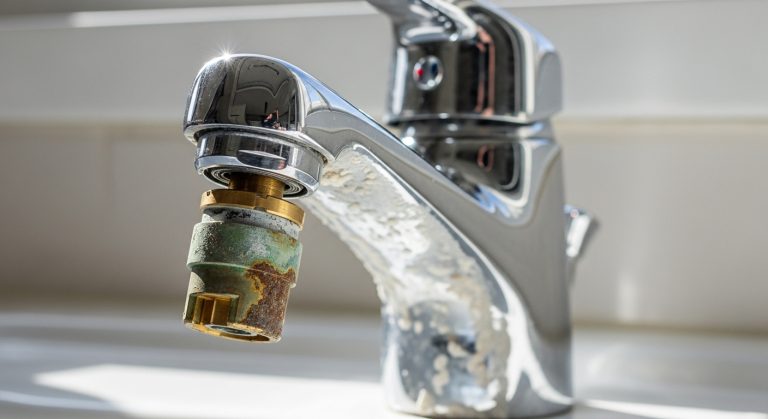
Here’s the nuance. On the outside, brushed nickel disguises limescale so well that many people in hard-water regions choose it for exactly that reason. On the inside, though, mineral buildup can clog the aerator and stiffen the cartridge over time on any faucet regardless of finish. The fix is simple and cheap: unscrew the aerator every few months and soak it in white vinegar, and choose a model with a ceramic-disc cartridge (which resists mineral wear far better than older rubber-washer designs). If hard water is your main concern, it’s worth reading our dedicated guide to the best bathroom faucet for hard water in 2026, which covers the specific cartridge types and coatings that last longest.
How do I make sure a Rona faucet actually fits my sink?
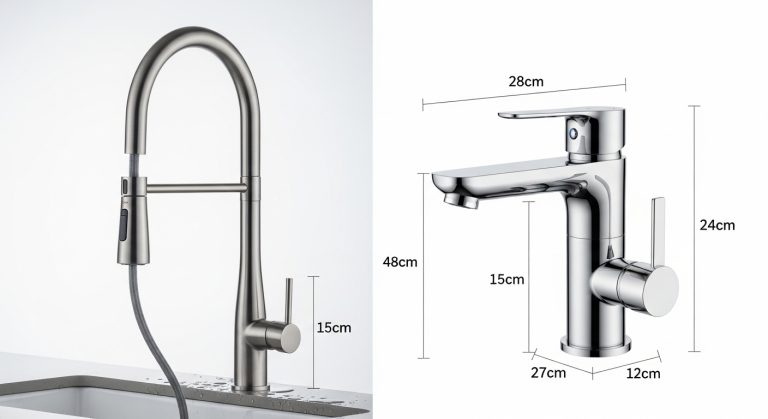
Before you buy any brushed nickel faucet — at Rona or anywhere — match three things: the number of mounting holes in your sink, the hole spacing, and the sink or deck thickness. Getting this wrong is the number-one reason faucets get returned.
Walk through it in order:
- Count your holes. Bathroom sinks come in single-hole, or 3-hole in 4-inch (centerset) or 8-inch (widespread) spacing. Kitchen sinks usually have 1–4 holes. Your new faucet must match — though a single-hole faucet can often cover extra holes with an included deck plate (escutcheon).
- Measure the spacing. For 3-hole bathroom setups, measure center-to-center between the outer holes: ~4 inches means centerset, ~8 inches means widespread. They are not interchangeable.
- Check the spout reach and height. For kitchens especially, make sure the spout reaches near the center of the basin and clears any window behind the sink.
- Confirm deck thickness. Thick stone or concrete counters sometimes need an extended mounting kit; most faucets handle standard countertops fine.
Rona’s product pages usually list the hole configuration and included deck plate, but the listings aren’t always complete — so if you’re unsure, jot down your sink’s measurements and confirm against the manufacturer’s spec sheet, not just the retailer description.
Is it better to buy a brushed nickel faucet at Rona or online?
Buy at Rona (in-store or rona.ca) if you value easy Canadian returns, being able to see the finish in person, and local warranty support; buy elsewhere online only if you find the exact same model materially cheaper. For most people, the convenience and no-hassle return policy of a big Canadian retailer outweighs saving a few dollars.
The real advantage of buying a brushed nickel faucet Rona stocks is that finishes genuinely look different under different lighting, and photos lie. Seeing the actual sheen and warmth in person — or having a return window if the online photo fooled you — is worth a lot. You also get straightforward Canadian shipping, in-store pickup, and no cross-border duty surprises. The one scenario where online wins is when you’ve already decided on a specific model number and can confirm an identical unit (same SKU, same warranty) for meaningfully less. In that case, price it out. Otherwise, Rona is a perfectly sound place to buy.
How do I install a brushed nickel faucet, and can I do it myself?
Most single-hole and centerset brushed nickel faucets are a 30–60 minute DIY job with basic tools — you shut off the water, disconnect the old faucet, drop in the new one, and connect the supply lines. Widespread and complex pull-down kitchen faucets take a bit longer but are still very doable for a confident DIYer.
The basic sequence looks like this:
- Shut off the hot and cold supply valves under the sink and open the faucet to relieve pressure.
- Disconnect the supply lines and loosen the old mounting nuts (a basin wrench makes this far easier).
- Clean the deck, then set the new faucet with its gasket or plumber’s putty per the instructions.
- Tighten the mounting hardware from below, reconnect the supply lines, and hand-tighten plus a quarter-turn.
- Turn the water back on slowly, remove the aerator, and run the faucet to flush debris before checking for leaks.
Two honest cautions: if your existing shutoff valves are old and crusty, replacing them is a good idea while you’re under there, and if you hit a stuck old faucet, don’t force it. Take your time — most “I need a plumber” moments come from rushing a seized nut.
A note on quality, testing, and warranty
When you’re comparing brushed nickel faucets, look past the finish and check for third-party certification. In Canada, reputable faucets carry cUPC/UPC certification and meet CSA and NSF/ANSI 61 and 372 standards (the latter governs low-lead compliance for drinking water). Every major brand Rona sells — Moen, Delta, Kohler, Pfister — meets these, and their brushed nickel finishes are typically PVD-coated and tested for corrosion and abrasion resistance. Pair that with a limited lifetime warranty on finish and function (standard on the big brands) and you have a faucet that should look and work well for a decade or more. Always keep your receipt and model number; warranty claims go much faster when you can cite the exact SKU.
FAQ
Does brushed nickel go out of style?
No. Brushed nickel has been a top-two faucet finish for over 20 years and shows no sign of fading in popularity. Because it’s warm and neutral rather than trendy, it works with traditional, transitional, and modern designs alike — making it one of the safest long-term finish choices you can make.
Is brushed nickel or matte black better for a bathroom?
Brushed nickel is the more forgiving, timeless choice; matte black is bolder and more contemporary but shows water spots and toothpaste splatter more readily. If you want low maintenance and broad appeal, go brushed nickel. If you want a statement look and don’t mind wiping the faucet more often, matte black is a great option — see our guide to picking a matte black set for the details.
Can you mix brushed nickel and chrome in the same bathroom?
You can, but it’s best done deliberately — for example, brushed nickel faucet and towel bars with chrome light fixtures. As a rule, keep the plumbing fixtures (faucet, shower, tub filler) in one consistent finish so the sink area reads as intentional rather than mismatched.
How do I clean a brushed nickel faucet without ruining the finish?
Use warm water, a drop of mild dish soap, and a soft cloth — then dry it. Avoid abrasive scrubbers, ammonia, bleach, and acidic cleaners, which can dull or damage the PVD coating over time. For hard-water spots, wipe with a cloth dampened in a 50/50 white vinegar solution, then rinse and dry. Never soak the exterior in vinegar for long periods.
Do Rona brushed nickel faucets come with a warranty?
Yes, but the length depends on the brand. Name-brand faucets (Moen, Delta, Kohler, Pfister) carry limited lifetime warranties on finish and function, while Rona’s house/value brands typically offer 1–5 years. Always register the product or keep your receipt and model number so a future claim is simple.
What’s the cheapest reliable brushed nickel faucet I can get?
In the CA$90–CA$140 range, a Pfister or entry-level Moen/Delta bathroom faucet gives you a ceramic-disc cartridge and a real warranty — the two things that separate a reliable budget faucet from a throwaway one. Below that, house-brand faucets can work fine for rentals or powder rooms, just check the cartridge type and warranty length first.
Author note: This guide was written by the Faucitta fixtures team, drawing on hands-on installation and testing of dozens of faucets across chrome, brushed nickel, satin nickel, and matte black finishes. Faucitta is a dedicated faucet and bathroom-fixtures specialist — we don’t cover general renovation, only the fixtures we actually work with every day. Prices are approximate, in Canadian dollars, and current as of 2026; always confirm the live price and specification against the retailer and manufacturer before buying.