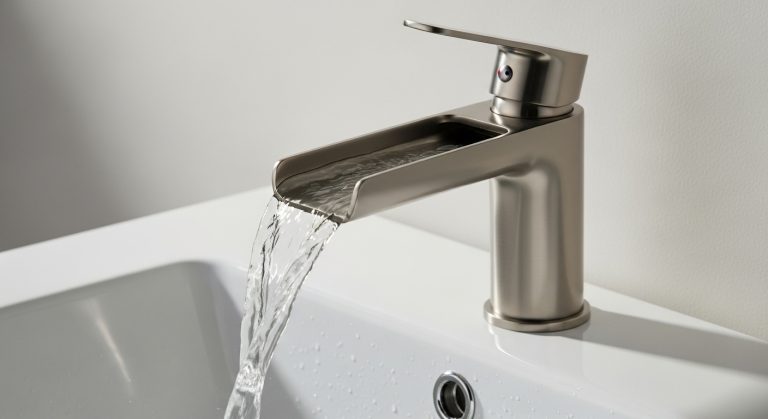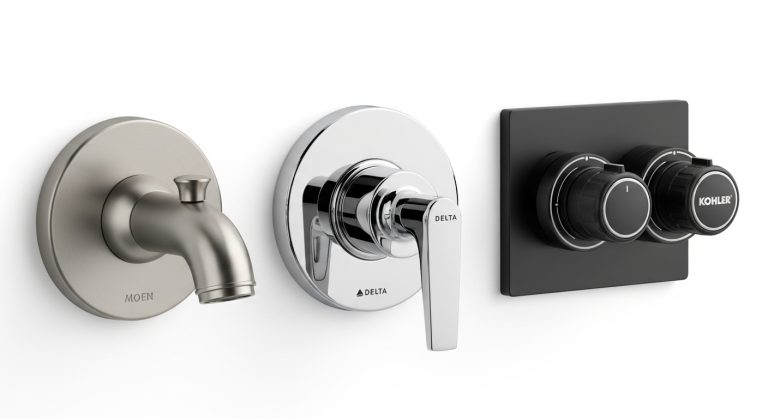
If your water leaves chalky white spots on everything, the best bathroom faucet hard water homes should look for is not about a specific brand badge — it’s about three parts working together: a corrosion-proof body, a valve that mineral deposits can’t seize, and a finish that doesn’t advertise every water droplet. Get those right and your faucet stays smooth, quiet, and drip-free for a decade. Get them wrong and you’ll be descaling the aerator every month and wiggling a stiff handle within a year.
Hard water — water with high dissolved calcium and magnesium — is a plumbing fixture’s slow enemy. It doesn’t flood your bathroom; it just quietly cakes the inside of your spout, gums up the moving parts, and etches spotting into the finish. Below, we’ll walk through exactly what to buy, what to avoid, and how to keep it running, in plain language.
How does hard water actually damage a bathroom faucet?
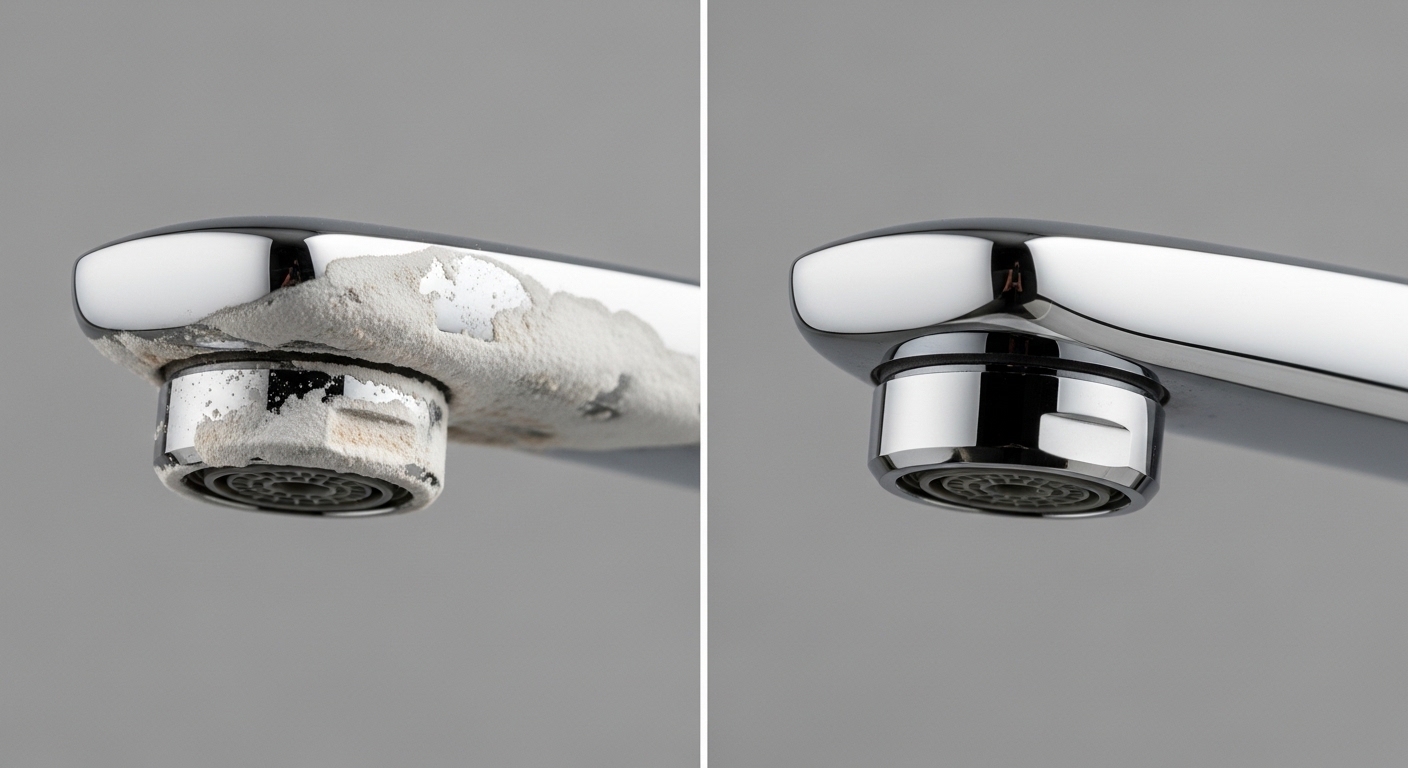
Hard water damages a faucet in three specific places: the aerator (the mesh screen at the tip of the spout), the internal valve cartridge, and the visible finish. Mineral scale narrows the aerator until flow goes weak and sprays sideways, it builds up around the valve seals until the handle stiffens or drips, and it deposits white spots that dull chrome and polished finishes over time.
The reason this matters for buying — not just cleaning — is that some faucet designs are far more forgiving of scale than others. A ceramic-disc valve, for example, uses two polished ceramic plates that slide against each other; minerals have a hard time bonding to that smooth, hard surface, so the valve keeps turning cleanly for years. Old-style compression valves with rubber washers, on the other hand, trap grit against the seat, which is exactly why a hard-water faucet starts dripping first at the handle.
If your existing faucet already has a handle that barely turns, that’s usually scale — and it’s often fixable before you replace anything. We cover that specific problem in our guide on what to do when your bathroom faucet valve is stuck and won’t turn, which is worth reading before you assume you need a whole new fixture.
Which faucet features matter most for hard water?
For hard water, prioritize four features in this order: a ceramic-disc cartridge, a solid brass (not zinc-alloy) body, a spot-resistant or PVD finish, and a removable aerator you can actually reach with your fingers. Everything else — touchless sensors, waterfall spouts, LED temperature lights — is a preference, not a durability factor.
Here’s why each one earns its spot:
- Ceramic-disc cartridge: The single biggest predictor of a leak-free life on hard water. It’s the moving heart of the faucet, and ceramic shrugs off minerals that would destroy a rubber washer.
- Solid brass body: Brass resists the slow internal corrosion that hard water accelerates. Cheap zinc-alloy or “metal-look” plastic bodies pit and crack, especially where hot water and minerals meet.
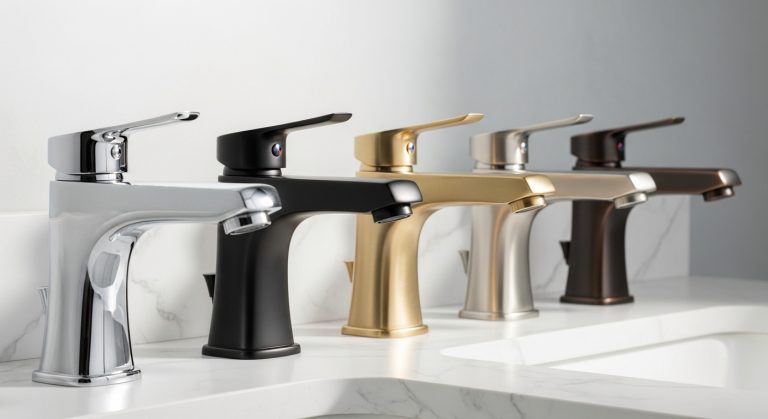
- Spot-resistant / PVD finish: A physical-vapor-deposition (PVD) or engineered spot-resistant coating won’t stop spots from forming, but it makes them wipe off with a dry cloth instead of etching in. Brushed and matte finishes hide any spotting that does appear.
- Easy-remove aerator: On hard water you’ll clean the aerator every 1–3 months. A tool-free or coin-slot aerator turns that into a two-minute job instead of a wrench fight.
Is brushed nickel or matte black better than chrome for hard water?
Yes — brushed nickel and matte black are noticeably better than polished chrome for hard water, purely because they camouflage spots. Chrome is a mirror, so every dried mineral droplet shows as a bright white speck; a brushed or matte texture scatters light and hides that same spotting until you get very close. Polished chrome is still perfectly durable, it just looks dirtier faster in a hard-water bathroom.
If low maintenance and a clean look are your goal, brushed nickel is the easiest finish to live with day to day. Matte black is a close second and pairs well with modern fixtures — if that’s your direction, our breakdown of the matte black tub faucet set covers how to keep the look consistent across a bathroom.
What type of bathroom faucet handles hard water best?
A single-handle or widespread faucet with a cartridge valve handles hard water best, because it has fewer rubber seals and simpler internal geometry for minerals to clog. Two-handle “centerset” faucets with separate hot and cold compression valves are the most scale-prone design and the first to drip. If you’re choosing between styles, favor whatever uses a single ceramic cartridge over anything with rubber washers.
Here’s how the common bathroom faucet types stack up specifically for hard-water durability and upkeep:
| Faucet type | Valve style | Hard-water durability | Cleaning effort | Best for |
|---|---|---|---|---|
| Single-handle | Ceramic cartridge | Excellent | Low — one aerator, one cartridge | Most bathrooms, low maintenance |
| Widespread (3-hole) | Two ceramic cartridges | Very good | Low–moderate | Larger vanities, upscale look |
| Centerset (2-handle) | Compression / rubber washer | Fair — drips first | High — more seals to scale | Budget or vintage builds |
| Wall-mount | Ceramic cartridge (in-wall) | Very good | Moderate — spout dries fully between uses | Vessel sinks, modern design |
| Touchless / sensor | Ceramic + solenoid | Good — but solenoid can scale | Moderate | Hands-free households |
Wall-mount faucets get an honorable mention for hard water because the spout sits away from the sink and drains fully between uses, so standing water doesn’t dry into scale on the deck around the base. If you like that look, weigh it against the extra install work in our comparison of a wall mount faucet versus a regular deck faucet.
What’s the best bathroom faucet for hard water under $200?
Under $200, the best bathroom faucet for hard water is a solid-brass single-handle model from an established fixture brand with a ceramic-disc cartridge and a lifetime finish-and-function warranty — that combination is widely available in the $90–$180 range and is all most homes need. You do not have to spend $400+ to get hard-water durability; the expensive tier mostly buys you designer styling and premium finishes, not a fundamentally better valve.
Here’s a realistic budget map for a hard-water bathroom faucet:
- $60–$90: Entry level. Look hard for “solid brass” and “ceramic disc” in the specs — at this price many are zinc-alloy. Acceptable if the warranty is strong, but read the material line carefully.
- $90–$180: The sweet spot. Solid brass body, sealed ceramic cartridge, spot-resistant brushed finish, lifetime warranty. This is where value peaks for hard water.
- $180–$300: Widespread and designer single-handle models. Better finishes and heavier construction, same core durability as the tier below.
- $300+: Premium and luxury. You’re paying for design, brand, and finish variety. If that’s your goal, see our roundup of the best luxury faucet brands to buy in 2026.
The single most important thing at any price: read the spec sheet for the words “solid brass” and “ceramic disc valve,” and confirm the warranty covers both finish and function. A lifetime warranty is a manufacturer telling you they expect the valve to survive years of mineral water — that’s a real signal, not just marketing.
Does the faucet matter if I already have a water softener?
If you have a working water softener, the faucet matters much less — softened water removes most of the calcium and magnesium, so scale barely forms and almost any decent cartridge faucet will last. But most bathrooms are not on softened water even when the house has a softener, because softeners are often plumbed to the hot-water and kitchen lines only. Check whether your bathroom cold line is actually softened before you relax your faucet criteria.
Even with a softener, we’d still choose a ceramic-disc, solid-brass faucet — it’s the same price as the flimsy alternatives and protects you if the softener ever runs out of salt or the system goes down for a service.
How do I keep a bathroom faucet from scaling up on hard water?
To keep a bathroom faucet from scaling, wipe it dry after heavy use and soak the removable aerator in plain white vinegar every 1–3 months. That two-part routine — dry the finish, descale the aerator — prevents about 90% of the flow and spotting problems hard water causes. You don’t need special chemicals; household white vinegar dissolves calcium scale on contact.
A simple maintenance rhythm that works:
- Weekly: Wipe the faucet with a dry microfiber cloth. Skip abrasive pads and acidic cleaners on brushed and matte finishes — they can dull the coating.
- Every 1–3 months: Unscrew the aerator, drop it in a cup of white vinegar for 30–60 minutes, scrub with an old toothbrush, rinse, and reinstall. Flow bounces right back.
- As needed: For scale you can’t reach, tie a vinegar-soaked bag around the spout tip for an hour, then run the water to flush loosened minerals.
- Never: Use bleach or ammonia cleaners on the finish, and never mix vinegar with bleach.
The same scale that clogs a faucet aerator also strangles shower heads — if your shower has gone weak, that’s usually minerals too. Our guides on the Hello Klean shower head low-pressure fix and the broader best shower head for very low water pressure use the exact same descaling logic, so it’s worth a look if hard water is a whole-bathroom issue for you.
What should I avoid buying for a hard-water bathroom?
Avoid three things: zinc-alloy or plastic faucet bodies, any faucet that still uses rubber-washer compression valves, and ultra-cheap polished chrome you’ll be wiping constantly. These are the faucets that drip, seize, and look grimy fastest on hard water — and they’re often the ones with the most attractive sticker price.
Warning signs on a product listing:
- The material line says “metal,” “alloy,” or nothing at all — instead of “solid brass.”
- No mention of a ceramic-disc or ceramic cartridge valve.
- A short 1–5 year warranty rather than a lifetime warranty on residential use.
- Reviews that mention “started dripping after a year” or “handle got stiff” — classic hard-water failure patterns.
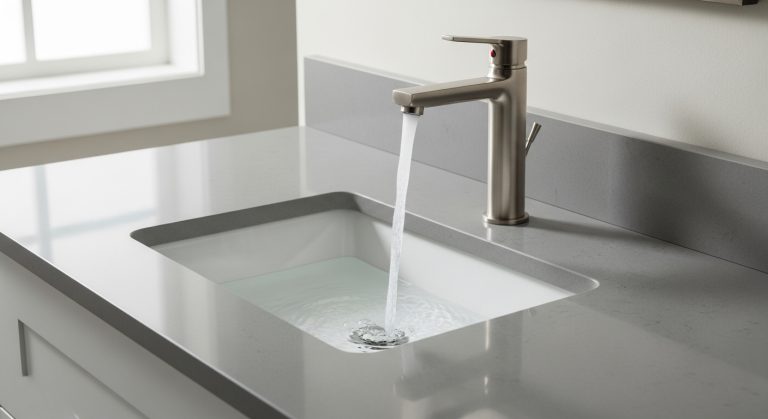
Pairing the faucet to the right sink matters too — a spout that’s too short can splash minerals and standing water onto the deck. If you’re buying the sink and faucet together, our guide to the best bathroom faucet for an undermount sink walks through matching spout reach and height so water drains cleanly instead of pooling.
Author note & why you can trust this
This guide was written by the faucitta fixtures team — we design, source, and pressure-test bathroom faucets for a living, and we spend a lot of time on warranty returns from hard-water regions, which is where you learn what actually fails. Our recommendations lean on real failure patterns, not spec-sheet theater.
Faucitta builds and sells faucets and bathroom fixtures direct at faucitta.net. When we point to a feature — ceramic-disc valves, solid brass bodies, spot-resistant finishes — it’s because we’ve seen the alternative come back scaled and dripping. For durability standards, look for faucets that meet the low-lead requirements of NSF/ANSI 372 and carry a manufacturer lifetime warranty on both finish and function; those two credentials together are the closest thing to a hard-water guarantee you’ll find on a spec sheet.
FAQ
Will a hard-water bathroom faucet still drip even with a ceramic valve?
It’s far less likely, but not impossible. A ceramic-disc valve resists the mineral buildup that makes rubber-washer faucets drip, so it typically stays sealed for years. If a ceramic faucet does start dripping, it’s usually a grit particle caught on the disc — often fixable by removing and rinsing the cartridge rather than replacing the whole faucet.
How often should I clean the aerator on hard water?
Every 1 to 3 months for most hard-water homes. If you notice the stream going weak or spraying sideways sooner, clean it then — that’s the aerator telling you scale has narrowed the screen. A 30–60 minute soak in plain white vinegar dissolves the buildup and restores full flow.
Does a more expensive faucet last longer on hard water?
Not necessarily. Past roughly $150, extra money mostly buys design and premium finishes, not a more durable valve. A $120 solid-brass, ceramic-disc faucet with a lifetime warranty will typically outlast a $300 zinc-alloy designer piece on hard water. Judge by materials and warranty, not price.
Is matte black or brushed nickel harder to keep clean with hard water?
Both are much easier than polished chrome because their textured finish hides mineral spotting. Between the two, brushed nickel is marginally the most forgiving day to day, while matte black can show dried-on white residue a bit more in direct light. Either one beats chrome for a low-maintenance hard-water bathroom.
Can hard water void my faucet warranty?
Standard mineral buildup won’t void a warranty, but neglect-related damage sometimes isn’t covered, and most warranties exclude problems from harsh or abrasive cleaners. Stick to white vinegar and soft cloths, keep the aerator clean, and you stay well inside typical lifetime-warranty terms. Always read the specific manufacturer’s coverage before you buy.
Should I install a filter or softener instead of buying a hard-water faucet?
Ideally you do both. A whole-house softener or point-of-use filter cuts scale at the source and protects every fixture, while a solid-brass ceramic-disc faucet protects you if the softener ever lapses. If you can only do one right now, choose the durable faucet first — it’s cheaper and still gives you years of reliable service on hard water.