If you’ve searched for a kitchen faucet unique enough to make your sink the centerpiece of the room, you already know the frustration: most “designer” faucets are just a standard gooseneck in a trendy color. Genuinely unique means the shape, finish, and function all do something ordinary faucets don’t — and, critically, it still has to work every single day for the next 15 years. Below I’ll walk you through exactly what separates a distinctive faucet from a gimmick, which styles actually get noticed, and how to match one to your sink, your water, and your budget without regretting it in six months.
What actually makes a kitchen faucet “unique” versus just expensive?
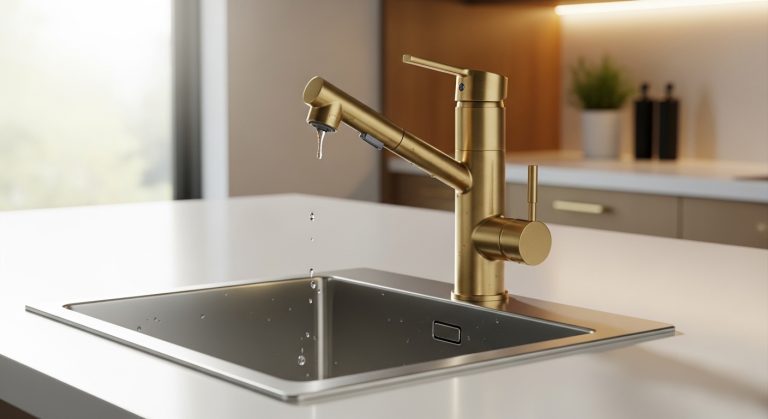
A kitchen faucet is unique when it differs in three specific ways: silhouette, finish, and function — not just price. A $600 faucet in polished chrome with a plain arch is expensive, not unique. A mid-priced articulating faucet in warm brushed gold that folds down out of your window’s way is unique.
Here’s the honest breakdown of where “unique” really comes from:
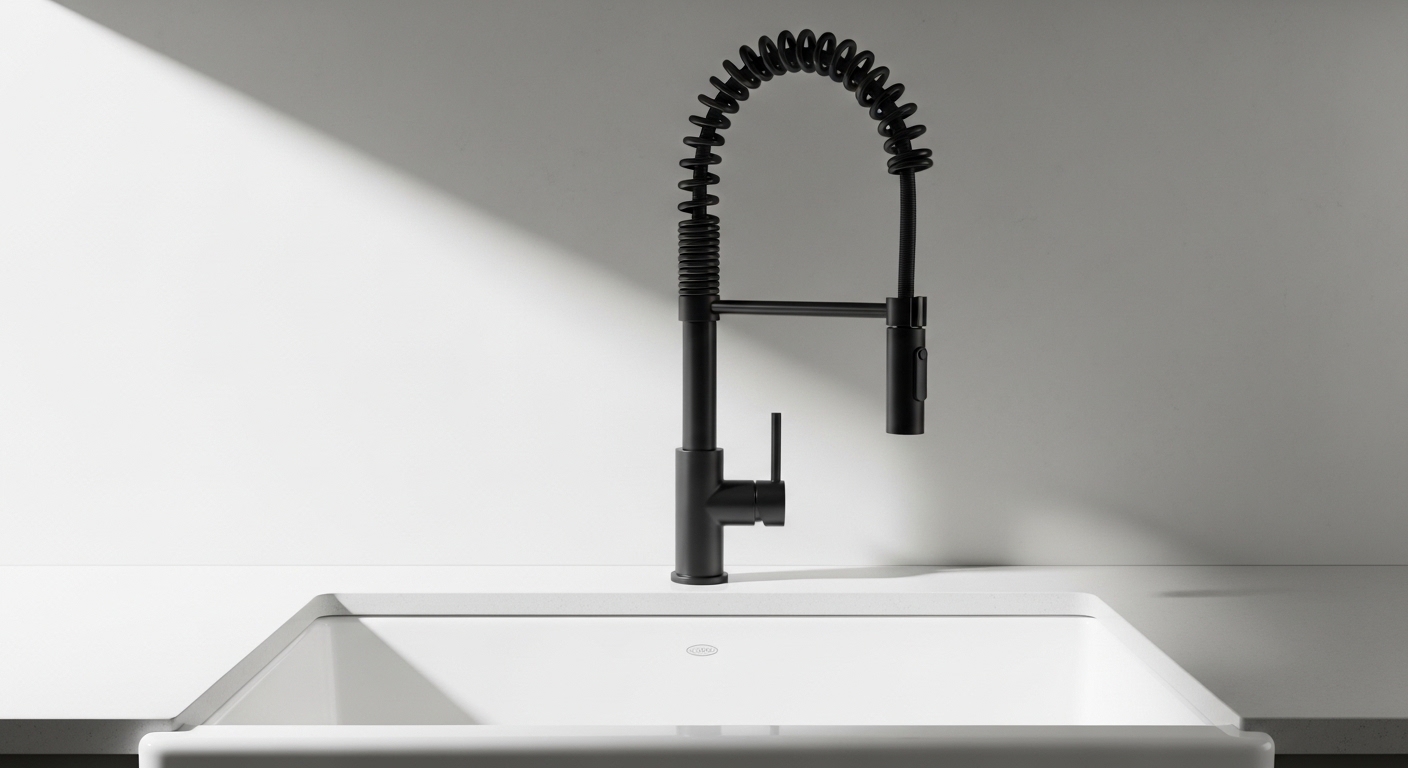
- Silhouette — Industrial spring/coil arms, articulating pro-style joints, squared-off “waterfall” spouts, bridge faucets with exposed cross handles, and ultra-tall commercial goosenecks all read as distinctive from across the room.
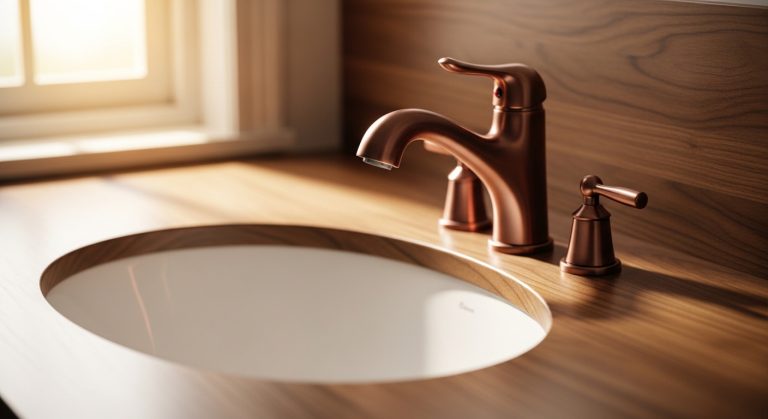
- Finish — Matte black, brushed/champagne gold, gunmetal, and two-tone combinations (black body + brass handle) are the finishes people actually notice. Chrome and standard brushed nickel are safe, not unique.
- Function — A hidden pull-down spray inside a sleek spout, touch-to-activate, voice control, or a magnetic dock that snaps the sprayer home perfectly every time adds “how did they do that?” appeal.
The trap to avoid: buying a unique look that hides a cheap cartridge. A striking faucet that drips in a year isn’t a design win. That’s why the real answer to “what makes it unique and worth it” always includes the valve and the warranty — covered further down.
Which unique faucet styles get noticed the most?
The most head-turning styles right now are articulating (pro/industrial) faucets, waterfall/squared spouts, and bridge faucets. Each fits a different kitchen personality.
Articulating faucets — the ones with a spring or a jointed arm like a chef’s station — are the single most “wow” option, especially in matte black or brass. Waterfall and squared-spout designs lean minimalist-modern and pair beautifully with quartz counters. Bridge faucets, with their exposed horizontal pipe and cross handles, bring vintage-farmhouse or Parisian charm and are unmistakably not standard. If your goal is that a guest immediately comments on your sink, an articulating or two-tone bridge faucet does it fastest.
Which unique kitchen faucet style should I choose for my kitchen?
Match the faucet to your kitchen’s era and your cooking habits: pick an articulating pro faucet for serious cooks, a waterfall/squared spout for modern minimalist kitchens, a bridge faucet for farmhouse/transitional spaces, and a touchless faucet for busy or messy-hands households. Here’s how the main styles compare.
| Style | Best For | Signature Look | Typical Price | Watch-Out |
|---|---|---|---|---|
| Articulating / Pro (spring or jointed) | Avid cooks, big pots, deep sinks | Bold, restaurant-kitchen | $180–$500 | Tall — check window clearance |
| Waterfall / Squared spout | Modern, minimalist kitchens | Sleek, architectural | $150–$400 | Flat streams splash in shallow sinks |
| Bridge (exposed pipe, cross handles) | Farmhouse, vintage, transitional | Charming, classic | $250–$700 | Needs 2–3 mounting holes |
| Touchless / Touch-activate | Busy families, raw-meat prep | Clean, tech-forward | $200–$500 | Needs batteries/power; sensor upkeep |
| Two-tone / mixed finish | Anyone wanting a statement | Custom, high-end | $200–$600 | Harder to match hardware |
One practical rule: the deeper and wider your sink, the taller and further-reaching your spout can be without splashing. Before you fall for a dramatic tall gooseneck, measure. If you’re unsure how far your spout should extend over the basin, our guide on what an 11-inch spout reach kitchen faucet means walks through sizing so a bold faucet doesn’t overshoot a small sink.
Do unique finishes like matte black or gold hold up over time?
Yes — if it’s a quality PVD (physical vapor deposition) finish, matte black and brushed gold hold up as well as chrome; cheaper painted or electroplated versions chip and fade. Finish durability is where “unique” faucets most often go wrong on the budget end.
PVD-coated finishes bond the color at a molecular level and resist scratching, tarnishing, and corrosion — they’re the industry standard for premium matte black, gold, and gunmetal. Painted finishes (common under ~$120) can wear at the handle and spray-head contact points within a year or two. Ask the spec sheet directly: look for “PVD” and a stated finish warranty. Matte black also shows water spots and fingerprints more than brushed finishes, so if you have hard water, a brushed or satin variant hides mineral spotting far better. Speaking of which — if your water is hard, finish choice matters even more; our roundup of the best faucets for hard water explains why spotting and mineral buildup hit some finishes worse than others.
Are touchless and smart kitchen faucets worth the extra money?
Touchless faucets are worth it if you cook with raw meat, have kids, or hate cleaning fingerprints off a statement finish — otherwise the premium (usually $80–$150 over the same faucet’s manual version) is a convenience upgrade, not a necessity. The tech is genuinely useful, but only for the right household.
Where touchless earns its keep: waving the back of your hand to start water flow when your fingers are covered in raw chicken or bread dough is a real hygiene win, and it protects a matte-black or gold finish from greasy fingerprints. Where it disappoints: the sensor needs occasional cleaning, most models run on batteries (6 AA’s or an optional AC adapter) that eventually die, and a poorly tuned sensor can false-trigger. If you want the tech, buy a well-reviewed model with adjustable sensitivity and a manual handle override. For a deeper look at which models perform, see our breakdown of the best touchless kitchen faucet reviews — it’s the fastest way to separate reliable sensors from frustrating ones.
What features make a unique faucet genuinely more useful, not just prettier?
The features that add real daily value are a pull-down (not pull-out) spray with a magnetic dock, a dual-function spray/stream toggle, a 360° swivel spout, and a docking system that won’t sag over time. Those turn a good-looking faucet into one you’re glad you bought.
- Magnetic docking — snaps the sprayer back flush every time; weaker spring-clip docks let the head droop after a year.
- Pull-down with dual spray — one button switches between a soft aerated stream and a powerful rinse; ideal for deep pots.
- 360° swivel — essential if you have a double-basin sink or an island where you work from two sides.
- Ceramic-disc cartridge — the unsung hero; it’s what prevents drips and gives you smooth, precise handle control for the life of the faucet.
- Optional soap dispenser — a coordinated dispenser completes the built-in look. If yours ever clogs, our fix for a kitchen faucet soap dispenser not working covers it.
What’s a realistic budget for a unique kitchen faucet in 2026?
Budget $180–$300 for a genuinely unique faucet with a PVD finish and ceramic-disc valve; $300–$600 gets you designer styles (articulating, bridge, two-tone) with lifetime warranties; under $150 you’re gambling on finish and cartridge quality. Price tracks the parts you can’t see as much as the look.
Here’s the honest value map:
- Under $150: You can find a unique look, but check for a real ceramic cartridge and a stated finish warranty. Many at this tier use painted finishes.
- $180–$300: The sweet spot. Distinctive finishes, magnetic docking, solid brass or quality zinc bodies, ceramic-disc valves, and often a lifetime limited warranty.
- $300–$600: True statement pieces — articulating pro faucets, bridge designs, two-tone finishes, and touchless tech, with the best warranties and heaviest-gauge construction.
- $600+: Luxury and designer brands; you’re paying for name, materials, and craftsmanship. If that’s your lane, our guide to the best luxury faucet brands is a good starting point.
The bigger point: a unique faucet is a long-term purchase you’ll touch dozens of times a day. Spending in the $180–$300 range on a properly built statement faucet almost always beats a $120 lookalike that drips or fades. If you’re weighing which manufacturers back their faucets best, our comparison of the best kitchen faucet brands lays out who actually honors their warranties.
Will a unique faucet fit my existing sink and countertop?
Most unique kitchen faucets fit a standard single-hole or 3-hole sink, but bridge faucets and some designer models require specific hole counts and spacing — always check your deck holes and counter thickness before buying. This is the step people skip and regret.
Count your existing holes first. A single-hole faucet needs one; a bridge faucet typically needs two or three at set spacing (often 8 inches on center); a faucet with a separate side sprayer or soap dispenser needs extra holes. If you’re downsizing hole count, a deck plate (escutcheon) can cover the extras — many statement faucets include one. Also check your counter thickness and the space under the sink for the mounting nut and supply lines. A tall articulating faucet on a shallow window ledge is a classic mistake, so measure clearance to the cabinet above.
How do I keep a unique-finish faucet looking new?
Wipe it dry after use with a soft cloth, clean only with mild soap and water, and never use abrasive pads or acidic/ammonia cleaners — that alone keeps matte black, gold, and gunmetal finishes looking new for years. Statement finishes reward a little care.
Hard water is the main enemy of a dramatic finish because mineral spotting shows most on dark and glossy surfaces. A quick dry-off after washing dishes prevents 90% of spotting. For existing buildup, a 50/50 white vinegar and water solution on a soft cloth (not on the sprayer’s PVD for prolonged periods) lifts minerals without scratching. Avoid anything labeled “abrasive,” “bleach,” or “ammonia” — those strip finishes and void many warranties. This everyday care matters more on unique finishes than on plain chrome, which is precisely the trade-off for that standout look.
Author note & why you can trust this
Written by the faucitta fixtures team. We’re a specialty faucet and bathroom-fixtures brand at faucitta.net, and we spend our days sizing spouts, testing cartridges, and helping customers match faucets to real sinks and real water. The guidance here reflects hands-on evaluation of finish durability (PVD vs. painted), valve longevity, and docking mechanisms across the styles we sell and service.
On standards and warranty: When we call a faucet worth buying, we look for lead-free compliance to NSF/ANSI 61 and 372, a flow rate that meets or beats the U.S. EPA WaterSense target of 1.8 GPM or lower where efficiency matters, ceramic-disc cartridges rated for hundreds of thousands of cycles, and a manufacturer-backed limited lifetime warranty on both finish and function. A unique faucet without those isn’t a bargain — it’s a future service call. Always register your faucet and keep the receipt; warranty claims almost always require proof of purchase.
FAQ
What is the most unique kitchen faucet style in 2026?
The articulating “pro” faucet — with a spring or jointed arm like a commercial chef’s station — is the most distinctive style, especially in matte black or brushed gold. Bridge faucets and two-tone (mixed-finish) designs are close runners-up for statement appeal.
Is matte black a good color for a kitchen faucet?
Yes, if it’s a PVD finish and you’re willing to wipe it dry occasionally. Matte black is dramatic and hides scratches, but shows water spots and fingerprints more than brushed finishes — so in hard-water homes, a brushed black or gunmetal variant is easier to keep clean.
Do unique or designer faucets last as long as standard ones?
They last just as long when they use the same core hardware — a ceramic-disc cartridge and a PVD finish. The “unique” part is cosmetic silhouette and finish; longevity comes from the valve and coating, which is why you should always check those specs regardless of looks.
How much should I spend on a unique kitchen faucet?
$180–$300 is the value sweet spot for a distinctive finish, magnetic docking, and a ceramic valve with a lifetime warranty. Statement styles like articulating or bridge faucets run $300–$600. Below $150, verify the cartridge and finish warranty before buying.
Can I install a unique kitchen faucet myself?
Most single-hole and 3-hole faucets are DIY-friendly in about an hour with a basin wrench — shut off the supply valves, disconnect the old faucet, mount the new one, and connect the supply lines. Bridge faucets and touchless models with electronics are trickier; if you’re not comfortable under the sink, hire a plumber.
Do unique faucets come in touchless versions?
Many do. Touchless technology is now available across articulating, high-arc, and even some bridge-inspired designs, so you rarely have to choose between a standout look and hands-free convenience — just confirm the model has adjustable sensor sensitivity and a manual handle override.