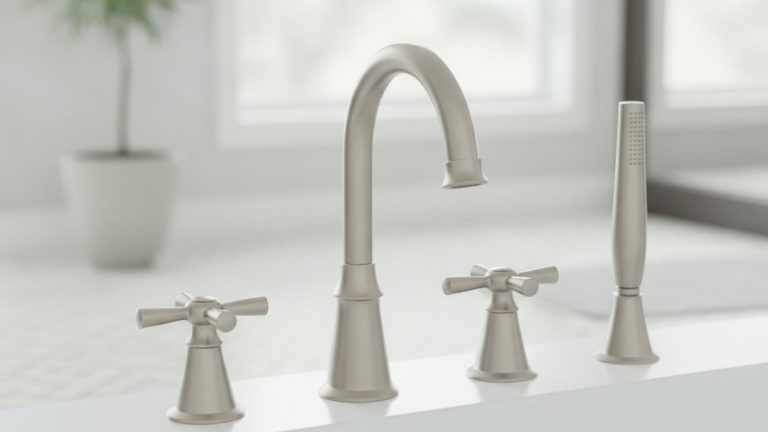
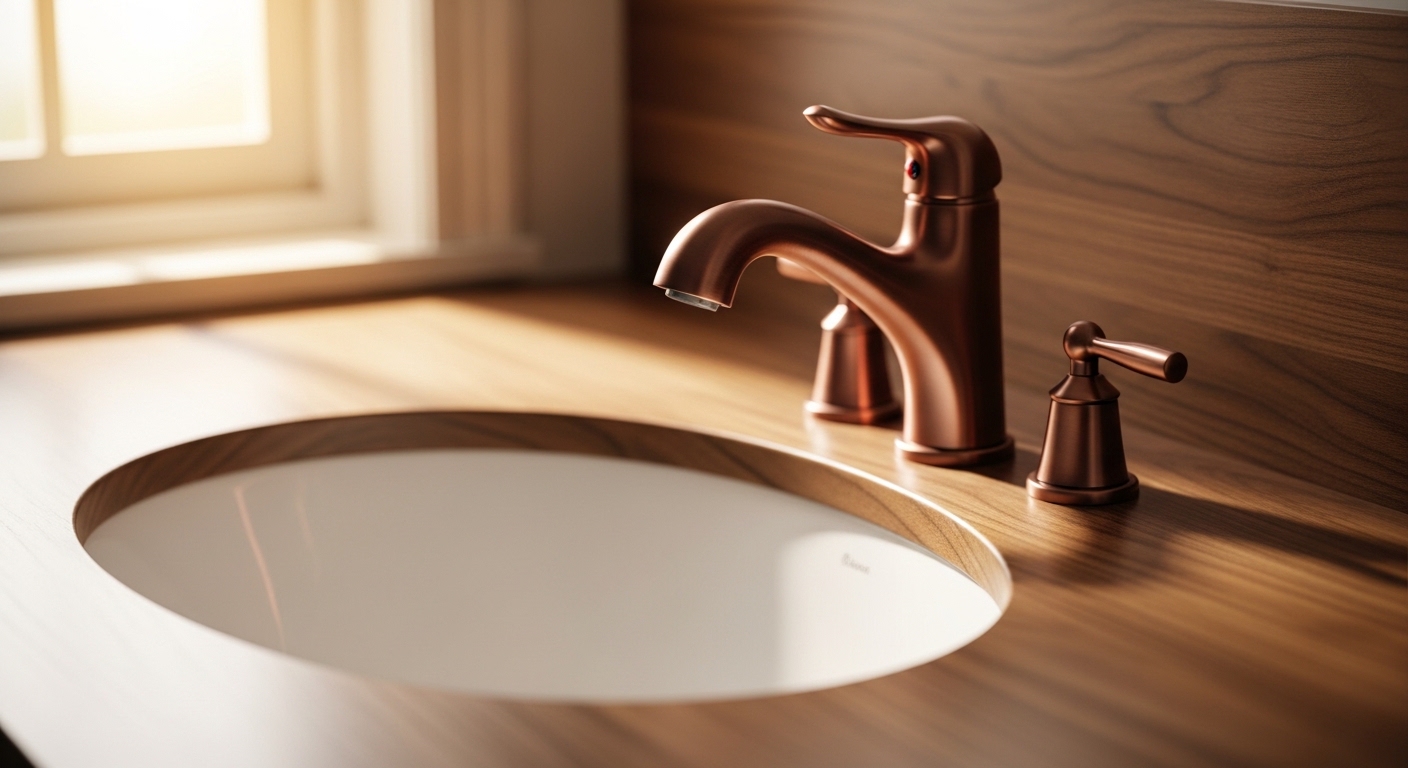
A copper faucet set is a coordinated group of fixtures — usually a sink faucet plus matching handles, drain, and sometimes a tub filler or shower trim — all finished in copper so your bathroom or kitchen reads as one deliberate design instead of a mismatched grab-bag. The appeal is obvious the second you see one: copper is warm, slightly pink-gold, and it makes a white sink or a dark stone vanity look expensive. But copper is also the one finish that behaves differently from chrome or nickel, so before you buy, it helps to know exactly what you’re signing up for.
I’ve spec’d and installed hundreds of faucet sets, and copper is the finish people fall in love with fastest — and return most often when they didn’t understand it. This guide walks through the real questions buyers actually ask: is it worth the money, does it tarnish, solid copper vs. copper-plated, how to match it with your sink, and what to budget. By the end you’ll know whether a copper set fits your life or whether you want the look without the upkeep.
Is a copper faucet set actually worth it, or is it just a trend?
It’s worth it if you want warmth and character and you pick the right type of copper finish for how much maintenance you’ll tolerate. Copper isn’t a passing trend — it’s one of the oldest plumbing metals there is — but the finish you choose determines whether you love it in year three or resent it.
Here’s the honest breakdown. Copper comes in two broad camps: living finishes that oxidize and shift color over time (this is the true, uncoated look many people romanticize), and sealed or PVD finishes that lock the color in place so it looks the same on day 1,000 as it did on day one. A living copper set develops a patina — deeper browns, hints of green in crevices — which some buyers adore and others hate. A sealed copper set stays consistent but loses that “it’s alive” quality. Neither is wrong; they’re just different commitments.
Where copper genuinely earns its price is impact per dollar in a small room. A powder room or a single vanity is a low-square-footage, high-visibility space, so a $250 copper faucet set changes the entire feel of the room more than $250 spent almost anywhere else. If you’re chasing a boutique-hotel or farmhouse-warm vibe, copper delivers it faster than any other finish. If you want something you install and never think about again, brushed nickel or matte black is the lower-drama choice — and if a coordinated dark set is more your speed, our guide on whether a matte black tub faucet set is worth buying covers that trade-off in depth.
Does a copper faucet tarnish, turn green, or need constant polishing?
It depends entirely on the finish. A lacquered or PVD copper faucet will not tarnish or turn green and needs nothing but a wipe with a soft cloth. A raw “living finish” copper faucet will darken and patina, and if you want to keep it bright and shiny you’ll be polishing it every week or two.
The green you’re picturing — verdigris — only forms on bare copper exposed to moisture and air over long periods, and even then mostly in crevices, not across the whole spout. Most modern copper bathroom faucets are either sealed with a clear protective lacquer or made with a PVD (physical vapor deposition) coating, which is a bonded, extremely hard color layer that resists tarnish, scratches, and corrosion. PVD is the same technology used on premium watch cases, and it’s the reason a good copper faucet can look identical for a decade.
So the real question isn’t “does copper tarnish” — it’s “which copper did I buy?” Here’s how to read a product listing:
- “Antique copper” / “oil-rubbed copper” — usually a pre-aged, darker tone that’s designed to hide fingerprints and water spots. Very forgiving, great for busy bathrooms.
- “Polished copper” / “bright copper” — shows the most shine but also the most water spots; needs the most wiping.
- “PVD copper” / “copper (PVD)” — sealed, color-stable, low maintenance. My default recommendation for most buyers.
- “Living finish” / “uncoated” / “raw copper” — will patina and change. Only buy this if the aging is exactly what you want.
One more practical note for anyone in a hard-water area: mineral-heavy water leaves chalky spots on any finish, copper included, and it can dull a bright copper faucet faster. If your water is hard, lean toward a matte or antique copper and read our breakdown of the best bathroom faucet for hard water — the cartridge and finish advice there applies directly to copper sets.
What’s the difference between solid copper and copper-plated, and does it matter?
For a faucet, “solid copper” almost never means a spout carved from pure copper — it means the faucet body is solid brass (a copper alloy) with a copper finish on top, versus a cheap zinc-alloy body with a thin copper-colored plating. This distinction matters more than the color itself, because it’s the single best predictor of whether the faucet lasts 15 years or starts leaking in three.
Here’s why. Brass is dense, corrosion-resistant, and threads hold up under repeated tightening. Zinc alloy (often called “zamak”) is lighter, cheaper, and much more prone to cracking, pitting, and stripped threads — especially where it meets water constantly. A copper finish can go over either one, so two faucets can look identical on a website and be built completely differently underneath.
| Feature | Solid Brass Body + Copper Finish | Zinc/Zamak Body + Copper Plating |
|---|---|---|
| Typical price (bathroom set) | $150–$600 | $40–$120 |
| Weight in hand | Noticeably heavy | Light, sometimes hollow-feeling |
| Corrosion resistance | Excellent | Poor to fair |
| Realistic lifespan | 15–25+ years | 3–8 years |
| Finish durability | High (esp. PVD) | Plating can flake or bubble |
| Cartridge quality | Usually ceramic disc | Often rubber/lower grade |
How do you tell them apart when shopping online? Look for the words “solid brass construction” in the spec sheet, check the shipping weight (a real brass bathroom faucet body usually weighs 2–4 lbs), and confirm the cartridge is described as “ceramic disc.” If a listing is vague about materials and the price seems too good, assume zinc. Copper’s whole point is longevity and warmth — buying a zinc set with a copper coating gets you neither.
Is copper naturally antimicrobial — is that a real benefit?
Yes, this one is real, with a caveat. Bare copper and copper alloys have genuine antimicrobial properties — the EPA has registered certain copper alloys for their ability to kill a high percentage of bacteria on contact. That’s a legitimate reason people like copper on high-touch fixtures. The caveat: a lacquered or PVD-coated copper faucet has a sealant layer over the metal, which reduces that direct-contact effect. So if antimicrobial performance is your top priority, an uncoated living-finish copper handle is the version that actually delivers it. For most people it’s a nice bonus, not the deciding factor.
How do I match a copper faucet set with my sink and other bathroom finishes?
The simplest reliable formula: pair copper with a neutral sink (white, cream, black, or natural stone) and keep your other metals either all-copper or one intentional contrast metal — don’t scatter three warm metals around one room. Copper is a statement finish, so it looks best when the room lets it be the star.
A few combinations that consistently work:
- Copper + white porcelain sink — the classic, clean, and impossible to get wrong. The warmth pops against the white.
- Copper + matte black hardware — modern and high-contrast; use black for towel bars and mirror frames, copper for the faucet.
- Copper + natural wood vanity — the farmhouse/organic look; walnut and oak both flatter copper.
- Copper + soft green or navy walls — copper reads as a warm accent against cool paint.
What to avoid: mixing polished copper, brushed gold, and brass in the same small space usually looks accidental rather than curated. If you want to mix warm metals on purpose, keep the tones deliberately different (a dark antique copper against a bright brass) and repeat each metal at least twice so it reads as a choice. Mixing metals well is genuinely an art — we broke down the rules in detail in our piece on whether a brass faucet with a silver sink actually looks good, and the same principles map directly onto copper.
One coordination detail buyers forget: the drain and pop-up assembly. A gorgeous copper faucet loses half its impact sitting above a shiny chrome drain. Buy a faucet set that includes a matching copper drain, or budget separately for one. Same goes for the supply lines’ escutcheon and any visible P-trap in a pedestal or console sink.
What should I budget for a good copper faucet set in 2026?
Plan on $150–$300 for a solid mid-range copper bathroom faucet set and $300–$600+ for a designer or full-coordinated set with matching drain, handles, and sometimes a tub filler. Below about $120 you’re almost always looking at zinc with plating, and above $600 you’re paying for brand cachet, hand-hammered artisan bodies, or a genuine living-finish sourced from a specialty maker.
Where your money actually goes at each tier:
| Budget | What you get | Best for |
|---|---|---|
| Under $120 | Zinc body, thin plating, basic cartridge | Rentals, short-term, staging only |
| $150–$300 | Solid brass body, PVD or lacquered copper, ceramic cartridge | Most homeowners — the sweet spot |
| $300–$600 | Full coordinated set, premium finish options, better warranty | Primary baths, design-forward remodels |
| $600+ | Artisan/hammered copper, true living finishes, luxury brands | Statement rooms, farmhouse-luxe builds |
My honest advice: the $150–$300 band is where copper stops being a gamble. You get the solid-brass longevity, a finish that won’t flake, and a ceramic disc cartridge that won’t drip in two years — which is exactly the combination copper needs to justify itself. If you’re building a whole warm-metal look across bathrooms, it’s also worth reading which makers do this finish well before committing, and our roundup of the best luxury faucet brands to buy in 2026 flags the ones with the most reliable copper and PVD programs.
How do I install and care for a copper faucet set so it lasts?
Installation is the same as any faucet — the copper doesn’t change the plumbing — but the care is what makes copper last and look right. Here’s the short version, then the details.
- Confirm your hole configuration first. Bathroom sinks come as single-hole, centerset (4″ spread), or widespread (8″ spread). Buy the copper set that matches your sink’s drilling, or you’ll be looking at a deck plate or a new sink.
- Shut off the supply valves under the sink and open the faucet to release pressure before you disconnect anything.
- Use plumber’s tape on threaded connections and hand-tighten plus a quarter turn — over-tightening is how you crack fittings, even brass ones.
- Wipe the finish dry after installation and after every heavy use for the first few weeks, especially with bright copper.
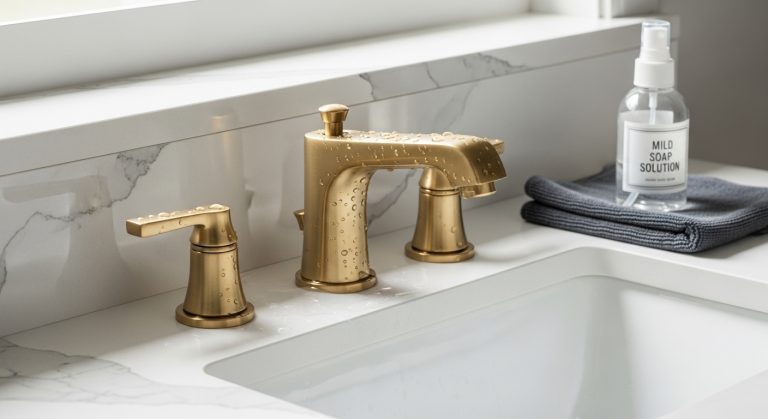
- Clean with only mild soap and water and a soft cloth. Never use abrasive pads, vinegar, or acidic/ammonia cleaners on copper — they strip lacquer and eat the finish. This is the single most common way people ruin a copper faucet.
For a sealed or PVD copper set, that’s genuinely all the maintenance there is. For a living-finish copper set, decide up front whether you’re letting it patina (do nothing) or keeping it bright (occasional copper polish, then a wax coat to slow re-tarnishing). Don’t switch strategies halfway — a half-polished, half-patinated faucet looks worse than either extreme.
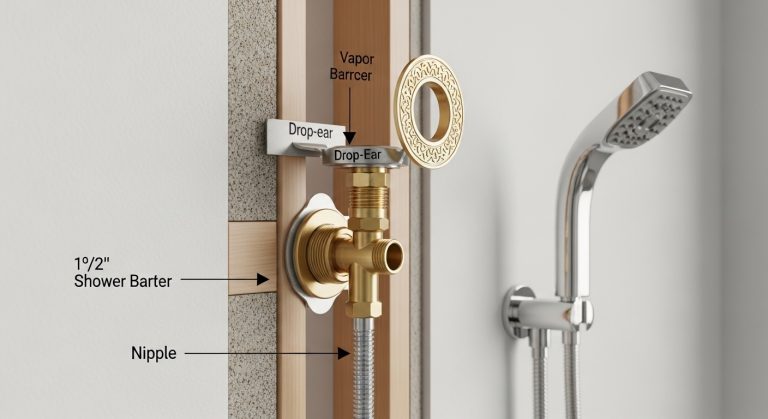
If your set includes tub or shower components, the same rules apply, but the rough-in valve behind the wall is a separate, more involved job. If you’re taking that on, watch a real walkthrough before you cut anything — our shower valve installation video guide shows the steps that trip up first-timers.
Author note & why you can trust this
This guide was written by the faucitta fixtures team — we’re a dedicated faucet and bathroom-fixtures brand, and our product specialists spend their days spec’ing, pressure-testing, and installing the exact fixtures we write about. Every finish claim here comes from hands-on experience with copper sets across real bathrooms, not marketing copy. Look for faucets that meet recognized standards like NSF/ANSI 61 (drinking-water safety) and cUPC/UPC certification, and favor sets backed by a manufacturer warranty on both the finish and the cartridge — a lifetime finish-and-function warranty is the industry sign that a maker actually trusts their copper.
FAQ
Do copper faucets stay antimicrobial after they’re sealed?
Partially. Uncoated (living-finish) copper keeps its full contact-kill antimicrobial effect, which is EPA-recognized for registered copper alloys. A lacquered or PVD-sealed copper faucet has a protective layer over the metal, which reduces that direct antimicrobial action. If the antimicrobial benefit is your main reason for buying copper, choose an uncoated handle or high-touch component.
Will a copper faucet set match my existing brushed nickel or chrome fixtures?
Not naturally — copper is a warm metal and nickel/chrome are cool, so mixing them can look accidental unless it’s clearly intentional. If you’re not ready to replace everything, treat copper as a deliberate contrast: repeat it in at least one other spot (a mirror frame, a towel ring) so it reads as a design choice rather than a leftover.
Is a copper faucet good for hard water?
Copper handles hard water as well as any finish, but bright polished copper shows mineral spots more visibly. In hard-water homes, an antique or matte copper finish hides spotting better, and a quality ceramic disc cartridge resists mineral buildup that causes drips. Regular wiping and, ideally, a whole-home softener keep any copper set looking its best.
How long does a copper faucet set last?
A solid-brass-bodied copper faucet with a PVD or lacquered finish and a ceramic cartridge realistically lasts 15–25 years or more with basic care. A zinc-alloy set with copper plating often starts failing — flaking finish, dripping, stripped threads — within 3–8 years. Construction material matters far more than the finish color for lifespan.
Can I put a copper faucet on any bathroom sink?
Only if the faucet’s hole configuration matches your sink’s drilling. Single-hole faucets need one hole, centerset sets fit a 4-inch three-hole layout, and widespread sets need an 8-inch spread. Check your sink before buying, and use a deck plate if you need to cover extra holes — the finish itself works on porcelain, stone, glass, and metal sinks alike.