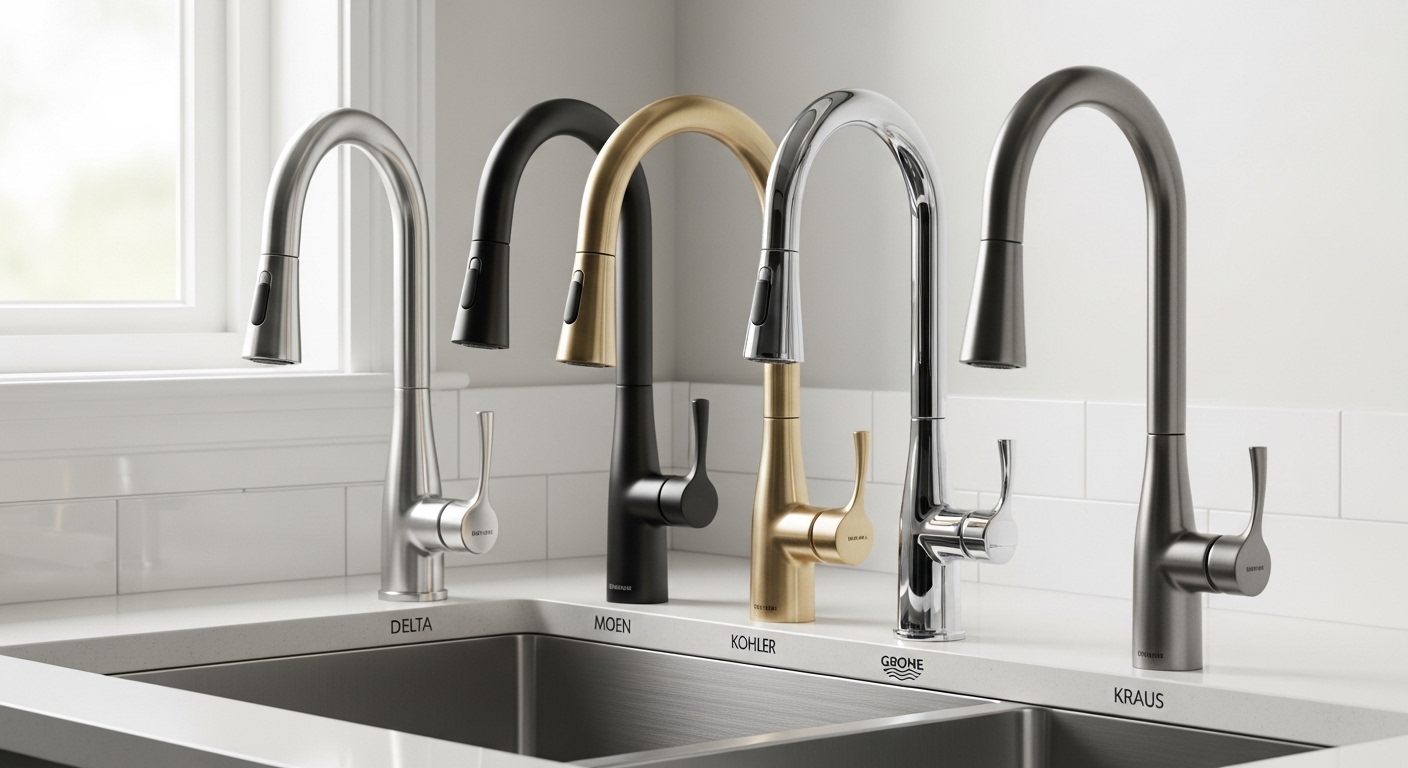
If you’re trying to sort out the best faucet brands kitchen shoppers actually trust — instead of whatever a random “top 10” list pushes — the honest answer is that five names cover about 90% of good buying decisions: Delta, Moen, Kohler, Grohe, and Kraus. The other 10% is Pfister and Hansgrohe for specific budget or luxury cases. Below, I’ll break down who each brand is genuinely best for, what to look at before the finish color, and how to avoid the two mistakes that make people hate a faucet they otherwise picked well.
The brand matters, but not the way marketing wants you to think. A faucet lives or dies on three unglamorous things: the cartridge inside, the spray head, and how the company handles it when something wears out. Everything else — arc height, touchless, matte black — is preference. So let’s answer the real questions people ask.
What are the best kitchen faucet brands overall in 2026?
The best overall kitchen faucet brands in 2026 are Delta, Moen, and Kohler for the mainstream market, with Grohe and Hansgrohe leading the premium tier and Kraus offering the strongest bang-for-buck in commercial-style pull-downs. These five (plus Pfister on the budget end) are the ones with real parts availability, lifetime-class warranties, and a track record you can look up.
Here’s the quick logic behind that ranking. “Best” isn’t a single trophy — it’s a match between a brand’s strengths and your kitchen. A busy family sink that gets used 40 times a day wants proven durability and easy replacement cartridges. A show-kitchen island wants finish quality and design. A rental or a garage utility sink wants low cost and zero drama.
| Brand | Best for | Typical price | Cartridge / valve | Warranty highlight |
|---|---|---|---|---|
| Delta | Reliable family kitchens, easy DIY repair | $120–$350 | DIAMOND-coated ceramic disc | Lifetime on faucet + finish |
| Moen | All-rounder, huge parts network | $130–$400 | Duralock / 1255 ceramic cartridge | Limited lifetime |
| Kohler | Design-forward, premium finishes | $200–$700 | Ceramic disc | Limited lifetime |
| Grohe | Euro engineering, smooth feel | $250–$600 | SilkMove ceramic cartridge | Limited lifetime |
| Kraus | Commercial-style pull-downs on a budget | $150–$350 | Ceramic disc | Limited lifetime |
| Pfister | Tight budgets, still solid | $90–$220 | Ceramic disc (Pforever seal) | Lifetime on function + finish |
If you want a deeper look at the top-tier names and what actually justifies their price, our guide to the best luxury faucet brands to buy in 2026 goes brand by brand on where the money goes.
Which kitchen faucet brand is most reliable and lasts the longest?
Delta and Moen are the two most reliable kitchen faucet brands for long-term durability, mainly because both use proven ceramic-disc cartridges and — just as important — sell replacement parts in every hardware store, so a 10-year-old faucet is fixable in 20 minutes instead of being throwaway. Kohler and Grohe last just as long mechanically, but parts can take longer to source.
Reliability comes down to the cartridge, which is the little valve that starts and stops the water every time you touch the handle. Cheap faucets use rubber or plastic seals that harden and drip within a few years. Good brands use ceramic discs — two polished ceramic plates that slide against each other and essentially don’t wear out under normal home water. That’s why a leaky brand-name faucet usually just needs a $15 cartridge, not a new faucet.
- Delta: DIAMOND Seal ceramic cartridge, rated for 5 million uses in the company’s own testing. Genuinely easy to rebuild yourself.
- Moen: The 1255 Duralock cartridge is one of the most replaced parts in America — meaning it’s everywhere and cheap.
- Kohler: Excellent ceramic valves; order parts online rather than expecting them on the shelf.
- Grohe / Hansgrohe: SilkMove and comparable cartridges feel buttery for years, but a stuck part may mean a longer wait for a Euro-spec replacement.
One tip that matters more than brand: if you have hard water, mineral scale is the real killer of pull-down spray heads and aerators. Buy a brand with a rubber-nub spray face (Delta Touch-Clean, Moen Power Boost) so you can wipe scale off with your thumb instead of soaking parts in vinegar every month.
What is the best budget kitchen faucet brand under $200?
Under $200, the best kitchen faucet brands are Moen, Delta, and Pfister — all three sell full pull-down models in that range with the same ceramic cartridges and lifetime-class warranties as their pricier lines, so you’re mostly giving up finish options and a bit of spray power, not durability. Kraus also fits here if you want the tall commercial-coil look for less.
A common myth is that a $170 faucet is “disposable” compared to a $400 one. From the same brand, that’s usually false — the internal valve is often identical, and you’re paying the difference for a fancier finish (matte black, brushed gold), a beefier spring, or a touchless sensor. For a straightforward family sink, the budget model from a top brand outlasts a no-name “luxury-looking” faucet every time.
If you’ve narrowed in on one specific value pick, we did a full breakdown of the best budget Moen kitchen faucet for under $200, including which exact models are worth it and which to skip. And if you like the classic warm look, the brushed nickel Moen kitchen setup guide covers the finish that hides water spots and fingerprints best.
Pull-down or pull-out — which style should I pick, and does the brand change the answer?
Pick a pull-down for a standard kitchen sink with room above it, and a pull-out for a shallow window sill or a small/prep sink — and no, the brand doesn’t change that decision, because Delta, Moen, Kohler, Grohe, and Kraus all make both styles well. Style is about your space; brand is about parts and finish.
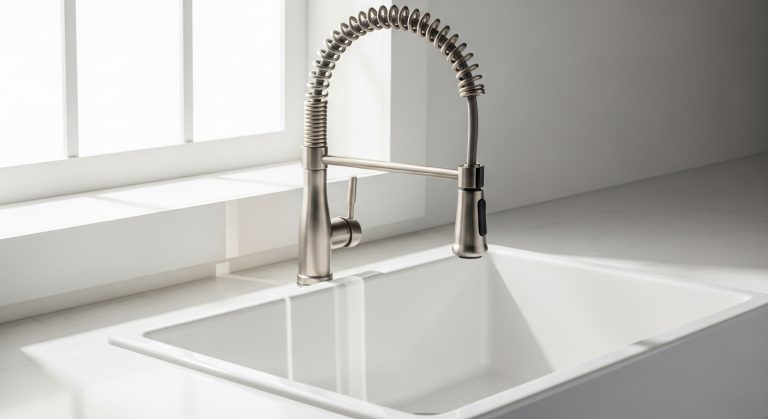
Here’s the plain difference. A pull-down has a tall arched neck and the spray head pulls straight down into the bowl — great reach, easy to fill big pots, the most popular style today. A pull-out is a lower spout where the head pulls horizontally toward you — better under a low window and easier to aim into a bar sink. Both use a hose you’ll eventually replace; that’s normal wear, and on major brands it’s a quick job. If yours ever starts drooping or leaking, our walkthrough on pull-out kitchen faucet hose replacement shows you how to do it without a plumber.
A few brand-flavored notes:
- Spray weight: Delta’s MagnaTite and Moen’s magnetic docks snap the head back firmly — cheaper hoses let it sag over time.
- Spout height: Grohe and Kohler tend to run tall and dramatic; measure the cabinet above so it clears when the faucet is off.
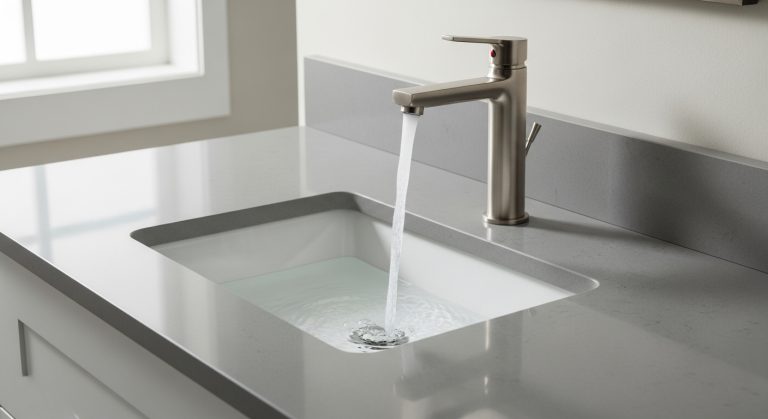
- Handle count: Most modern kitchen faucets are single-handle for one-hand temperature control. If you specifically want that layout, see our guide to the best single-handle faucet for a sink.
Are touchless and smart kitchen faucets worth it, and which brands do them best?
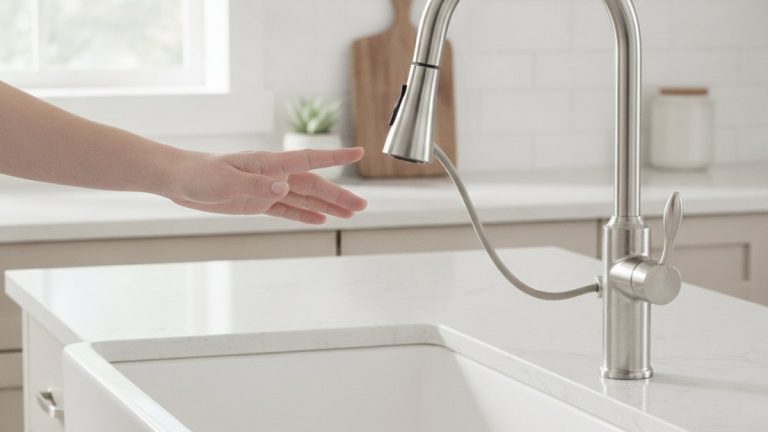
Touchless kitchen faucets are worth it if you cook with raw meat often or have kids who leave the water running, and Moen (MotionSense) and Delta (Touch2O / VoiceIQ) do them best because their sensors are the most refined and their battery/electronics have the longest field track record. Expect to pay $70–$150 more than the manual version of the same faucet.
The upside is real: wave to start water with dirty or full hands, and touch-to-stop cuts waste. The tradeoff is a battery pack (usually 4 AA or 6 AA, lasting 1–2 years) or an AC adapter, plus a solenoid valve that’s one more part that can eventually fail. On a good brand that solenoid is warrantied and replaceable; on an off-brand, a dead sensor can brick the whole faucet.
My honest take: if you want touchless, buy Moen or Delta specifically — this is one area where brand really does change the answer, because the electronics quality gap is wide. If you just want convenience without electronics, a well-sprung manual pull-down from any top-five brand is more foolproof and cheaper to own for a decade.
How do I choose the right kitchen faucet brand for MY sink?
Choose your kitchen faucet by matching four things to your sink in this order: number of mounting holes, spout height and reach, spray/handle features, then finish and brand preference — get the first two wrong and no brand can save you. Once the physical fit is right, pick the brand whose warranty and parts network you trust.
Run this quick checklist before you buy anything:
- Count your holes. Look under the sink or at the deck: 1, 2, 3, or 4 holes. A single-hole faucet can cover extra holes with a deck plate (escutcheon); a 3-hole sink needs a faucet with a base plate or separate handles/sprayer.
- Measure clearance. Check the height to your window or upper cabinet, and how far the spout reaches toward the center of the bowl. Tall arch + shallow sink = splashing.
- Pick features. Pull-down vs pull-out, single vs dual spray, touchless or not, and whether you want a side soap dispenser.
- Then choose finish and brand. Match your cabinet hardware and appliances, and lean toward a brand with strong warranty and easy parts.
If you’re not sure how kitchen and bathroom faucets differ (and why you can’t just move one to the other), our explainer on kitchen faucet vs bathroom faucet clears up the mounting and flow-rate differences that trip people up. And one small but common headache — a side soap dispenser that stops pumping — has an easy fix covered in why your kitchen faucet soap dispenser isn’t working.
What about finishes — which one holds up best in a kitchen?
For a kitchen, stainless and brushed/spot-resist nickel hold up best because they hide water spots and fingerprints, while polished chrome shows every drop and matte black shows dried mineral spots in hard-water homes. All major brands offer a “spot resist” or “PVD” version that resists tarnishing and is the safest long-term bet.
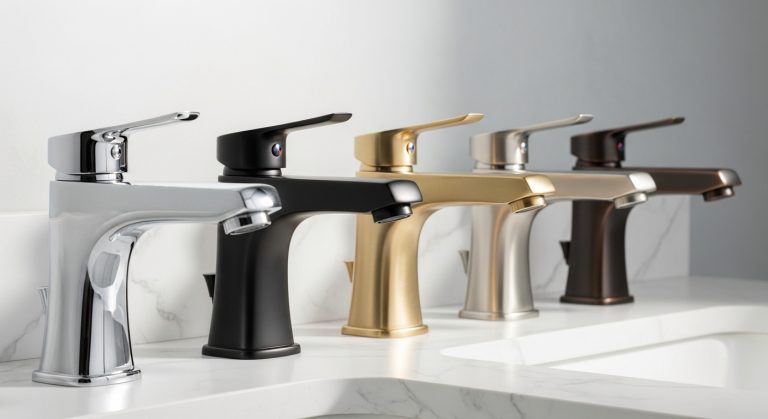
Finish is where personal taste rules, but two practical rules help: (1) match your finish to your cabinet handles and appliances rather than chasing a trend, and (2) in a hard-water house, avoid glossy finishes that broadcast every splash and instead pick a brushed texture. The quality difference between brands here is the coating process — top brands use PVD (physical vapor deposition), a bonded finish that resists scratching and won’t peel like cheaper electroplated coatings.
A quick word on who we are (author & brand note)
This guide was written by the Faucitta fixtures team — we’ve specced, installed, and warranty-tested kitchen and bath faucets across residential and light-commercial projects, and we sell and service these categories daily at Faucitta (faucitta.net). Our recommendations weigh independent durability testing, published cycle-life ratings from the manufacturers, third-party certifications like NSF/ANSI 61 and 372 (lead-free compliance) and cUPC listing, and real warranty-claim experience — not just spec sheets. When we say a cartridge lasts, it’s because we’ve replaced (or failed to need to replace) a lot of them. Always confirm your model carries current lead-free certification and register the product to activate its limited-lifetime warranty.
FAQ
What is the number one kitchen faucet brand?
There’s no single “number one” for everyone, but Moen and Delta are the two most-recommended kitchen faucet brands in the U.S. because they combine proven ceramic cartridges, lifetime-class warranties, and replacement parts you can find in almost any hardware store. For premium design, Kohler and Grohe lead instead.
Is Delta or Moen better for a kitchen faucet?
Both are excellent and very close. Choose Delta if you want the easiest DIY repairs and the MagnaTite spray dock; choose Moen if you want the widest parts availability and the most touchless options. Their warranties and durability are essentially equal, so it often comes down to which specific model and finish you like.
How much should I spend on a good kitchen faucet?
For a good, long-lasting kitchen faucet from a top brand, $150–$300 hits the sweet spot in 2026 — that range gets you a ceramic cartridge, a solid pull-down spray, and a lifetime-class warranty. Spending more mostly buys designer finishes, touchless sensors, or premium European engineering, not core durability.
Do expensive kitchen faucets last longer than cheap ones?
Not always — a mid-priced faucet from a major brand often lasts as long as a luxury one because they use the same ceramic-disc valves. The bigger durability gap is brand-name vs no-name: unbranded faucets tend to use inferior cartridges and coatings and have no parts support, which is what actually shortens their life.
Which kitchen faucet brand is best for hard water?
Delta and Moen are the best kitchen faucet brands for hard water because their spray heads have flexible rubber nubs you can wipe clean of scale by hand, and their aerators are easy to unscrew and soak. Pair any brand with a wipe-clean spray face and you’ll fight mineral buildup far less.
Can I install a name-brand kitchen faucet myself?
Yes — most single-hole and standard pull-down kitchen faucets from major brands are a 30–60 minute DIY job with a basin wrench and the included mounting hardware. Shut off the supply valves, disconnect the old faucet, drop in the new one, and reconnect the supply lines. If your sink has a tricky mounting bracket, follow a model-specific guide before you start.