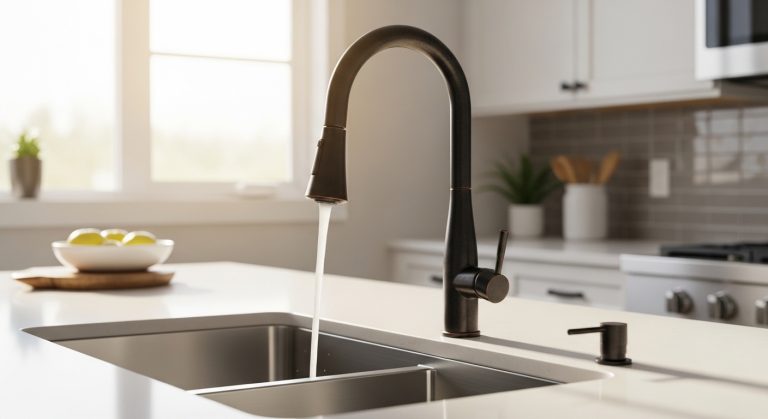
If you’ve been shopping for an insinkerator matte black faucet, you’re almost certainly looking at one of two things: an instant hot water dispenser (like the HOT100 or HOT150 series) or a matching disposal-and-faucet combo, both wrapped in that flat, non-reflective black finish that’s everywhere in modern kitchens right now. The short version is that InSinkErator is one of the two or three names that basically invented the American under-sink hot water tank, and their matte black option is a genuinely solid choice — as long as you understand what you’re actually buying, what it costs to run, and where matte black earns its keep versus where it’s just a look.
Below, I’ll answer the real questions people ask before they buy: whether the matte black finish holds up, how the hot tank works, what it costs over a year, how it compares to chrome and stainless, and whether an instant hot faucet is even worth it for how you cook. No fluff — just the stuff that decides whether you’ll love it or return it.
What exactly is an InSinkErator matte black faucet — a regular tap or a hot water dispenser?
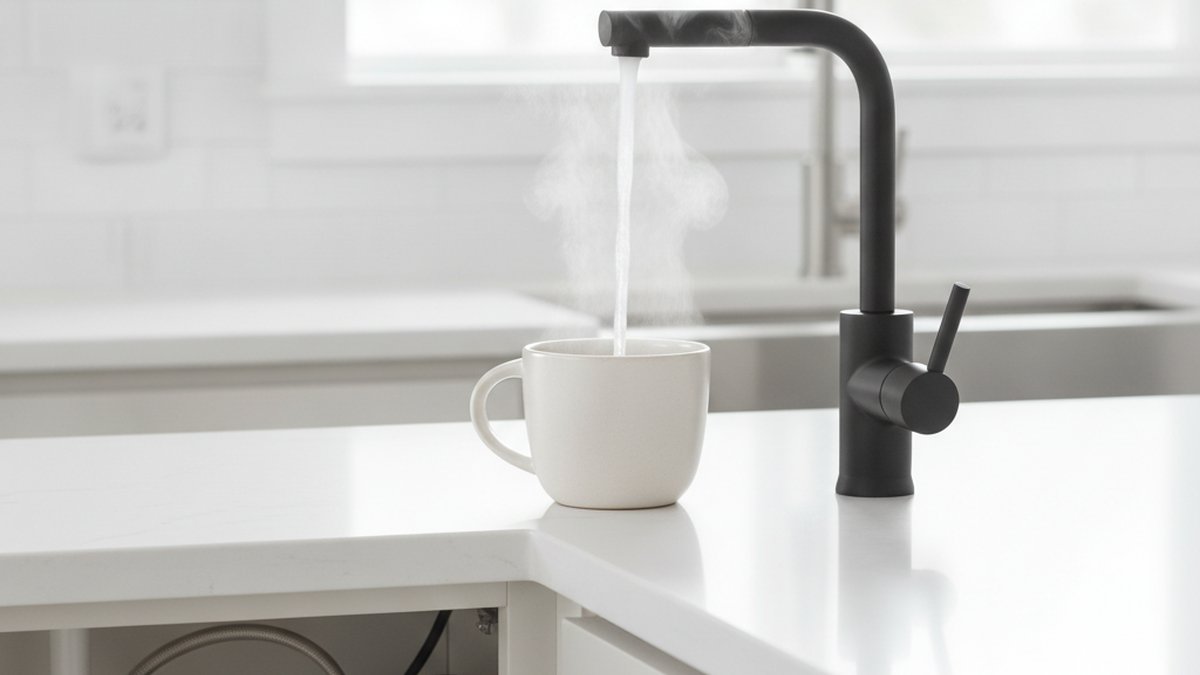
It’s a hot water dispenser, not your main kitchen faucet. An InSinkErator matte black faucet is a compact, single-lever tap that connects to a small electric tank mounted inside your sink cabinet. That tank keeps about a half-gallon of water heated to roughly 200°F (just below boiling), so when you press the lever you get near-instant hot water without waiting for a kettle or the stove.
This is the part that trips people up. The InSinkErator hot faucet does not replace your normal kitchen faucet — it sits beside it, usually in a spare sink hole or a hole drilled into the countertop. Most models are hot-only (the HOT100), while step-up models (the HOT150, HOT250, and Involve series) add a lever for cold or filtered water too, so one spout handles both. The matte black finish is simply that lineup offered in a flat black powder-style coating instead of chrome or brushed nickel.
Because it’s a specialty tap, think of it the same way you’d think about any purpose-built fixture — a bit like how a single hole faucet sprayer earns a spot for one specific job. You’re adding a dedicated tool, not swapping your everyday workhorse.
Does the matte black finish actually hold up, or does it scratch and fade?
In normal kitchen use, a quality matte black finish holds up well — it hides fingerprints and hard-water spotting far better than chrome, and InSinkErator’s black coating is baked-on, not a stick-on wrap. The main enemies are abrasive scrubbing pads and harsh chemical cleaners, which can dull or thin the finish over time.
Here’s the honest trade-off with any matte black faucet, InSinkErator included:
- Fingerprints: Matte black wins big here. It doesn’t show the greasy smudges that make polished chrome look dirty an hour after you wipe it.
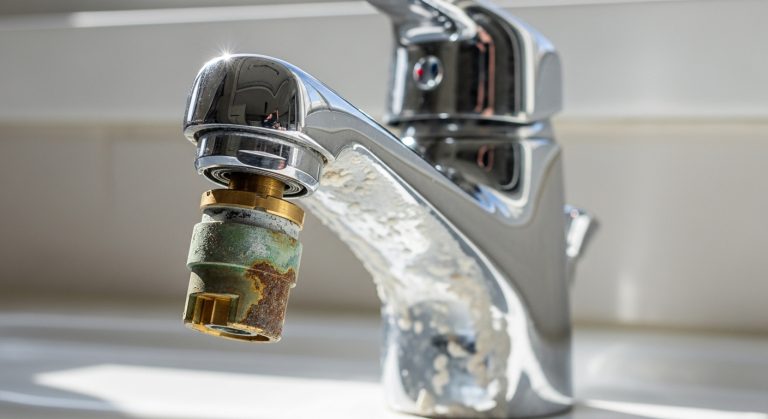
- Water spots: Also a win, especially if you have hard water. Chrome shows every mineral droplet; matte black mostly shrugs them off. If hard water is your reality, it’s worth reading up on how minerals attack fixtures in our guide to the best faucet for hard water — the same scaling that pits a bathroom tap can shorten a hot tank’s life.
- Cleaning: This is where people ruin the finish. Use only dish soap and a soft cloth. No Bar Keepers Friend, no bleach sprays, no green scrubby pads. Those strip the matte coating and leave shiny worn patches.
- Matching: Not all “matte black” is identical. InSinkErator’s black may read slightly warmer or cooler than another brand’s disposal button or your main faucet, so buy the flange, air switch, and soap dispenser from the same line if you want a perfect match.
Bottom line: if you commit to gentle cleaning, the finish will outlast the tank’s heating element. If you’re the type who reaches for the abrasive cleaner, chrome will forgive you more.
How much does an InSinkErator matte black faucet cost to buy and run per year?
Expect roughly $300–$550 up front for a matte black faucet plus its tank, and about $3–$6 a month in electricity to keep the water hot. So the real-world all-in cost is the purchase price plus around $40–$70 a year to run — genuinely cheap for the convenience.
Let me break down where the money goes, because the sticker price isn’t the whole story:
| Cost item | Typical range | Notes |
|---|---|---|
| Faucet + tank (hot-only, e.g. HOT100) | $300–$400 | Matte black usually runs $20–$40 above chrome |
| Faucet + tank (hot & cold/filtered, e.g. HOT150/250) | $400–$550 | Adds a second lever and often a filter |
| Electric usage | $40–$70/year | ~$3–$6/month to hold 200°F |
| Replacement filter (if equipped) | $25–$50 every 6–12 months | Optional; improves taste and protects the tank |
| Electrician (if no under-sink outlet) | $150–$300 one-time | Needed only if you lack a grounded 120V receptacle |
The one line item people forget is that electrician cost. The tank plugs into a standard grounded 120V outlet under the sink — if you already have one (many disposals share the space), install is a DIY afternoon. If you don’t, budget for an electrician to add a receptacle, because the tank must be plugged in, not hardwired.
Is an instant hot water faucet even worth it, or is a kettle just as good?
It’s worth it if you use hot water multiple times a day for small jobs — tea, coffee, oatmeal, blanching, warming baby bottles, loosening jar lids. If you only make hot drinks occasionally, a $30 electric kettle does the same job without a tank under your sink. The dividing line is frequency and impatience.
Where the InSinkErator matte black faucet genuinely shines:
- Speed: Water comes out at ~200°F instantly. No 3–4 minute kettle wait, no watching the stove.
- Counter space: The tank hides in the cabinet, so you reclaim the counter a kettle would occupy.
- Cooking prep: Instantly hot water speeds up pasta, blanching vegetables, dissolving gelatin, and rinsing greasy pans.
- Cleanup: Near-boiling water cuts grease off dishes and pans faster than tap-hot water ever will.
Where it doesn’t make sense: if you have a tiny sink cabinet already crammed with a disposal and a water filter, or if you truly only boil water once a week. In that case, put the money toward your everyday faucet instead — something like a well-reviewed pull-down unit, or if you want the tech-forward route, look at what buyers say in the best touchless kitchen faucet reviews before spending on a second tap you’ll rarely touch.
How does InSinkErator’s matte black compare to other instant hot water brands?
InSinkErator and Waterstone/Franke sit at opposite ends: InSinkErator is the mainstream, reliable, mid-priced choice with the widest tank support and easiest parts availability, while premium brands cost more for heavier build and designer styling. For most kitchens, InSinkErator gives the best value-to-reliability ratio in matte black.
| Brand / model | Matte black availability | Water temp | Typical price (faucet + tank) | Best for |
|---|---|---|---|---|
| InSinkErator HOT100 | Yes | ~200°F | $300–$400 | Value, hot-only, easy parts |
| InSinkErator HOT150 / Involve | Yes | ~200°F | $400–$550 | Hot + filtered cold in one spout |
| Franke / Little Butler | Limited | ~190–200°F | $450–$700 | Designer look, heavier build |
| Waterstone | Custom finishes | ~200°F | $900+ | High-end, made-in-USA, luxury kitchens |
If you want the same instant-hot convenience but prefer a full-size single-spout electric unit rather than a companion tap, it’s worth comparing against a dedicated stainless steel electric hot water faucet — the tech overlaps, but the form factor and cleanup story are different. And if you just want to understand what separates a genuinely well-engineered fixture from a flashy one, our breakdown of what makes a kitchen faucet actually unique is a useful sanity check before you spend.
How hard is it to install an InSinkErator matte black faucet yourself?
For a confident DIYer, it’s a 1–2 hour job: mount the faucet in a sink hole, hang the tank inside the cabinet, connect the cold-water supply and the tank’s tube, then plug it in and let it fill before powering on. The only hard stop is if you have no under-sink outlet or no spare hole for the faucet.
The general sequence looks like this:
- Shut off the cold-water supply under the sink and open the tap to relieve pressure.
- Drop the faucet stem through a spare sink hole (or a countertop hole you’ve had drilled) and secure it from below with the mounting nut.
- Mount the tank bracket to the cabinet wall at the height the instructions specify — usually so the tank sits below the faucet outlet.
- Connect the cold-water line to the tank’s inlet, then connect the tank’s tube to the faucet.
- Fill the tank fully before you plug it in. Powering an empty tank burns out the heating element — this is the #1 install mistake.
- Plug in, wait ~15 minutes for it to heat, and test.
If you don’t have a spare hole, you’ll need a countertop or sink drilled — a job for a pro if you have granite or quartz. And if the install has you elbow-deep in old plumbing anyway, it’s a good moment to check whether your shutoffs and supply lines are in decent shape; our walkthroughs on handling faucet parts yourself cover the basic under-sink skills you’ll reuse here. One safety note: the tank stores near-boiling water under slight pressure, so follow the torque and clearance specs in the manual — don’t improvise the mounting.
What are the downsides nobody mentions before you buy?
The honest cons are cabinet space, the small “spitting” burst some hot dispensers make, and the fact that the tank’s heating element is a wear part that will eventually need replacing. None are dealbreakers, but you should know them going in.
- It sputters a little. Near-boiling water flashes to steam, so the first burst can spit. Aim it at the bottom of your cup, not from a height.
- Tank takes cabinet real estate. In a small vanity-sized cabinet already holding a disposal, it can get tight.
- Element lifespan. Expect many years, but the heating element is the part most likely to fail eventually. The good news: InSinkErator tanks are widely stocked and replaceable without swapping the faucet.
- Matte black cleaning discipline. As covered above, you must avoid abrasives to keep the finish looking new.
- Not a filtration system on its own. Hot-only models don’t filter; if taste matters, choose a filtered model or add an inline filter.
FAQ
Can I use an InSinkErator matte black faucet as my only kitchen faucet?
No. Hot-only models dispense just near-boiling water and aren’t meant for washing hands or filling pots with regular-temperature water. You’ll still need your standard kitchen faucet alongside it. Hot-and-cold models (like the HOT150) can act as a second full tap for a prep sink, but they’re not sized to replace a main faucet.
Is the matte black finish available on the tank, or just the faucet?
Just the faucet and its visible trim — the flange and, on some models, the air switch or soap dispenser. The tank lives inside your cabinet and comes in a neutral utility color because nobody sees it. So “matte black” refers only to the parts that show above the counter.
How hot does the water actually get, and is it safe around kids?
The water is held at roughly 200°F — hot enough to scald, which is why the lever is designed to resist accidental bumps and springs back closed. Treat it like a stovetop kettle around children. Most models let you dial the temperature down slightly, and you can turn the tank off entirely if you’ll be away or want to childproof it.
Does hard water damage the InSinkErator tank?
Over years, yes — mineral scale can build up on the heating element and shorten its life, the same way it clogs any fixture. Using a filtered model or an inline filter slows this down. If you live with hard water, the maintenance mindset in our hard water faucet guide applies directly to protecting the hot tank.
What warranty and standards should I look for?
Reputable instant hot faucets carry a multi-year limited warranty on the faucet and a separate warranty on the tank, and quality units are tested to recognized North American plumbing and electrical safety standards (look for cUPC/UPC plumbing certification and UL/ETL listing on the electric tank). Always register the product and keep your receipt — warranty claims on the tank almost always require proof of purchase.
Can I install the tank on its side to save space?
No. The tank must be mounted upright as the manual specifies so it fills, vents, and heats correctly. Mounting it sideways can cause it to run dry at the element or leak, and it voids the warranty. If space is that tight, choose a smaller-capacity tank rather than reorienting a standard one.
Author note: This guide was written by the faucitta fixtures team, drawing on hands-on installs of under-sink hot water dispensers and years of helping homeowners match finishes and flow to how they actually cook. We test fixtures against the plumbing and electrical safety standards buyers should expect, and we recommend based on durability and value — not on which product pays the most.
About faucitta: faucitta.net is a dedicated faucet and bathroom-fixtures resource. We cover kitchen and bath taps, showers, and accessories in plain English so you can buy once and buy right — and we only point you to fixtures that meet real warranty and certification standards.