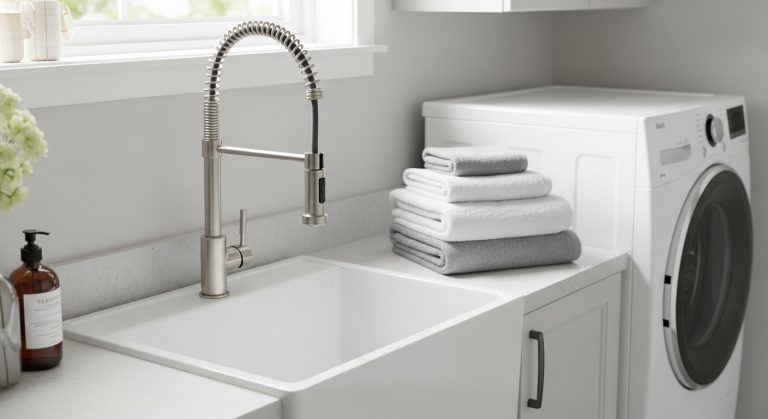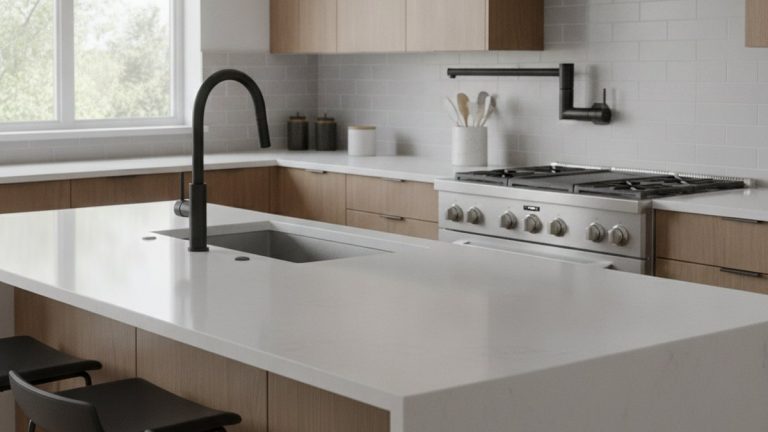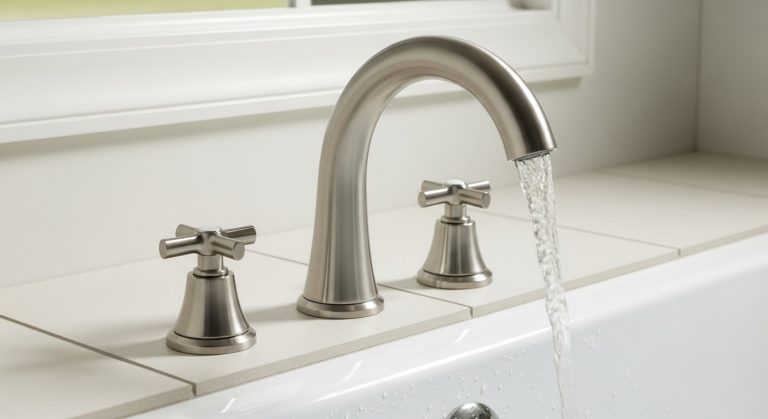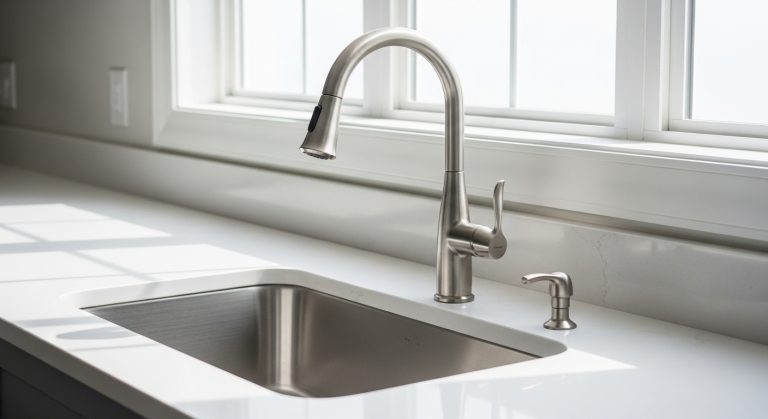
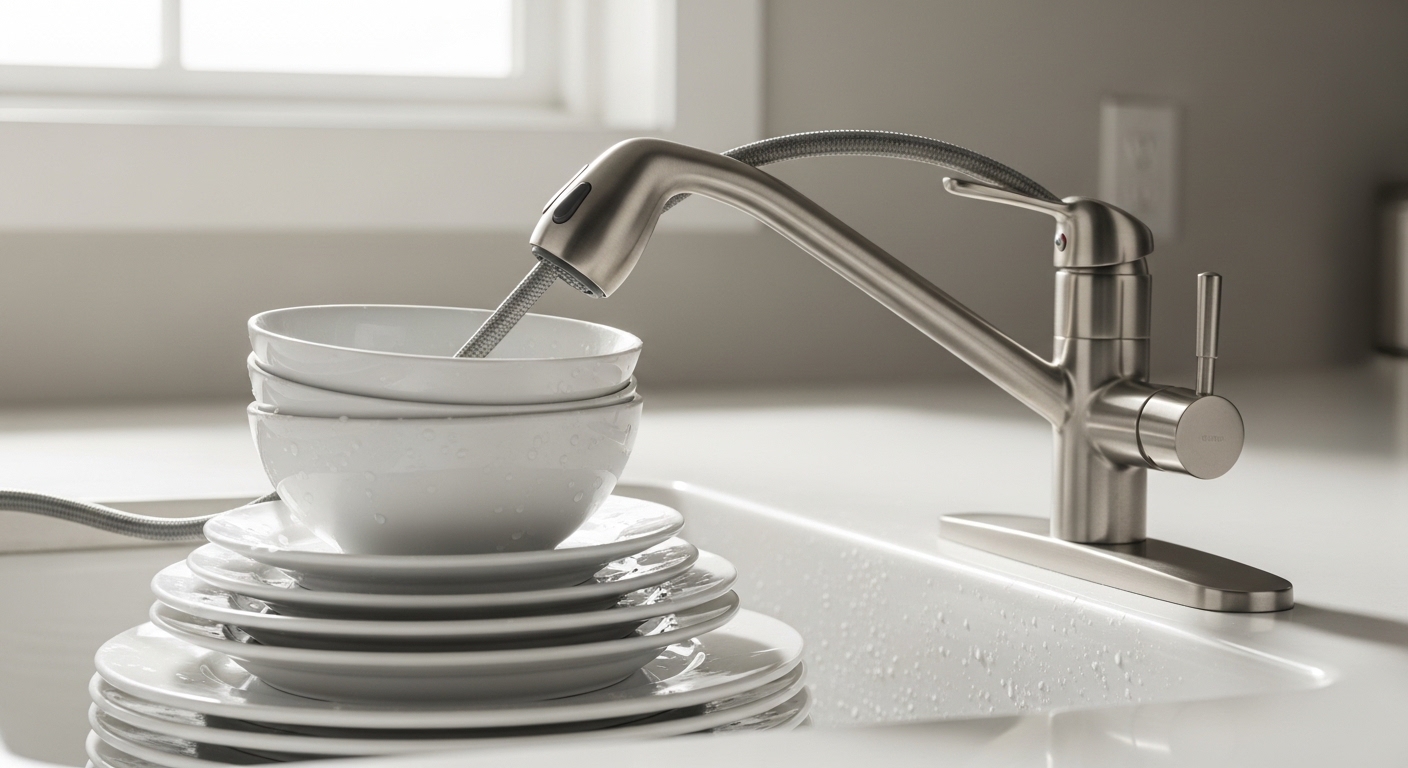
If you’ve been shopping and keep landing on the term single hole faucet sprayer, here’s the plain-English version: it’s a faucet where the handle, spout, and pull-out (or pull-down) sprayer all live in one body that drops through a single hole in your sink or countertop. No separate side-spray, no gap-filled deck, no guessing about hole spacing. For most modern kitchens and prep sinks, it’s the simplest, cleanest way to get spray function — and that’s exactly why it’s become the default look you see in showrooms and on new sinks.
Below, I’ll answer the real questions people actually ask before buying one: whether you need it, how it differs from a side sprayer, whether it’ll fit your sink, what spray types matter, and how to avoid the two or three mistakes that lead to returns. I’ve installed and tested dozens of these, so I’ll flag the stuff that isn’t on the spec sheet.
What exactly is a single hole faucet sprayer, and how is it different from a side sprayer?
A single hole faucet sprayer combines the faucet and the sprayer into one unit that installs in one hole; a side sprayer is a separate nozzle that installs in its own second hole beside the faucet. That’s the whole difference in a sentence — but it changes how your sink looks, how it cleans, and how likely it is to fail down the road.
With the single-hole design, the spray head is the spout end. You grab the spout, pull it toward you (pull-down) or out and forward (pull-out), and a flexible hose feeds water through it. When you let go, a weight or a magnetic dock pulls it back into place. There’s nothing else on the deck.
A traditional side sprayer, by contrast, is that little pistol-grip nozzle sitting in a hole to the right of older kitchen faucets. It works, but it relies on a diverter valve inside the faucet that’s the single most common failure point on older kitchen setups — when the sprayer gets weak or the faucet dribbles while you spray, that diverter is usually the culprit.
- Single hole faucet sprayer: one hole, cleaner look, spray built into the spout, fewer leak points, easy one-hand use.
- Side sprayer: two holes, separate nozzle, extra reach off to the side, but more parts and a diverter that can fail.
- No sprayer at all: a plain single-hole faucet — fine for a bar or bathroom sink, but you lose rinse power in a kitchen.
If you’re weighing whether a bathroom sink even benefits from spray, our deeper walkthrough on the best faucet sprayer bathroom setup breaks down where a sprayer actually earns its keep versus where it’s overkill.
Do I actually need a sprayer, or is a plain single-hole faucet enough?
You need a sprayer if you rinse dishes, wash produce, fill and clean large pots, or hate scrubbing the far corners of the sink basin — everywhere else, a plain single-hole faucet is fine. The pull-down/pull-out spray earns its place in the kitchen; in a small bathroom or bar sink it’s often unnecessary.
Here’s the honest test I give people: stand at your sink and picture your worst chore. Rinsing a sheet pan? Filling a stockpot at the back of the deck? Blasting stuck-on oatmeal? Those are all spray jobs — the movable head lets you aim water where a fixed spout can’t reach, and the toggle between aerated stream and concentrated jet does the heavy lifting. If your worst chore is just filling a glass and washing your hands, you don’t need to pay for a sprayer.
One thing people underestimate is spout reach and height. A single hole faucet sprayer with a tall gooseneck and good reach clears tall pots and covers the basin. If you’re not sure what reach number to look for, our guide on what an 11-inch spout reach kitchen faucet actually means will help you match the faucet to your sink size before you buy.
Will a single hole faucet sprayer fit my sink if it has 3 or 4 holes?
Yes — a single hole faucet sprayer fits a multi-hole sink using a deck plate (also called an escutcheon), a metal cover that spans the extra holes so only the faucet shows. Most single-hole faucets include a matching deck plate in the box, or offer one as a low-cost add-on. So a sink drilled for 3 or 4 holes is not a dealbreaker.
Sinks and countertops typically come in these hole configurations:
| Sink hole setup | Common spacing | Does a single hole faucet sprayer fit? |
|---|---|---|
| 1 hole | ~1⅜”–1½” diameter | Yes — direct fit, no deck plate needed. |
| 3 holes (4″ centerset) | 4″ between outer holes | Yes — use a 4″ deck plate to cover the two outer holes. |
| 3 holes (8″ widespread) | 8″ between outer holes | Yes — use a 10″ deck plate to bridge the span. |
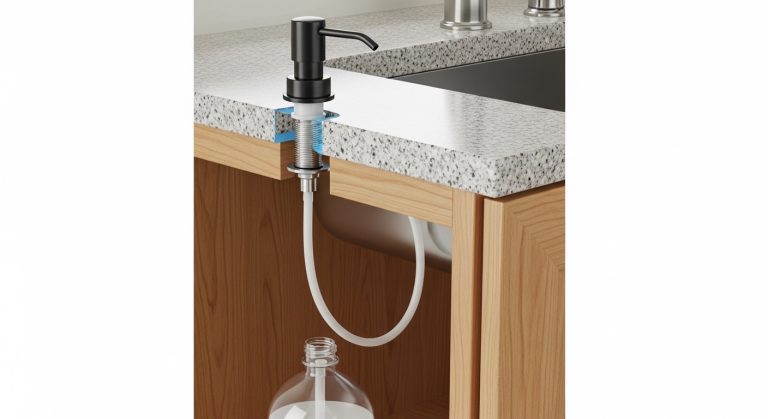
| 4 holes | Varies (4th for soap/spray) | Yes — deck plate covers extras, or use the 4th for a soap dispenser. |
Two measurements to check before you order: the hole diameter (most faucets need at least 1⅜”, and some countertops are drilled tighter) and the deck thickness your faucet’s mounting hardware can clamp. A thick stone counter or a mounted-over-sink combo can exceed what a short mounting shank handles. Grab a tape measure and confirm both before checkout — it’s the single most common reason these get returned.
Pull-down vs pull-out: which spray style should I get?
Get a pull-down if you have a deep kitchen sink and room above the deck; get a pull-out if you have a low-clearance spot (like a window behind the sink) or a smaller bar/prep sink. Both give you a movable sprayer in one hole — they just travel in different directions.
A pull-down has a tall arched spout, and the spray head pulls straight down into the basin. It’s the standard modern kitchen look, gives great basin coverage, and docks with a magnet so it snaps back crisply. The catch: it needs vertical space, so it can clash with a low window sill.
A pull-out has a lower spout, and the whole head pulls out horizontally toward you. It excels in tight spots and gives you a longer effective hose reach for filling pots on the counter. The trade-off is a slightly less dramatic silhouette and sometimes a shorter arc over the sink.
- Deep single-bowl sink + open space above: pull-down.
- Window over the sink / low upper cabinets: pull-out.
- Bar or prep sink: pull-out (more maneuverable, better scaled).
- Big-family dish loads: pull-down with a dual-spray toggle and a strong dock magnet.
What spray specs actually matter — flow rate, spray modes, and materials?
The specs that make or break a single hole faucet sprayer are flow rate (GPM), the number and quality of spray modes, the hose and head materials, and the docking mechanism. Ignore marketing adjectives; these four things decide how it performs on day 1,000.
Flow rate (GPM): Most U.S. kitchen faucets are capped at 1.8 GPM (some regions require 1.5). Higher isn’t automatically better — a well-designed 1.8 GPM sprayer with a good aerator feels stronger than a poorly designed one. If you want to understand what’s “normal” and how much water pressure you actually need to fill pots quickly, our explainer on the flow rate of a standard kitchen faucet lays out the real numbers.
Spray modes: At minimum you want two — an aerated stream for everyday tasks and filling, and a concentrated spray/jet for rinsing and blasting stuck food. Nicer models add a “pause” button (handy when moving a full pot) and a boosted spray. More than three modes is usually gimmick territory.
Materials: Look for a solid brass or stainless faucet body, a ceramic-disc cartridge (the part that controls flow and lasts the longest), and a braided nylon hose rather than cheap PVC. The spray head face should be silicone or rubber nozzles you can wipe to break up mineral buildup — a huge deal if you have hard water.
Docking: A magnetic dock keeps the head snapped in place; a weight-based dock relies on a hose weight and can sag over time. Magnetic is the upgrade worth paying for.
| Feature | Budget (~$60–$120) | Mid-range (~$150–$280) | Premium (~$300+) |
|---|---|---|---|
| Body material | Zinc/thin brass | Solid brass | Solid brass, heavier build |
| Cartridge | Basic ceramic | Ceramic disc | Premium ceramic (long-life) |
| Spray modes | 2 (stream/spray) | 2–3 + pause | 3 + boost + pause |
| Dock | Weight or weak magnet | Magnetic | Strong magnetic |
| Finish durability | Prone to spotting | Spot-resist available | PVD/spot-resist standard |
| Warranty | 1–5 yrs | Limited lifetime | Limited lifetime |
Finish matters for looks and upkeep. Brushed/satin nickel and spot-resist stainless hide water spots and fingerprints best — a real advantage on a sprayer you’re grabbing with wet hands all day. Chrome shines but shows every drop; matte black looks fantastic but shows hard-water film if you don’t wipe it. Since brand engineering varies a lot across finishes and cartridges, it’s worth skimming which faucet brands are actually worth buying for a kitchen before you commit to a name.
How hard is it to install a single hole faucet sprayer myself?
Installing a single hole faucet sprayer is a genuine DIY job for most people — plan on 45–90 minutes with basic tools, since the single-hole design means fewer connections than a widespread faucet. The trickiest parts are working in the tight cabinet under the sink and routing the sprayer hose so it doesn’t kink.
- Shut off the water at the two supply valves under the sink and open the faucet to release pressure.
- Remove the old faucet — disconnect supply lines and the mounting nut. If your old one has a stubborn under-sink bracket, this is where people get stuck.
- Drop the new faucet through the hole (add the deck plate first if you’re covering extra holes), then tighten the mounting nut from below.
- Connect the supply lines to the hot and cold valves — hand-tight plus a quarter turn with a wrench.
- Attach the sprayer hose to the quick-connect fitting and clip on the hose weight or confirm the magnetic dock seats.
- Turn the water back on slowly, check every joint for drips, then run the sprayer through all modes.
The one step that surprises people is removal, not installation — older faucets often hide a U-shaped mounting bracket that’s awkward to reach. If that’s your situation, follow our step-by-step on how to remove a kitchen faucet with a U-shaped bracket so you don’t scratch the sink or round off the nut.
Tip from experience: connect the sprayer hose before you fully seat the faucet if the cabinet is cramped, and leave a gentle loop in the hose so the weight can travel freely. A kinked or over-tight hose is the number-one reason a brand-new sprayer won’t retract smoothly.
How do I keep the sprayer working and spot-free, especially with hard water?
To keep a single hole faucet sprayer spraying evenly, wipe the rubber nozzles on the spray face weekly and deep-clean the aerator every few months — mineral scale is what turns a strong, even spray into a weak, splayed mess. With hard water, this is maintenance, not optional.
- Rub the nozzles: With the water on a gentle stream, run your thumb across the soft rubber tips on the spray head. This flakes off scale before it hardens.
- Soak the head: If flow gets weak, unscrew the spray head or aerator and soak it in a 50/50 white vinegar–water mix for an hour, then brush with an old toothbrush.
- Wipe the finish dry: A quick wipe after big dish sessions prevents the cloudy hard-water film, especially on chrome and matte black.
- Never use abrasive pads on the finish — they’ll dull spot-resist and PVD coatings.
If your whole house fights limescale, the faucet is only half the battle. Our roundup of the best bathroom faucet for hard water covers the cartridge types and finishes that hold up best in high-mineral areas — the same logic applies to your kitchen sprayer.
FAQ
Is a single hole faucet sprayer the same as a pull-down faucet?
Not exactly — a pull-down faucet is one type of single hole faucet sprayer. “Single hole” describes how it mounts (one hole), while “pull-down” or “pull-out” describes how the sprayer moves. Most pull-down and pull-out kitchen faucets are single-hole, but you can also find single-hole faucets with no sprayer at all.
Can I put a single hole faucet sprayer on a sink drilled for 3 holes?
Yes. Use a deck plate (escutcheon) to cover the two extra holes so only the faucet shows. A 4-inch deck plate covers a standard centerset layout; a 10-inch deck plate covers an 8-inch widespread layout. Most single-hole faucets include a matching plate or sell one as an inexpensive add-on.
Why is my single hole faucet sprayer weak or spraying unevenly?
Nine times out of ten it’s mineral buildup on the spray face or aerator. Soak the spray head in a vinegar-water solution and scrub the rubber nozzles. If the whole faucet is weak, check that the supply valves are fully open and that the sprayer hose under the sink isn’t kinked.
Does a single hole faucet sprayer leak more than a regular faucet?
No — it usually leaks less than an older faucet with a separate side sprayer, because it has no diverter valve (the most common side-sprayer failure point) and fewer deck connections. The main wear part is the sprayer hose and quick-connect, which are easy and cheap to replace if they ever fail.
What flow rate should I look for in a kitchen sprayer?
Look for 1.8 GPM, the U.S. standard max for kitchen faucets (1.5 GPM in stricter regions). A well-engineered 1.8 GPM sprayer with a quality aerator feels strong and fills pots quickly. Chasing a higher number isn’t worth it and may not be legal where you live.
Author & brand note
This guide was written by the faucitta fixtures team, drawing on hands-on installation and bench testing of pull-down and pull-out single-hole faucets across chrome, brushed nickel, and matte black finishes. faucitta specializes exclusively in faucets and bathroom fixtures, and we prioritize models built with solid brass bodies, ceramic-disc cartridges, and lead-free waterways that meet ANSI/NSF 61 and cUPC standards — features backed by manufacturer limited-lifetime warranties on function and finish. We recommend confirming your sink’s hole count, hole diameter, and deck thickness before purchase, and registering your faucet’s warranty at installation.