If you’ve been searching for the best bathroom waterfall faucet, you’re really asking two questions at once: which style actually looks as good in real life as it does in the photo, and which one won’t drip, corrode, or splash all over your counter six months in. This guide answers both — with real specs, real trade-offs, and honest talk about where waterfall faucets shine and where they quietly frustrate people. We sell and test these at faucitta, so we’ll tell you the stuff the product page won’t.
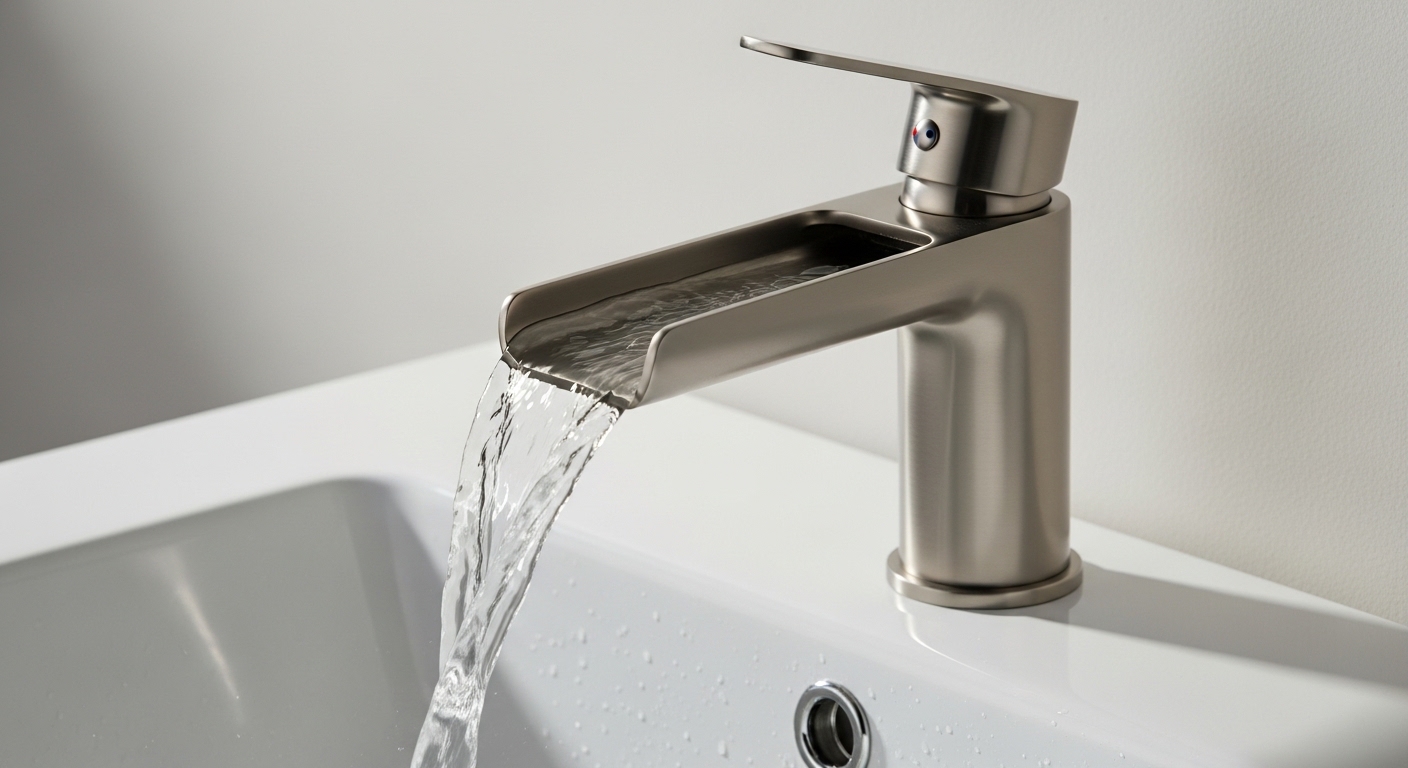
A waterfall faucet is defined by its spout: instead of an enclosed aerated stream, water pours out over an open lip or through a wide channel, creating that flat, glassy sheet of water. It’s a design statement first and a plumbing fixture second — which is exactly why choosing well matters. Get it right and it’s the centerpiece of your vanity. Get it wrong and you’ve got a splashy, spotty, hard-to-clean faucet you resent every morning.
What actually makes one waterfall faucet “the best” over another?
The best waterfall faucet comes down to four things: the valve inside, the base material, the spout geometry, and the finish. Everything else — brand name, price, packaging — is downstream of those four. Here’s what to look for on each.
- Valve: Insist on a ceramic disc cartridge. It’s the part that turns water on and off, and ceramic discs are rated for 500,000+ cycles versus rubber-washer valves that wear out and drip in a couple of years.
- Base material: Go for solid brass, not zinc alloy. Brass resists corrosion, handles hot water without warping, and gives the faucet real heft. A suspiciously light, cheap faucet is almost always zinc under the plating.
- Spout geometry: The lip should be wide and slightly angled so the water sheet lands where you expect. Too short a spout reach and the cascade hits the back of the bowl; too flat and it splashes.
- Finish: A PVD (physical vapor deposition) finish is far more scratch- and tarnish-resistant than a standard electroplated one. It costs a little more and lasts years longer.
If you only remember one line: solid brass body + ceramic disc valve + PVD finish is the trifecta separating a faucet you love in 2030 from one you replace in 2027.
Are bathroom waterfall faucets actually good, or do they just splash?
They’re good if you match the spout height to your sink depth — and yes, a badly matched one will splash. That’s the single most common complaint, and it’s almost always an installation-and-selection problem, not a flaw in waterfall faucets themselves.
Here’s the physics in plain terms: a waterfall spout drops an open, unaerated sheet of water. The higher the spout and the shallower the sink bowl, the more that sheet accelerates and splatters when it hits. A tall “vessel” waterfall faucet over a shallow countertop basin is the classic splash disaster. The fix is simple — pair the spout height to the basin:
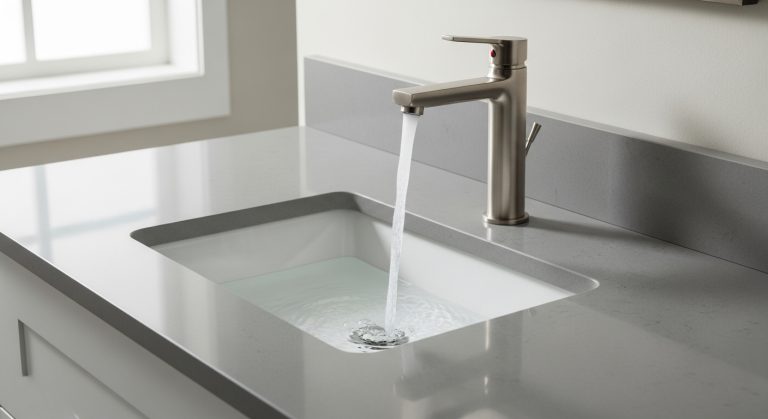
- Standard deck-mount sink (undermount or drop-in): a low or mid-height waterfall faucet (spout height 4–6 inches above the deck) sits close to the water and barely splashes.
- Vessel sink (bowl sitting on top of the counter): you need a tall vessel waterfall faucet, but pick one with a WaterSense-limited 1.2 GPM flow — lower flow means a gentler, less splashy sheet.
- Wall-mount setup: works beautifully with waterfall spouts because you control the exact drop height and reach.
Bottom line: waterfall faucets aren’t inherently splashy. A mismatched height-to-basin combo is. If you’re choosing a faucet for an undermount basin specifically, our guide to the best bathroom faucet for an undermount sink walks through the exact spout-reach math so the stream lands dead center in the drain.
Which type of waterfall faucet should I buy for my setup?
Match the mounting type to your sink and counter — that decision matters more than brand. Here’s how the main types compare on the things that actually affect daily use.
| Type | Best for | Typical spout height | Splash risk | Price range |
|---|---|---|---|---|
| Single-hole deck mount | Standard undermount / drop-in sinks | 4–6 in | Low | $80–$160 |
| Tall vessel | Bowl sinks sitting on the counter | 10–13 in | Medium (pick 1.2 GPM) | $110–$220 |
| Widespread (3-hole, 8 in) | Larger vanities, two-handle look | 5–7 in | Low | $140–$300 |
| Wall mount | Vessel or trough sinks, minimalist vanities | Adjustable | Very low | $130–$280 |
| Glass-disc waterfall | Statement / luxury vanities | Varies | Medium | $150–$400 |
For most people renovating a standard bathroom, a single-hole deck-mount waterfall faucet is the answer: it fits the one pre-drilled hole in the majority of modern sinks, keeps the water close to the basin so splashing stays low, and a single handle makes temperature easy. If your sink has three holes drilled 8 inches apart, you’ll want the widespread version instead — don’t try to force a single-hole faucet into a three-hole deck without an escutcheon plate.
What finish holds up best — brushed nickel, matte black, or chrome?
For durability and hiding water spots, brushed nickel and matte black win; polished chrome looks brightest but shows every fingerprint and mineral spot. The “best” finish is really about your water and your cleaning tolerance, not just looks.
Here’s the honest breakdown from what we see come back and what customers keep:
- Brushed nickel: The safest all-rounder. Its warm satin texture hides water spots and fingerprints, and it pairs with almost any hardware. If you have hard water, this is the finish that stays looking clean between wipes.
- Matte black: Bold and modern, and it hides fingerprints well — but hard-water mineral deposits show up as chalky gray streaks on black, so you’ll wipe it more often if your water is hard. Worth it for the look if you’re diligent. If you’re leaning black, the same logic we cover in our matte black tub faucet guide applies to sink faucets too.
- Polished chrome: Cheapest and brightest, extremely durable plating — but it’s a fingerprint and spot magnet. Great in a low-hard-water home or a guest bath that isn’t used daily.
- Brushed gold / champagne bronze: Trendy and forgiving of spots, but confirm it’s a real PVD finish or it’ll fade unevenly over a few years.
- Oil-rubbed bronze: A warm traditional look that hides everything; if that’s your direction, see our take on the oil rubbed bronze 4-inch faucet for how it wears over time.
One rule that saves regret: match your faucet finish to your other bathroom metals — towel bars, drain, shower trim, cabinet pulls. A gorgeous matte black waterfall faucet next to a chrome drain and gold pulls reads as a mistake, not a mix.
How much should I spend on a good bathroom waterfall faucet?
Plan on $90–$180 for a genuinely good one. Below about $70 you’re almost always getting a zinc body with a rubber-washer valve that will drip within a year or two; above $250 you’re paying for designer branding and exotic finishes, not meaningfully better function.
Here’s what your money actually buys at each tier:
- Under $70: Zinc alloy body, standard electroplated finish, often a lower-grade cartridge. Fine for a rarely used powder room; risky as a daily driver.
- $90–$180 (the sweet spot): Solid brass or high-grade construction, ceramic disc cartridge, PVD finish, WaterSense certification. This is where the best bathroom waterfall faucet for most homes lives.
- $180–$400: Premium designer names, glass or specialty spouts, boutique finishes. Beautiful, but you’re paying for aesthetics and brand, not longer life.
A quick reality check: a faucet is one of the highest-touch objects in your house — used dozens of times a day for a decade or more. Spending an extra $40 to go from a dripping zinc faucet to a solid-brass ceramic-disc one is one of the best value-per-dollar upgrades in a bathroom.
How do I install a deck-mount waterfall faucet myself?
Most single-hole deck-mount waterfall faucets install in 30–45 minutes with basic tools — you shut off the water, drop the faucet through the sink hole, secure it from below, and connect the supply lines. You don’t need a plumber for a standard swap. Here’s the sequence:
- Shut off the water at the two angle valves under the sink and open the old faucet to relieve pressure.
- Disconnect the supply lines and the old faucet’s mounting nut, then lift the old faucet out.
- Clean the deck where the old faucet sat — old sealant and mineral crust will keep the new base from sitting flush.
- Drop the new faucet through the hole, seating its gasket or trim ring against the deck.
- Tighten the mounting nut from below by hand, then a quarter-turn with a basin wrench — snug, not gorilla-tight.
- Connect the supply lines (hot to left, cold to right), hand-tighten plus a small wrench turn.
- Turn the water back on slowly, run both temperatures, and check every connection for drips before you call it done.
Two tips that prevent 90% of first-timer headaches: use fresh braided stainless supply lines rather than reusing brittle old ones, and if you’re not sure how the parts stack up, a quick look at a labeled bathroom faucet diagram shows exactly how the gasket, mounting nut, and cartridge fit together so nothing goes in backwards.
How do I keep a waterfall faucet looking new?
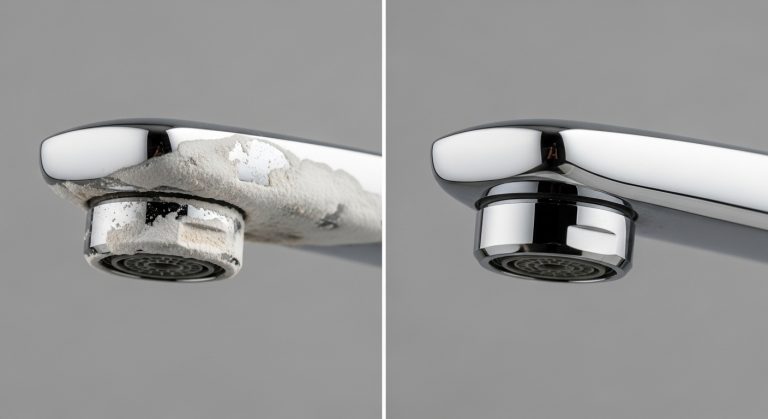
Wipe it dry after use and clean it weekly with mild soap and water — never abrasive pads or acidic descalers on the finish. Because waterfall spouts have an open lip, mineral scale builds up right where you can see it, so a quick habit keeps it looking showroom-fresh.
- Keep a microfiber cloth nearby and dry the spout lip after heavy use — this alone prevents most spotting.
- For hard-water scale on the spout, lay a cloth soaked in a 50/50 white vinegar solution over the lip for 10 minutes, then rinse and buff. Don’t leave vinegar on matte black or bronze for long.
- Never use bleach, ammonia, or scouring powders — they strip and dull PVD and plated finishes.
- If flow weakens over time, it’s usually scale in the spout channel, not a faucet failure — a vinegar soak fixes it.
Which faucitta waterfall faucet is the right pick?
For the average bathroom, choose our single-hole deck-mount waterfall model in brushed nickel; for a vessel bowl, step up to the tall version in the same finish; for a bold, modern vanity, go matte black. Every faucitta waterfall faucet uses a solid-brass body, a ceramic disc cartridge rated for 500,000+ cycles, a WaterSense-certified 1.2 GPM aerator, and a PVD finish — the exact trifecta we told you to look for. And because they share standard 1.375-inch mounting holes and 3/8-inch compression connections, they drop into the vast majority of existing sinks without adapters.
FAQ
Do waterfall bathroom faucets splash more than regular faucets?
They can, but only when the spout height is mismatched to the sink. A low deck-mount waterfall faucet over a standard undermount basin splashes about as little as a regular aerated faucet. Splash problems come from tall spouts over shallow bowls — match the height to the basin and it’s a non-issue.
Are waterfall faucets harder to clean than standard ones?
Slightly, because the open spout lip is where you can see mineral scale form. The upside is there’s no aerator screen to unclog. A weekly wipe and an occasional vinegar soak on the lip keeps it spotless — it’s a habit, not a hassle.
What flow rate should a bathroom waterfall faucet have?
Look for a WaterSense-certified 1.2 GPM (gallons per minute) rating. It meets efficiency standards, lowers your water bill, and — bonus for waterfall faucets — the gentler flow produces a cleaner sheet with less splash than an older 2.2 GPM model.
Can I put a waterfall faucet on any bathroom sink?
Almost — you just have to match the mounting. Single-hole faucets need one drilled hole; widespread faucets need three holes 8 inches apart; vessel sinks need a tall faucet. Check how many holes your sink or countertop has before buying, and confirm the spout reach places the stream over the drain.
Is brass really better than stainless steel or zinc for a faucet body?
For faucets, solid brass is the gold standard — it resists corrosion, handles hot water without warping, and lasts decades. Stainless steel is also excellent and fully lead-safe. Zinc alloy is the budget material to avoid for a daily-use faucet; it’s lighter, corrodes faster, and its valves tend to fail sooner.
How long should a good waterfall faucet last?
A solid-brass, ceramic-disc waterfall faucet should give you 15–20 years of daily use, with the cartridge being the only likely wear part — and that’s a cheap, tool-free swap. Cheap zinc faucets often start dripping within one to three years, which is why the valve and body material matter more than any other spec.
About the author: This guide was written by the faucitta product team, drawing on years of fixture testing, plumbing-supply experience, and thousands of customer installs. We pressure-cycle every waterfall faucet we sell and evaluate real-world splash, flow, and finish wear before it reaches a product page.
About faucitta: faucitta designs and supplies bathroom and kitchen fixtures built to modern North American plumbing standards. Our waterfall faucets use solid-brass bodies and ceramic disc cartridges, ship with WaterSense-certified aerators, and are backed by a limited lifetime warranty against defects in materials and finish — so your investment is protected long after installation.