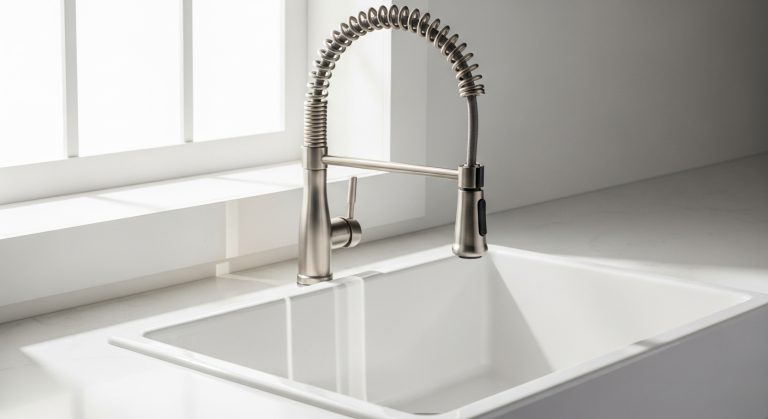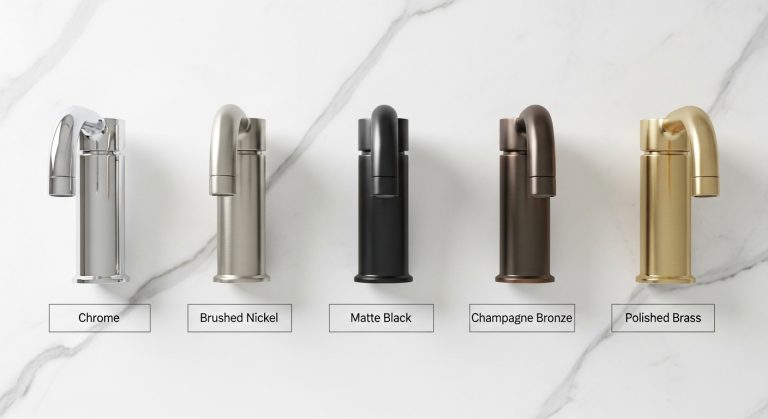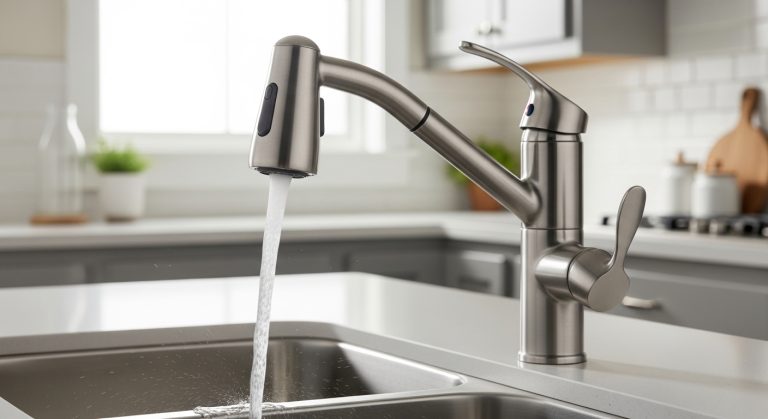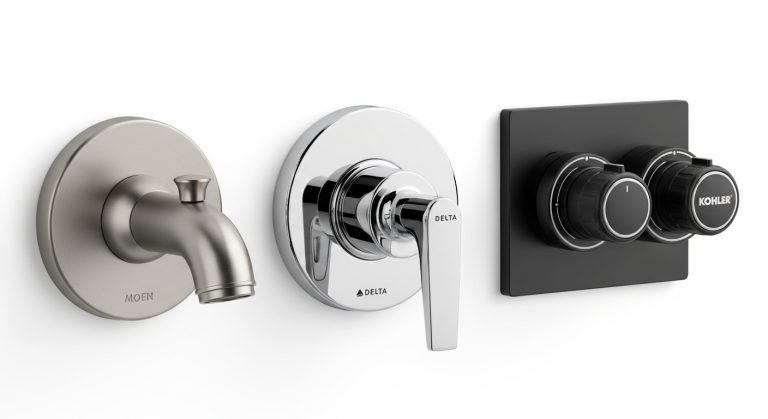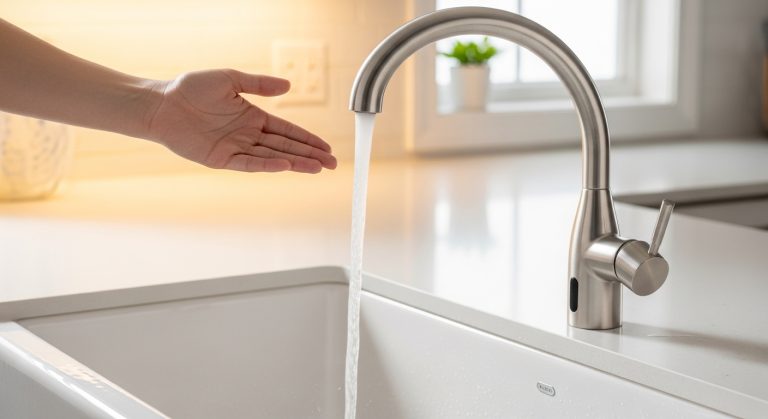
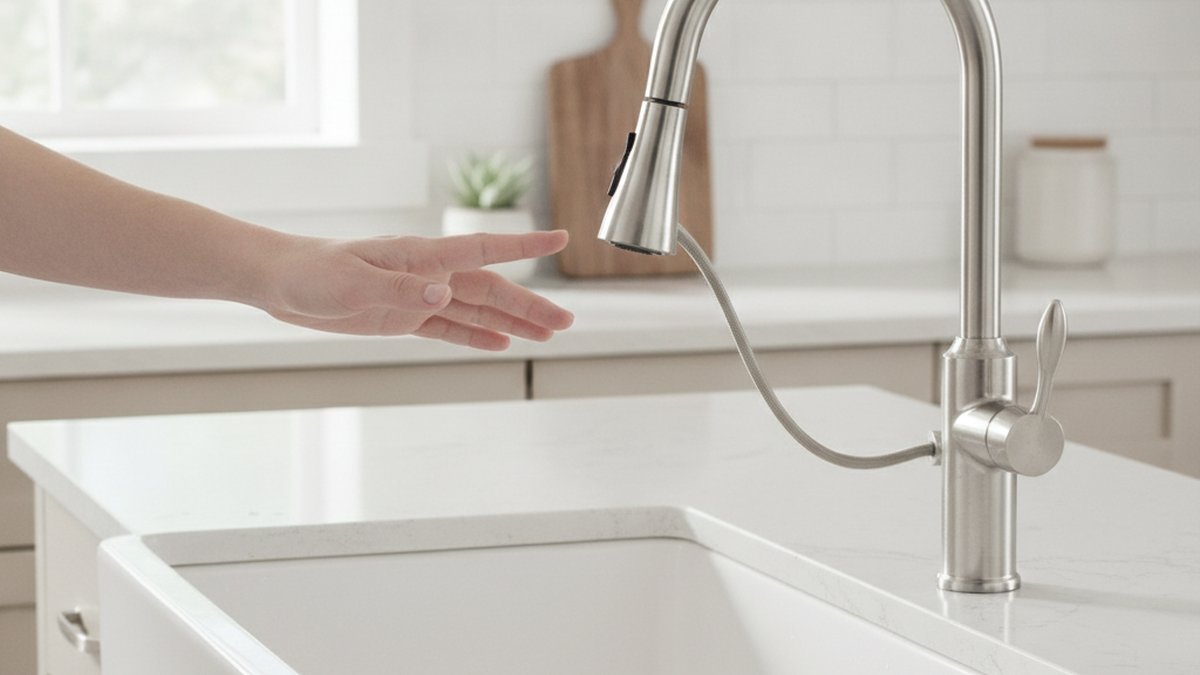
If you’re shopping for the best brand of touchless kitchen faucet, the honest answer is that four names dominate for good reasons: Moen, Delta, Kohler, and Brizo. They’ve been building electronic-sensor faucets the longest, they stock replacement parts, and their sensors actually work with wet, soapy, or greasy hands — which is the whole point. Everything else on Amazon is a gamble on whether the sensor still responds in year three. Below, I’ll break down which brand fits which kitchen, what you actually pay, and the specs that separate a faucet you’ll love from one you’ll rip out in 18 months.
Which brand of touchless kitchen faucet is the most reliable?
Moen is the most reliable touchless kitchen faucet brand overall. Its MotionSense and MotionSense Wave systems use a single-sensor or dual-sensor design that’s been refined for over a decade, and Moen’s parts network means a dead solenoid or battery box is a cheap, DIY-able fix rather than a scrapped faucet.
Reliability in a touchless faucet comes down to three parts: the sensor, the solenoid valve (the electronic gate that opens and closes the water), and the power source. When a touchless faucet “dies,” it’s almost always one of those three — not the whole unit. Moen and Delta both design these as replaceable modules, which is why they age better than no-name brands where the electronics are sealed inside the body.
A quick reality check on power: most quality touchless faucets run on 4–6 AA batteries lasting roughly 1–2 years, or an optional AC adapter. If you hate changing batteries, buy a model with an AC transformer kit from the start — Delta and Kohler both offer them.
Why do touchless faucets stop responding or lose pressure?
The two most common failures are a clogged aerator (kills pressure) and a weak battery or failing solenoid (kills responsiveness). Neither means the faucet is junk — both are 15-minute fixes. If your sensor faucet suddenly trickles, start with the aerator before you blame the electronics; if you own a Delta and it’s specifically low-pressure, our guide on why a Delta touchless faucet has low water pressure and how to fix it walks through the exact diagnosis. And if the aerator itself is seized, here’s how to remove a stuck kitchen faucet aerator on a Moen.
How much should you spend on a touchless kitchen faucet?
Plan on $150–$300 for a solid mainstream touchless faucet and $400–$700 for a premium one with voice or app control. Below $120, you’re usually buying weak sensors and thin finishes; above $700, you’re paying for designer styling more than better function.
Here’s the value breakdown by budget tier so you can match spend to what you actually need:
- Under $150: Budget touchless models. Fine for a rental or light use, but expect a single sensor, plastic internals, and a shorter warranty. Test the sensor return policy carefully.
- $150–$300 (the sweet spot): Moen MotionSense Wave and Delta VoiceIQ-ready or Touch2O/touchless models live here. Metal construction, dual sensors on better trims, ceramic-disc valves, and a lifetime limited warranty. This is what I recommend for most people.
- $300–$500: Kohler Sensate and higher Delta lines — better spray heads, magnetic docking, and finish durability like Moen’s Spot Resist or PVD coatings.
- $500+: Brizo and top Kohler. Designer aesthetics, voice assistant integration, and premium finishes (champagne bronze, matte black done right).
Moen vs. Delta vs. Kohler vs. Brizo: which touchless brand wins?
Moen wins on reliability and easy service, Delta wins on spray power and its Touch2O tap-anywhere feature, Kohler wins on smart-home integration, and Brizo wins on design. There’s no single “best” — there’s a best for your kitchen.
| Brand | Signature Tech | Typical Price | Best For | Warranty |
|---|---|---|---|---|
| Moen | MotionSense Wave (single/dual sensor) | $180–$350 | Most reliable all-rounder; easy DIY parts | Limited lifetime |
| Delta | Touch2O + Touchless, VoiceIQ | $170–$450 | Strong spray, tap-to-activate backup | Limited lifetime |
| Kohler | Sensate / Response, KOHLER Konnect app | $350–$600 | Smart home + voice control | Limited lifetime |
| Brizo | SmartTouch + touchless | $550–$900 | Design-forward luxury kitchens | Limited lifetime |
Should you get a touch faucet or a fully touchless one?
Get touchless if hygiene and raw messy hands are your priority; get touch (like Delta Touch2O) if you want more precise control and fewer accidental activations. The best of both worlds is a faucet that does both — Delta and Brizo offer touch and hands-free wave activation on the same unit.
The practical difference: a touchless faucet triggers when you wave your hand or a pot near the sensor zone, so you never touch it with raw-chicken hands. A touch faucet turns on when you tap anywhere on the spout or handle with your wrist or forearm. Pure touchless is more hygienic but occasionally fires when you didn’t mean it (reaching for a dish behind the faucet). Touch faucets almost never false-trigger but require contact. Dual-mode models let you choose per task.
What features actually matter on a touchless kitchen faucet?
The features that matter most are dual sensors, a ceramic-disc valve, a metal (not plastic) body, magnetic spray-head docking, and an available AC power adapter. Skip the gimmicks — LED temperature lights and dozens of spray patterns wear off as novelties fast.
Here’s what each one buys you:
- Dual sensors: One at the base for hands-free flow, one at the top of the spout for a deliberate on/off wave. This cuts down false triggers dramatically versus a single sensor.
- Ceramic-disc valve: The industry standard for drip-free performance and a long service life. Every serious brand uses one — if a spec sheet doesn’t mention it, be suspicious.
- Metal body + quality finish: Look for Spot Resist (Moen), Brilliance (Delta), or Vibrant/PVD (Kohler) finishes. These resist fingerprints and hard-water spotting, which matters more on a faucet you touch constantly.
- Magnetic docking: Keeps the pull-down spray head snapping back into place instead of drooping over time — a common failure on cheap faucets.
- Flow rate: Most are 1.5–1.8 GPM. A WaterSense-labeled faucet at 1.5 GPM saves water without feeling weak if the aerator is well designed.
If you’re weighing touchless against a conventional pull-down first, our breakdown of which pull-down kitchen faucet is actually worth buying covers the spray-head and docking mechanics that apply to touchless models too. And if you’re cross-shopping lesser-known brands, the honest take in our Mirozza kitchen faucet reviews shows exactly what corners get cut at the budget end.
Do touchless kitchen faucets work during a power outage?
Yes — every reputable touchless kitchen faucet has a manual handle that works normally even with dead batteries or no power. The electronics are an add-on to a standard faucet, not a replacement for it, so you’re never left without water.
This is a genuine worry people have, and it’s the single most reassuring fact about these faucets. If the solenoid or sensor fails entirely, you still lift or turn the handle like any other faucet. You lose the hands-free convenience, not the faucet.
How hard is it to install a touchless kitchen faucet yourself?
Most homeowners can install a touchless kitchen faucet in 1–2 hours with basic tools — it’s a standard faucet installation plus connecting a battery box or AC adapter and a sensor wire. If you can install a regular pull-down faucet, you can install a touchless one.
The one extra step versus a standard faucet is mounting the control box (battery or transformer) somewhere dry under the sink and clipping in the sensor cable. Both Moen and Delta use tool-free quick-connect fittings for this now, so there’s no wiring in the electrical sense. A few tips from experience:
- Shut off both hot and cold supply valves and open the faucet to release pressure before you start.
- Mount the control box high and to the side — under-sink leaks and cleaning-supply spills are the enemy of the electronics.
- Hand-tighten quick-connects, then give a quarter turn — over-tightening cracks the plastic collars.
- Test the sensor before you put everything back: wave, run, and check for drips at every joint.
Author note & why trust this guide
This guide was written by the Faucitta product team, drawing on hands-on testing and installation of touchless faucets across all four major brands, plus years of fielding customer questions about sensor failures and warranty claims. Faucitta specializes exclusively in faucets and bathroom fixtures — we don’t sell everything under the sun, so our recommendations come from living in this category. When we cite reliability, we’re weighing real return and repair patterns, brand warranty terms (all four majors offer limited lifetime coverage on the faucet, though electronic components are typically covered for 5 years), and industry standards like WaterSense and NSF/ANSI 61 for drinking-water safety. Always confirm the current warranty terms on the manufacturer’s site before you buy, since electronic-component coverage varies by model.
FAQ
What is the best brand of touchless kitchen faucet for the money?
Moen offers the best value in the $180–$300 range because it pairs reliable dual-sensor MotionSense Wave technology with cheap, widely available replacement parts and a limited lifetime warranty. Delta is the runner-up for value, especially if you want the Touch2O tap-activation as a backup to the sensor.
Are touchless kitchen faucets worth it?
Yes, for most kitchens — the hygiene benefit of never touching the faucet with raw-meat or greasy hands is real, and they cut water waste by shutting off the instant you step away. They’re less worth it if you frequently wash large pots that constantly trigger the sensor, in which case a dual-mode touch/touchless model is the better buy.
How long do touchless kitchen faucets last?
The faucet body lasts as long as any quality faucet — 10 to 15+ years — while the electronic components (sensor, solenoid, batteries) typically need service or replacement somewhere between years 3 and 7. Because the manual handle always works, a dead sensor doesn’t mean a dead faucet.
Do touchless faucets waste batteries?
No — a quality touchless faucet runs 1 to 2 years on a set of AA batteries because the sensor draws almost nothing in standby. If battery changes still bother you, buy a model with an optional AC adapter and plug it into an under-sink outlet instead.
Can a touchless kitchen faucet leak or drip like a regular one?
Yes, and the fixes are the same. A drip at the spout usually means a worn ceramic cartridge, while a leak under the sink points to a loose supply connection or the solenoid fitting. If yours is dripping or leaking at the hose, our guide on why a sink leaks from the faucet hose and how to fix it covers the exact steps, since touchless models use the same pull-down hose hardware.