If your bathroom faucet valve is stuck — the handle won’t budge, spins loosely without shutting off, or grinds when you turn it — the culprit is usually one of three things: mineral buildup gluing the internal parts together, a corroded or worn cartridge, or a seized packing nut. The good news is that none of these means your faucet is done. In most cases you’re looking at a $10–$40 part and 30–60 minutes of work. Below I’ll walk you through exactly why it happens, how to free the valve without cracking anything, and when it’s smarter to just replace the cartridge (or the whole faucet).
Why is my bathroom faucet valve stuck in the first place?
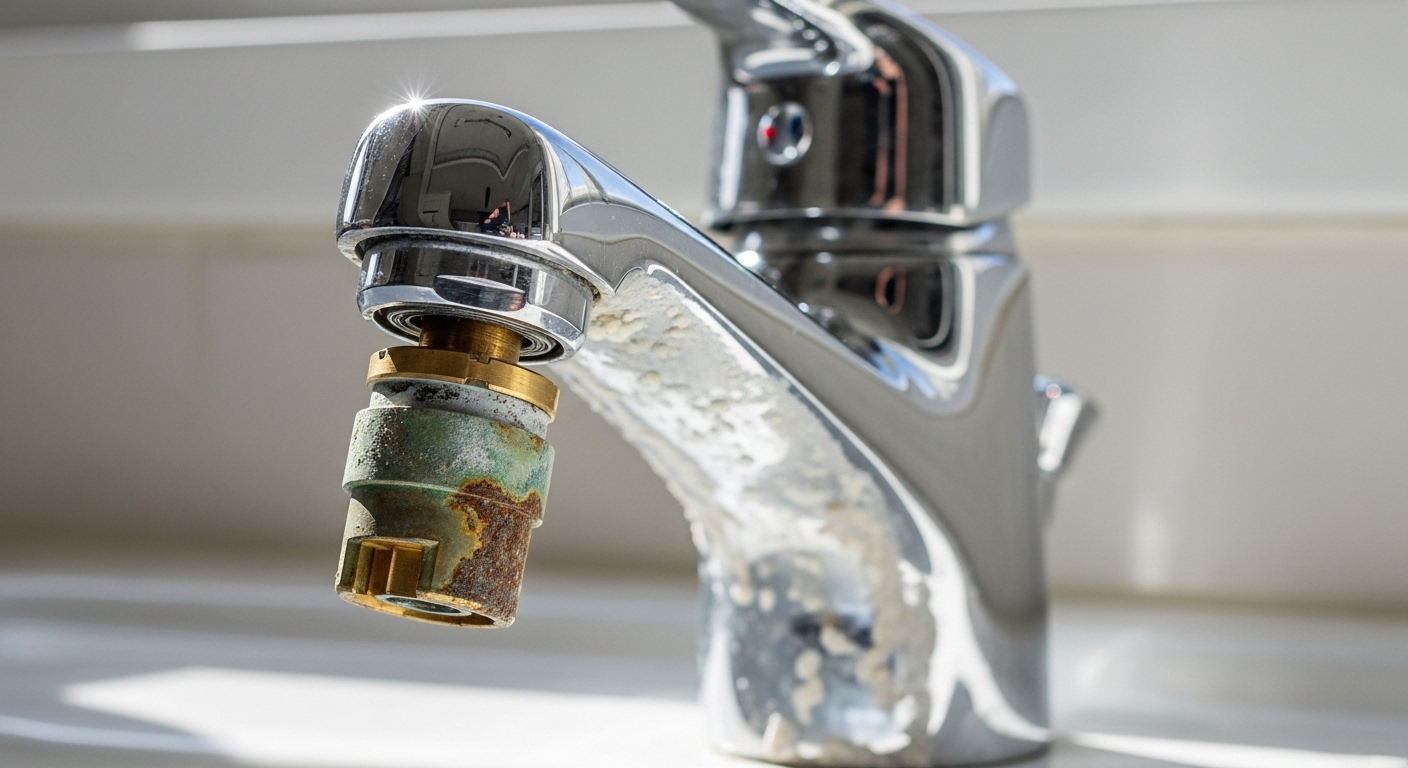
Nine times out of ten, a stuck valve comes down to hard-water mineral scale — calcium and magnesium deposits that build up on the cartridge, stem, and valve seat until the moving parts basically cement together. The second most common cause is corrosion on a brass or metal cartridge, especially on faucets 8–15 years old that haven’t been serviced.
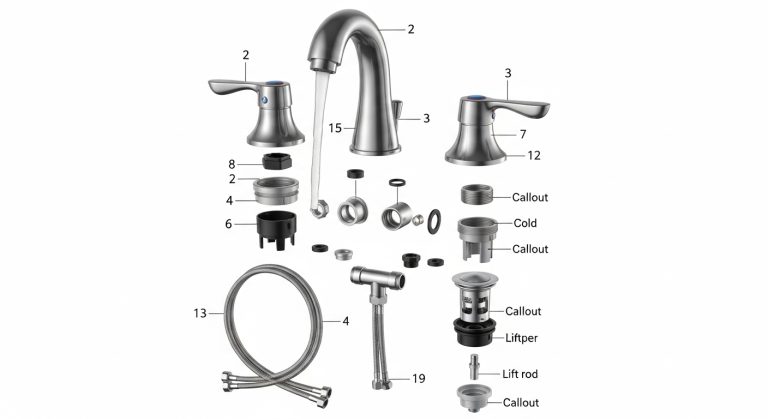
Here’s what’s actually happening inside. Every bathroom faucet has a valve mechanism — a cartridge, a ceramic disc, a compression stem, or a ball — that opens and closes to control water flow. Hard water leaves behind scale every time it dries. Over months and years, that scale creeps into the tight tolerances where the cartridge rotates or slides. Add a little brass corrosion (green or white crust) and rubber O-rings that have gone brittle and swollen, and the parts that used to glide now grip.
- Hard-water scale: The #1 cause. Worse if you have water above ~7 grains per gallon of hardness.
- Corrosion: Brass and steel parts oxidize, especially where dissimilar metals meet.
- Dried-out or swollen O-rings: Old rubber seals grip the cartridge and resist movement.
- Over-tightened packing nut: Someone cranked it down to stop a drip and now the stem won’t turn.
- Wrong or missing lubrication: Cartridges need silicone grease; without it they bind.
Knowing which one you have matters, because a scaled-up valve can often be soaked free and reused, while a corroded cartridge almost always needs replacing.
How do I free a stuck bathroom faucet valve without breaking anything?
Start by shutting off the water and removing the handle, then work the valve loose with penetrating oil or a vinegar soak — never force a frozen handle, because that’s how you snap a plastic cartridge stem or crack the faucet body. Patience beats muscle here every single time.
Here’s the step-by-step I use:
- Shut off the water. Turn the two shutoff valves under the sink clockwise until they stop. No shutoffs? Turn off the main. Then open the faucet to release pressure and confirm the water’s off.
- Plug the drain. Drop the stopper or stuff a rag in it so you don’t lose the tiny screws.
- Remove the handle. Pop off the decorative cap (index button), then remove the set screw underneath — usually a small Phillips or a hex/Allen screw. Pull the handle straight up. If it’s stuck too, a handle puller or gentle rocking helps.
- Expose the valve. Unscrew the retaining nut or remove the retaining clip that holds the cartridge in place. Keep track of the order of parts.
- Apply penetrant. Spray a little penetrating oil or drip white vinegar around the cartridge and let it sit 15–30 minutes. For heavy scale, wrap a vinegar-soaked rag around the exposed valve for an hour.
- Work it gently. Grip the cartridge stem with pliers and rock it back and forth — small movements, both directions — rather than yanking. A cartridge puller tool (about $15, and many brands offer a model-specific one) is the safe way to pull a truly stuck cartridge.
- Clean everything. Once the cartridge is out, scrub the valve body with an old toothbrush and vinegar to clear scale from the bore and seat.
If the valve frees up, clean it, replace the O-rings, coat everything with silicone plumber’s grease (never petroleum-based — it destroys rubber seals), and reassemble. If it’s corroded, pitted, or the plastic is cracked, don’t reuse it — drop in a fresh cartridge instead.
Should I repair the valve or just replace the cartridge?
Replace the cartridge if it’s corroded, cracked, or more than about 10 years old — a new one costs $10–$40 and gives you a like-new faucet. Only reuse the existing valve if it came out intact, cleaned up nicely, and just needs fresh O-rings and grease.
A cartridge is a wear part. Trying to nurse a badly corroded one back to life usually means you’re back under the sink in six months. Since the hard part — getting the old one out — is already done, swapping in a new cartridge is the obvious move. The trick is matching it exactly to your faucet’s brand and model. Take the old cartridge to the store or search your faucet’s model number; even within one brand there are dozens of cartridge styles, and a close-but-wrong part will leak or won’t seat.
This is the same logic that applies to other faucet internals — if you’ve ever tackled a faucet cartridge replacement without calling a plumber, you already know the whole job lives or dies on getting the exact right part number.
What’s the difference between cartridge, ceramic disc, ball, and compression valves?
They’re the four valve types you’ll find in bathroom faucets, and each gets stuck a little differently. Knowing which one you have tells you what to buy and how to free it.
| Valve Type | How to Spot It | Why It Sticks | Typical Fix & Cost |
|---|---|---|---|
| Cartridge | Single or double handle; smooth quarter-to-half turn | Scale + corrosion binding the cartridge in its bore | Replace cartridge, $10–$40 |
| Ceramic disc | Single lever, sits in a wide cylinder | Grit scratches the discs; scale locks the lever | Clean or replace disc cartridge, $20–$50 |
| Ball | Single handle that moves in all directions | Worn springs/seats; scale on the ball | Repair kit (springs, seats, cam), $15–$30 |
| Compression | Two handles, turn several rotations; older faucets | Seized stem, corroded packing nut, worn washer | New stem/washer/seat, $5–$20 |
Compression valves (the two-handle kind that take several full turns) are the ones most likely to seize at the packing nut — and also the easiest to over-tighten into a stuck mess. Modern cartridge and ceramic-disc faucets stick less often because they turn only a quarter or half rotation, but when they do, scale is almost always the reason.
How do I stop the valve from getting stuck again?
Control the mineral scale and lubricate the moving parts — that’s 90% of prevention. If you have hard water, a $2 tube of silicone faucet grease at each service and periodic descaling will keep a valve turning smoothly for a decade.
A few habits that genuinely make a difference:
- Exercise the handles. Fully open and close each faucet occasionally so parts don’t sit in one position and cement up.
- Descale periodically. Wipe faucets dry and, once or twice a year, run vinegar around the base and aerator to dissolve fresh scale before it hardens.
- Grease at every service. Any time you have the cartridge out, re-coat it with silicone plumber’s grease.
- Don’t crank handles shut. Modern valves seal with light pressure; forcing them wears seats and seizes stems.
- Consider a water softener if your whole house runs above ~10 grains per gallon — it protects every fixture, not just this faucet.
If hard water is a recurring theme in your home, it’s not only your faucet valves that suffer — it’s your shower heads too. The same scale that seizes a valve is what kills flow, which is exactly what we cover in our guide to fixing a weak, low-pressure shower.
When is a stuck valve a sign I should just replace the whole faucet?
Replace the entire faucet if the valve body itself is cracked or corroded through, if the faucet is 15+ years old and parts are discontinued, or if you’ve already replaced the cartridge and it still won’t seal. At that point a new mid-range bathroom faucet ($60–$200) is cheaper than repeated repairs.
Signs it’s time to swap the faucet rather than the valve:
- You broke the cartridge trying to remove it and the stub is corroded into the body.
- The valve body is pitted, green with corrosion, or leaking from the base.
- Replacement cartridges for your model are discontinued or impossible to find.
- The finish is worn and you were thinking about upgrading anyway.
If you’re shopping for a replacement, a clean single-handle design is the most reliable long-term choice because it uses one easy-to-source cartridge — our breakdown of how to choose the best single-handle faucet walks through exactly what to look for. And if you want a fixture built to resist scale and corrosion from day one, the best bathroom faucets for undermount sinks roundup covers models with ceramic-disc valves rated for long service life.
What tools and parts do I actually need?
For most stuck-valve jobs you need an adjustable wrench, pliers, an Allen key set, a cartridge puller, penetrating oil or vinegar, silicone grease, and the correct replacement cartridge. Total investment is usually under $50 even if you buy every tool fresh.
Don’t skip the silicone grease or the model-specific cartridge — those two items are the difference between a fix that lasts a decade and one that fails by next season. And if your faucet handle or a corroded connection under the sink is fighting you, the removal techniques carry over from other jobs, like when you have to remove a stubborn faucet held by an awkward bracket without wrecking the sink.
FAQ
Can I fix a stuck bathroom faucet valve without turning off the water?
No — always shut off the supply first. Removing a handle or cartridge with the water on will spray your bathroom under full line pressure and can flood the room in seconds. Turn the under-sink shutoffs clockwise, or the main if you don’t have them, then open the faucet to bleed off pressure before you start.
Why does my faucet handle turn but no water comes out (or won’t shut off)?
The cartridge stem has stripped or the internal valve has failed, so the handle spins without engaging the mechanism. The handle is turning but nothing inside is moving. This almost always means the cartridge needs replacing — the plastic splines that grip the stem have worn round.
Will WD-40 free a stuck faucet valve?
It can help loosen a seized metal stem or packing nut, but use it sparingly and clean it off before reassembly — it’s a solvent-based penetrant, not a lubricant for rubber O-rings. For the actual reassembly, switch to silicone plumber’s grease, which is safe for seals and won’t swell or degrade them.
How much does it cost to fix a stuck bathroom faucet valve?
DIY, you’re looking at $10–$40 for a cartridge plus maybe $15–$30 in tools you’ll keep. If you hire a plumber, expect roughly $100–$250 depending on your area and how badly the valve is seized. Since the repair is genuinely beginner-friendly, most people save the labor and do it themselves.
How do I know which replacement cartridge to buy?
Match it to your faucet’s brand and model number, not just its shape. Pull the old cartridge and either take it to the store or look up your faucet model online — brands make dozens of cartridge variants, and a near-match will leak or won’t seat. Photograph the old part and note any numbers stamped on it before you shop.
Can hard water really seize a valve completely?
Yes. Calcium and magnesium scale builds up in the microscopic clearances a cartridge needs to rotate, and over years it hardens into a cement-like layer that locks the valve solid. That’s why a vinegar soak — which dissolves the scale — frees so many “dead” valves, and why a water softener is the best long-term prevention in hard-water homes.
About the author: This guide was written by the faucitta fixtures team, plumbing-product specialists who spec, test, and service residential faucets and valves every day. We’ve rebuilt cartridge, ceramic-disc, ball, and compression valves across every major brand and price point.
Why trust faucitta: faucitta (faucitta.net) designs and supplies bathroom and kitchen fixtures built to standard water-supply specs. Our faucet valves are cycle-tested to industry durability standards (ceramic-disc cartridges rated for hundreds of thousands of on/off cycles) and backed by our manufacturer warranty. When we recommend a repair or a replacement, it’s based on hands-on testing of the actual parts — not guesswork.