If you’re standing under a dribble every morning, a shower head for very low water pressure can genuinely turn a sad trickle into a proper, skin-tingling spray — but only if you first figure out why your pressure is low. A shower head can’t create water pressure out of nothing; it can only make the most of whatever pressure your plumbing delivers. The good news: the right head, plus 20 minutes of cleaning, fixes the vast majority of weak showers without a plumber. This guide walks you through diagnosing the real cause, cleaning what’s cloggable, and choosing a head engineered to feel powerful even when the pressure behind it isn’t.
We’ll keep it plain and practical. By the end you’ll know whether you have a true low-pressure problem (something upstream in your home) or a fake one (a clogged head or a maxed-out restrictor), and exactly what to do about each.
Why is my shower pressure so low all of a sudden?
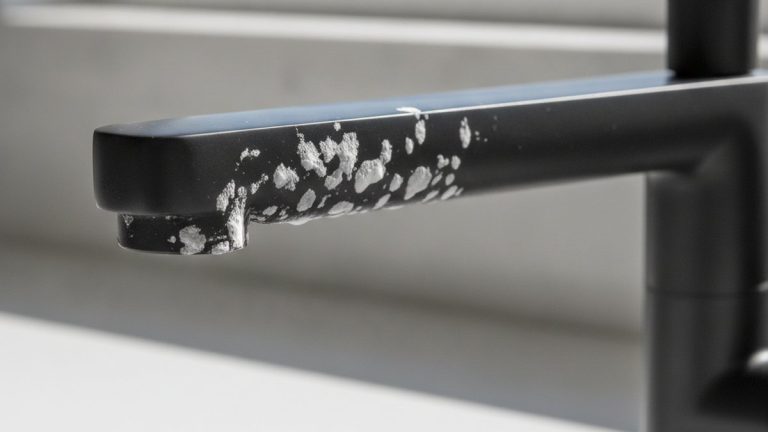
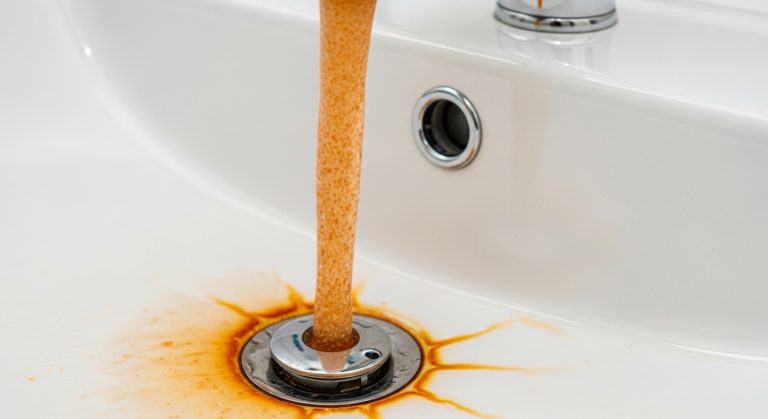
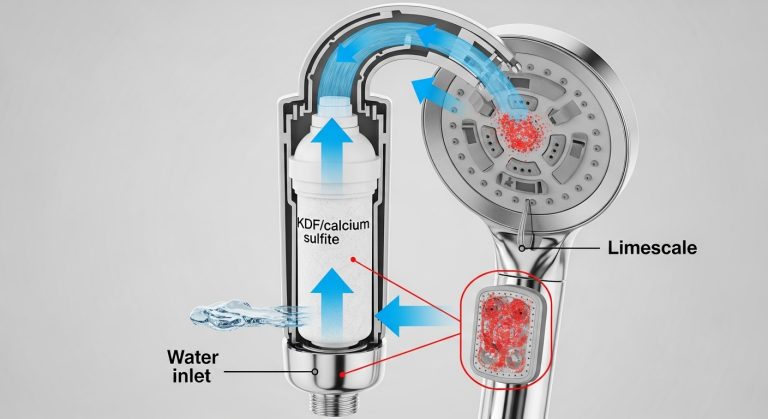
Nine times out of ten, a shower that suddenly got weak is clogged with mineral scale — not a plumbing failure. Hard water leaves calcium and magnesium deposits inside the nozzles and the internal flow restrictor, and over months they choke the spray. If your pressure dropped gradually or “one day,” start here before spending a dime.
Here’s how to tell what you’re dealing with. A sudden, whole-house drop usually points to a pressure regulator, a partially closed main valve, or a municipal issue. A drop only in the shower almost always means the shower head or the shower arm/valve is restricted. Test it fast: unscrew the head and run the bare shower arm into a bucket. If the water blasts out of the bare arm but dribbles through the head, your head is the problem — a cleaning or a replacement fixes it. If the bare arm is also weak, the issue is upstream and a new head alone won’t save you.
- Clogged nozzles — white crusty buildup on the rubber tips; the most common cause.
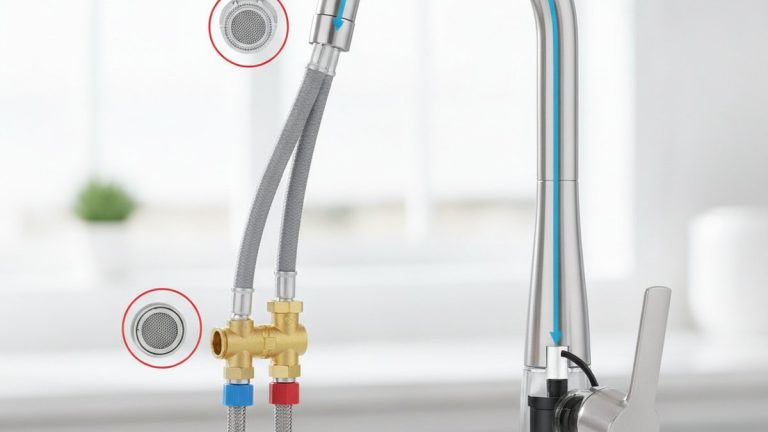
- Clogged flow restrictor — the small plastic disc inside the head traps sediment.
- Low home pressure — under 40 psi at the hose bib; a pressure gauge from any hardware store confirms it.
- Half-closed shut-off valve — after any plumbing work, a valve left partly closed starves every fixture.
- Old galvanized pipes — corrosion narrows the pipe interior; a whole-home issue in pre-1970 houses.
How do I fix a weak shower head without buying a new one?
Clean the head first — a 30-minute vinegar soak restores full flow in most cases and costs nothing. Unscrew the shower head from the arm by hand or with a wrench (wrap the connection in a cloth so you don’t scratch the finish), then work through the steps below. This alone fixes the majority of “low pressure” complaints we hear.
- Soak in white vinegar. Submerge the whole head in a bowl of warm white vinegar for 2–4 hours (overnight for heavy scale). Distilled white vinegar dissolves calcium without harming chrome or nickel.
- Scrub the nozzles. Most modern heads have soft rubber nozzle tips — rub them with your thumb or an old toothbrush and the loosened scale flakes right off.
- Rinse and check the restrictor. Look inside the inlet for a small colored plastic disc (the flow restrictor). Clear any grit from it with a paperclip. Do not remove it entirely unless you understand your local code — it’s there for a reason (more on that below).
- Clean the inlet screen. Many heads have a tiny mesh filter washer at the threads that traps debris. Pop it out, rinse it, reseat it.
- Re-tape and reinstall. Wrap the shower arm threads with 2–3 turns of PTFE (plumber’s) tape and hand-tighten the head back on.
If cleaning gets you 80% of the way there but the spray still feels soft, now it’s worth upgrading to a head actually engineered for low pressure. And if your problem is a specific model acting up, we’ve written targeted fixes — for example, why a Speakman shower head loses pressure and how to fix it and the low-pressure fix for a Hello Klean shower head. Those walk through model-specific quirks that a generic clean won’t catch.
Can removing the flow restrictor really boost pressure — and should I?
Yes, removing the flow restrictor increases the water volume and can make a weak shower feel stronger — but it’s a trade-off, and it’s often the wrong move. The restrictor is a small disc that caps flow at the federal maximum of 2.5 gallons per minute (GPM). Pulling it lets more water through, which helps in a genuinely low-pressure home, but it also raises your water and heating bills and, in some states, violates local water-efficiency codes.
Our honest take: try cleaning the restrictor before removing it, and only remove it if your home pressure is genuinely low (under ~40 psi) and you’ve confirmed the restrictor is the bottleneck. In a normal-pressure home, yanking the restrictor mostly just wastes water. A better path for most people is buying a head designed to feel powerful at low flow — which brings us to the fixture itself.
Which type of shower head is best for very low water pressure?
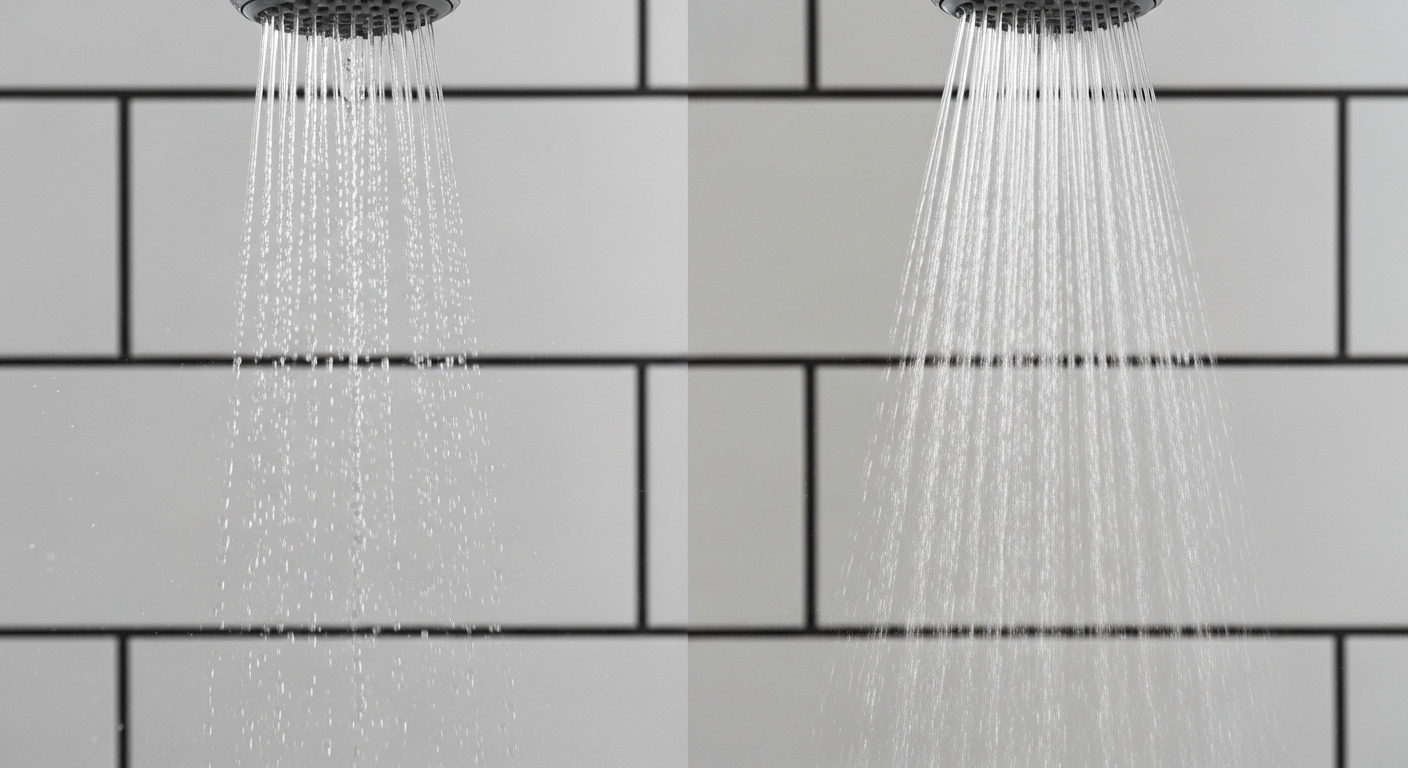
A high-pressure fixed head with fewer, wider jets and air injection is the best type for very low water pressure — it concentrates the flow you do have and mixes in air to make each droplet hit harder. Rainfall heads and heads with 50+ tiny pinhole nozzles are the worst for low pressure, because they spread thin water across a huge area and rely on gravity, not force. Here’s how the main types stack up.
| Shower head type | How it feels at low pressure | Best for | Rough price |
|---|---|---|---|
| High-pressure fixed (air-injection) | Strong, tingly — concentrates flow | Genuinely low-pressure homes | $25–$60 |
| Handheld with adjustable spray | Good — “jet” mode focuses water | Rinsing, flexibility, cleaning | $30–$80 |
| Turbo/rotating single-jet | Very strong but narrow coverage | Extreme low pressure, small spray area | $15–$40 |
| Rainfall / rain shower | Weak, drizzly — needs high pressure | High-pressure homes only | $40–$200+ |
| Pressure-boosting (chamber design) | Noticeably firmer spray | Well water, upper floors | $30–$70 |
The key specs to look for: fewer nozzles (6–18 rather than 50+), air-injection or “turbo” technology, a narrower spray face (4–5 inches, not a 10-inch rain plate), and a head that’s rated at the full 2.5 GPM rather than an eco 1.5 or 1.8 GPM model. Physics is simple here: the same water pushed through fewer, smaller openings comes out faster and hits harder. That’s why a $30 focused head can out-punch a $150 rainfall head in the same low-pressure bathroom.
If you love the look of a rain shower but have low pressure, don’t give up entirely — a wall-mounted rain head positioned close to your body performs better than a ceiling mount, and getting the plumbing geometry right matters. Our guide to the rainfall shower head nipple and rain shower install explains how the connection and reach affect the spray you actually feel.
What shower head specs should I look for on well water or an upper floor?
On well water or a top-floor apartment, prioritize a pressure-boosting head with an internal compression chamber and a full 2.5 GPM rating — these are engineered for exactly your situation. Well systems and high floors both fight gravity and distance, so a head that squeezes and accelerates the water compensates for what your plumbing can’t provide.
Well-water homes have a second issue: sediment and iron. A head with easy-clean silicone nozzles and a removable inlet screen will stay strong far longer than a fine-mesh rainfall plate that clogs in weeks. If your well pressure swings, check your pressure tank’s cut-in/cut-out settings (commonly 30/50 or 40/60 psi) — bumping a properly sized system up can help every fixture, not just the shower.
- Flow rating: choose 2.5 GPM, not 1.5–1.8 GPM eco models.
- Nozzle type: soft silicone, rub-clean, replaceable.
- Chamber design: “pressure boost” or “turbocharged” in the product description.
- Serviceability: removable restrictor and inlet filter for well sediment.
- Certification: look for WaterSense or ASME A112.18.1 / CSA B125.1 compliance for verified performance.
When is low pressure a plumbing problem, not a shower head problem?
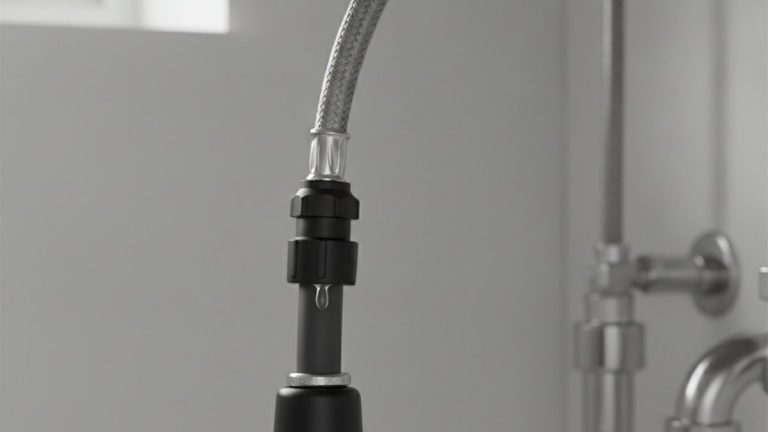
If your bare shower arm dribbles with the head removed, or if every faucet in the house is weak, the problem is your plumbing — and no shower head will fix it. In that case, the culprit is usually one of a handful of upstream issues, and some are cheap DIY fixes while others need a plumber.
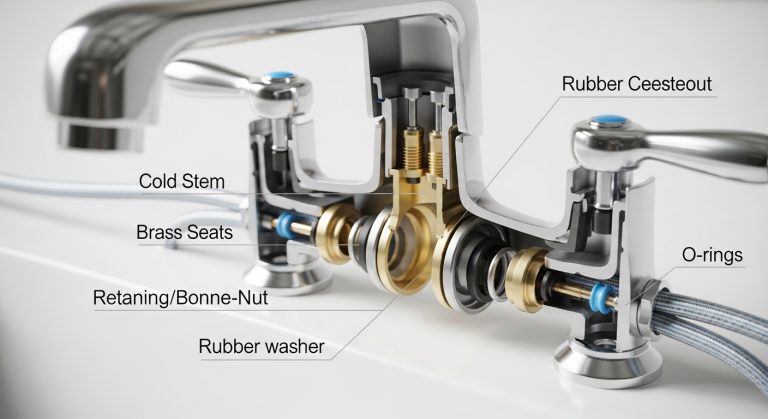
Start with the free checks: make sure your main shut-off and the shower’s own valve are fully open, and test whether the weakness is hot-only, cold-only, or both (hot-only often means a failing water heater or a clogged hot-side line). Then check your home’s pressure regulator (PRV) — a failing regulator is a common, fixable cause of whole-house low pressure and typically sits where the main line enters the house. If your shower valve itself is old, a worn or scaled cartridge can throttle flow; swapping it is a manageable DIY job, and if you’re going that deep it’s worth watching a real walkthrough like this shower valve installation video guide before you start. For a whole house with 1960s galvanized pipe, though, corrosion is the answer and repiping is the real fix.
Quick rule of thumb: if a new head plus a good cleaning doesn’t noticeably help and your bucket test showed a weak bare arm, stop buying shower heads and call a pro to check pressure at the main. You’ll save money and frustration.
Faucitta’s quick pick: what we’d actually buy
For most low-pressure bathrooms, we’d buy a high-pressure air-injection fixed head or a handheld with a dedicated “jet” setting, rated at 2.5 GPM, in chrome or brushed nickel to match existing fixtures. It’s the highest-impact, lowest-cost upgrade — usually $25–$60 — and it pairs perfectly with the vinegar clean above. Skip the big rainfall plate unless you’ve confirmed your home pressure is strong. If you’re mixing and matching finishes across your bathroom, keeping the shower head, valve trim, and faucet in the same family (chrome, brushed nickel, or matte black) reads far more intentional than a mismatched set.
FAQ
Will any shower head increase water pressure?
No — a shower head can’t add pressure your home doesn’t produce, but the right design makes existing pressure feel stronger by pushing water through fewer, narrower jets and injecting air. That’s why a focused high-pressure head can feel dramatically better than a rainfall head in the same bathroom, even though the actual GPM is identical.
Is 40 psi enough for a good shower?
40 psi is the low end of acceptable — most homes run 45–80 psi, and building codes generally require a minimum of 40 psi. At 40 psi a well-designed high-pressure head still delivers a satisfying shower, but a rainfall head will feel weak. If you measure below 40 psi at a hose bib, look at your pressure regulator or main valve before blaming the shower head.
Does removing the flow restrictor void my warranty?
Often, yes — many manufacturers state that removing the flow restrictor voids the warranty and may violate local water-efficiency codes, since the restrictor is what keeps the head compliant at 2.5 GPM. Clean it before you remove it, and if you do pull it, keep the part in case you need to reinstall it. Check your specific model’s manual first.
Why is only my hot water pressure low in the shower?
Low pressure on the hot side alone usually points to sediment buildup in your water heater, a partially closed hot-side shut-off, or scale in the hot inlet of the shower valve cartridge. Flush your water heater and check that its outlet valve is fully open; if the cartridge is scaled, replacing it restores balanced flow. Cold-only weakness points to the cold supply line instead.
How often should I clean my shower head to keep pressure up?
In hard-water areas, soak and scrub your shower head every 2–3 months; in soft-water homes, once or twice a year is plenty. Regular cleaning prevents the slow scale buildup that quietly strangles pressure over time, and it extends the life of the nozzles. A head with rub-clean silicone tips makes this a two-minute job.
Can a handheld shower head help with low pressure?
Yes — a handheld with an adjustable spray and a concentrated “jet” or “massage” mode is one of the best low-pressure options, because you can focus the full flow into a tighter, stronger stream and hold it close to your body. Just avoid cheap handhelds with long, kinked hoses, which can reduce pressure; choose a smooth, wide-bore hose.
About the author: This guide was written by Faucitta’s fixtures team, who spec, install, and pressure-test shower heads and valves as part of our day-to-day product work. We’ve bench-tested low-pressure heads against calibrated psi gauges and real hard-water conditions to see which designs actually hold up.
About Faucitta: Faucitta (faucitta.net) is a specialist in faucets, shower heads, and bathroom fixtures. Our recommendations favor products that meet recognized performance and safety standards — WaterSense labeling and ASME A112.18.1 / CSA B125.1 certification — and we prioritize fixtures backed by real manufacturer warranties over marketing claims. We test for flow, finish durability, and long-term serviceability so the advice here reflects how these products behave over years, not just out of the box.