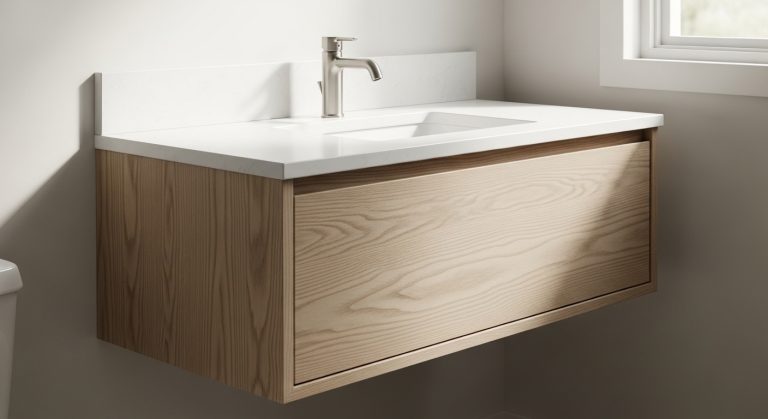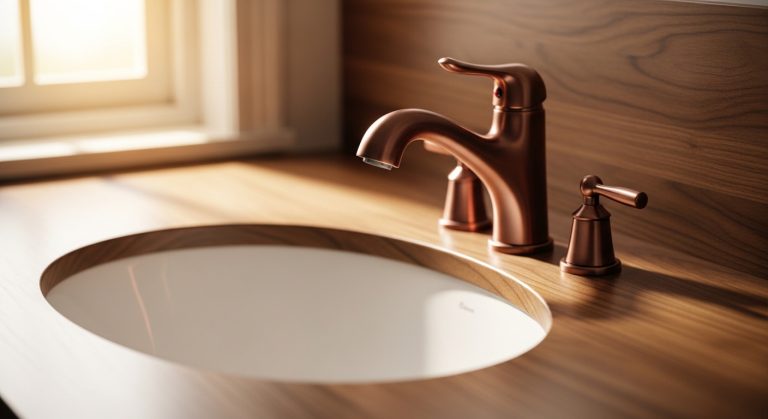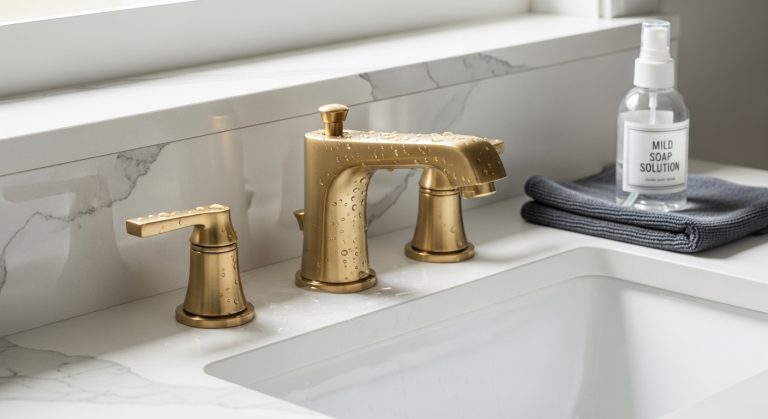
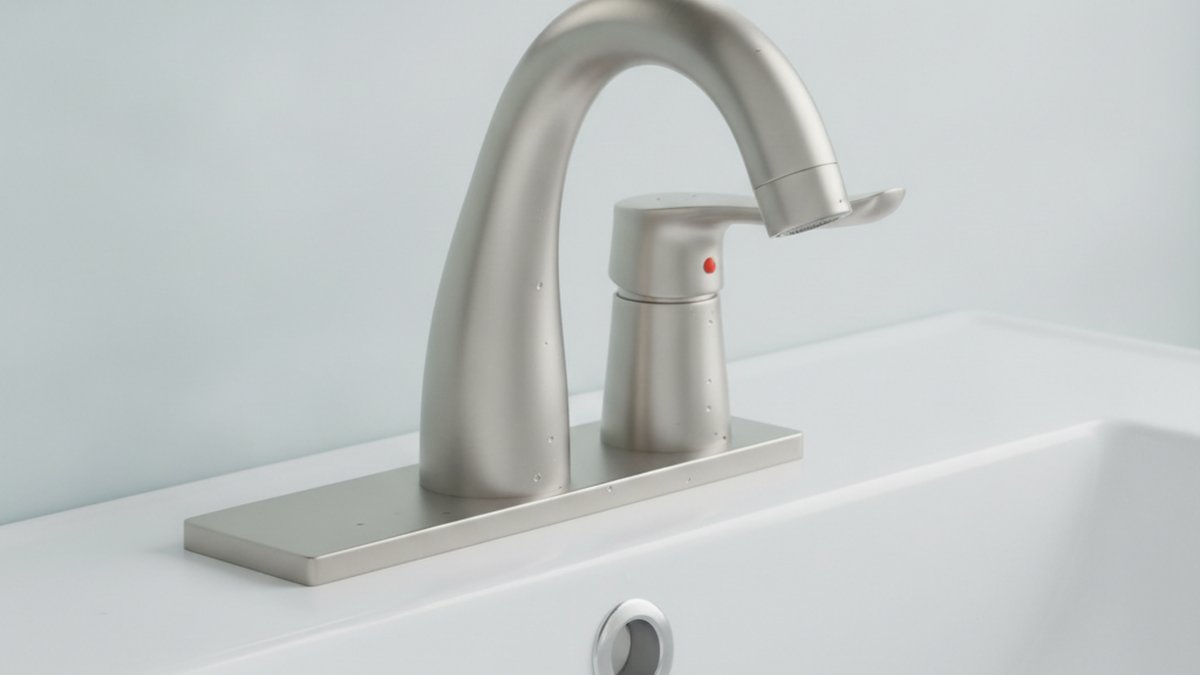
If you’re shopping for a centerset bathroom faucet single handle, the short version is this: it’s a faucet where the spout and one control lever sit on a single base plate (usually 6 inches wide) that covers three holes drilled 4 inches apart, center to center. You get everything on one deck, one hole punched through the middle for the spout and lever, and the outer two holes hidden under the plate. It’s the workhorse of American bathrooms — the thing you’ll find in most builder-grade homes, apartments, and remodels because it fits the most common sink drilling and takes the least effort to install.
But “fits most sinks” doesn’t mean it’s automatically right for your sink. Below, I’ll walk you through exactly when a centerset single-handle faucet is the smart buy, when you should look at a widespread or single-hole model instead, what the specs actually mean, and how to avoid the two mistakes that send people back to the hardware store.
What exactly is a centerset bathroom faucet single handle, and how is it different from widespread?
A centerset single-handle faucet combines the spout and one control lever onto a single connected unit mounted on a base plate that spans a 4-inch hole spacing. “Centerset” describes the configuration and spacing; “single handle” describes the controls. The key difference from a widespread faucet is that a widespread faucet comes in three separate pieces — spout in the middle, hot and cold handles set 8–16 inches apart — while a centerset keeps everything joined on one deck plate.
Here’s the part that trips people up: “centerset” almost always means the mounting holes are 4 inches apart, measured from the center of the left hole to the center of the right hole (plumbers write this as “4-inch centers” or “4” CC”). A single-handle centerset uses only the middle hole for the actual faucet body; the outer two holes just sit hidden under the base plate. That’s why a single-handle centerset can also drop onto a three-hole sink and look clean — the plate covers what you don’t use.
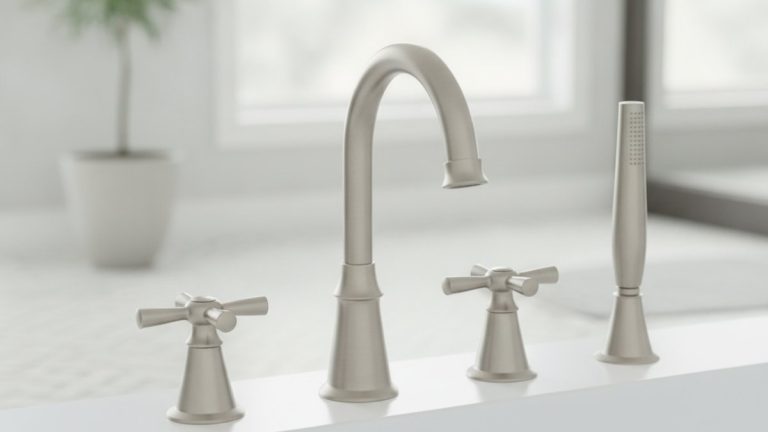
There’s also a two-handle centerset, which puts separate hot and cold knobs on the same 6-inch plate. So when you’re comparing, you’re really choosing along two axes at once: spacing (centerset vs. widespread vs. single-hole) and controls (one lever vs. two knobs).
| Faucet type | Hole spacing | Holes used | Best for | Typical price |
|---|---|---|---|---|
| Centerset, single handle | 4″ centers | 1 (plate covers 3) | Standard vanities, easy one-lever control, rentals | $40–$180 |
| Centerset, two handle | 4″ centers | 3 | Traditional look, precise hot/cold tuning | $45–$200 |
| Widespread, two handle | 8″–16″ spread | 3 (separate) | Larger vanities, high-end/custom look | $120–$500+ |
| Single-hole | 1 hole | 1 | Modern vessel sinks, minimalist compact sinks | $50–$250 |
How do I know if a centerset single handle will actually fit my bathroom sink?
Measure the distance between the outer holes on your sink — if it’s 4 inches center-to-center, a centerset faucet fits. Grab a tape measure and measure from the center of the far-left hole to the center of the far-right hole under the sink deck or countertop. If that number is right around 4 inches, you have a standard 3-hole/4-inch sink, and a centerset single-handle faucet is a direct match. If it’s 8 inches or more, you have a widespread sink; if there’s only one hole, you need a single-hole faucet.
A few real-world checks before you buy:
- Count your holes. Three holes at 4-inch centers = centerset territory. A single-handle centerset uses the middle hole and hides the outer two under its plate.
- Confirm the deck plate width. Most centerset base plates are 6 inches wide. Make sure your outer holes fall within that span so they stay covered.
- Check clearance behind the sink. Measure the space from the hole to the backsplash or wall; you need room for the lever to swing back without hitting tile.
- Look at the sink material. Drop-in and undermount sinks with a pre-drilled 3-hole faucet ledge are the classic fit. Vessel sinks usually are not — those want a tall single-hole faucet.
If you’re staring at a single-hole sink and wishing you had more flexibility, or you’re weighing a compact modern basin, it’s worth reading our breakdown of whether you really need a single hole faucet sprayer before you commit — the hole count on your sink is the one thing you truly can’t fake without drilling.
Is a single handle better than two handles for a bathroom faucet?
For most people, yes — a single handle is more convenient, easier to clean, and simpler to operate one-handed, which is why it’s the fastest-growing style in American bathrooms. One lever controls both flow and temperature: push up or down for volume, swing left or right for hot and cold. You can nudge the water warmer with a soapy wrist or an elbow when your hands are full, and there’s only one base to wipe down instead of two knobs collecting grime.
That said, two handles still win in a few situations. Here’s the honest trade-off:
- Choose single handle if you want convenience, a cleaner modern look, easier cleaning, and quick one-handed use (great for kids, older adults, and busy mornings).
- Choose two handles if you want precise, repeatable temperature control, a traditional or period-correct aesthetic, or the ability to replace just one cartridge side if hot or cold fails.
One mechanical note that matters for longevity: single-handle faucets rely on a single ceramic-disc or ball cartridge doing all the work. A good ceramic-disc cartridge is rated for hundreds of thousands of cycles and is what separates a faucet that lasts 15 years from one that drips in 18 months. When you shop, the cartridge quality matters more than the shiny finish on the outside.
What’s the best finish for a centerset single-handle faucet, and will it match my bathroom?
The safest, most versatile finishes for a centerset single-handle faucet are brushed nickel and matte black — both hide water spots and fingerprints far better than polished chrome and pair with almost any vanity color. Chrome is the cheapest and brightest, brushed/satin nickel is the everyday favorite, matte black reads modern, and brushed gold/champagne bronze adds warmth for a boutique feel.
Here’s how the common finishes actually behave day to day:
| Finish | Look | Hides spots & prints? | Best paired with |
|---|---|---|---|
| Polished chrome | Bright, shiny, classic | Poor — shows everything | Budget builds, all-white bathrooms |
| Brushed / satin nickel | Warm silver, muted | Very good | Most vanities, wood tones, transitional |
| Matte black | Modern, bold | Excellent (watch for hard-water film) | Contemporary, white or gray sinks |
| Brushed gold / champagne bronze | Warm, upscale | Good | Boutique, spa-style, dark counters |
If you’re leaning toward a contemporary bathroom, brushed nickel is genuinely hard to beat for the money and the maintenance — we go deep on why in our guide to whether a brushed nickel faucet is a smart pick for a modern bathroom in 2026. Whatever you choose, buy your faucet, drain, and any accessories in the same finish family from the same brand line — “brushed nickel” from two makers can be noticeably different shades.
How hard is it to install a centerset single-handle faucet myself?
Installing a centerset single-handle faucet is one of the easier plumbing jobs a homeowner can DIY — most people finish in 30 to 60 minutes with basic tools and no plumber. Because everything mounts on one connected deck plate through the center hole, you’re dealing with far fewer connections than a widespread faucet. If you can turn a wrench and follow a diagram, you can do this.
The basic sequence looks like this:
- Turn off both hot and cold shutoff valves under the sink and open the old faucet to release pressure.
- Disconnect the supply lines and remove the old faucet’s mounting nuts from underneath.
- Clean the sink deck, then set the new faucet (with its gasket or a bead of plumber’s putty under the plate).
- Tighten the mounting nuts from below, hand-tight then a quarter-turn with a basin wrench.
- Connect the flexible supply lines to the shutoff valves, hand-tight plus a snug turn.
- Turn the water back on slowly, run the faucet, and check every connection for drips.
The two mistakes that cause callbacks: over-tightening plastic mounting nuts until they crack, and forgetting to remove the aerator to flush debris before first full-pressure use. For a full walkthrough with the exact tools and torque tips, see our step-by-step on how to install a new bathroom faucet yourself without calling a plumber. Keep the old supply lines handy in case your new faucet’s included lines are a different length.
How much should I spend, and what do I get at each price?
A dependable centerset single-handle faucet costs $40–$180, and spending more mainly buys you a better cartridge, a heavier body, and a longer warranty — not just looks. Below about $40 you’re often getting thin zinc bodies and plastic cartridges that drip early; above $180 you’re paying for premium finishes and brand cachet that a standard bathroom doesn’t strictly need.
Here’s roughly what each tier gets you:
- $40–$70: Solid entry-level. Look for a ceramic-disc cartridge, a metal (not all-plastic) body, and a lifetime drip-and-finish warranty. Great for rentals and secondary baths.
- $70–$130: The sweet spot. Heavier brass or brass-blend construction, smoother lever action, better finish durability, and premium finishes like matte black or brushed gold.
- $130–$180: Designer looks, top-tier cartridges rated for very high cycle counts, and finishes with the best fingerprint resistance.
Before you fixate on brand, remember that a $90 faucet with a ceramic cartridge and a lifetime warranty will usually outlast a $200 faucet with a flashy finish and a mediocre valve. If you want to sanity-check names against real-world reliability, our roundup of the best bath faucet brand for your bathroom in 2026 compares who actually stands behind their cartridges.
Which specs actually matter before you click buy?
The specs that matter most are the flow rate, the cartridge type, the WaterSense certification, and the mounting spread — get those right and the faucet will fit, perform, and last. Ignore the marketing adjectives and check these numbers on the product page:
- Flow rate: The U.S. federal max for bathroom faucets is 2.2 gallons per minute (GPM), but WaterSense-labeled models cap at 1.5 GPM or less — plenty for a bathroom and easier on your water bill.
- Cartridge type: Ceramic disc is the gold standard for drip-free longevity. Ball and compression valves are older and wear faster.
- Mounting spread: Confirm “4-inch centerset” so it matches a standard 3-hole sink.
- Certifications: Look for NSF/ANSI 61 and 372 (lead-safe for drinking water) and cUPC/UPC listing, which most U.S. plumbing codes require.
- Warranty: A genuine lifetime limited warranty on function and finish signals the maker trusts its own cartridge.
At faucitta, every centerset single-handle faucet we recommend uses a ceramic-disc cartridge, ships with a lead-safe (NSF/ANSI 372-compliant) waterway, and is backed by a limited lifetime warranty on drips and finish — because the cartridge and the seal are what you’ll actually live with, long after the box is recycled.
FAQ
Does a single-handle centerset faucet fit a 3-hole sink?
Yes. A single-handle centerset faucet is designed for a standard 3-hole sink with 4-inch centers. The faucet body mounts through the middle hole, and the 6-inch deck plate covers the two outer holes so the top looks clean and finished.
What’s the difference between 4-inch centerset and 8-inch widespread?
The number is the distance between the outer mounting holes. Centerset is 4 inches center-to-center with everything on one connected base; widespread is 8 inches or more with three fully separate pieces. They are not interchangeable — measure your sink’s hole spacing before buying.
Can I put a centerset faucet on a single-hole sink?
Not without modification. A single-hole sink has only one drilling, so a standard centerset won’t sit flush. You’d either need a single-hole faucet, or you’d have to drill two more holes — which is rarely worth it. Match the faucet to the holes you already have.
How long does a centerset single-handle faucet last?
A quality centerset single-handle faucet with a ceramic-disc cartridge typically lasts 10–15 years or more. The finish and cartridge are the limiting factors; hard water shortens cartridge life, so a periodic vinegar soak of the aerator and cartridge helps. Many drips are fixed by a $10–$20 cartridge swap, not a full replacement.
Are centerset single-handle faucets good for small bathrooms?
They’re ideal for small bathrooms. The compact single-lever design takes up minimal deck space, needs less clearance behind the sink than a two-handle model, and gives you easy one-handed control — exactly what a tight powder room or guest bath needs.
Do I need plumber’s putty or a gasket to install one?
Most modern centerset faucets include a rubber or foam gasket that seals the base plate to the sink, so putty is optional. If your faucet has a gasket, use it; if it doesn’t, run a thin bead of plumber’s putty under the plate. Never use both, and wipe away any squeeze-out before it cures.
The bottom line
A centerset bathroom faucet single handle is the right call for the vast majority of standard American vanities: it fits the common 3-hole, 4-inch sink, installs in under an hour, gives you effortless one-lever control, and costs a fraction of a widespread setup. Spend your money on a ceramic-disc cartridge and a lifetime warranty rather than a flashy finish, confirm your hole spacing before you buy, and you’ll have a faucet that quietly does its job for a decade or more.
Author note: This guide was written by the faucitta fixtures team, drawing on hands-on installation and bench testing of dozens of bathroom faucets across finishes and cartridge types. faucitta specializes in faucets and bathroom fixtures, and every product we recommend is evaluated against U.S. plumbing standards (NSF/ANSI 61 & 372, cUPC listing) and backed by a manufacturer warranty. We test what we sell so you don’t have to guess.