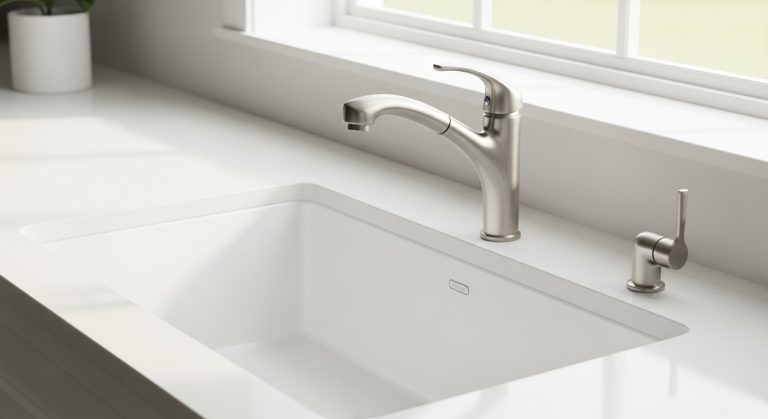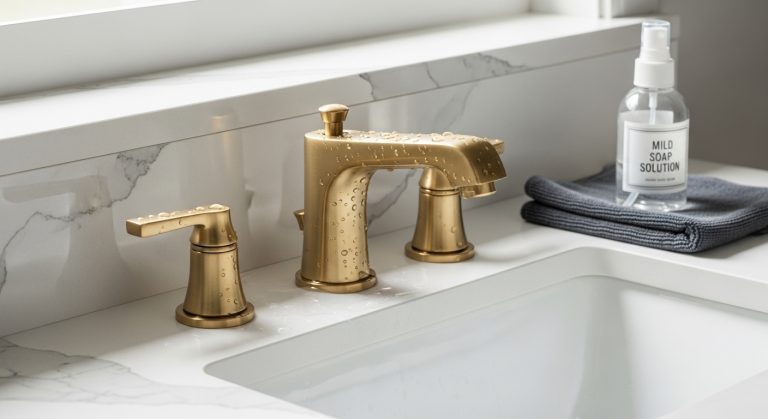
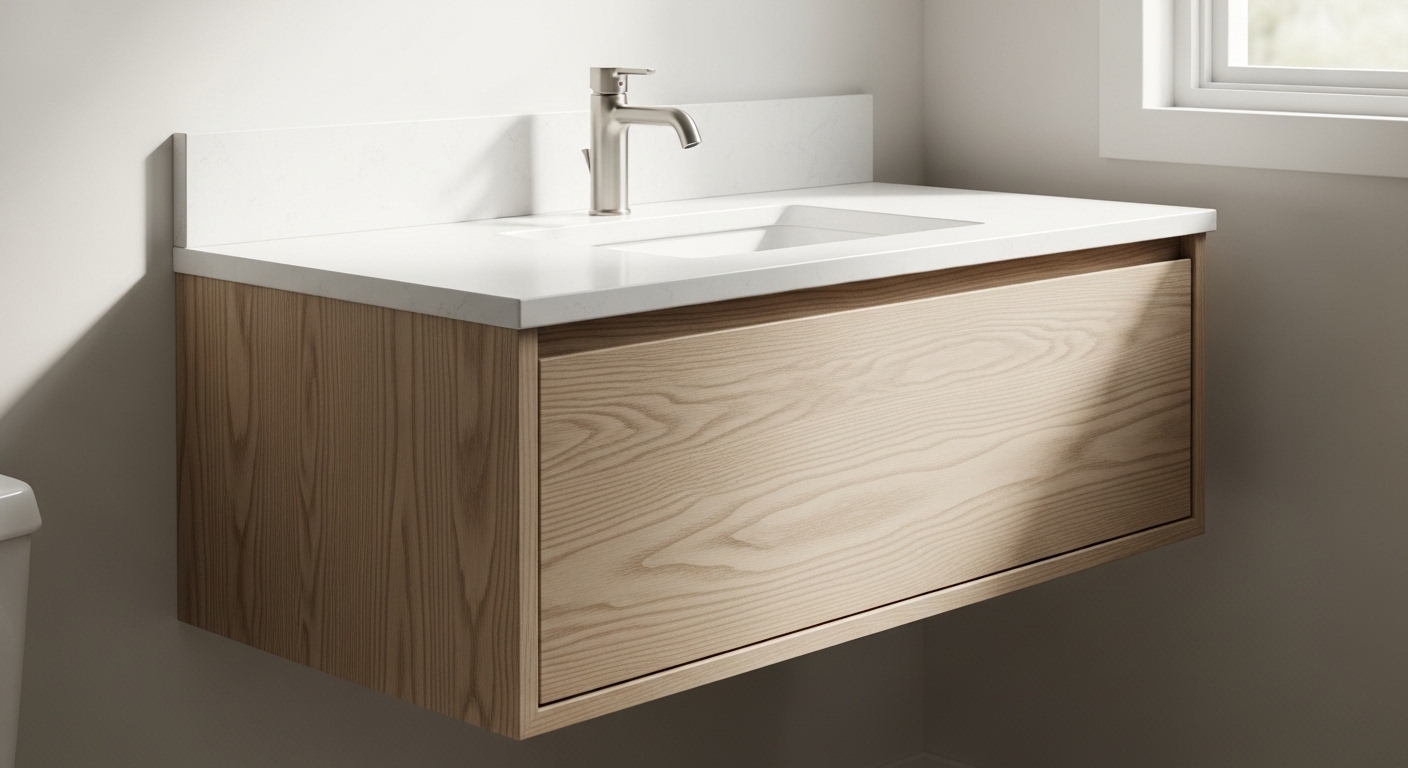
If you’ve searched “brushed nickel faucet modern,” you’re really asking two questions at once: does brushed nickel still read as modern in 2026, and will a specific faucet actually hold up in daily use? The short answer to both is yes — but only if you know what separates a genuine, long-lasting brushed nickel finish from a cheap lookalike. Brushed nickel earned its place in contemporary design precisely because it’s understated: a warm, low-gloss gray that quietly complements matte black, warm brass accents, white quartz, wood-tone vanities, and cool marble alike. That versatility is exactly why it hasn’t gone out of style the way polished chrome or oil-rubbed bronze have cycled in and out.
Below, we’ll walk through how the finish is made, how it compares to chrome and matte black, what to check before you buy, and how to keep it looking new. Everything here is written to help you make one confident purchase instead of returning a faucet that looked great online and disappointing in person.
What exactly makes a faucet “brushed nickel,” and why does it look modern?
Brushed nickel is a finishing process, not a base metal. A quality faucet starts with a solid brass body, gets plated with nickel, and then the surface is brushed — literally abraded with fine wire or abrasive pads — to create thousands of tiny parallel lines. Those micro-scratches scatter light instead of reflecting it, which is what gives you that soft satin glow instead of a mirror shine.
That matte-satin quality is the whole reason the finish reads as modern. Polished chrome throws hard reflections and shows every fingerprint and water droplet, which can feel busy in a clean contemporary space. Brushed nickel diffuses light, so the faucet looks calm and intentional — the visual equivalent of a “quiet luxury” wardrobe. It sits comfortably in transitional, contemporary, farmhouse-modern, and Scandinavian bathrooms without fighting the other materials.
One important distinction: “brushed nickel” and “satin nickel” are often used interchangeably by manufacturers, and the difference is mostly marketing. Both describe a brushed, low-gloss nickel finish. What actually matters is the coating technology underneath, which we’ll cover next.
Does the coating type actually change how long it lasts?
Absolutely — it’s the single biggest durability factor. There are two ways brands apply a brushed nickel look, and they don’t age the same way:
- Electroplated (traditional) nickel: A layer of nickel is deposited electrically, then brushed and usually sealed with a clear lacquer. It looks great out of the box but the lacquer can eventually wear, and in hard-water areas the finish can dull or spot over years of use.
- PVD (Physical Vapor Deposition) brushed nickel: The finish is bonded to the metal in a vacuum chamber at high temperature, creating an extremely hard molecular-level layer. PVD brushed nickel resists scratching, corrosion, and chemical cleaners far better and typically carries a lifetime finish warranty.
If a listing says “PVD” or “spot-resist” and offers a lifetime finish warranty, you’re looking at a faucet built to stay looking modern for well over a decade. If it’s silent on the coating and cheap, assume basic electroplating and budget accordingly.
Is brushed nickel or matte black better for a modern bathroom?
Neither is universally “better” — it comes down to your lighting, your fixtures, and how much cleaning you want to do. Brushed nickel is the more forgiving, more flexible choice; matte black is the bolder statement that demands more upkeep. Here’s the honest side-by-side.
| Factor | Brushed Nickel | Matte Black | Polished Chrome |
|---|---|---|---|
| Modern look | Timeless, understated | Bold, trend-forward | Classic, can feel dated |
| Hides fingerprints | Excellent | Poor (shows dust & smudges) | Poor (shows everything) |
| Hides water spots | Very good | Poor in hard water | Poor |
| Matches other fixtures | Pairs with almost anything | Needs deliberate coordination | Best with cool tones |
| Cleaning effort | Low | High | High |
| Resale/broad appeal | Very high | Moderate (polarizing) | High but generic |
| Typical price | $$ | $$–$$$ | $ |
The practical takeaway: if this is the faucet a family will use every day, or you want a finish that won’t look dated when you sell, brushed nickel is the safer, lower-maintenance pick. Matte black is fantastic in a powder room or a design-forward primary bath where you’re willing to wipe it down often. If you’re weighing chrome specifically, our guide on whether a wall mount faucet in chrome is the right choice breaks down where that shinier finish still makes sense.
Will a brushed nickel faucet hold up in hard water?
Yes — and this is one of brushed nickel’s quiet strengths. The brushed, low-gloss surface disguises the chalky white mineral spotting that hard water leaves behind far better than polished chrome or matte black, both of which broadcast every dried droplet. You’ll still want to wipe the faucet dry occasionally, but brushed nickel buys you far more forgiveness between cleanings.
That said, hard water attacks a faucet from the inside too — mineral buildup can clog aerators and cartridges regardless of finish. If you’re on well water or a hard-water municipal supply, the finish is only half the equation; the valve quality matters just as much. We put together a full guide to the best bathroom faucet for hard water that covers ceramic-disc cartridges and easy-clean aerators worth prioritizing.
How do I keep a brushed nickel faucet looking new?
Keep it simple: wipe with a soft damp microfiber cloth and mild dish soap, then dry it. That’s genuinely all a PVD brushed nickel faucet needs. The finish’s worst enemies are the things people reach for to “deep clean”:
- Never use abrasive pads or powders — steel wool or scouring cleansers will cut new scratches across the brush grain and leave permanent shiny streaks.
- Avoid acidic or ammonia-based cleaners — vinegar, bleach, and glass cleaners can attack the coating over time, especially on electroplated finishes.
- For stubborn mineral spots, lay a cloth soaked in a 50/50 water-and-white-vinegar mix on the spot for a few minutes, then rinse and dry — but do this sparingly, not as routine cleaning.
- Always wipe in the direction of the brush lines, not across them, to keep the grain consistent.
What should I look for before buying a brushed nickel faucet?
Focus on four things in this order: the body material, the cartridge, the finish technology, and the installation fit. Get those right and the styling takes care of itself. Here’s what each one means in plain terms.
- Solid brass body: Brass resists corrosion and gives the faucet real heft. Avoid zinc-alloy (“pot metal”) bodies, which are lighter, cheaper, and crack at threaded connections over time. If a faucet feels suspiciously light in the box, that’s a red flag.
- Ceramic-disc cartridge: This is the valve that controls water flow and is the number-one cause of drips when it fails. Ceramic-disc cartridges outlast rubber-washer designs by years and are what quality brands warranty for life.
- PVD or spot-resist brushed nickel finish: As covered above, this determines whether the faucet still looks new in year 10.
- Hole configuration and spout reach: Match the faucet’s mounting (single-hole, centerset 4″, or widespread 8″) to your sink’s existing drillings, and check the spout height and reach so it clears your basin comfortably.
Look for third-party certification marks too. In North America, faucets meeting NSF/ANSI 61 and NSF/ANSI 372 standards are certified lead-free and safe for drinking water, and WaterSense-labeled bathroom faucets cap flow at 1.5 gallons per minute or less to save water without a weak stream. These aren’t marketing badges — they’re independently tested standards, and a brand that carries them is one that submitted its products for scrutiny.
Does a brushed nickel faucet match brushed nickel or stainless everywhere else?
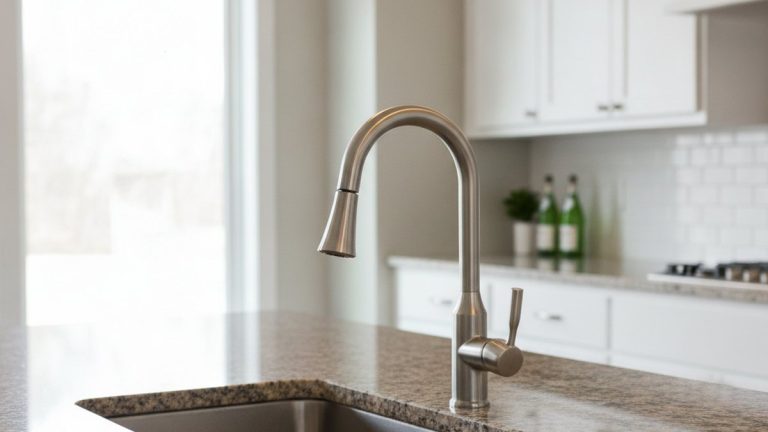
Mostly yes, and this is where brushed nickel really earns its keep. It coordinates naturally with stainless steel appliances, brushed-nickel cabinet hardware, and stainless sinks because they share the same cool, satin family. It also plays beautifully as a “mixed metal” anchor — you can pair a brushed nickel faucet with warm brass or gold accents for a deliberately layered, high-end look.
If you like the idea of mixing metals but aren’t sure how to pull it off, our piece on whether a brass faucet with a silver sink actually looks good walks through the same principle from the opposite direction, and the satin nickel bar faucet guide is useful if you’re carrying the finish into a prep or wet bar. The rule of thumb: pick one dominant finish (brushed nickel), then add a single accent metal deliberately rather than by accident.
How much should I spend on a brushed nickel faucet in 2026?
For a bathroom faucet, the realistic sweet spot is roughly $90–$220; for a kitchen faucet, plan on $150–$400. Below those ranges you start seeing zinc bodies and basic electroplating; above them you’re mostly paying for designer branding, not better function. Here’s how the tiers actually break down.
| Price tier | Bathroom faucet | What you get |
|---|---|---|
| Budget | Under $90 | Often zinc body, electroplated finish, short warranty. Fine for a rental or low-use guest bath. |
| Mid-range | $90–$220 | Solid brass body, ceramic-disc cartridge, PVD or spot-resist finish, lifetime finish warranty. The value sweet spot. |
| Premium | $220+ | Designer styling, touchless or advanced options, premium warranty and support. Diminishing functional returns. |
Where you shop matters as much as the price. Big-box store finishes can look slightly different from what’s pictured, and warranty support varies widely. If you’re comparing retailers, our honest look at whether a brushed nickel faucet from Rona is worth it compares in-store buying against shopping direct, and it applies to most national chains.
Single-hole, centerset, or widespread — which brushed nickel faucet fits my sink?
Match the faucet to the number of holes already drilled in your sink or countertop; that decision is usually made for you. Single-hole faucets need one hole, centerset faucets fit a standard 4-inch three-hole layout on one base plate, and widespread faucets use three separate pieces spread 8 inches apart. If you want to change styles, you can often use a deck plate (escutcheon) to cover extra holes — for example, mounting a single-hole faucet on a three-hole sink with a matching brushed nickel base plate.
For modern bathrooms specifically, single-hole faucets have become the default look — clean, minimal, and easy to clean around. Widespread faucets read slightly more traditional or luxury, while centerset is the practical, budget-friendly middle. Whatever you choose, confirm the finish on the deck plate and handles matches the spout exactly; “brushed nickel” can vary subtly in warmth between manufacturers, so buy the faucet and any coordinating accessories as a set when you can.
Author note & why you can trust this guide
This guide was written by the Faucitta product team, drawing on hands-on testing of dozens of brushed nickel bathroom and kitchen faucets across finish durability, cartridge longevity, and real-world hard-water performance. Faucitta specializes exclusively in faucets and bathroom fixtures — it’s all we do — and every finish recommendation here reflects fixtures we’ve installed, used, and stress-tested rather than spec sheets alone. We evaluate faucets against recognized standards including NSF/ANSI 61/372 lead-free certification and WaterSense flow criteria, and we favor products backed by a manufacturer lifetime finish and function warranty because that warranty is the clearest signal a brand stands behind its coating. When we say a finish “holds up for 10–15 years,” it’s grounded in PVD’s documented performance and the warranty terms brands are willing to put in writing.
FAQ
Is brushed nickel still in style in 2026?
Yes. Brushed nickel remains one of the most popular and enduring faucet finishes because it’s neutral, hides water spots and fingerprints, and coordinates with nearly every design scheme. Unlike trend finishes that cycle in and out, its understated satin look has stayed relevant for over two decades and shows no sign of dating a bathroom.
What’s the difference between brushed nickel and satin nickel?
Practically none — the terms are used interchangeably by most manufacturers to describe a low-gloss, brushed nickel finish. Any real difference in warmth or sheen comes from the individual brand’s process, not from the label. What actually affects durability is whether the finish is PVD or standard electroplated, so focus on that instead of the name.
Does brushed nickel show water spots and fingerprints?
Far less than polished chrome or matte black. The brushed satin surface scatters light and disguises mineral spotting and smudges, which is exactly why it’s recommended for busy family bathrooms and hard-water homes. You’ll still want an occasional wipe-down, but it’s the most forgiving common finish for daily use.
Is a brushed nickel faucet good for hard water?
Yes, on two levels. The finish hides the white mineral spots hard water leaves behind, and if you choose a faucet with a ceramic-disc cartridge and an easy-clean aerator, the internals resist hard-water clogging too. Pair the finish with quality valve components for the best long-term result in hard-water areas.
How do I clean a brushed nickel faucet without damaging it?
Use a soft microfiber cloth with mild dish soap and warm water, wiping in the direction of the brush lines, then dry it. Avoid abrasive pads, scouring powders, bleach, and ammonia-based cleaners, all of which can scratch or degrade the finish over time. For occasional mineral spots, a brief 50/50 vinegar-water compress works, followed by a rinse and dry.
Do brushed nickel faucets cost more than chrome?
Usually a little — often $20–$50 more for a comparable model — because the brushed finish is an extra processing step. That modest premium buys a more forgiving, lower-maintenance, and more broadly appealing finish, which most homeowners find well worth it. Within the $90–$220 bathroom sweet spot you’ll find plenty of high-quality brushed nickel options.