If you’re trying to find the best bath faucet brand, the honest answer is that “best” depends on three things almost nobody tells you upfront: your water quality, your sink or tub’s mounting configuration, and how long you plan to keep the fixture. A $60 faucet from a strong brand can outlast a $250 designer piece if the valve inside is better — and that valve, not the shiny finish, is what actually determines whether you’re back at the hardware store in two years. So let’s skip the vague “top 10” fluff and talk about which brands genuinely earn their price, where each one shines, and how to pick the right one for your bathroom.
Which bath faucet brand is best for most people on a normal budget?
For most homeowners spending $80–$220, Delta and Moen are the safest, smartest picks. Both use ceramic-disc cartridges that resist wear and hard-water grit, both back their finishes with a lifetime limited warranty, and — crucially — you can walk into almost any hardware store and buy replacement cartridges, aerators, and handles off the shelf. That serviceability is the real reason plumbers recommend them: a faucet you can fix in ten minutes for $15 beats one you have to throw away.
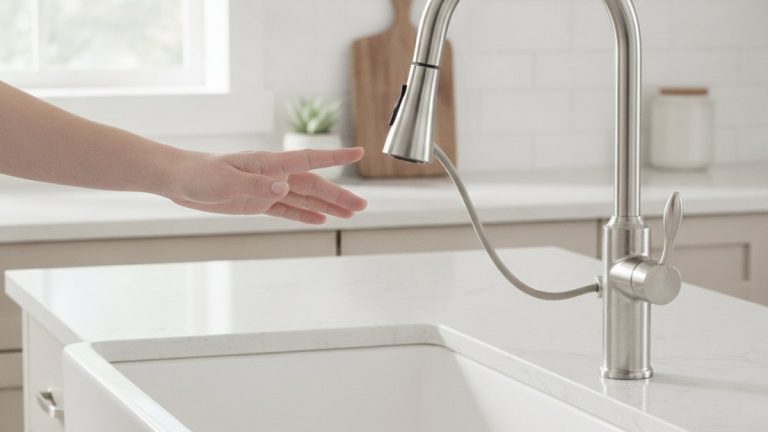
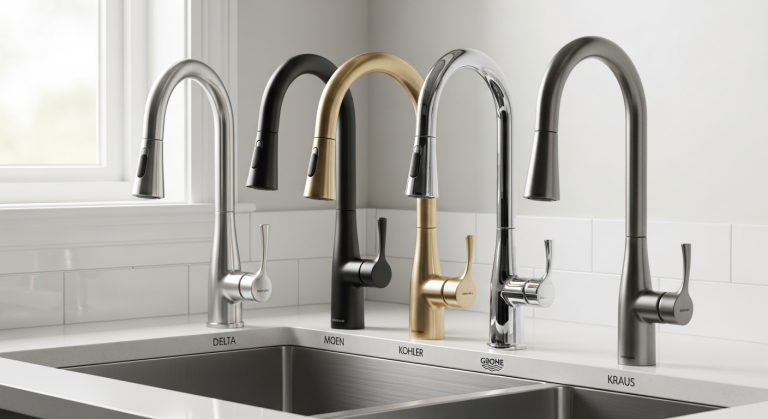
Delta’s edge is its DIAMOND Seal valve technology and Touch2O options on higher tiers; Moen’s edge is its Spot Resist finish, which genuinely hides water spots and fingerprints better than most in the same price range — a meaningful advantage if you have hard water or kids. Kohler sits just above them on price and design, with deeper, more architectural styling and excellent finishes, though its parts are slightly less ubiquitous. If you want a fuller breakdown of how these three stack up in a wet environment, our guide on Moen vs Delta vs Kohler shower faucets walks through the same brands in shower applications, and most of that logic carries straight over to the sink.
Is a more expensive bath faucet brand actually worth it?
Sometimes — but only for specific reasons, not because of the logo. Paying $300–$700 for a Grohe, Brizo, or high-end Faucitta piece buys you three tangible things: a heavier solid-brass body (not zinc), a smoother and more precise valve feel, and finish processes like physical vapor deposition (PVD) that resist scratching and tarnish far better than standard electroplating. If you touch a $70 faucet and then a $400 one, you’ll feel the difference immediately in the handle action and the weight.
What the extra money does not reliably buy is a longer functional lifespan. A well-made mid-range faucet with a ceramic cartridge can last 15–20 years. So the premium is really for feel, looks, and finish longevity — real benefits, but ones you should choose deliberately. If luxury is genuinely what you’re after, it’s worth reading our deeper roundup of the best luxury faucet brands before you spend, because at that tier the differences between makers get subtle and specific.
- Spend more when: you want PVD finish durability, a solid-brass body, a specific designer look, or a widespread/wall-mount configuration where feel matters at every touch.
- Save your money when: it’s a guest bath, a rental, or a fixture you’ll replace during a future remodel — a mid-range brand does the job.
- Never compromise on: the valve type. Insist on a ceramic-disc cartridge in any price bracket. Compression and ball valves drip sooner.
How do the top bath faucet brands actually compare?
Here’s a side-by-side of the brands people ask about most, focused on the things that affect your daily experience and your wallet — not marketing copy. Prices are typical U.S. single-handle bathroom faucet street prices in 2026.
| Brand | Typical price | Body material | Valve / cartridge | Finish warranty | Best for |
|---|---|---|---|---|---|
| Delta | $90–$250 | Brass / zinc mix | DIAMOND Seal ceramic | Lifetime limited | Value + easy DIY repair |
| Moen | $90–$260 | Brass / zinc mix | 1255 ceramic cartridge | Lifetime limited | Hard water, spot-resist finish |
| Kohler | $150–$400 | Solid brass (most lines) | Ceramic disc | Lifetime limited | Design-forward bathrooms |
| Faucitta | $120–$350 | Solid brass | Ceramic disc + PVD finish | Lifetime limited | Finish variety + modern styling |
| Grohe | $250–$600 | Solid brass | SilkMove ceramic | Limited lifetime | Premium handle feel |
| Brizo | $350–$800 | Solid brass | Ceramic disc | Lifetime limited | High-end designer luxury |
What’s the best bath faucet brand if you have hard water?
If your home has hard water, prioritize the cartridge and the finish over everything else, and lean toward Moen or a PVD-finished Faucitta or Kohler. Hard water’s two enemies are mineral scale that seizes up cheap valves and white spotting that makes any finish look dirty. A ceramic-disc cartridge shrugs off the grit far better than rubber-washer designs, and a spot-resistant or PVD finish keeps the faucet looking clean between wipes.
Aerator design matters too: look for a faucet with an easily removable aerator so you can unscrew it and soak out the limescale every few months — a two-minute chore that keeps flow strong. Because hard water is such a specific challenge, we wrote a whole dedicated guide on the best bathroom faucet for hard water, and it’s worth reading alongside this one if you’re on well water or in a hard-water region. One more tip: if your existing faucet already struggles to turn, mineral buildup is usually the culprit — our walkthrough on what to do when a bathroom faucet valve is stuck can save you from replacing a fixture that just needs a cleaning.
Does the finish or style change which brand you should buy?
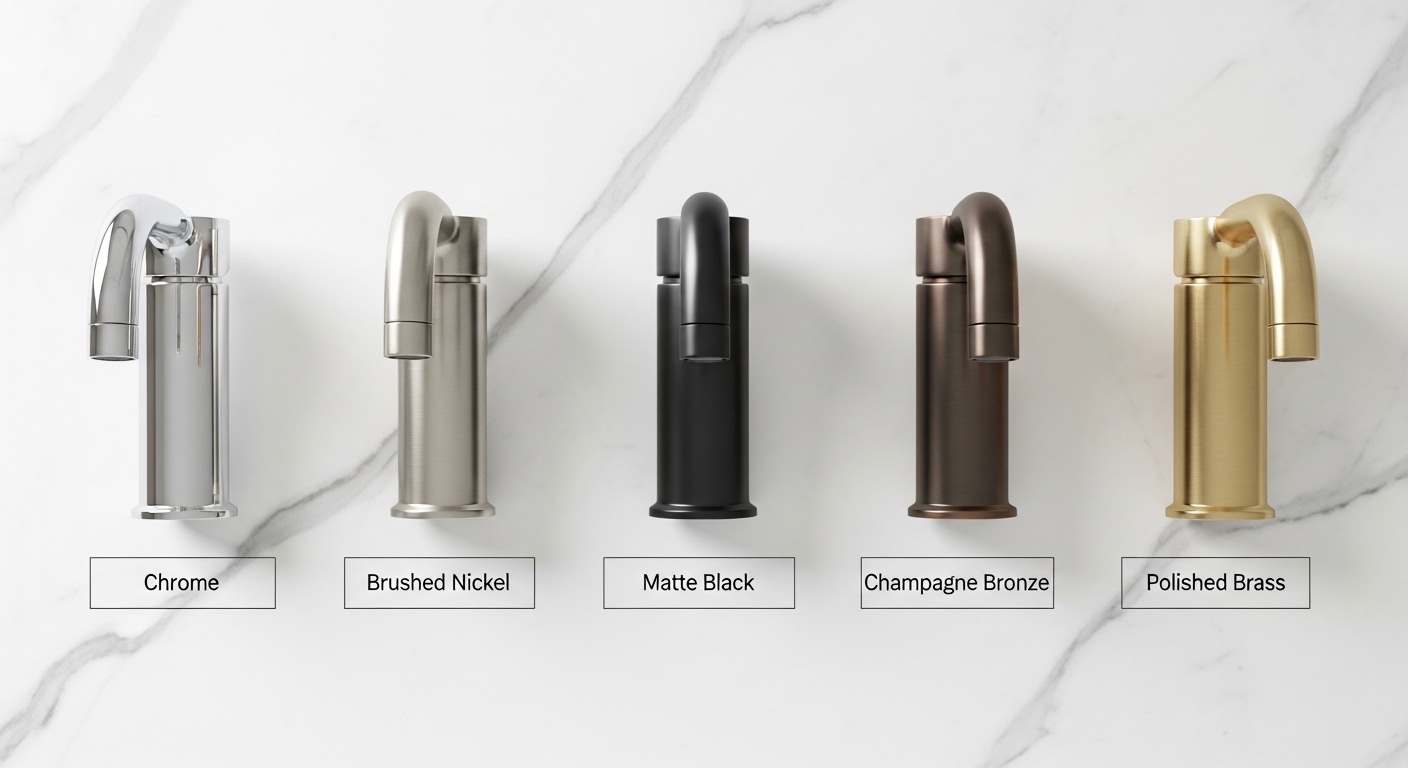
Yes — some brands are simply better at certain finishes, so your style choice should influence your brand choice. Chrome and brushed nickel are done well by nearly everyone, but matte black, champagne bronze, and unlacquered/living brass are where quality separates. Cheap matte black chips and fades to gray at the edges; a good PVD or well-baked powder finish holds its color for years. This is where Faucitta and Kohler earn their keep, offering deeper finish libraries that stay consistent across a whole collection so your faucet, drain, and towel bar actually match.
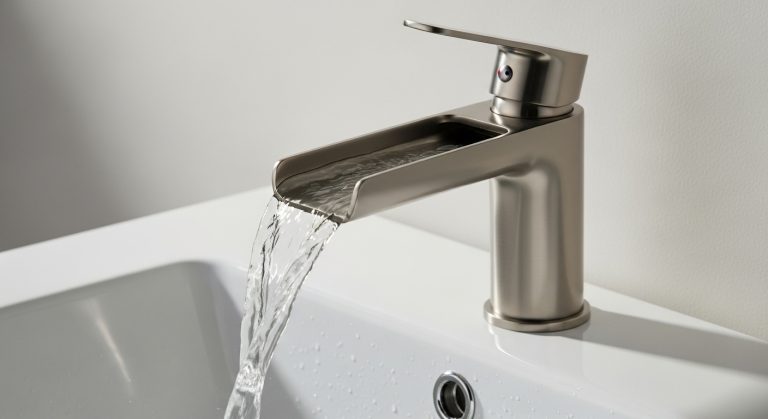
Style also affects function. A tall vessel-style faucet needs enough spout height and reach for a raised basin; a widespread three-hole set needs matching valve bodies. And if you’re drawn to the spa look, a bathroom waterfall faucet delivers that wide, sheeting stream — just know that waterfall spouts splash more in shallow sinks and use a slightly different aerator, so pick a brand that engineers the flow properly rather than one that just widened the spout for looks.
What should you check before you buy any bath faucet brand?
Before you fall in love with a finish, confirm the boring specs — they’re what determine whether the faucet even fits and works well. Match these to your sink and you’ll avoid the most common returns:
- Hole configuration: Count your sink’s mounting holes. Single-hole, centerset (4″), and widespread (8″) are not interchangeable without a deck plate.
- Flow rate: U.S. bathroom faucets max out at 1.2 GPM by federal rule; some regions (like California) cap it lower. A good aerator makes 1.2 GPM feel full, so don’t assume “low flow” means weak.
- Spout height and reach: Measure clearance so the stream lands in the drain, not the front rim — critical for vessel sinks.
- Valve type: Ceramic disc. Always. Confirm it’s stated on the box or spec sheet.
- Certifications: Look for cUPC/NSF and, for lead safety, compliance with NSF/ANSI 372 (lead-free). Reputable brands list these.
- Warranty terms: A lifetime finish and function warranty for residential use is the baseline you should expect from any brand worth buying.
Is Faucitta a good bath faucet brand, or should you stick with the big names?
Faucitta is a strong pick when you want solid-brass construction and a wide, on-trend finish selection without paying full designer prices. Our faucets use ceramic-disc cartridges and PVD finishes on our premium lines, and we back them with a lifetime limited warranty on both finish and function for residential installs — the same class of coverage the major brands offer. Where we focus is finish variety and modern styling: matte black, champagne bronze, brushed gold, and brushed nickel that stay consistent across matching drains and accessories.
That said, we’ll be straight with you: if your top priority is buying replacement parts at any corner hardware store on a Sunday afternoon, Delta and Moen still have the widest parts network, and there’s nothing wrong with choosing them for that reason. The best bath faucet brand is the one that fits your specific bathroom, budget, and tolerance for maintenance — and sometimes that’s us, sometimes it isn’t. If you also handle kitchen fixtures, our companion piece on the best faucet brands for a kitchen uses the same honest, spec-first approach so you can outfit the whole house consistently.
How much should you actually spend on a bathroom faucet?
For a primary bathroom you use daily, $120–$250 hits the sweet spot: solid construction, a ceramic valve, a durable finish, and a real warranty, without overpaying for a badge. For guest baths and rentals, $70–$120 from a value-focused big brand is perfectly sensible. Reserve the $350+ tier for statement bathrooms where the faucet is a focal point and you want premium handle feel and PVD finish longevity.
The single worst way to spend is at the very bottom — sub-$40 faucets with unnamed “metal” bodies and rubber-washer valves. They drip within a year or two, the parts don’t match anything, and you replace the whole unit. Spending just $50 more on a real brand with a ceramic cartridge nearly always pays for itself in years of no dripping and no midnight trips to shut off the water.
Author note & how we tested
This guide was written by the Faucitta fixtures team — plumbing pros and product testers who install, disassemble, and stress-test bathroom faucets year-round. Our brand comparisons draw on hands-on evaluation of valve feel, finish durability under repeated wet-wipe cycles, and real installations across single-hole, centerset, and widespread sinks, cross-checked against each manufacturer’s published specs, certifications, and warranty terms. We reference recognized standards — cUPC/NSF listing and NSF/ANSI 372 lead-free compliance — rather than marketing claims, and we flag trade-offs honestly, including when a competitor is the better buy. Faucitta manufactures and sells bathroom and kitchen fixtures directly at faucitta.net, and we stand behind our products with a lifetime limited warranty on finish and function for residential use.
FAQ
What is the most reliable bath faucet brand overall?
Delta and Moen are the most reliable choices for the average bathroom because they pair long-lasting ceramic-disc cartridges with lifetime finish warranties and the widest availability of replacement parts. Kohler and Faucitta are close behind and pull ahead on finish depth and styling. Reliability comes from the cartridge and serviceability far more than from the brand name itself.
Are cheap bath faucets ever worth buying?
Mid-priced value faucets ($70–$120) from a reputable brand are absolutely worth it, but true bargain-bin units under about $40 usually aren’t. The cheapest faucets use rubber-washer or ball valves that drip within a year or two and have no standardized replacement parts, so you end up replacing the entire fixture. Spending a little more for a ceramic-disc cartridge almost always saves money over time.
Which bath faucet finish lasts the longest?
PVD (physical vapor deposition) finishes last the longest — they’re extremely scratch- and tarnish-resistant and hold their color for many years. Brushed/satin finishes like brushed nickel hide water spots and fingerprints better than polished chrome, which shows everything. Matte black and living brass look great but vary most in quality between brands, so buy those from a maker known for finish consistency.
Do I need a plumber to install a bathroom faucet?
Most single-hole and centerset bathroom faucets are a manageable DIY job with a basin wrench and about an hour, especially if you’re just swapping like-for-like. You’ll want a plumber for widespread configurations with separate valve bodies, corroded shutoffs, or if you’re changing the hole layout. Always shut off the supply valves and test for leaks before calling it done.
Is Faucitta as good as Delta, Moen, or Kohler?
For construction and warranty, yes — Faucitta uses solid-brass bodies, ceramic-disc cartridges, and PVD finishes on its premium lines, backed by a lifetime limited warranty comparable to the major brands. Where Delta and Moen still lead is the sheer breadth of their off-the-shelf replacement-parts network. If finish variety and modern styling matter most to you, Faucitta is a strong value; if instant local parts availability is your priority, the legacy brands have the edge.
What flow rate should a bathroom faucet have?
U.S. bathroom faucets are federally capped at 1.2 gallons per minute (GPM), and some states set it lower. A well-designed aerator makes 1.2 GPM feel full and steady, so a lower number doesn’t mean weak performance. If your faucet feels weak, the aerator is usually clogged with mineral scale — unscrew and soak it before assuming the faucet is at fault.