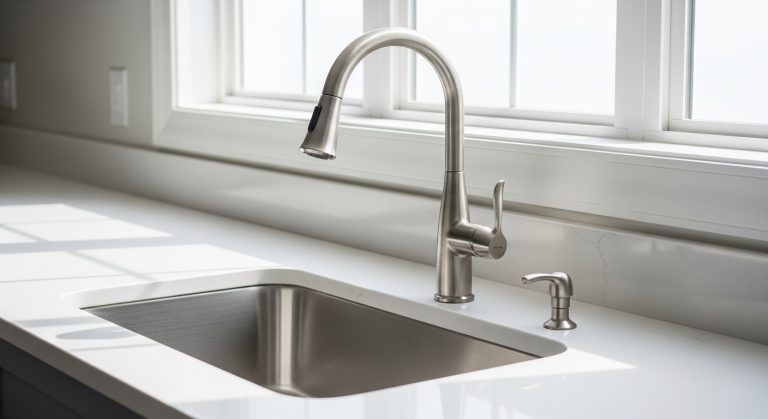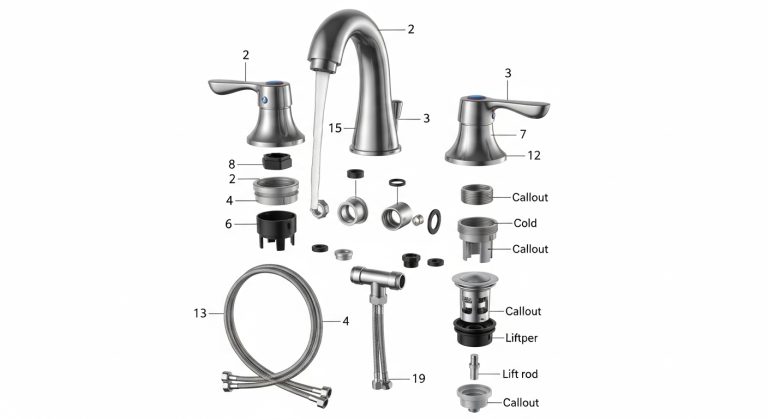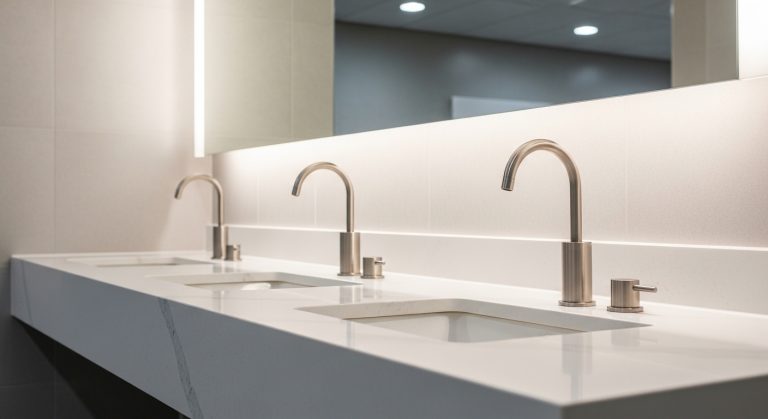
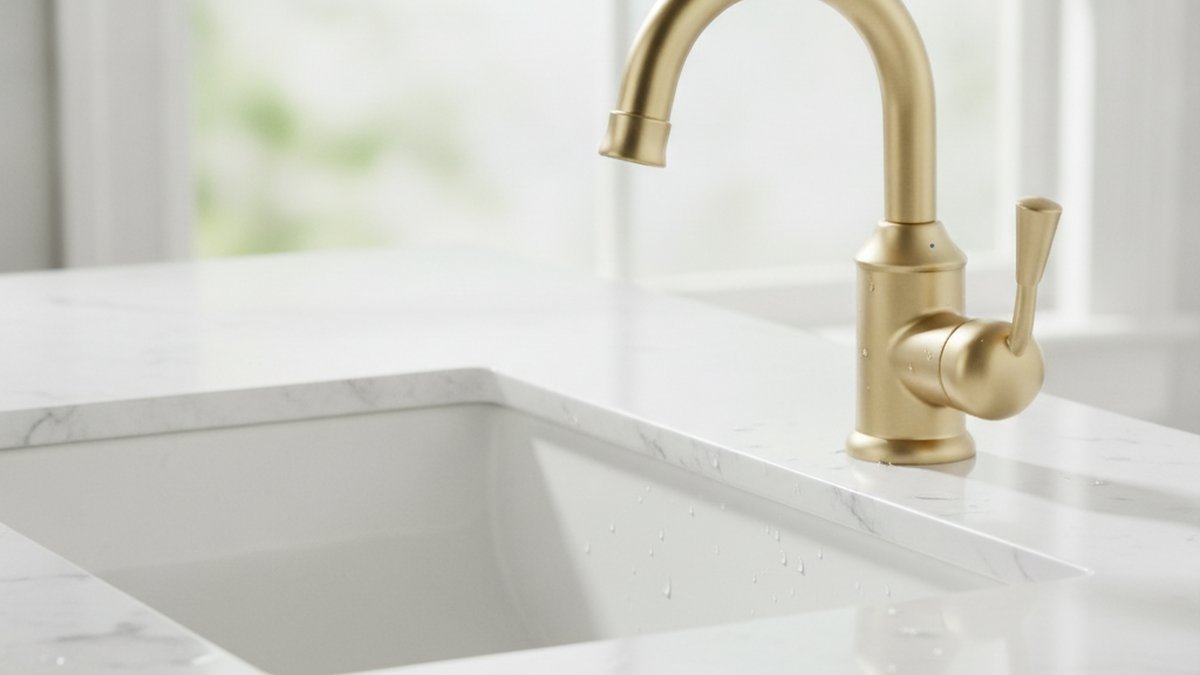
If you’re shopping for a 4 inch centerset faucet gold, the short version is this: it’s one of the easiest, most forgiving upgrades you can make to a standard bathroom sink, as long as your sink actually has three holes drilled 4 inches apart. Gold has quietly become one of the most-requested bathroom finishes since 2023, and the 4-inch centerset is the single most common faucet configuration in American homes, so you’re right in the sweet spot of “looks premium, still fits almost everything.” Below I’ll walk you through exactly how to know it fits, which shade of gold to buy, how the finishes hold up, and where people go wrong.
What exactly is a 4 inch centerset faucet, and how do I know mine fits?
A 4 inch centerset faucet is a faucet built for a sink with three holes where the two outer holes are 4 inches apart, measured from the center of one hole to the center of the other. The spout and handles all sit on a single connected base (a deckplate), so it installs as one unit rather than three separate pieces.
Here’s the quick test. Grab a tape measure, look at the top of your sink or countertop, and measure from the middle of the left hole to the middle of the right hole. If that number is right around 4 inches (100 mm), you need a centerset. If it’s 8 inches or more, you have a “widespread” layout and a centerset won’t reach — that’s the single most common mistake people make when ordering online.
A few things worth knowing before you commit:
- Three holes vs. one hole: Most centersets are made for 3-hole sinks, but many gold centersets ship with an optional escutcheon (deckplate) so you can also mount them on a single-hole sink. Check the spec sheet.
- Single-handle vs. two-handle: A 4-inch centerset comes in both. Two-handle gives you that classic hot/cold look; single-handle is easier one-handed and reads more modern.
- Spout height and reach: For a standard drop-in or undermount bathroom sink, look for 4–6 inches of spout height and 4–5 inches of reach so water lands near the drain, not the front rim.
If you want to go deeper on the single-handle version specifically — how it compares to two-handle for ease of use and cleaning — we cover that in detail in our guide on whether a centerset bathroom faucet single handle is the right choice for your sink.
Which shade of gold should I actually buy — brushed gold, champagne bronze, or polished gold?
For most bathrooms, buy brushed gold or brushed/champagne gold, not shiny polished gold. Brushed finishes hide water spots and fingerprints far better, and their softer, warmer tone blends with more cabinet colors, tile, and hardware than mirror-bright polished brass does.
“Gold” is a marketing umbrella, and the exact tone matters a lot when you’re standing at the sink every morning. Here’s how the common versions actually differ:
| Finish name | Look | Best for | Fingerprints / spots |
|---|---|---|---|
| Brushed / Champagne Gold | Soft, warm, matte-satin | Modern & transitional baths; most homes | Hides them well |
| Polished Gold / Brass | Mirror-bright, yellow, glam | Traditional, high-glam, powder rooms | Shows every spot |
| Matte Gold | Flat, no shine | Contemporary, minimalist | Hides them, but can look chalky in some light |
| Rose / Pink Gold | Warm with a copper tint | Statement powder rooms | Moderate |
One practical tip: gold shades from different brands are almost never an exact match. If you already have a gold towel bar, drain, or shower trim, try to buy the faucet from the same brand and the same finish name so the tones line up. “Champagne bronze” from one maker and “brushed gold” from another can read noticeably different side by side.
Will a gold faucet still look good in a few years, or is it a trend that’ll date fast?
Brushed and champagne gold have real staying power; they’ve been mainstream in kitchen and bath design since roughly 2019 and show no signs of leaving. High-glam polished gold is more fashion-driven and can feel dated faster, which is another reason brushed tones are the safer long-term buy. Because gold pairs naturally with white, black, navy, marble, and warm wood, it tends to survive changes in your tile and paint better than trend colors do.
Is a gold finish durable, or will it wear off around the handles?
A quality gold faucet is very durable — as long as it uses a PVD finish rather than cheap electroplating. PVD (physical vapor deposition) bonds the color to the brass at a molecular level, so it resists scratching, tarnishing, and the wear you’d otherwise see around handles and the spout tip. Electroplated or painted gold, by contrast, can rub thin at high-touch spots within a year or two.
When you’re comparing products, look for these signals of a finish that will last:
- “PVD” stated in the specs. This is the single most important word to look for in a gold finish.
- A solid brass body, not zinc alloy or plastic, under the finish — brass resists corrosion and holds the finish better.
- A finish warranty. Reputable brands back the finish and the drip-free cartridge for years; a “lifetime finish and function” warranty tells you they trust the coating.
- Compliance markings such as cUPC certification and lead-free (NSF/ANSI 61 & 372) brass — required for potable water in the U.S. and a sign the faucet was actually tested.
Caring for it is genuinely easy: wipe with a soft, damp cloth and dry it. Skip abrasive pads, vinegar, and anything with bleach or ammonia — those are what strip and dull plated finishes over time. Gold doesn’t tarnish the way people fear when it’s PVD; the “dulling” you sometimes read about is almost always a cleaning-chemical problem, not the metal itself. If you’ve ever dealt with a blotchy or discolored finish on another fixture, our breakdown of why a faucet finish gets discolored and how to fix it explains what actually causes it.
How hard is it to install a 4 inch centerset gold faucet myself?
For most people it’s a 30-to-60-minute DIY job with no special skills — a centerset is actually the easiest faucet type to install because everything mounts as one connected unit through the three (or one) existing holes. If you can turn off a shutoff valve and tighten a nut under the sink, you can do this.
The basic sequence looks like this:
- Turn off the hot and cold shutoff valves under the sink and open the faucet to release pressure.
- Disconnect and remove the old faucet (a basin wrench helps with the tight nuts up behind the bowl).
- Set the new gold centerset — with its deckplate — into the holes, using the included gasket or a thin bead of plumber’s putty/silicone under the base.
- Tighten the mounting nuts from below, connect the hot and cold supply lines, and hook up the pop-up drain if one’s included.
- Turn the water back on slowly and check every connection for drips before you walk away.
The most common snag isn’t the new faucet — it’s getting the old one off when the mounting nuts are corroded. If you’re fighting rust, our step-by-step on installing a new bathroom faucet yourself without calling a plumber walks through the whole removal-and-replace process, tools and all.
What tools and parts do I need before I start?
Very few. You’ll want an adjustable wrench, a basin wrench, plumber’s putty or silicone, a bucket and towel, and new braided stainless supply lines (always replace these — they’re cheap and the old ones are the thing most likely to leak). Most gold centersets include the mounting hardware and often the matching pop-up drain, but confirm the drain is included and in the same gold finish if you want them to match.
Which rooms and sinks does a gold centerset work best in?
A 4-inch gold centerset is ideal for standard-size bathroom sinks, powder rooms, guest baths, and any vanity with a 3-hole drop-in or undermount basin. It’s especially good in powder rooms, where a warm gold finish adds a little “jewelry” to a small, high-impact space that guests notice.
Where it’s not the right call: a wide, rectangular vessel-style setup often looks better with a taller single-hole or wall-mount faucet, and any sink drilled for 8-inch spacing needs a widespread, not a centerset. Match the faucet to the sink’s holes first, then the style.
If you’re weighing gold against the other big neutral, brushed nickel, it’s worth reading our take on whether a brushed nickel faucet is a smart pick for a modern bathroom — the two finishes suit slightly different palettes, and gold leans warmer while nickel stays cooler and more understated.
Do my drain, towel bars, and other fixtures have to match the gold exactly?
Your drain and the faucet should match closely because they sit inches apart; towel bars and other hardware can be in the same family without being a perfect match. The safest approach is to buy the pop-up drain in the same gold finish from the same brand as the faucet. For accessories a few feet away, small tone differences read as intentional layering, not a mistake — the eye is far more forgiving at distance.
How much should a good gold centerset cost, and is cheap gold a mistake?
Expect to pay roughly $60–$120 for a solid mid-range gold centerset with a PVD finish and a ceramic-disc cartridge, and $120–$250+ for premium designer models. Below about $40, you’re usually looking at electroplated finish over zinc or plastic, which is where the “the gold wore off” complaints come from.
| Price tier | Typical build | What you get |
|---|---|---|
| Budget (under $40) | Zinc/plastic body, electroplated gold | Fine for rentals; finish may wear at handles |
| Mid-range ($60–$120) | Solid brass, PVD finish, ceramic cartridge | Best value; durable finish, drip-free for years |
| Premium ($120–$250+) | Heavy solid brass, designer PVD tones | Best feel, warranty, and finish consistency |
The two components that decide whether you’re happy in year three are the PVD finish and the ceramic-disc cartridge (that’s the part that keeps it from dripping). Spend there. Everything else — deckplate, handle shape — is preference.
FAQ
Does a 4 inch centerset faucet fit a single-hole sink?
Often yes. Many 4-inch centersets include a deckplate that lets them mount on a single-hole sink by covering the extra space. Check the spec sheet — if it says “single-hole installation with included escutcheon,” you’re set. If your sink has three holes, the standard centerset covers all three automatically.
Is champagne bronze the same as gold?
Not exactly, but they’re close cousins. “Champagne bronze” is a specific brand-style name for a warm, muted brushed gold with a faint bronze undertone. It reads as gold in a room, but if you’re matching it to another maker’s “brushed gold,” the tones may differ slightly. When in doubt, buy the faucet and the drain in the same finish name from the same brand.
Will a gold faucet show water spots and fingerprints?
Brushed and champagne gold hide spots and fingerprints well thanks to their satin texture. Polished (shiny) gold shows them the most — much like polished chrome. For a busy family bathroom, a brushed gold finish is the low-maintenance choice; a quick wipe with a damp cloth keeps it looking new.
How do I clean a gold faucet without ruining the finish?
Use only a soft cloth with warm water and a drop of mild dish soap, then dry it. Avoid abrasive scrubbers, vinegar, bleach, ammonia, and any “scouring” cleaner — those are what strip and dull metal finishes over time. A PVD gold finish is very tough, but harsh chemicals are its only real enemy.
Do gold faucets cost more than chrome or nickel?
Usually a little, but not dramatically. A gold PVD finish often adds roughly $10–$30 over the same faucet in chrome, because gold is nearly always offered as a PVD (rather than plated) coating. Given that PVD is also the more durable finish, that premium is generally money well spent.
What’s the difference between a centerset and a widespread gold faucet?
A centerset has the spout and handles connected on one base for holes 4 inches apart; a widespread has three separate pieces for holes 8 inches or more apart. They’re not interchangeable — the spacing on your sink decides which one you need. Measure center-to-center between the outer holes before you buy.
About the author: This guide was written by the faucitta fixtures team — plumbing-product specialists who spec, test, and install bathroom faucets for a living. We evaluate finish durability, cartridge longevity, and real-world fit rather than repeating spec sheets.
About faucitta: faucitta (faucitta.net) is a dedicated faucet and bathroom-fixtures brand. Every faucet we recommend uses lead-free, cUPC-certified solid-brass construction with ceramic-disc cartridges tested to standard cycle-life ratings, and our gold finishes are PVD-coated and backed by our finish-and-function warranty. We stay strictly in our lane — faucets, showers, tubs, and sinks — so the advice here comes from people who work with these products every day.