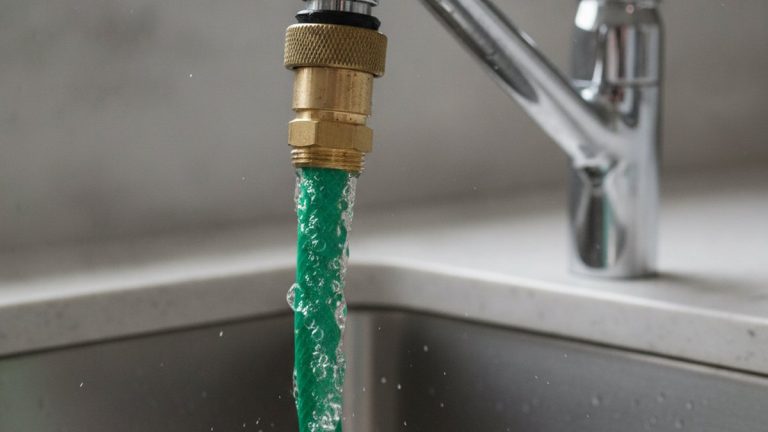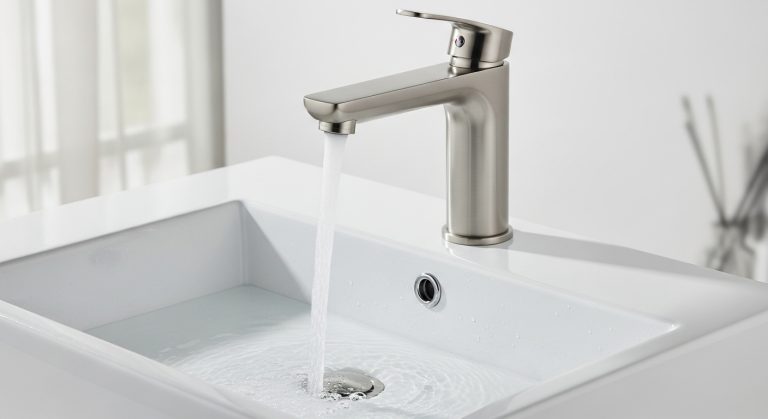
A tap extender gold is one of those tiny bathroom upgrades that solves a surprisingly annoying problem for about the price of two coffees. If you’ve ever watched a toddler stretch on their tiptoes to reach the water, or tried to rinse a razor under a spout that barely clears the back of the basin, an extender fixes it in about thirty seconds — and the gold versions exist specifically so the fix doesn’t clash with a warm-metal faucet you paid good money for. Below, I’ll walk you through exactly what these things do, the different types, how to make sure the finish actually matches, and whether the cheap ones hold up.
What is a tap extender, and what does the “gold” part actually mean?
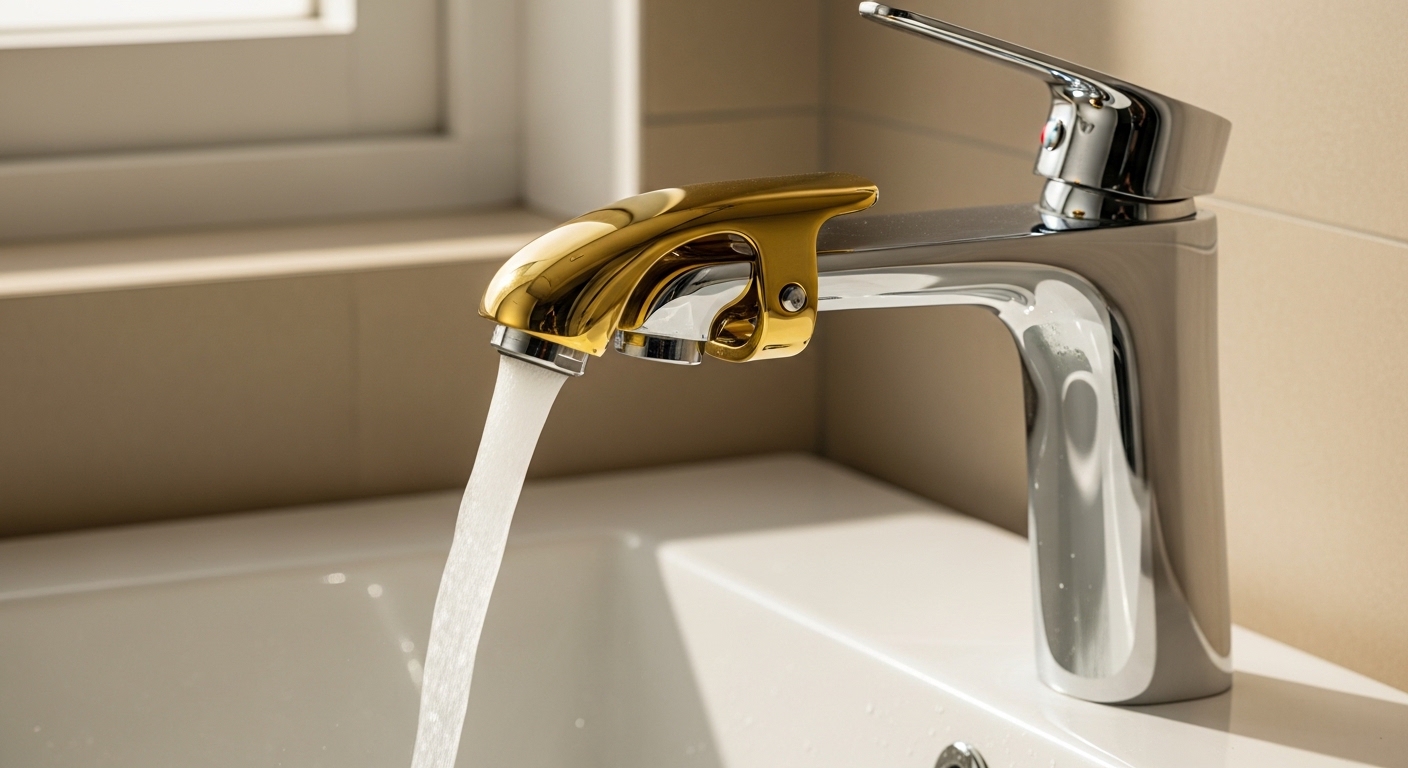
A tap extender is a short spout attachment that redirects and lengthens the reach of your faucet’s water stream, and “gold” simply refers to the finish — a warm metallic coating (brushed/satin gold, polished gold, or the increasingly popular champagne/brushed brass tone) chosen to blend in with a gold faucet instead of standing out as a random silver accessory. Functionally, the gold one and the chrome one do the exact same job; the color is purely so it disappears into your existing fixtures.
Most extenders come in two broad families. The first is the faucet-tip extender — a rigid or slightly flexible nozzle that snaps or screws over your existing spout and pushes the stream out and down, typically adding 2–4 inches of forward reach. The second is the kids’ faucet extender (often a silicone or ABS “waterfall” guide) that clamps under the spout and channels water toward the front edge of the sink so small children don’t have to reach all the way to the back. Both show up in gold, and both are aimed at the same core complaint: the water isn’t where you need it.
The reason gold has taken off is the same reason warm finishes took over faucets in general — champagne bronze, brushed brass, and satin gold have been the fastest-growing bathroom finishes for years, and buyers who invested in those faucets don’t want a shiny chrome gadget bolted to the end. If you’re curious how far the warm-metal trend runs at the premium end, our roundup of the best luxury faucet brands to buy in 2026 shows just how dominant gold tones have become on high-end fixtures.
Who actually needs a gold tap extender, and who doesn’t?
You need one if the water in your sink is genuinely hard to reach — most often because you have young kids, a deep vessel or undermount basin, or a short-reach faucet that dribbles too close to the drain. You probably don’t need one if your faucet already has a comfortable spout reach and no one in the house is struggling to get their hands under the stream.
Here are the real-life scenarios where an extender earns its keep:
- Toddlers and young kids: A child who can’t reach the back-mounted stream will either climb the vanity or skip washing. A gold kids’ extender brings the water to the front lip so a 3-year-old can wash hands independently.
- Deep or vessel sinks: Tall vessel bowls often sit under a spout that barely clears the rim. An extender pushes the water forward so you’re not scraping your knuckles on the back of the basin.
- Short spout reach: If your faucet drops water right over the drain hole, filling a cup or a water bottle is a wobbly balancing act. A 2–3 inch extension moves the stream into usable space.
- Rinsing, face-washing, and filling containers: Anyone who fills watering cans, cleaning buckets, or pet bowls at a bathroom sink benefits from the extra forward projection.
- Rental-friendly upgrades: Because most clip or thread on without tools, they’re perfect when you can’t replace the whole faucet.
If your problem is really about the sink itself — say a laundry or utility basin — an extender is a band-aid, and you may be better served rethinking the fixture entirely. We cover that whole category in our guide to the best laundry tap ideas for a functional laundry room, which is worth a look before you spend on accessories for a workspace sink.
What are the different types of gold tap extenders, and how do they compare?
There are four common types, and the right one depends on your faucet’s tip and what you’re trying to fix. The quick version: clip-on silicone extenders are best for kids and cause zero damage; threaded aerator extenders give the most solid, permanent feel; flexible gooseneck extenders add reach and a little swivel; and universal push-fit tips are the cheapest but the least secure.
| Type | How it attaches | Best for | Typical price | Watch out for |
|---|---|---|---|---|
| Clip-on silicone (kids’ guide) | Clamps under the spout, no tools | Toddlers, hand-washing, rentals | $8–$15 | Loosens over months; wipe dry to avoid mildew |
| Threaded aerator extender | Screws into faucet aerator threads | Permanent reach boost, adults | $12–$25 | Must match M22/M24 thread and gender |
| Flexible gooseneck / swivel | Screws on, then bends/rotates | Filling containers, directional rinse | $15–$30 | Cheap hinges can drip at the joint |
| Universal push-fit tip | Presses over the spout end | Odd-shaped or non-threaded spouts | $6–$12 | Least secure; can pop off under pressure |
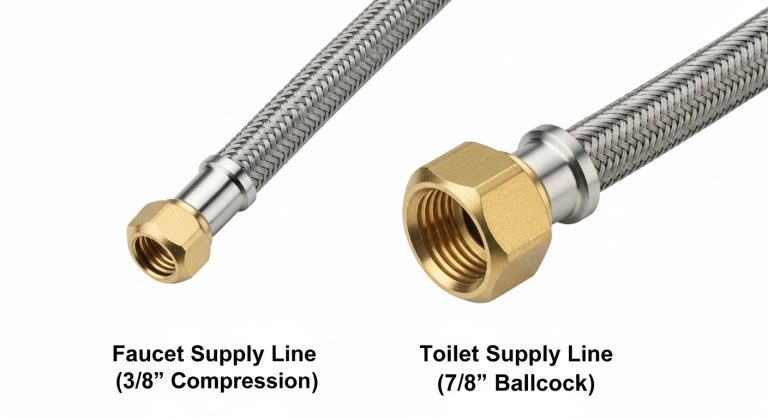
The single most important spec is how your extender meets the faucet. Threaded models rely on your aerator threads — the two most common are M22 male and M24 female (roughly 22–24 mm across), and getting the gender backwards is the #1 reason returns happen. Clip and push-fit models are more forgiving because they grip the outside of the spout, but they trade a little security for that flexibility.
How do I make sure the gold finish actually matches my faucet?
The honest answer: “gold” is not one color, so match the tone and the sheen, not just the word. A polished-gold extender next to a brushed/satin-gold faucet will look like a mismatch even though both are technically “gold,” because one is mirror-shiny and warm-yellow while the other is muted and slightly beige.
Here’s how to nail it:
- Identify your faucet’s exact finish first. Look for the manufacturer’s finish name — champagne bronze, brushed brass, satin gold, and polished gold are the four you’ll see most. Each has a distinct undertone.
- Match sheen before hue. Brushed-to-brushed and polished-to-polished matter more than getting the yellow perfectly identical. A tiny hue difference reads as “same family”; a sheen difference reads as “wrong part.”
- Beware of “gold-tone” plastic. Budget extenders are often gold-painted ABS plastic, which photographs fine but can look flat next to real PVD-coated metal. If it sits right at eye level, spend a few dollars more for a metal or PVD finish.
- Check it in your actual bathroom light. Warm bulbs push everything yellower; cool daylight makes gold look paler. Hold the extender next to the faucet under your normal lighting before deciding.
If you enjoy the mix-and-match approach to finishes, it’s the same skill set as pairing metals anywhere in the bathroom — the logic we lay out for choosing a warm-versus-cool statement piece in our guide to whether a matte black tub faucet set is worth buying applies directly to picking a gold accessory that reads as intentional rather than accidental.
How do I install a gold tap extender myself?
You can install nearly all of them in under two minutes with no tools, and the only “hard” part is knowing whether yours clips on or threads on. Here’s the general process that covers both.
- Turn off and dry the spout. You don’t strictly need to shut the water, but a dry spout grips better for clip-on and push-fit models.
- For clip-on models: open the clamp, seat it around the underside of the spout so the channel points where you want the water, and press until it snaps. Adjust the angle by hand.
- For threaded models: unscrew your existing aerator (turn counter-clockwise; use a rubber jar-grip pad, not pliers, to avoid scratching the gold). Note whether the exposed thread is inside (female) or outside (male) the spout, then hand-thread the extender on clockwise until snug. Don’t over-tighten — you’ll crush the washer.
- For push-fit tips: press the collar firmly over the spout end until the O-ring seats. Give it a gentle tug to confirm it won’t pop off.
- Test at full pressure. Run hot and cold at full blast and watch for side leaks. A drip at the joint usually means the internal washer isn’t seated or the thread is cross-threaded — back it off and redo it.
If you turn the water on and get a weak or spitting stream after installing, that’s almost always the aerator screen, not the extender — the same troubleshooting logic we use for low-flow spouts. And if your extender simply won’t thread on because the underlying faucet parts are seized, that’s a different repair; our walkthrough on what to do when a bathroom faucet valve is stuck covers freeing up stubborn fixtures without breaking them.
Do cheap gold tap extenders hold up, or will the finish flake off?
Quality varies more than the low price suggests, but a well-made one holds up for years — the failure point on cheap units is almost always the coating, not the mechanism. Spray-painted gold on plastic can chip or dull within months of daily hot water and toothpaste splatter, while a real PVD (physical vapor deposition) gold finish or solid brass is rated to resist corrosion, scratching, and tarnish for the life of the fixture.
What separates the ones that last from the ones you’ll toss:
- Finish method: PVD or electroplated over metal beats painted plastic every time. If the listing says “PVD” or “brass,” that’s a good sign; if it only says “gold color,” assume paint.
- Washers and O-rings: Silicone lasts; the thin rubber rings on the cheapest units harden and leak. A $3 pack of replacement washers can revive an otherwise good extender.
- Mineral buildup: In hard-water areas, any extender’s screen will clog. Look for one you can unscrew and soak in vinegar rather than a sealed unit.
- Standards markings: Faucet-contact components in the U.S. should meet lead-free requirements (NSF/ANSI 61 and 372, the “lead-free” standard tied to the Safe Drinking Water Act). Reputable extenders that touch your drinking-water stream will say so.
A quick care routine keeps a gold finish looking new: wipe it dry after use, clean with mild dish soap and a soft cloth, and never use abrasive pads or acidic descalers directly on the gold coating — those are exactly what strip the shine. Treat it like you’d treat the faucet itself.
Tap extender vs. replacing the faucet or adding a sprayer — which makes sense?
Start with the cheapest fix that solves your actual problem: if the only issue is reach, a $10–$25 gold extender is the obvious first move; only step up to a new faucet if the fixture is also dated, leaking, or the wrong style. An extender is a reach-and-access tool, not a replacement for a failing faucet.
That said, if what you really want is spray flexibility — rinsing, cleaning the basin, washing hair in a bathroom sink — a pull-out or add-on sprayer does more than an extender ever will. It’s a bigger commitment but a bigger capability jump, and we break down when it’s worth it in our guide to the best faucet sprayer bathroom setup and whether you actually need one. For pure reach on a budget, though, the gold tap extender wins on cost, install time, and zero risk to your plumbing.
FAQ
Will a gold tap extender fit any faucet?
Most fit the majority of standard faucets, but not literally all of them. Clip-on and push-fit models work on almost any round spout, while threaded models require standard aerator threads — usually M22 male or M24 female. Faucets with hidden/recessed aerators or unusual spout shapes may need a specific adapter, so check your spout tip before buying.
Is a gold tap extender safe for drinking water?
Yes, as long as it’s made from lead-free materials. Look for extenders that meet NSF/ANSI 61 and 372 (the lead-free standard). Avoid unbranded units with no material information, and stick to brass, stainless, or food-grade silicone components for anything in your drinking-water stream.
Why is my water pressure weaker after adding an extender?
Usually it’s the aerator screen, not the extender itself. Extenders often include or sit behind a fine mesh that traps sediment and mineral scale. Unscrew it, soak it in white vinegar for an hour to dissolve the buildup, rinse, and reinstall. If pressure is still low, the issue is upstream in your supply, not the accessory.
Can I put a gold extender on a chrome or nickel faucet?
You can, and some people do it on purpose as a small accent, but it will read as a deliberate two-tone look rather than a seamless match. If you want it to disappear, match the extender to the faucet finish. If you want a pop of warmth, a gold tip on a chrome faucet can work — just make it look intentional by repeating gold elsewhere, like drawer pulls.
How long does a gold tap extender last?
A PVD-coated or solid-brass gold extender can last many years — essentially the life of the faucet — with basic care. Painted-plastic versions often start dulling or chipping within 6–18 months of daily use. The mechanism usually outlives the finish, so buying a quality coating is what determines longevity.
Do I need a plumber to install one?
No. Clip-on and push-fit extenders install by hand in under a minute, and threaded models only require unscrewing your existing aerator by hand or with a soft grip pad. No plumber, no tools, and no shutoff of your water supply are needed for a standard install.
Author note: This guide was written by the faucitta fixtures team, drawing on hands-on testing of dozens of faucet accessories across brushed, polished, and PVD gold finishes. faucitta designs and sells bathroom and kitchen fixtures at faucitta.net, and we evaluate accessories the same way we evaluate faucets — checking finish durability, thread compatibility, and lead-free compliance (NSF/ANSI 61/372) before we recommend them. Always follow the manufacturer’s warranty and installation instructions for your specific model.