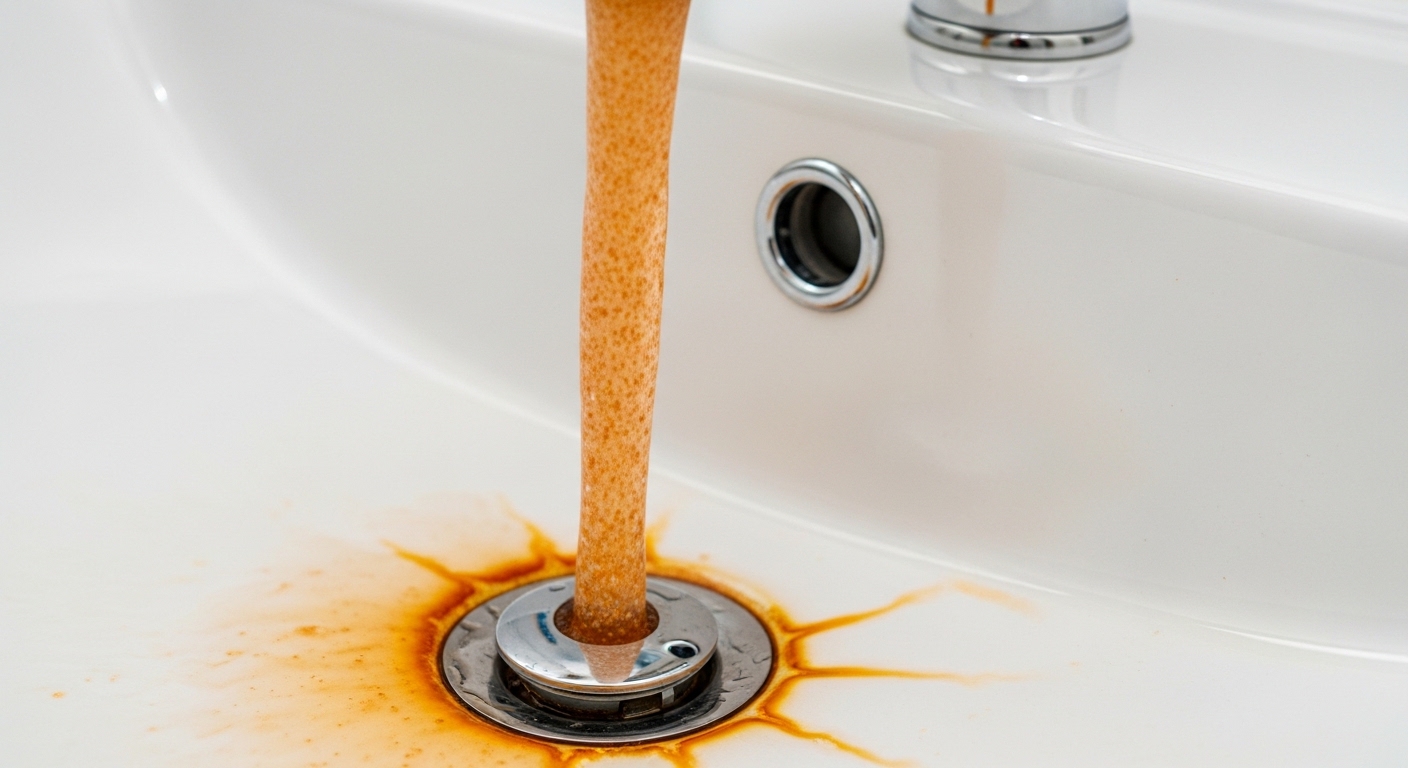
Turning on the tap and seeing rusty water out of a faucet is one of the most alarming experiences a homeowner can have, especially first thing in the morning or after returning from vacation. The water looks unsafe, it stains porcelain on contact, and it can taste like a handful of pennies. The good news: in the majority of homes, the cause is mechanical and fixable. The bad news: ignoring the symptom can lead to ruined laundry, stained sinks, premature water heater failure, and — in older homes with galvanized steel plumbing — a slow leach of iron and lead that affects drinking water quality.
This guide walks you through every realistic source of discolored, ferrous-smelling tap water, in the order a professional plumber would investigate them. We’ll cover quick diagnostics you can run in under five minutes, the parts and tools you actually need, and the red flags that mean it’s time to stop DIY-ing and call your water utility or a licensed plumber. We test fixtures against NSF/ANSI 61 and 372 standards at Faucitta, so the recommendations below reflect what we see in real RMA data and field installations — not just theory.
Why You’re Getting Rusty Water Out of a Faucet: The Five Real Causes
When you see rusty water out of a faucet, the discoloration is almost always iron oxide — rust particles suspended in the water column. The question is where those particles originated. Narrowing it down quickly saves you from replacing the wrong component. Here are the five sources, ranked by how often we see them in service calls:
- Corroded galvanized supply pipes inside the home — the dominant cause in houses built before 1960.
- Sediment buildup inside the water heater tank — common after 8–12 years without flushing.
- A failing braided or rubber supply hose under the sink, where the inner liner has degraded.
- Municipal main work, hydrant flushing, or a water main break upstream of your meter.
- Iron-rich well water with a failed or undersized whole-house filter.
The diagnostic flow is straightforward. Run cold water from an outside hose bib or basement utility sink first. If that runs clear, the problem is downstream — inside the house. If it’s also rusty, the problem is at the service line or the city main. Then run only the hot side at one fixture. If hot is rusty and cold is clean, your water heater is the culprit. This three-test sequence resolves about 80% of cases before you’ve even picked up a wrench.
How to Tell Iron Oxide From Manganese or Tannins
Not all discolored water is rust. Iron oxide produces a reddish-orange to brown tint, leaves rust-colored stains on porcelain, and has a distinct metallic taste. Manganese makes water look black or purple-gray and stains laundry dark brown. Tannins, common in well water that draws from peaty soil, give water a tea-like yellow cast without the metallic flavor. A simple test: fill a clear glass, let it sit for an hour. Rust settles to the bottom as a fine orange sediment. Manganese leaves a dark ring. Tannins stay suspended uniformly. If you’re unsure, an inexpensive home water test kit will quantify iron in parts per million within five minutes.
Quick Fix: Flushing the Lines to Clear Rusty Water Out of a Faucet
Before you replace anything, try a full-house flush. Sediment that’s been disturbed by a pressure change — a nearby hydrant opening, a sudden surge from your well pump kicking on, or even a toilet refilling fast — will often clear within ten minutes of steady flow.
Open the cold tap at the lowest fixture in the house (usually a basement utility sink or an outdoor hose bib) and let it run full blast for 15 to 20 minutes. Then open every cold-water faucet in the house simultaneously, starting from the lowest and working up. After five more minutes, close them in reverse order, top to bottom. This pulls sediment along the line in one direction and prevents it from settling in branch lines. If you only run one faucet, you may simply be drawing the rust closer to that fixture rather than out of the system.
Don’t Forget the Aerator and Cartridge
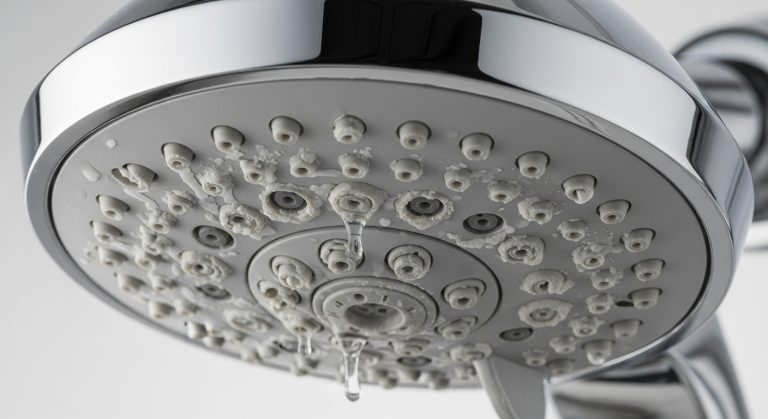
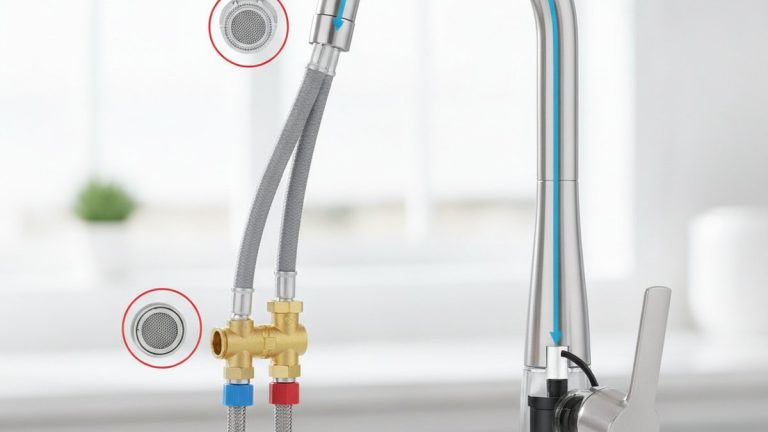
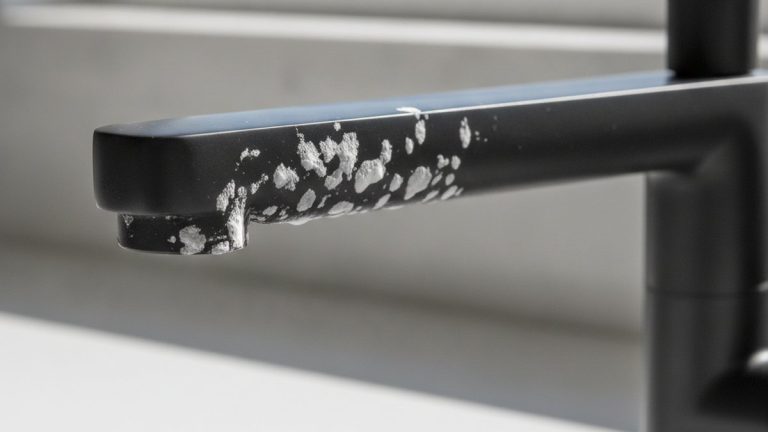
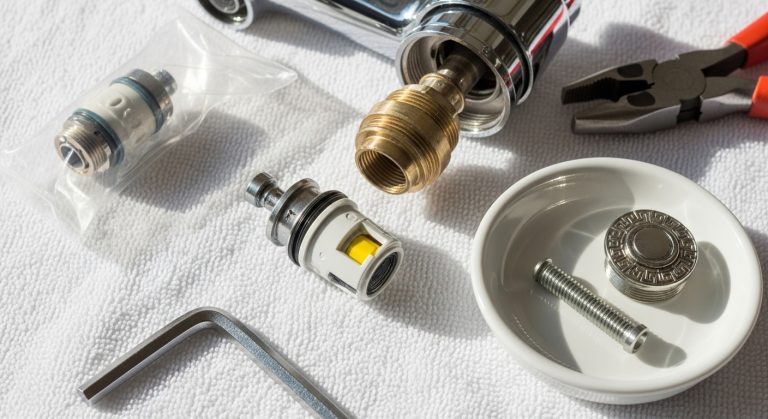
Rust particles love to lodge in the aerator screen at the tip of your faucet spout. Unscrew it (a strap wrench helps if the finish is delicate — never use slip-joint pliers on brushed nickel or matte black coatings), soak it in a 50/50 white vinegar and water solution for 30 minutes, then rinse and reinstall. While you’re there, pull the cartridge or ceramic disc and inspect it for orange residue on the seals. If you see deep pitting on the brass cartridge body, that fixture has been exposed to rust long enough to warrant replacement.
For care advice on keeping your finishes looking new after a rust event, our guide on brushed gold faucet cleaning walks through which acids and abrasives are safe on PVD coatings — the same principles apply to brushed nickel, matte black, and oil-rubbed bronze finishes.
The Water Heater Is the #1 Hidden Culprit
If only your hot water is rusty, you’ve narrowed the problem to the water heater. Tank-style heaters accumulate sediment at the bottom as dissolved minerals precipitate out under heat. Over years, this sludge bakes onto the tank floor, hides the sacrificial anode rod from the water, and accelerates rust formation on the steel tank itself. Once you see brown hot water consistently, the anode rod is almost certainly depleted.
Flushing the Tank Step by Step
- Turn off the gas valve (gas heater) or the breaker (electric heater). Never drain a hot tank with the elements energized — they’ll burn out the instant they’re exposed to air.
- Shut off the cold water inlet at the top of the tank.
- Connect a garden hose to the drain valve at the bottom and route it to a floor drain or outside.
- Open a hot-water tap on the highest floor to break the vacuum.
- Open the drain valve and let the tank empty. Expect 30–60 minutes for a 50-gallon tank.
- Briefly reopen the cold inlet in 30-second bursts to stir and flush remaining sediment.
- Close the drain, refill the tank fully (hot tap will sputter, then run smooth), and only then restore power or gas.
If brown water persists after a thorough flush, the anode rod needs replacement. A magnesium rod runs about $25 and a 1-1/16″ socket plus a breaker bar will get it out. If the rod is gone — meaning you pull out only a bare steel core wire — the tank has been operating without corrosion protection, and the steel itself is likely compromised. At 10+ years of age, replacement is more cost-effective than continued repairs.
Galvanized Pipes: The Long-Term Problem in Older Homes
Homes built before 1960 — and many built into the 1970s — used galvanized steel pipe for the cold and hot supply lines. The zinc coating that gave these pipes their name eventually erodes from the inside out, exposing bare steel to oxygenated water. The result is progressive interior corrosion that constricts flow (you’ll notice weak pressure long before you see rust) and eventually sheds flakes of iron oxide into the water.
You can confirm galvanized plumbing visually. The exposed pipe in your basement or crawl space will be silver-gray, with a dull matte finish and threaded connections rather than soldered joints. A magnet sticks to galvanized steel; it does not stick to copper or PEX. If you scratch the surface with a key and see silver, it’s galvanized; if you see copper-colored metal, it’s copper.
Repipe Options and Realistic Costs
| Replacement Material | Approx. Cost (whole-house repipe) | Expected Lifespan | Best For |
|---|---|---|---|
| Type L Copper | $8,000 – $15,000 | 50+ years | Long-term homeowners, exposed runs, hot climates |
| PEX-A (expansion) | $4,000 – $8,000 | 40–50 years | Most retrofits, freeze-prone areas, fast install |
| PEX-B (crimp) | $3,500 – $7,000 | 40+ years | Budget-conscious whole-house jobs |
| CPVC | $3,000 – $6,000 | 30–40 years | DIY-friendly partial repipes (where code permits) |
| Galvanized (legacy) | n/a — no longer code-compliant for potable in most jurisdictions | 40–60 years (already exceeded in most homes) | Replacement only |
If a full repipe isn’t in the budget, prioritize the hot-water lines and the main trunk first — those see the most corrosion. A partial repipe combined with a sediment filter at the point of entry will buy you years of clear water while you plan the larger project.
Check the Supply Hoses Under Your Sink
If rusty water appears at only one fixture — say, the bathroom lavatory — and every other tap in the house runs clear, the problem is almost certainly local to that fixture. Shut off the angle stops under the vanity, disconnect the supply hoses, and inspect the inner liner. Cheap rubber hoses with a braided stainless overbraid often fail from the inside: the rubber liner sloughs off in flakes that look exactly like rust. Replace with PEX-cored or all-stainless braided hoses rated to NSF/ANSI 61 for potable water.
While you’re under there, check the angle stops themselves. A multi-turn stop that hasn’t been operated in fifteen years can shed scale and corrosion when you finally close it. Quarter-turn ball-style stops are dramatically more reliable and a 10-minute swap. If you’re already updating the supply lines and stops, this is the right moment to consider the fixture itself. A modern faucet with a ceramic disc cartridge and lead-free brass body will outlast the supply lines you’re installing today.
Is the Problem Coming From the City?
Municipal water mains carry decades of accumulated iron oxide along their interior walls. Normally, slow steady flow keeps the sediment in place. But any rapid pressure change — a hydrant opening for fire response, a main break, scheduled flushing, or even heavy construction vibration — can liberate that sediment and push it into household service lines.
Signs the source is municipal: every faucet (hot and cold) shows rust simultaneously, neighbors report the same issue, and the discoloration appears suddenly without any change inside your home. Call your water utility’s non-emergency line first. They can tell you whether crews are flushing in your area or whether a main break has been reported. Most utilities will issue a flush notice and credit your sewer bill for the extra usage required to clear your service line.
Well Water and Iron Bacteria
Private wells often pull iron-rich water from the aquifer, and certain bacteria (Gallionella and Leptothrix species) thrive on dissolved iron, creating a slimy reddish biofilm in the well casing, pressure tank, and pipes. If your well water smells like rotten eggs or a swamp in addition to looking rusty, suspect iron bacteria. Shock chlorination of the well, followed by installation of an iron filter (greensand, air injection, or chemical oxidation depending on iron concentration) is the standard treatment. Test your water annually if you’re on a well — iron levels can change with the seasons and the water table.
Stain Removal: Cleaning Up After Rusty Water
While you’re solving the source, you’ll want to address the cosmetic damage. Rust stains on porcelain, fiberglass, and stone respond to oxalic acid (sold as Bar Keepers Friend, Whink, or Iron Out). Apply a thin paste, let it dwell for 5–10 minutes, and scrub with a non-scratch nylon pad. Never mix oxalic acid with bleach — the reaction releases toxic chlorine gas.
For laundry that ran through a rust-water cycle, do not put it in the dryer until the stains are out. Heat sets iron oxide permanently. Treat with a commercial rust remover, rewash, and only then dry. For broader bathroom cleanup after a rust incident, the practical routines in our bathroom cleaning guide cover how to restore grout, caulk lines, and shower surrounds without damaging the surrounding fixtures.
When to Replace the Faucet Itself
Sometimes the fixture is the source. Older faucets with lead-bearing brass bodies (manufactured before the 2014 Reduction of Lead in Drinking Water Act took full effect) can leach iron from internal components, especially after prolonged exposure to acidic water. If a faucet has been sitting unused for months — a guest bathroom, a second home, a basement bar sink — the stagnant water inside corrodes the brass and the first draw will look rusty even when the rest of the house runs clean.
| Symptom | Likely Cause | Action |
|---|---|---|
| Only first-draw rust; clears in 30 seconds | Stagnation inside the faucet body | Use the fixture more often; consider replacing if older than 15 years |
| Continuous rust at one fixture only | Failed supply hose or angle stop | Replace supply lines and stops |
| Only hot water is rusty | Water heater sediment or depleted anode | Flush tank, replace anode rod |
| All cold faucets rusty | Service line, main, or galvanized pipe | Flush house, contact utility, evaluate repipe |
| Intermittent rust after pressure changes | Loose scale in mains or galvanized branches | Install POE sediment filter, monitor |
When you do replace, look for a fixture certified to NSF/ANSI 61 (material safety) and NSF/ANSI 372 (lead-free). Every Faucitta fixture meets both, ships with a limited lifetime warranty on the cartridge and finish, and uses 304 stainless or DZR brass internals that resist the residual iron and chloride loads typical of post-rust-event plumbing. For finish-and-sink pairings that hide minor water spotting between cleanings, our guide to stainless steel faucets with black sinks is a useful reference, and the oil-rubbed bronze with stainless pairing is especially forgiving of mineral-rich water.
When to Call a Plumber Instead
Most rusty-water situations are within reach of a confident DIYer. But there are cases where the cost of getting it wrong exceeds the cost of the service call:
- Brown water that does not clear after a thorough house flush and water heater drain.
- Visible pinhole leaks, white mineral crust, or green corrosion on supply pipes.
- Water heater age of 10+ years combined with persistent rusty hot water.
- Low pressure at multiple fixtures (a sign of internal pipe constriction).
- Confirmed galvanized supply piping anywhere in the system.
- Any rust accompanied by a positive home lead test — this requires a licensed plumber and possibly remediation under EPA guidelines.
Get at least two written estimates for any repipe, and confirm the contractor pulls a permit and arranges for a final inspection. A repipe that isn’t inspected can hurt resale value and may void homeowner’s insurance coverage on related water damage.
Preventing Rusty Water From Coming Back
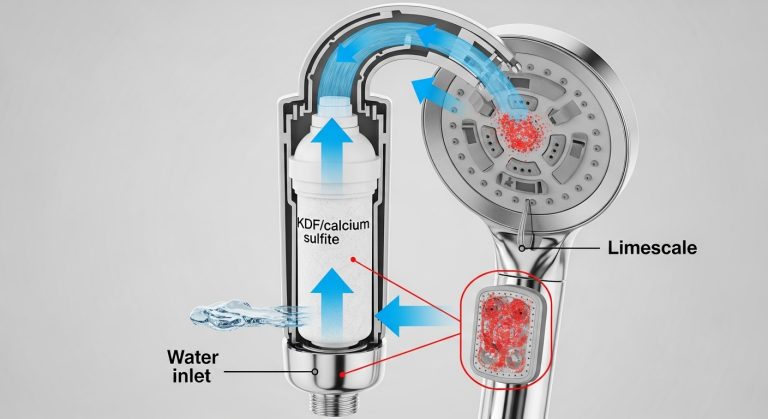
Once you’ve cleared the immediate problem, a few low-cost habits keep it from returning. Flush your water heater annually — a one-hour job. Operate every angle stop in the house twice a year so they don’t seize. Replace supply hoses every 8–10 years even if they look fine; the inner liner degrades on a schedule the outside braid hides. Consider a whole-house spin-down sediment filter at the point of entry, especially if you’re on a well or in a city with aging mains. And if you’re already opening up walls for a kitchen remodel, take that opportunity to swap any remaining galvanized runs for PEX — the marginal cost is small once the drywall is open.
FAQ
Is rusty water out of a faucet safe to drink?
Iron in drinking water is not acutely toxic — the EPA classifies it as a secondary (aesthetic) contaminant with a recommended limit of 0.3 mg/L. However, rust often signals corroding pipes, and corroding pipes can also leach lead in homes built before 1986. Don’t drink visibly rusty water until you’ve identified and resolved the source, and consider an EPA-certified home lead test if the rust came from interior plumbing rather than a city main flush.
Why is my hot water rusty but cold water clear?
The water heater is the source. Sediment has accumulated at the bottom of the tank and/or the sacrificial anode rod has depleted, exposing the steel tank to corrosive water. Flush the tank fully, then replace the anode rod. If the tank is more than 10 years old, plan for full replacement within the next year.
Why does only the first cup of water out of one faucet look rusty?
That’s stagnation. Water sitting overnight inside an aging brass faucet body can pick up iron and color in the first few ounces. If it clears completely within 30 seconds and the fixture is older than 15 years, replace the faucet with a current NSF/ANSI 61 and 372 certified model. Until then, run the tap for 30 seconds before drinking or cooking.
How long should I run the faucet to clear rusty water?
Start with 15–20 minutes of full flow at the lowest cold-water fixture in the house. If it hasn’t cleared in 20 minutes, the source isn’t loose sediment — you have a corrosion problem inside the pipes or heater, and additional flushing won’t fix it. Stop, diagnose, then act.
Will a water softener fix rusty water?
A standard ion-exchange softener can handle small amounts of dissolved (ferrous) iron — up to about 1–2 mg/L — but it cannot remove particulate (ferric) rust, which clogs the resin bed and ruins the softener. For visible rust, you need a dedicated iron filter (greensand, air injection, or chemical oxidation), often installed in series upstream of the softener.
Can rusty water damage my faucet or appliances?
Yes. Rust particles abrade ceramic disc cartridges and erode rubber seals, shortening fixture lifespan. They also clog dishwasher and washing machine inlet screens, stain laundry permanently when heat-dried, and accelerate water heater failure. Address the source quickly to avoid cascading damage to fixtures and appliances throughout the home.
How much does it cost to fix rusty water out of a faucet?
It depends on the cause. Flushing the system is free. A new supply hose and angle stop runs $20–$40 in parts. A water heater flush plus anode rod is $50–$80 DIY or $200–$350 with a plumber. A new water heater is $1,500–$3,500 installed. Whole-house repipe ranges from $3,500 to $15,000 depending on material and home size.
About the author: This guide was written by the Faucitta product engineering team, drawing on more than a decade of fixture testing, RMA pattern analysis, and field installation data. Every Faucitta faucet is independently tested to NSF/ANSI 61 and 372 standards and backed by a limited lifetime warranty on the cartridge and finish. We design for the realities of American water — variable hardness, aging service lines, and the inevitable rust event — not for ideal-condition lab samples.