If you’ve been reading mirozza kitchen faucet reviews trying to figure out whether this is a smart buy or a gamble, here’s the honest version: Mirozza sits in the same crowded lane as dozens of Amazon-first faucet brands — attractive stainless or matte-black pull-downs, spec sheets that look premium, prices that undercut the big names by half. Some of that value is real. Some of it is the stuff you don’t notice until month 14. Below I’ll break down what these faucets actually get right, where they cut corners, which model fits which kitchen, and how they stack up against the brands people cross-shop them with.
Are Mirozza kitchen faucets actually any good, or is it just cheap Amazon stuff?
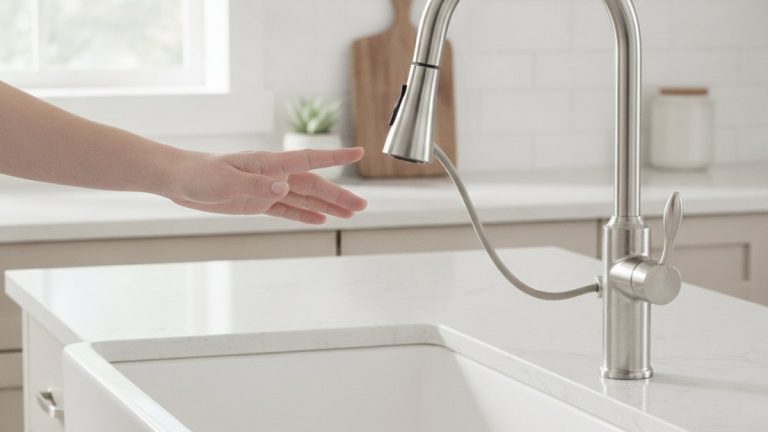
Yes — for the money, Mirozza faucets are genuinely decent, not junk. They’re better than the true bottom-tier no-name faucets and clearly a notch below premium brands. The typical Mirozza uses a ceramic disc cartridge (the same valve technology found in faucets costing three times as much), a stainless-steel exterior, and a nylon-braided pull-down hose with a magnetic or weighted docking system. That’s a legitimately good spec sheet at the $80–$180 price point.
Where the “cheap Amazon stuff” reputation comes from is the parts you can’t see. The faucet body is usually a lighter zinc alloy or thin brass rather than the heavy solid brass in a high-end faucet, the finish is a coating rather than a physical vapor deposit (PVD), and the included supply lines and mounting hardware are functional but basic. None of that makes the faucet bad — it makes it a value product that’s honest about being a value product, as long as you know what you’re getting.
One reality check worth saying out loud: brands in this tier rotate model names and listings frequently, so the “Mirozza X” you read a review of last year may be a slightly different unit today. Judge the specific model in front of you, not the brand halo. That’s true across this whole category — I say the same thing in our Huaake kitchen faucet reviews, which is a near-identical brand story worth reading side by side.
What do you actually get for the price — key specs and features?
You get a full-featured pull-down faucet: a high-arc spout, a dual-function spray head (aerated stream plus a stronger spray), a retractable hose, single-lever temperature and flow control, and usually a deck plate so it fits both single-hole and 3-hole (8-inch) sinks. For under $150, that’s a lot of faucet.
Here’s what to look for on any Mirozza listing before you click buy:
- Valve type: Confirm it says “ceramic disc cartridge.” This is what keeps it from dripping in a year. Mirozza models generally have this — good.
- Flow rate: Most are 1.8 GPM, some 1.5 GPM. Lower is fine for everyday use and often required by law in states like California. If you want to understand what that number actually means for filling pots, read our guide to the flow rate of standard kitchen faucet models.
- Spout reach and height: Check clearance if you have a shelf or window behind the sink. High-arc spouts look great but can splash in a shallow sink.
- Hose length: A pull-down hose should retract cleanly. Weighted docking is fine; magnetic docking snaps back more satisfyingly.
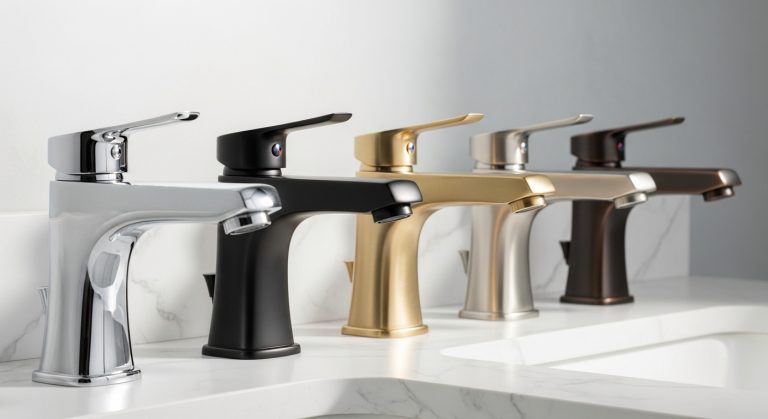
- Finish: Brushed/spot-resist stainless hides water spots best. Matte black looks premium but shows limescale and dried water faster, especially in hard-water homes.
How does Mirozza compare to Delta, Moen, and other budget brands?
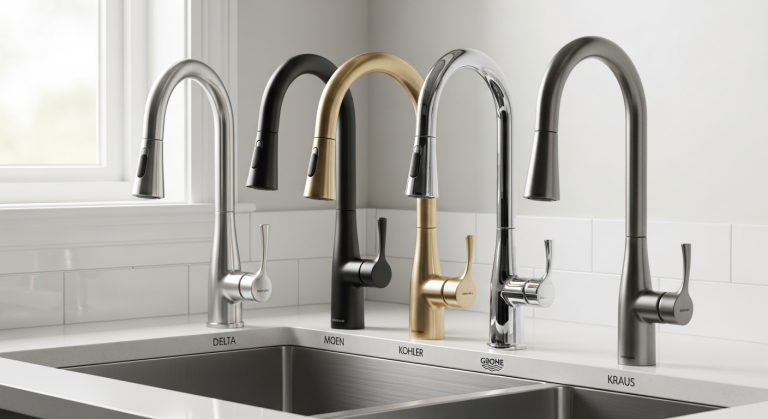
Short answer: Mirozza wins on price and looks, loses on warranty, finish longevity, and long-term parts support. Delta and Moen cost more but are essentially “buy it and forget it” faucets with lifetime warranties and cartridges you can find at any hardware store for a decade. Mirozza competes head-to-head with Huaake, WEWE, Kaiping-sourced brands, and similar direct-import names.
| Brand | Typical price | Valve | Body material | Warranty | Best for |
|---|---|---|---|---|---|
| Mirozza | $80–$180 | Ceramic disc | Zinc alloy / light brass | Limited (often 1–5 yr) | Good-looking pull-down on a budget |
| Huaake | $70–$160 | Ceramic disc | Zinc alloy / brass | Limited | Same tier, cross-shop it |
| Moen | $180–$400 | Ceramic disc | Brass / metal | Lifetime (residential) | Long-term, easy parts |
| Delta | $180–$450 | DIAMOND ceramic | Brass / metal | Lifetime (residential) | Durability + MagnaTite dock |
If your priority is “I want it to look great and work well for the next 3–6 years and I’d rather spend the savings elsewhere,” Mirozza is a rational pick. If your priority is “I never want to touch this faucet again and I want a store to hand me a free cartridge in 2035,” pay up for Delta or Moen. There’s no wrong answer — it’s a budget-versus-longevity decision, and honestly most kitchens don’t need the premium tier. For a broader look at how to weigh brand against your actual kitchen, our piece on what makes a kitchen faucet unique walks through the features that genuinely matter versus marketing noise.
Which Mirozza kitchen faucet should you buy for your specific kitchen?
Pick by sink setup and how hard your household is on a faucet. Here’s the quick decision guide most people need:
- Standard family kitchen, single-bowl sink: Go with a mid-arc or high-arc stainless pull-down at 1.8 GPM. It’s the do-everything choice — pot filling, rinsing, cleanup. Stainless finish hides fingerprints and water spots.
- Modern / matte-black kitchen: The matte-black Mirozza pull-down looks fantastic in photos and in person. Just commit to wiping it down, because black finishes advertise every water droplet, especially with hard water.
- Small kitchen, bar, or prep sink: Look for a lower-arc or compact single-hole model. You don’t need a giant gooseneck over a tiny bowl — it splashes. A pull-out (rather than pull-down) style is often better in tight spaces under a window.
- Hard-water household: Honestly, consider spending more here. Budget faucets with lighter internals and coated finishes are the ones most affected by scale. More on this next.
If your Mirozza ever develops a weak or leaky spray head down the line, don’t panic and replace the whole faucet — the sprayer assembly is usually a swap-only part. Our walkthrough on pull-down kitchen faucet sprayer head replacement covers exactly how to do it without a plumber.
Will a Mirozza faucet hold up in hard water?
Cautiously — it’ll work, but hard water is the single biggest enemy of any budget faucet, Mirozza included. Ceramic disc valves handle minerals reasonably well, but the aerator and spray head clog with limescale, and coated finishes (versus true PVD) can dull or spot over time. If you have hard water, you’ll be soaking the aerator in vinegar every couple of months to keep the flow strong.
If your water is genuinely hard, I’d weigh whether a step-up faucet with a PVD finish and metal internals is worth it, because that’s precisely the environment where cheap components show their age fastest. We go deep on this exact trade-off in our guide to the best bathroom faucet for hard water — the fixture principles carry straight over to the kitchen. Either way, a simple habit of periodically unscrewing and vinegar-soaking the spray head will do more for longevity than the brand name on the box.
Is a Mirozza kitchen faucet easy to install yourself?
Yes — most Mirozza pull-downs are a genuine 30–60 minute DIY job for someone comfortable working under a sink, no plumber required. They ship with the faucet, hoses, a mounting nut, a deck plate, and basic instructions. If you’ve ever installed a faucet before, this one won’t surprise you.
The general sequence: shut off the hot and cold supply valves under the sink, disconnect and remove the old faucet, feed the new faucet’s hoses down through the mounting hole, secure it from below with the included nut, connect the supply lines, then connect the pull-down hose to the spray head weight. Turn the water back on, remove the aerator, and run the faucet for 15–20 seconds to flush out debris before checking for leaks. Two tips that save headaches: don’t overtighten the plastic mounting nut (you can crack it), and make sure the pull-down hose has a clear path to retract before you button everything up. If your existing shutoff valves are old or stiff, budget an extra trip for new ones.
What are the real downsides nobody mentions in the star ratings?
The honest weak spots are warranty, finish coating, and long-term parts availability — not day-one performance. Out of the box, a Mirozza feels great. The concerns are all about year two and beyond:
- Warranty and support: Big brands offer lifetime residential warranties and answer the phone in 2035. Budget-import brands offer shorter, limited warranties, and the seller may not even be listed the same way in a few years. Keep your order confirmation.
- Finish over time: A coated finish can wear at high-touch spots. Stainless hides this well; matte black and “gold” tones can show it.
- Replacement cartridges: If the ceramic cartridge ever fails, you may need to order the exact matching part online rather than grabbing a universal one at the hardware store. Not a dealbreaker, but worth knowing.
- Weight and feel: Lighter body means it can feel slightly less “planted” than a heavy brass faucet. Purely cosmetic-feel, not functional.
None of these are reasons to avoid Mirozza — they’re reasons to buy it with clear eyes. A value faucet that you understand is a smart purchase; a value faucet you expected to behave like a $400 one is a disappointment waiting to happen.
The bottom line: who should buy a Mirozza kitchen faucet?
Buy a Mirozza if you want a stylish, fully-featured pull-down faucet for under about $150, you’re renovating on a budget or updating a rental, and you’re comfortable with a shorter warranty and a bit of hard-water maintenance. It’s a strong value pick that punches above its price on looks and features.
Skip it and spend more on a Delta or Moen if you have very hard water, you want a “install once and forget it for 20 years” faucet, or you specifically want a rock-solid lifetime warranty and universal replacement parts. Both choices are defensible — it comes down to whether you’re optimizing for upfront value or long-term peace of mind.
FAQ
How long do Mirozza kitchen faucets last?
With normal use and occasional aerator cleaning, expect roughly 5–8 years of solid performance, and often longer. The ceramic disc valve is the durable part; the finish and spray head are what tend to age first, especially in hard-water homes.
Are Mirozza faucets lead-free and safe for drinking water?
Reputable listings state compliance with lead-free standards (the U.S. limit is 0.25% weighted-average lead content on wetted surfaces). Before buying, confirm the specific model lists lead-free / low-lead certification. If a listing doesn’t mention any drinking-water standard at all, treat that as a red flag.
Do Mirozza kitchen faucets come with a warranty?
Usually yes, but it’s a limited warranty — commonly in the 1-to-5-year range rather than the lifetime residential warranty you get from Delta or Moen. Read the exact terms on the listing and save your proof of purchase, because budget-brand claims often require it.
Is Mirozza better than Huaake or other budget faucet brands?
They’re roughly the same tier — similar ceramic-disc pull-downs at similar prices — so cross-shop them on the specific model, current price, finish, and buyer feedback rather than the brand name. Prioritize the model with a clear lead-free certification, ceramic valve, and the finish that suits your kitchen.
Can I replace just the spray head or cartridge instead of the whole faucet?
Yes. A weak or leaking spray head is a simple swap, and a dripping faucet usually just needs a new ceramic cartridge — not a whole new faucet. The main catch with budget brands is sourcing the exact matching part, so order from the same brand or an identical spec.
What flow rate should I choose for a Mirozza kitchen faucet?
For everyday kitchen use, 1.8 GPM is the sweet spot — strong enough to fill pots quickly without wasting water. Choose 1.5 GPM if you want to conserve or your state requires it; the difference in real-world feel is minor for rinsing and cleanup.
Author note: This review is written by the Faucitta fixtures team — we install, test, and live with kitchen and bathroom faucets across finishes and price tiers, and we evaluate every faucet against the specs that actually predict longevity: valve type, body material, finish process, flow rate, and warranty terms. Faucitta is an independent faucet and bathroom-fixtures retailer, and our guidance references industry benchmarks like ceramic-disc valve standards, lead-free wetted-surface limits, and standard residential warranty practices so you can compare brands on facts, not just star ratings.