If you’ve been searching for the right faucet sprayer bathroom solution, here’s the honest starting point: it’s one of the most genuinely useful upgrades you can make to a vanity or utility sink, but only if you match the sprayer type to how you actually use the room. A pull-down sprayer that’s amazing in a deep utility basin can feel awkward and splash-happy over a shallow decorative vessel sink. Below, we’ll walk through the real questions people ask before buying — which type to get, whether it’s worth it, how it holds up, and what to look for so you don’t end up returning it.
What exactly is a “faucet sprayer” in a bathroom, and how is it different from a kitchen one?
A bathroom faucet sprayer is a faucet with a detachable or pull-out spray head — you pull the wand toward you and switch between a soft aerated stream and a stronger spray. It’s the same concept as a kitchen sprayer, but scaled down: shorter spray hoses, lower flow rates, and a more compact spout built for a vanity, not a farmhouse sink.
The key difference is flow. Kitchen faucets in the U.S. are typically capped at 1.8 gallons per minute (GPM), while bathroom faucets are limited to 1.5 GPM or less (many states cap them at 1.2 GPM). So a bathroom sprayer is gentler by design — great for a vanity, but don’t expect kitchen-grade blasting power. The other difference is spout height and reach: bathroom sprayers are shorter so they don’t tower over your vanity or spray past a shallow sink. If you’re still deciding whether a bathroom or kitchen model fits your space, our guide on kitchen faucet vs bathroom faucet differences breaks down exactly when you can (and can’t) swap one for the other.
What are the main types of bathroom faucet sprayers?
There are four main types: pull-down, pull-out, side sprayers, and clip-on/handheld attachments. Pull-down and pull-out are the most popular for full replacements, while side sprayers and clip-on handhelds are add-ons for existing faucets.
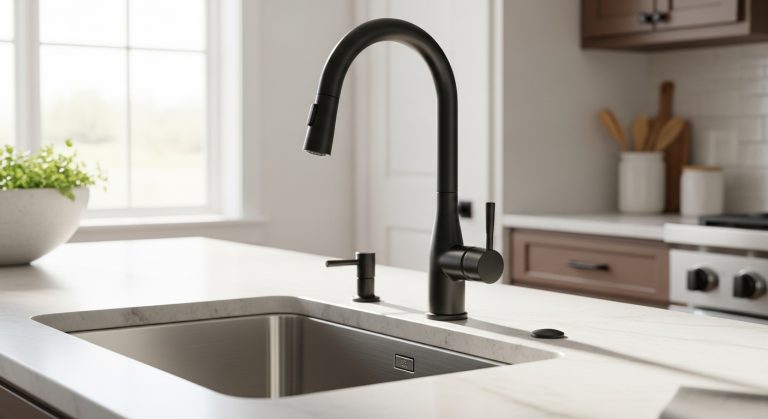
- Pull-down sprayer: The spray wand pulls straight down into the sink from a tall, arched spout. Best for deeper basins and utility/prep-style bathroom sinks.
- Pull-out sprayer: The wand pulls out horizontally toward you from a lower spout. Better for shallow vanities and tight spaces under a mirror or window.
- Side sprayer: A separate spray head mounted in an extra deck hole beside the faucet. Common on 3- or 4-hole setups.
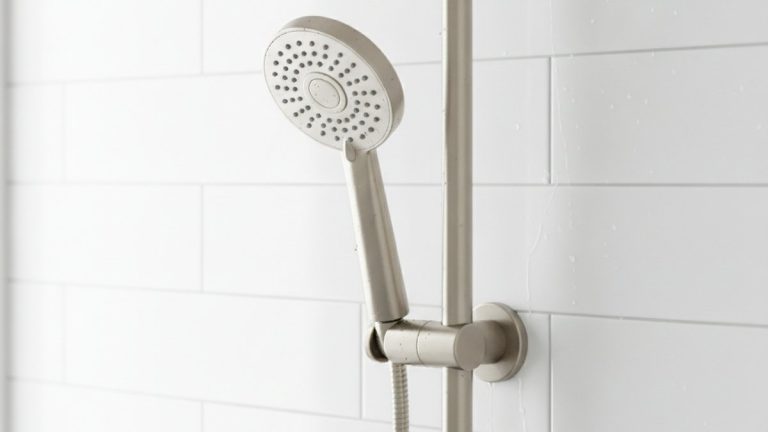
- Clip-on / handheld attachment: A hose-and-head unit that connects to an existing faucet or diverter — the cheapest way to add spray function without replacing anything.
| Sprayer Type | Best For | Typical Price | Watch Out For |
|---|---|---|---|
| Pull-down | Deep basins, utility/prep bathrooms, washing hair | $110–$280 | Can splash in shallow vessel sinks |
| Pull-out | Shallow vanities, low-clearance windows/mirrors | $90–$220 | Shorter reach than pull-down |
| Side sprayer | Traditional 3-hole widespread setups | $60–$160 | Needs an extra deck hole; more leak points |
| Clip-on / handheld | Renters, quick upgrades, no plumbing changes | $15–$45 | Less polished look, can feel flimsy |
Do I actually need a sprayer on my bathroom faucet, or is it overkill?
You genuinely benefit from a bathroom sprayer if you rinse hair in the sink, bathe small kids or pets there, wash the basin daily, or fill buckets and cleaning containers. If your bathroom is purely for handwashing and brushing teeth, a standard fixed-spout faucet is cheaper, simpler, and has fewer parts to fail.
Here’s the practical rule of thumb: the deeper and more “working” your sink is, the more a sprayer earns its keep. A guest powder room with a shallow decorative bowl rarely needs one. A primary bathroom where someone dyes their hair, shaves in the basin, or a mudroom-adjacent utility sink where you rinse paintbrushes and dog paws? A sprayer pays for itself in convenience. The trade-off is honest: every sprayer adds a hose and a spray head, which are two more components that can eventually wear or leak compared to a solid one-piece spout.
Which bathroom faucet sprayer is best for hard water under $200?
Under $200, the best bathroom faucet sprayer for hard water is a single-hole pull-down model with a silicone or rubber nozzle spray face and a solid-brass body. The rubber nozzles let you wipe mineral buildup off with your thumb, and the brass body resists corrosion far better than cheaper zinc alloy.
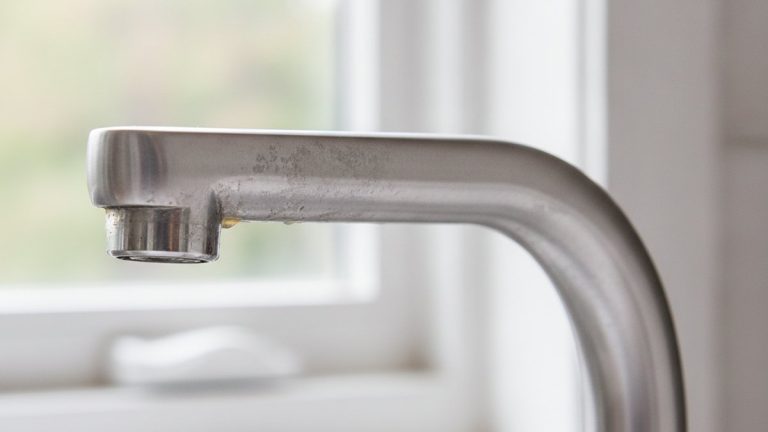
Hard water is the number-one killer of sprayer performance — calcium and lime clog the tiny spray holes and weaken the stream over time. Two features solve most of that: (1) flexible silicone spray nozzles you can rub clean in seconds, and (2) a ceramic disc cartridge, which handles grit and hard water far better than rubber washers. If you’re on well water or in a hard-water region, prioritize those two specs over finish or brand name. And if your existing faucet has already gummed up to the point the handle won’t budge, our walkthrough on what to do when a bathroom faucet valve is stuck will help you diagnose whether it’s mineral buildup or a failed cartridge before you buy a replacement.
What finish should I choose for a bathroom sprayer faucet?
For a bathroom sprayer faucet, brushed nickel and matte black are the most forgiving finishes because they hide water spots and fingerprints — which matters more on a sprayer, since you’re constantly handling the wand. Polished chrome looks bright and cleans easily but shows every droplet; oil-rubbed bronze and brushed gold add warmth but cost more.
- Brushed nickel: The safe all-rounder. Hides spots, matches most fixtures, easy to clean.
- Matte black: Modern and hides fingerprints well, but shows dried mineral streaks if you have hard water — wipe it dry.
- Polished chrome: Cheapest and most durable finish, but shows water spots the fastest.
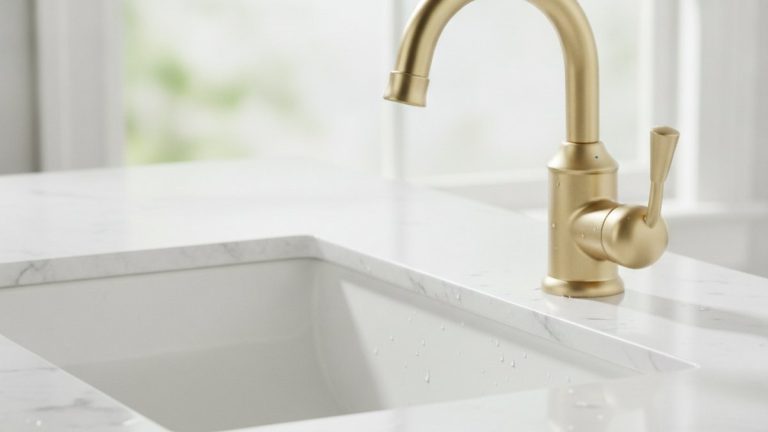
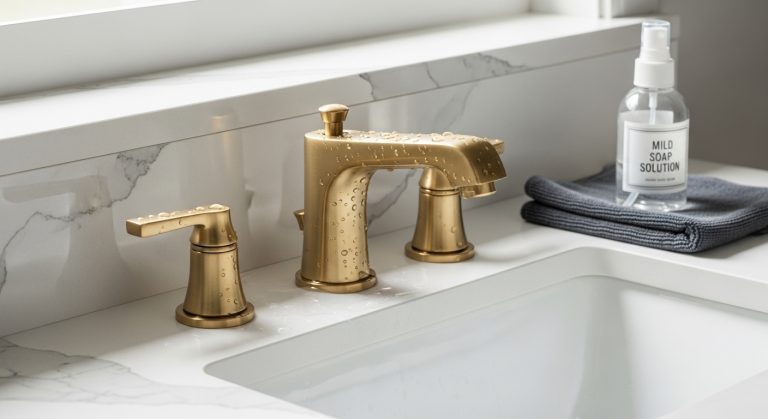
- Oil-rubbed bronze / brushed gold: Warm, high-end look; make sure your spray wand matches the spout exactly.
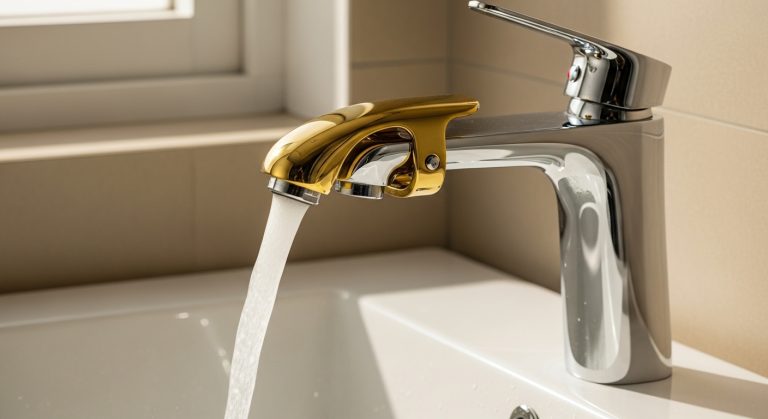
One thing people forget: on a pull-out or pull-down, the spray head is a separate molded piece, so cheap faucets sometimes have a slightly off-tone wand versus the spout. Buy from a brand that finishes both parts together. If you’re leaning toward a warmer tone, our piece on the oil rubbed bronze 4 inch faucet covers how those darker finishes wear over years of daily handling.
How do I install a bathroom faucet sprayer myself?
Most single-hole bathroom sprayer faucets install in under an hour with basic tools — you shut off the water, remove the old faucet, drop the new one through the deck hole, connect the supply lines and the spray hose, and attach the weight that pulls the wand back. No soldering, no special skills.
- Shut off the hot and cold supply valves under the sink and open the faucet to release pressure.
- Disconnect the old supply lines and remove the mounting nut holding the old faucet in place.
- Lift out the old faucet and wipe the deck clean of old putty or gunk.
- Feed the new faucet’s spray hose and lines down through the mounting hole and secure the faucet from below.
- Connect the flexible supply lines to the shutoff valves (hand-tight plus a quarter turn with a wrench).
- Attach the pull-down/pull-out hose to the quick-connect fitting and clip on the counterweight.
- Turn the water back on slowly, check for leaks, and run the sprayer to flush any debris.
The one step people skip is flushing the line before threading the aerator or spray head — always run water for 15–30 seconds first to clear installation debris, or you’ll clog a brand-new spray face on day one. If your sink has a 3-hole configuration and you’re going to a single-hole faucet, you’ll need a matching deck plate (escutcheon) to cover the extra holes.
Are bathroom sprayer faucets reliable, or do they leak?
Quality bathroom sprayer faucets are reliable for 8–15 years, but the spray hose and quick-connect fitting are the parts most likely to eventually leak — far more than a fixed-spout faucet. The good news is those parts are cheap and replaceable, and reputable brands back the whole faucet with a lifetime limited warranty on the finish and function.
What actually determines longevity comes down to three things: the cartridge (ceramic disc lasts longest), the hose material (braided nylon over PEX outlasts plain vinyl), and the quick-connect coupling (metal collars beat plastic). Look for faucets certified to ANSI/NSF 61 and NSF 372 (lead-free/drinking-water safety) and ASME A112.18.1 / CSA B125.1 — the plumbing standard that covers pull-out spray faucets specifically. A WaterSense label also tells you the flow rate is verified. These aren’t marketing badges; they’re third-party test standards, and a sprayer that carries them has been pressure-cycled and leak-tested thousands of times before it ships.
What about a handheld sprayer add-on for renters?
If you rent or don’t want to touch the plumbing, a clip-on handheld sprayer that attaches to your existing faucet spout or aerator threads is the best no-commitment option — usually $15–$45 and reversible in minutes. It won’t look as clean as a built-in sprayer, but it adds real rinsing power for washing hair or a dog without any installation.
These attach one of two ways: a diverter that screws onto the faucet’s aerator threads, or a slip-on hose that clamps over the spout. The trade-off is aesthetics and a slightly weaker seal — you may get minor drips at the connection. For a temporary or budget fix, though, it’s the smartest way to get sprayer function without losing your deposit. When you eventually own the place, that’s when a proper pull-down upgrade makes sense.
How does a sprayer faucet work with different sink types?
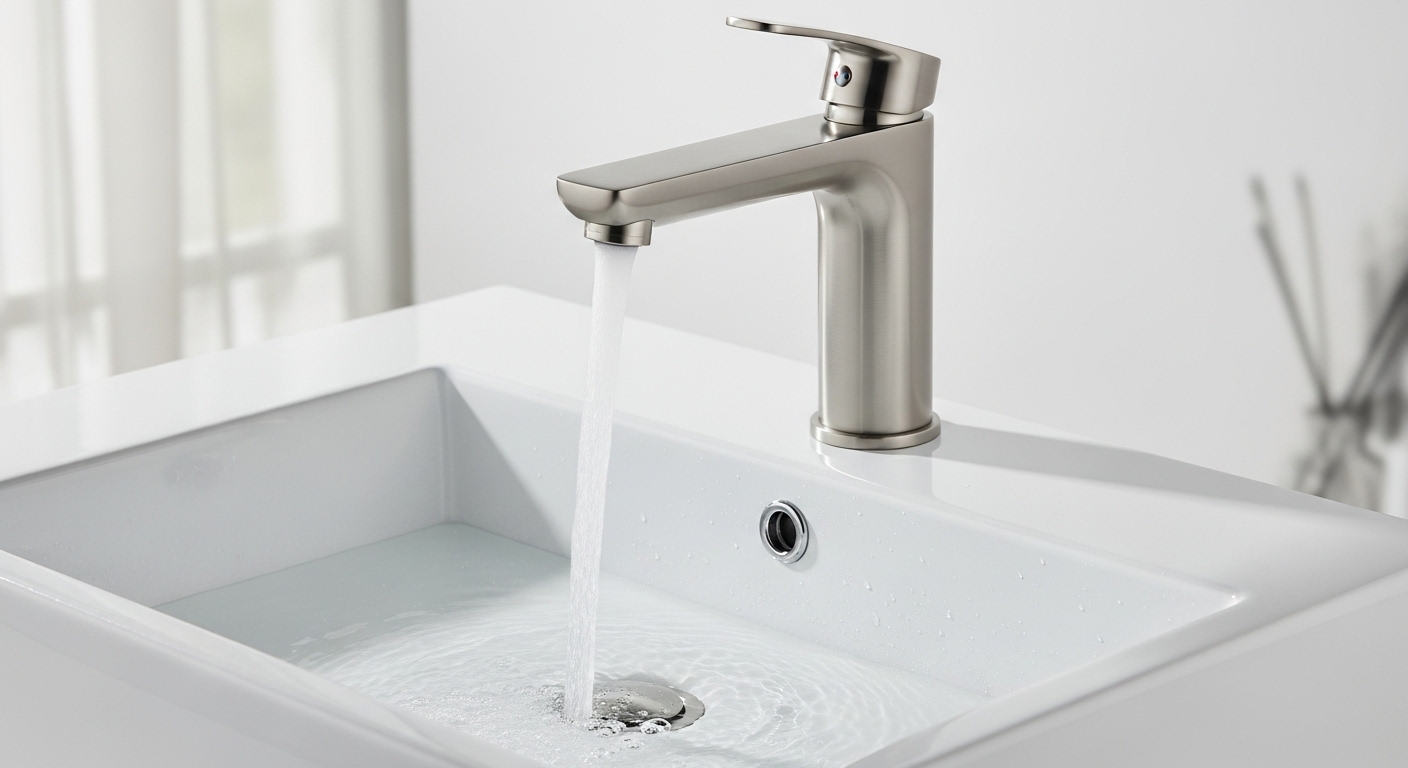
A sprayer faucet works best with deeper drop-in and undermount sinks that contain splashing, and least well with shallow vessel (above-counter bowl) sinks where the spray bounces out. Match the spout height and reach to your basin depth to avoid mess.
For undermount vanities specifically, you want a spout with enough reach to center water in the basin without overshooting — too tall and a pull-down splashes; too short and the wand won’t clear the rim comfortably. Our guide to the best bathroom faucet for an undermount sink covers the exact reach-and-height numbers that keep water in the bowl. For vessel sinks, skip the pull-down entirely and consider a tall fixed spout, or a wall-mounted design so the sprayer’s splash zone stays inside the bowl.
faucitta’s take: which bathroom faucet sprayer should most people buy?
For most bathrooms, buy a single-hole pull-down sprayer faucet with a ceramic disc cartridge, silicone spray nozzles, and a solid-brass body in brushed nickel or matte black, in the $120–$200 range. That combination gives you the best balance of durability, hard-water resistance, and easy cleaning without paying for luxury-tier branding you won’t notice day to day.
Spend more only if you want a designer finish, a magnetic wand dock (which snaps the head back more securely than a gravity weight), or a touchless/motion sensor. Spend less only if it’s a low-use powder room, in which case a simpler fixed faucet is the smarter call. The sweet spot for a genuinely useful, long-lasting bathroom sprayer is that mid-range single-hole pull-down.
FAQ
Can I put a kitchen sprayer faucet on my bathroom sink?
Technically you can if the hole spacing and deck fit, but it’s usually a mistake. Kitchen faucets are taller, have higher flow (1.8 GPM vs. 1.5 or less for bathroom), and often overshoot a shallow vanity, causing splashing. They may also violate local flow-rate codes for bathroom fixtures. Choose a faucet actually rated for bathroom use.
Why is my bathroom faucet sprayer losing pressure?
The most common cause is mineral buildup clogging the spray nozzles or the aerator. Rub the silicone nozzles clean with your thumb, or unscrew the spray head and soak it in white vinegar for 30 minutes to dissolve calcium. If pressure is weak everywhere, check that the supply shutoff valves are fully open and the hose isn’t kinked under the sink.
How much does a good bathroom faucet sprayer cost?
A reliable single-hole pull-down or pull-out bathroom sprayer faucet runs $90–$250, with the best value in the $120–$200 range. Clip-on handheld attachments cost $15–$45. Luxury or touchless models with premium finishes can exceed $400, but you don’t need to spend that for excellent performance.
Do bathroom sprayer faucets need a special sink?
No special sink is required, but the setup matters. Single-hole sprayer faucets fit standard 1.375-inch deck holes, and you can cover a 3-hole sink with a deck plate. The bigger factor is basin depth — deeper drop-in and undermount sinks contain spray best, while shallow vessel bowls tend to splash.
Is a pull-down or pull-out sprayer better for a small bathroom?
For a small bathroom, especially one with a mirror, cabinet, or window close above the faucet, a pull-out sprayer is usually better because its lower profile leaves clearance overhead. Pull-down faucets have taller arched spouts that can crowd a tight space, though they offer a more comfortable downward spray in deeper sinks.
Are handheld sprayer attachments safe for drinking-water faucets?
Yes, as long as the attachment is certified lead-free to NSF/ANSI 372. Reputable clip-on sprayers use drinking-water-safe materials, but avoid ultra-cheap unbranded units with no certification, since the internal hose material may not be rated for potable water. Check the packaging for the NSF or WaterSense mark.
About the author: This guide was written by the faucitta fixtures team, drawing on hands-on testing of pull-out and pull-down bathroom faucets across hard-water and soft-water conditions. About faucitta: faucitta designs and sells bathroom and kitchen faucets, shower systems, and sink fixtures, with every faucet built to ANSI/ASME plumbing standards, certified lead-free (NSF 372), and backed by a limited lifetime warranty on finish and function. We test spray heads through thousands of pressure cycles before they reach your bathroom.