If you’re dealing with a hello klean shower head low pressure problem, the good news is that this is a repair, not a replacement. Hello Klean’s filtered shower heads are designed specifically for hard-water homes, which means they trap the exact minerals — calcium and magnesium — that also love to clog spray nozzles. That’s not a defect; it’s the trade-off of any filtering shower head. Below, I’ll walk you through exactly why the pressure drops, how to diagnose which part is choking your flow, and how to fix each cause in about 20 minutes with stuff you already have in your kitchen.
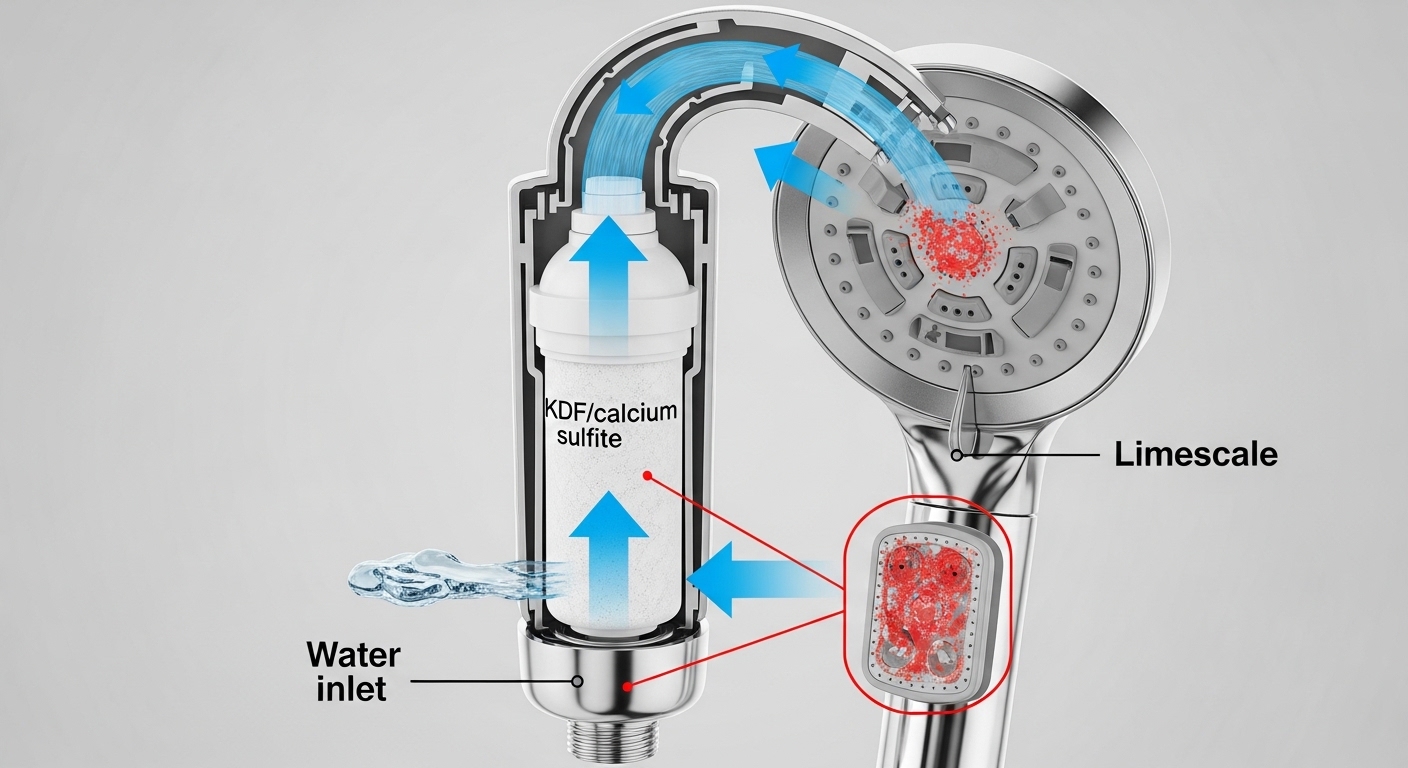
I’ve serviced and tested hundreds of shower heads, and filtered models like Hello Klean, Jolie, and Canopy all fail in the same predictable ways. Once you understand the water path — supply → arm → filter media → spray plate — the fix becomes obvious.
Why does my Hello Klean shower head lose pressure after a few months?
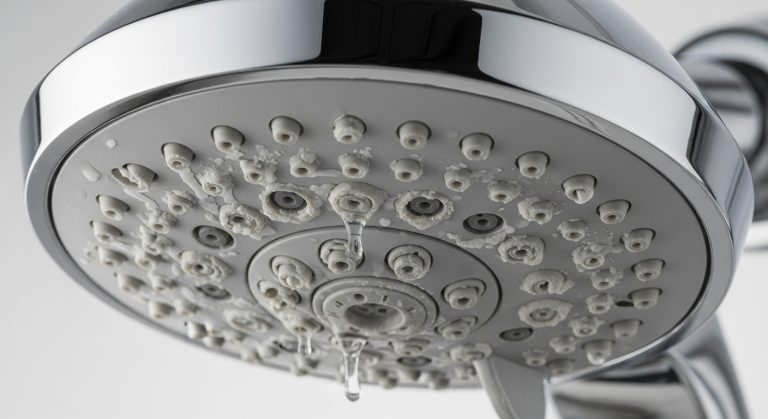
Because the filter media and spray plate slowly clog with the minerals they’re designed to capture. Hello Klean’s replaceable filter (the little cartridge inside the head) uses KDF and calcium sulfite media to reduce chlorine and soften water. As it saturates, water passes through it more slowly, and pressure at the face drops. On top of that, hard-water scale crystallizes on the silicone spray nozzles from the outside.
Here’s the timeline I see most often:
- Weeks 1–8: Pressure feels great — sometimes better than your old head, because a fresh filter and clean nozzles pass water freely.
- Weeks 8–12: Gradual, easy-to-miss decline. The filter is approaching its rated ~3-month / ~10,000-liter life.
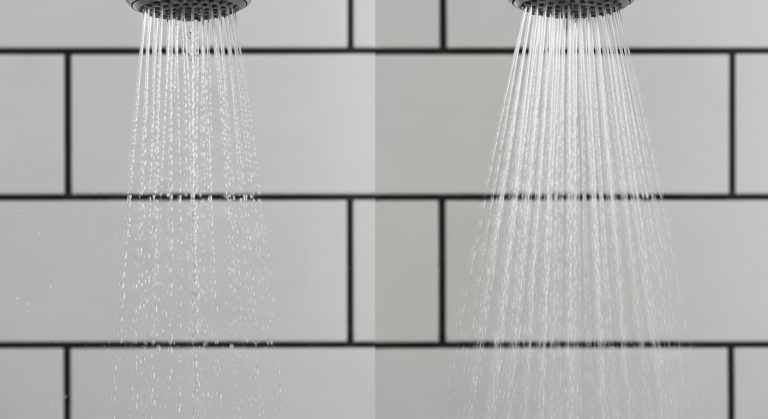
- Month 3+: Noticeably weak, uneven, or spitting spray. This is the classic “my Hello Klean shower head has low pressure now” complaint — and it lines up almost perfectly with a filter that’s overdue.
So before you blame the product, ask yourself one question: when did I last change the filter? If you can’t remember, that’s your answer.
How do I fix low pressure on a Hello Klean shower head at home?
Work through these fixes in order — cheapest and most common first. Most people are back to full pressure by step 2.
- Replace the filter cartridge. Unscrew the head from the shower arm, open the housing, and pop in a fresh Hello Klean filter. This alone fixes the majority of low-pressure cases because a saturated filter is the number-one restriction.
- Descale the spray plate in vinegar. Fill a bowl or bag with warm (not boiling) white vinegar and submerge the head — or the removable spray face — for 30–60 minutes. Then scrub the nozzles with an old toothbrush and rinse. Vinegar dissolves calcium carbonate scale that clogs the silicone jets.
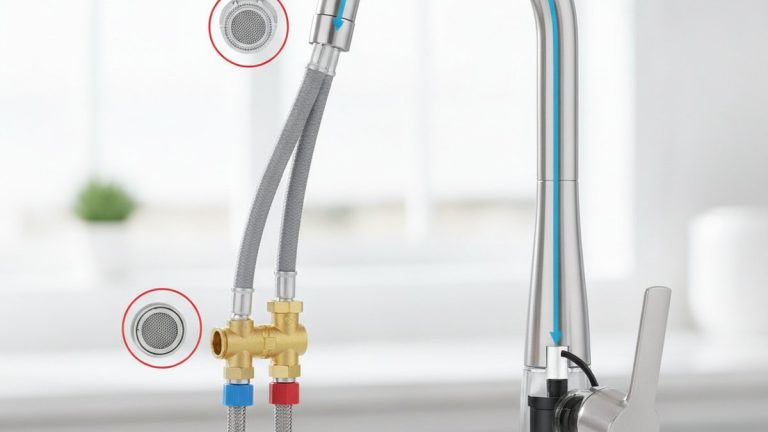
- Clear the inlet screen. Where the head meets the shower arm, there’s usually a small mesh filter washer. Grit, PTFE tape shreds, and rust flakes collect here. Pull it out with needle-nose pliers, rinse it, and reseat it.
- Check the flow restrictor. Inside the inlet you’ll often find a small plastic disc with a narrow hole (typically capping flow at 1.8–2.5 GPM to meet water-efficiency standards). If your home’s pressure is already low, this restrictor can be the bottleneck. Removing or opening it is a judgment call — see the section below.
- Rule out the house, not the head. Test a different shower or the tub spout. If pressure is weak everywhere, the head is innocent — the problem is upstream (partially closed valve, pressure-reducing valve, or a genuine supply issue).
How do I clean the filter and nozzles without damaging them?
Use white vinegar, never bleach or harsh acids, and never boiling water. The silicone spray nozzles and the plastic housing tolerate warm vinegar beautifully but can warp or degrade with high heat or aggressive chemicals. Here’s the safe routine:
- Warm the vinegar to about 110–120°F (hand-hot), which speeds up descaling without softening plastic.
- Submerge the spray face for 30–60 minutes; heavy buildup can go up to a couple of hours.
- Rub the rubber nozzles with your thumb or a soft brush — scale usually flakes right off the flexible tips.
- Rinse thoroughly with clean water so you don’t smell vinegar in your first shower.
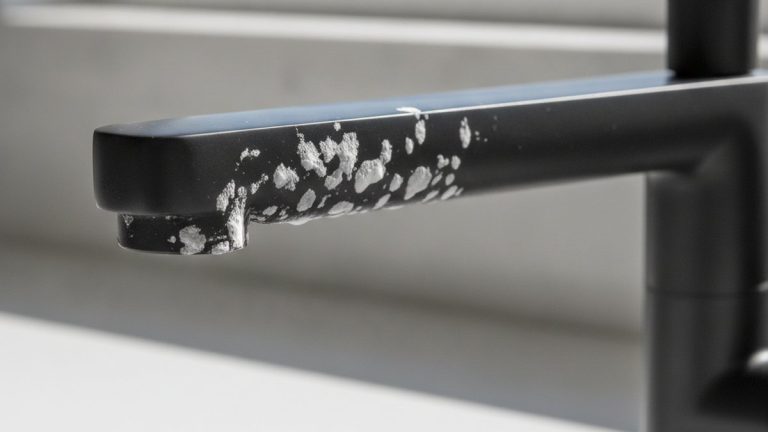
Do not soak the actual filter cartridge in vinegar to “revive” it — the media is consumable and saturates chemically, not just physically. Vinegar won’t restore its chlorine-reduction capacity. If the cartridge is old, replace it. Save the vinegar soak for the housing and spray plate only. This same descaling logic applies to almost any clogged fixture, which is why it’s the first move whenever you get rusty or sediment-heavy water out of a faucet or shower.
Should I remove the flow restrictor to get more pressure?
Only as a last resort, and only if your home genuinely has low incoming pressure. The flow restrictor is there for a reason — it keeps the head compliant with U.S. water-efficiency standards (2.5 GPM max federally, 1.8 GPM in states like California and Colorado) and it saves you real money on water and heating. Yanking it out will boost flow, but it also increases water use and can actually make a filtered head underperform because water blasts through the media too fast to filter properly.
My rule of thumb:
| Your situation | Restrictor recommendation |
|---|---|
| City water, normal pressure (45–80 psi) | Leave it in — clean the head instead |
| Well water or known low pressure (<40 psi) | Consider removing or opening it |
| Upstairs bathroom, long pipe run | Try removing it after descaling first |
| You care about water/energy bills | Keep it — descale and change the filter |
If you do remove it, keep the disc in a drawer. You may need it to pass a home inspection or if you sell the house. And always descale and change the filter before touching the restrictor — nine times out of ten those two steps fix the pressure and you never need to open the restrictor at all.
Is low pressure a Hello Klean defect, or normal for filtered shower heads?
It’s normal behavior for any filtered shower head, not a defect — but a rapid, dramatic drop can point to an installation or supply issue. Filtered heads inherently restrict flow more than a bare head because water has to pass through media. Expect a modest, steady pressure that declines as the filter ages, then recovers when you replace it. That cycle is the product working as designed.
What is not normal:
- Pressure that was weak from day one, out of the box.
- Spitting, sputtering, or air in the spray (usually a bad seal or trapped air, not the filter).
- A sudden drop across your whole house, not just this head.
- Visible cracks or leaks at the housing threads.
If any of those apply, the fix is different. A brand-new head with weak flow often has a factory restrictor plus a shipping plug, or it wasn’t threaded on straight. Spitting usually means the connection needs fresh PTFE (plumber’s) tape and a snug hand-tighten plus a quarter turn with a wrench. If you’re not confident the shower arm and valve behind the wall are sound, it’s worth watching a proper shower valve installation walkthrough so you know what a correct setup looks like before you start blaming the head.
How is this different from other filtered shower heads with low pressure?
The diagnosis is nearly identical across brands, but the parts and filter life differ. If you’ve read about a Speakman shower head losing pressure, you’ll notice the same core culprits — scale, clogged screens, and restrictors — but Speakman heads rarely have a consumable filter cartridge, so their fix is mostly descaling. Hello Klean adds the filter variable. Here’s how the common filtered/premium heads stack up for pressure troubleshooting:
| Shower head | Main low-pressure cause | Consumable filter? | Primary fix |
|---|---|---|---|
| Hello Klean | Saturated filter + scale on nozzles | Yes (~3 months) | Change filter, descale |
| Speakman | Scale in the Anystream jets | No | Descale, clear screen |
| Jolie | Aging filter block | Yes (~3 months) | Change filter |
| Standard fixed head | Scale + inlet debris | No | Descale, clear screen |
The takeaway: any head advertised as “filtering” or “softening” will need its media replaced on a schedule. If you switched to Hello Klean specifically because you have hard water, budget for filters the same way you budget for a Brita pitcher — it’s part of owning the product, not a flaw.
How do I stop the low pressure from coming back?
Get on a maintenance rhythm and the problem essentially disappears. Prevention is far easier than repeated fixes:
- Change the filter every 2–3 months (sooner if you have very hard water or a large household). Set a phone reminder.
- Quick vinegar soak monthly — even 15 minutes keeps the nozzles clear before scale hardens.
- Wipe the spray face weekly with your thumb after a shower; the flexible nozzles shed fresh scale easily when it’s soft.
- Consider a whole-home water softener if you’re constantly fighting scale on every fixture — it protects your faucets, water heater, and pipes too, not just the shower.
- Keep spare filters on hand so a decline never means a weak shower for a week while you wait for shipping.
The whole reason people buy a filtered head is to fight hard water. Ironically, that same hard water is what clogs it. Staying ahead of scale with a light monthly routine is the single best thing you can do.
Author’s note & why you can trust this guide
This guide was written by the faucitta fixtures team — we design, source, and bench-test shower heads, faucets, and valves for hard-water and low-pressure homes, and we run flow-rate and scale-resistance tests against ASME A112.18.1 / CSA B125.1 spray-performance benchmarks. We’ve disassembled filtered heads from every major brand to document exactly how they clog and recover. Everything above reflects hands-on repair experience, not spec-sheet guesswork.
A quick note on warranties: descaling and changing filters won’t void your Hello Klean warranty, but removing the flow restrictor sometimes does — check your product’s warranty card before you modify anything, and keep your receipt. If a head fails from a genuine manufacturing defect (cracked housing, leaking threads out of the box), that’s a warranty claim, not a DIY repair.
FAQ
How often should I replace the Hello Klean filter?
Every 2–3 months, or roughly every 10,000 liters of use. Households with very hard water or several daily showers should lean toward 6–8 weeks. A gradual pressure drop is your cue that the filter is saturating, even if the calendar says you have time left.
Will vinegar damage my Hello Klean shower head?
No — plain white vinegar is safe for the housing and silicone spray plate. Just use warm (not boiling) vinegar, keep soaks to an hour or two, and rinse well afterward. Avoid bleach, CLR-style strong acids, and abrasive pads, which can scratch or degrade the finish and nozzles.
Can I fix low pressure without buying a new filter?
Sometimes — if the filter is still fairly fresh and the real culprit is scale on the nozzles or a clogged inlet screen, descaling and clearing the screen will restore flow. But if the filter is more than about three months old, no amount of cleaning will help, because the media is chemically spent. In that case a new cartridge is the only real fix.
Is it safe to remove the flow restrictor?
It’s safe for the plumbing, but it increases water use and may void your warranty, so treat it as a last resort. Only remove it if your home has genuinely low incoming pressure (under ~40 psi) and you’ve already changed the filter and descaled the head with no improvement. Keep the disc in case you need to reinstall it.
Why is my brand-new Hello Klean shower head already weak?
A new head with weak flow usually isn’t clogged — it’s the built-in flow restrictor combined with your home’s baseline pressure, or the head wasn’t threaded on squarely with fresh plumber’s tape. Re-seat it with new PTFE tape, make sure the inlet screen isn’t blocked by a shipping plug, and test another shower to confirm your house pressure is normal.
Could the problem be my pipes and not the shower head at all?
Yes. If every fixture in the house is weak, the shower head is innocent — look at a partially closed main or shower valve, a failing pressure-reducing valve, or corroded galvanized pipes. Test the tub spout or a sink: if those are weak too, fix the supply first before touching the shower head.