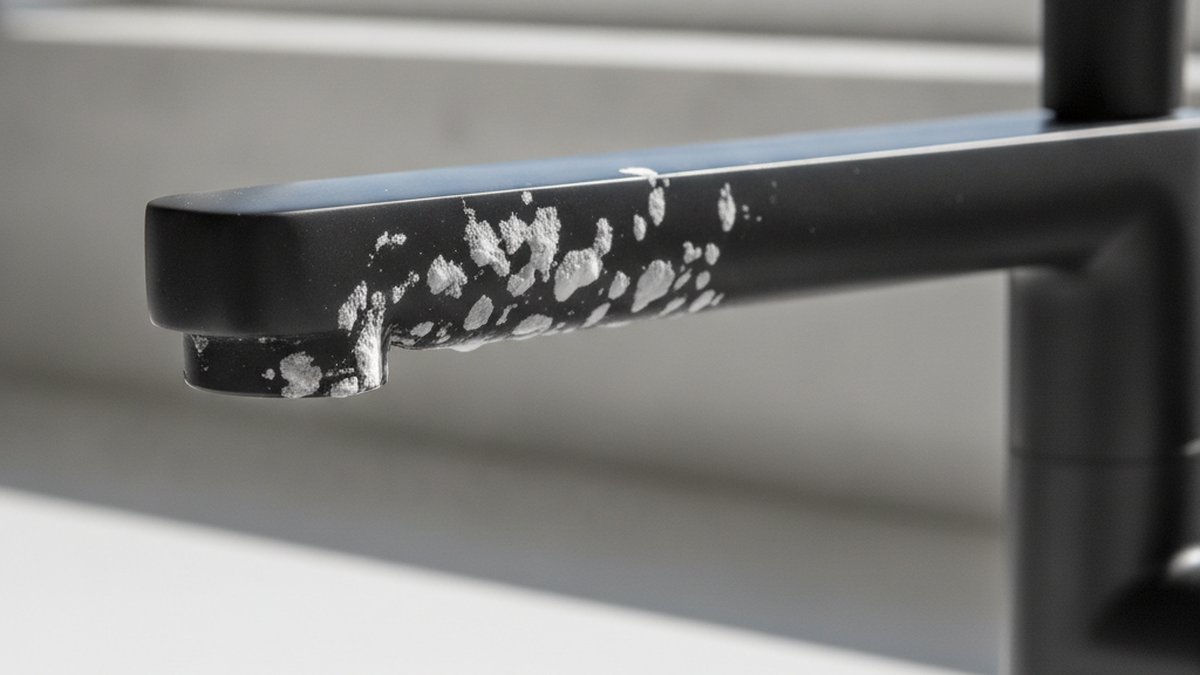
Those chalky white or grayish streaks on your dark faucet aren’t rust or “burned” metal — they’re mineral deposits, and the good news is that hard water stains on a matte black faucet are almost always removable if you catch them early and use the right (gentle) approach. The bad news is that matte black is the single least forgiving finish in your bathroom or kitchen: it shows every water spot, and it punishes anything abrasive with permanent glossy marks. This guide walks you through exactly what those stains are, how to remove them safely, and how to keep them from coming back — using real methods that won’t void your warranty or wreck a $250 faucet.
What actually causes those white spots on a matte black faucet?
They’re mineral deposits — mostly calcium carbonate and magnesium — left behind when hard water evaporates off the surface. The water leaves; the dissolved rock stays. On a shiny chrome faucet you’d barely notice it, but on a flat, light-absorbing matte black finish those pale minerals stand out like chalk on a blackboard.
Hard water is water with a high concentration of dissolved calcium and magnesium. In the U.S., water hardness is measured in grains per gallon (GPG) or parts per million (ppm). Anything above about 7 GPG (120 ppm) is considered hard, and large swaths of the country — Arizona, Texas, Nevada, Indiana, Florida — sit at 10–25+ GPG. The higher your GPG, the faster and thicker the buildup. That’s why the same faucet can stay spotless in Seattle and turn crusty in three days in Phoenix.
Two things make matte black especially prone to showing this:
- Contrast. Light minerals against a dark background are maximally visible. A spot that’s invisible on brushed nickel is glaring on matte black.
- Texture. Matte finishes are microscopically rougher than polished ones, so mineral-laden water clings and dries in place instead of beading and rolling off.
Important distinction: if the “stain” is orange-brown and won’t budge, that’s iron staining or actual corrosion, not calcium — and it’s a different fix. If it’s a rainbow or gray haze, that may be soap scum combined with minerals. Pure hard water spotting is white-to-gray and chalky.
What’s the safest way to remove hard water stains on a matte black faucet?
The safest method is a diluted white vinegar soak followed by gentle scrubbing with a soft cloth — nothing abrasive, nothing stronger than vinegar, and never left on longer than about 10 minutes. Here’s the step-by-step that protects the finish:
- Mix a 50/50 solution of distilled white vinegar and warm water in a bowl or spray bottle. Distilled vinegar (5% acidity) is plenty — you do not need industrial descalers.
- Apply to the stained areas. For flat surfaces, spray it on. For the base and around the handle, soak a microfiber cloth in the solution and lay it over the spots so it stays wet.
- Wait 5–10 minutes. The mild acid dissolves the calcium bond. Don’t walk away for an hour — prolonged acid contact can dull the coating.
- Scrub gently. Use a soft microfiber cloth, or for crevices, a soft-bristle (baby or old) toothbrush. Move in small circles with light pressure. Let the vinegar do the work, not your arm.
- Rinse thoroughly with clean water to remove all acid residue.
- Dry completely with a clean, dry microfiber towel. This step is not optional — drying is what prevents the next round of spots.
For a stubborn faucet aerator or spray head clogged with minerals, unscrew it and soak just that part in full-strength vinegar for 20–30 minutes, then brush it clean. If your aerator is fighting you, our guide on how to remove a stuck kitchen faucet aerator on a Moen covers the exact trick to break it free without scratching the finish.
What if vinegar alone doesn’t lift the deposits?
Step up gradually, not violently. If a 10-minute vinegar soak leaves faint residue, make a paste of baking soda and water — not baking soda straight, which can be gritty — spread it thin, and wipe (don’t grind) with a damp microfiber cloth, then rinse. Baking soda is a very mild abrasive and a base, so it also neutralizes leftover vinegar. For a whole-faucet refresh, some people use a diluted citric acid solution (1 tablespoon citric acid powder per cup of warm water), which is gentler and less smelly than vinegar but works the same way. Rinse and dry after either method.
What should you NEVER use on a matte black faucet?
Never use anything abrasive or strongly acidic — that’s the one-sentence rule that saves finishes. Matte black is typically a PVD (physical vapor deposition) coating or a powder/electroplated finish over brass or stainless, and the matte “flatness” comes from a thin top layer. Scratch or etch that layer and you expose shiny or lighter metal underneath, which no amount of cleaning will fix. Avoid all of the following:
| Don’t use this | Why it wrecks matte black | Use this instead |
|---|---|---|
| Magic Eraser / melamine sponge | It’s an ultra-fine abrasive; it buffs matte to glossy in streaks | Soft microfiber cloth |
| Scouring powder (Comet, Bar Keepers Friend) | Grit permanently scratches and lightens the finish | Baking soda paste, wiped not scrubbed |
| Steel wool / scrub pads | Strips coating down to bare metal | Soft-bristle toothbrush |
| Bleach or ammonia cleaners | Discolors and can corrode the coating | Diluted white vinegar |
| Acidic tub/tile cleaners (CLR, Lime-A-Way full strength) | Too aggressive; etches matte surface if left on | 50/50 vinegar, timed to 10 min |
| Glass cleaner with dyes/ammonia | Can leave a haze or streak on flat black | Water + dry microfiber, or vinegar |
One more caution people miss: many faucet manufacturers explicitly state in their care instructions that acidic and abrasive cleaners void the finish warranty. Before you reach for a chemical descaler, check your paperwork. Damage from harsh cleaners is considered misuse, not a defect — so a $15 bottle of the wrong cleaner can cost you a warranty claim on a $300 faucet. This is the same principle we cover in our piece on why a stainless steel faucet gets discolored and how to fix it — the finish, not the metal, is usually what’s damaged.
Is it safe to use a commercial descaler like CLR on matte black?
Only heavily diluted, briefly, and at your own risk — I’d avoid it. Products like CLR and Lime-A-Way are formulated for chrome, porcelain, and glass, not delicate coated finishes. If you must, dilute to at least 1:3 with water, apply for under 2 minutes, keep it off any decorative black surface you care about, rinse immediately, and test on a hidden spot first. In nine out of ten cases plain vinegar does the same job with zero risk, so there’s rarely a reason to escalate.
How do you stop hard water stains from coming back on matte black?
The single most effective prevention is drying the faucet after use — spots can’t form if the water never evaporates on the surface. Keep a microfiber cloth near the sink and give the faucet a quick wipe once a day, or at least after the last use each night. That one habit does more than any product.
Beyond wiping, here’s what actually helps, roughly in order of impact:
- Dry after use. Free, and the highest-impact fix. Ten seconds with a cloth.
- Weekly vinegar wipe-down. A light preventive vinegar-and-water pass before deposits build up means you never have to scrub hard.
- A water softener or filter. If your home is above ~10 GPG, a whole-house softener attacks the root cause and protects every fixture, appliance, and your water heater — not just this faucet.
- A protective wax or sealant. A thin coat of car wax or a dedicated fixture wax makes the surface more water-repellent so droplets bead and slide off. Reapply every few months. Test on a hidden area first and use sparingly on matte finishes to avoid a sheen change.
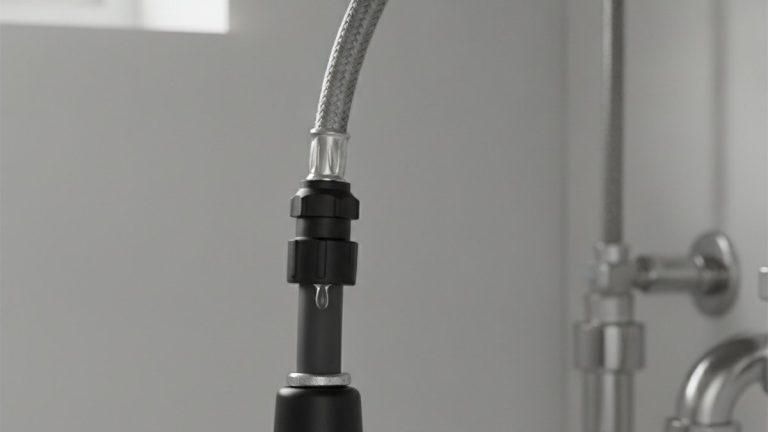
- Fix drips fast. A slow drip keeps one spot perpetually wet, and that’s where the worst crust forms. A dripping faucet isn’t just annoying — it’s a stain factory.
How often should you clean a matte black faucet in a hard water area?
In hard water regions, a quick wipe daily and a proper vinegar clean weekly keeps it looking new. In soft water areas you can stretch that to a light clean every couple of weeks. The trick is frequency over intensity: many short, gentle cleanings beat one aggressive scrubbing session, because the gentle routine never lets minerals bond hard enough to require force. Force is what damages matte black — so a consistent light touch is literally the finish-preserving strategy.
When are the stains permanent, and when is it time to replace the faucet?
If the marks lighten with vinegar, they’re mineral deposits and fully removable. If they don’t move at all after repeated gentle treatment and the surface underneath feels etched, pitted, or has turned permanently lighter/shinier, the coating itself is damaged — and that can’t be “cleaned” off, only refinished or replaced. Etching usually comes from previous abrasive scrubbing or harsh chemicals, not from the water itself.
A few signs it’s genuinely time to consider a new faucet rather than more cleaning:
- Bare brass or steel showing through where the black has worn away, especially around the handle and spout tip.
- The finish looks blotchy and shiny in patches no cleaning restores.
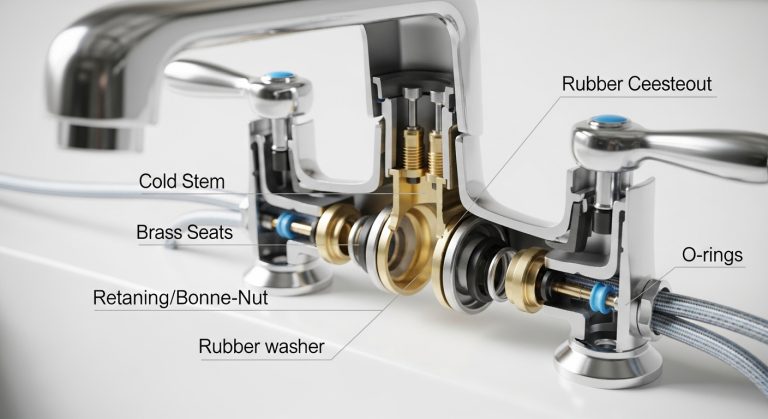
- Persistent low flow or spitting even after descaling the aerator — internal mineral buildup in the cartridge.
- The faucet is 10+ years old and the finish was a cheaper electroplate rather than PVD.
If you do decide to upgrade, look for a faucet with a genuine PVD matte black finish, which is far more durable and stain-resistant than standard powder coating. For kitchens, an integrated setup like an InSinkErator matte black instant hot water faucet shows how a quality PVD coat holds up to daily use. And if you’re weighing whether matte black is even the right long-term call versus an easier-care finish, our comparison of a brushed nickel faucet for a modern bathroom lays out how the finishes differ on spotting and upkeep — brushed nickel famously hides water spots better than nearly anything.
Does a water softener really fix this for good?
Yes — a water softener addresses the actual cause, so it prevents new mineral deposits on every fixture in the house, not just the one faucet you’re fighting today. Softeners work by ion exchange, swapping the calcium and magnesium (the “hardness”) for sodium or potassium before the water ever reaches your taps. With soft water, spots essentially stop forming, cleaning becomes trivial, and your faucets, showerheads, dishwasher, and water heater all last longer.
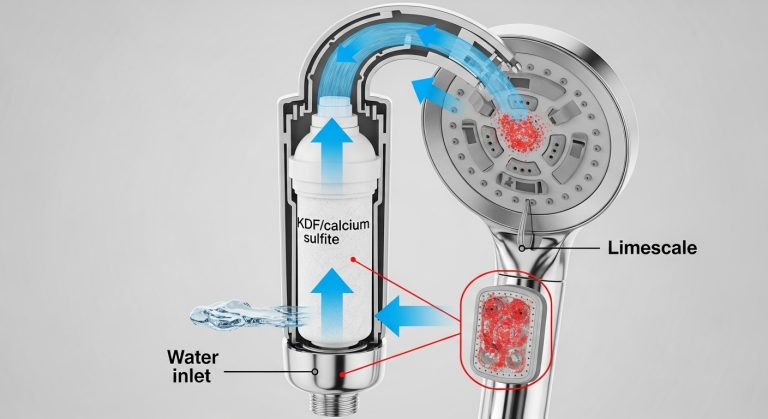
The tradeoff is cost and installation: a whole-house softener runs roughly $800–$2,500 installed, plus salt. If that’s not in the budget, a point-of-use inline filter or a showerhead filter helps in specific spots, and diligent drying remains the free alternative. For most people in very hard water areas, though, a softener pays for itself in reduced fixture wear and cleaning time — and it’s the only “fix it once” answer to recurring spots.
FAQ
Will vinegar damage a matte black faucet finish?
Not if you dilute it and limit contact time. A 50/50 vinegar-water solution left on for 5–10 minutes and then rinsed and dried is safe for the vast majority of matte black finishes. The risk comes from full-strength vinegar left sitting for an hour or applied daily — prolonged acid exposure can slowly dull the coating. Use it as a targeted treatment, not a constant soak.
Can I use Bar Keepers Friend or a Magic Eraser on hard water stains?
No. Both are abrasive — Bar Keepers Friend is a mild acid plus grit, and a Magic Eraser is a melamine micro-abrasive. On matte black they buff the flat finish into uneven glossy patches that are permanent. Stick to vinegar and soft microfiber. If you’ve already used one and see a shiny streak, unfortunately that’s finish damage, not residue.
Why does my matte black faucet spot again the very next day?
Because the water evaporating on it is hard, and matte texture holds droplets in place. Cleaning removes the existing minerals but does nothing about tomorrow’s water. The fix is prevention: dry the faucet after use, wipe it weekly with vinegar, and if it’s relentless, install a softener. A hidden drip that keeps one area wet is another common culprit worth checking.
Are hard water stains the same as rust on a black faucet?
No. Hard water stains are white-to-gray calcium and magnesium deposits and wipe off with vinegar. Rust or iron staining is orange-brown, comes from iron in the water or from bare metal exposed under a worn finish, and needs a different approach. If gentle cleaning doesn’t lift an orange mark, the coating is likely compromised underneath.
Does matte black show water spots more than brushed nickel or chrome?
Yes, noticeably. The dark, flat surface gives maximum contrast against pale minerals, and the matte texture grips droplets. Brushed nickel is the champion at hiding spots, and chrome is easy to wipe clean because it’s so smooth. Matte black looks stunning but is the highest-maintenance common finish for hard water areas — worth knowing before you buy.
How do I clean the matte black spray head or aerator without scratching it?
Unscrew it and soak the part in full-strength vinegar for 20–30 minutes, then brush the mineral clog out with a soft toothbrush and rinse. Because it’s detached, you can soak it longer without acid pooling on the decorative faucet body. Reattach only after it’s fully dry. This restores flow and clears the spitting that heavy mineral buildup causes.
Author note: This guide was written by the faucitta fixtures team, drawing on hands-on testing of matte black PVD and powder-coated faucets across a range of water-hardness conditions, from soft municipal supply to 20+ GPG well water. faucitta designs and sells faucets and bathroom fixtures at faucitta.net, and our finish-care recommendations follow manufacturer care standards and finish-warranty guidelines — we deliberately steer you away from any cleaner that would void your coverage. When in doubt, always confirm with your specific faucet’s included care instructions, since warranty terms vary by finish and manufacturer.