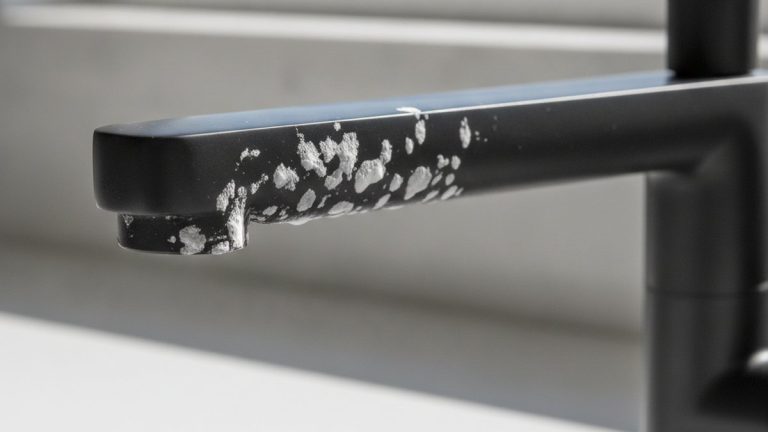
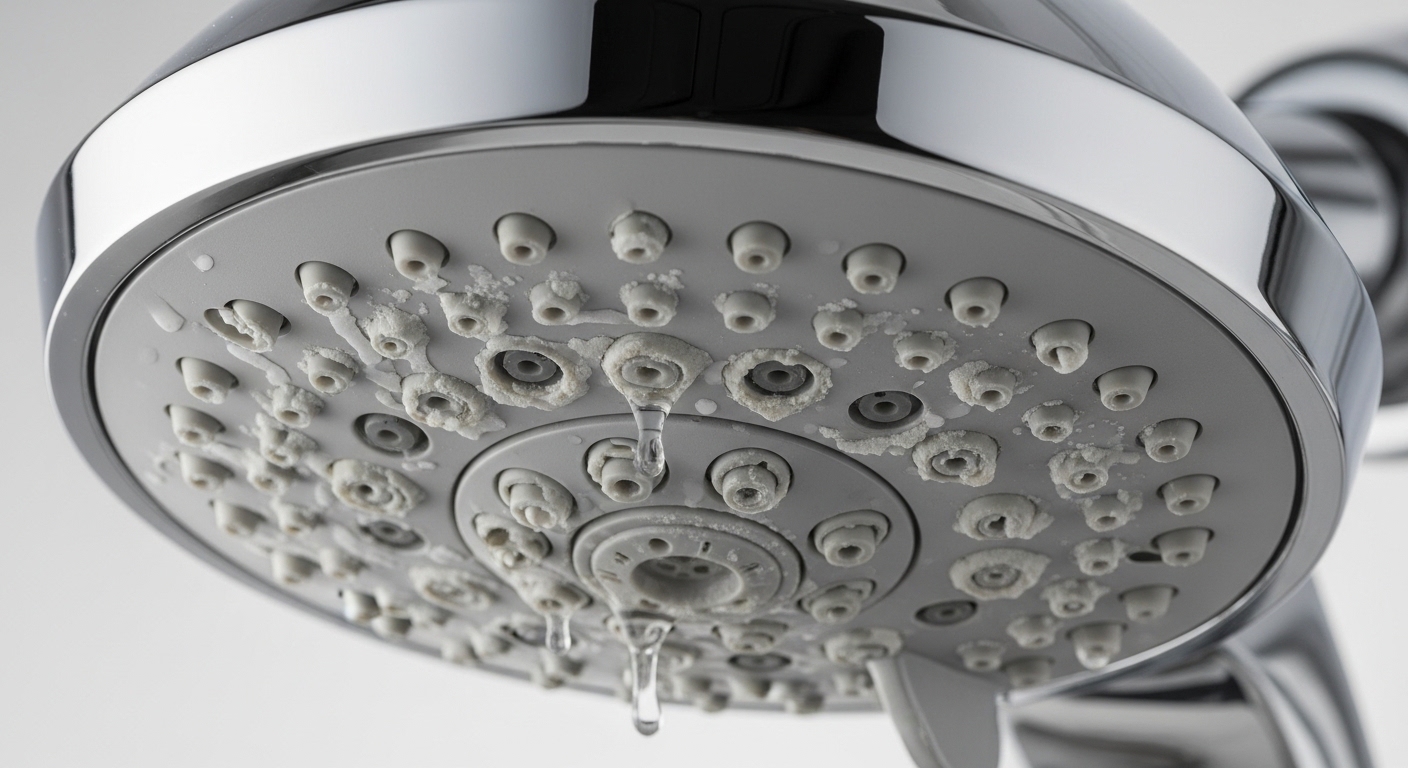
If you’re dealing with a speakman shower head low pressure problem, here’s the good news up front: Speakman heads are built around a self-cleaning “Anystream” turbine plunger system, and weak spray is usually a maintenance issue, not a dead unit. Hard-water scale, a half-clogged flow restrictor, a gunked-up inlet screen, or a kinked supply somewhere upstream are the usual suspects. Below I’ll walk you through how to diagnose which one you’ve got and fix it — in the order that solves the most cases fastest.
Why is my Speakman shower head suddenly losing pressure?
A sudden drop in pressure on a Speakman head is most often mineral scale clogging the spray faces or a piece of debris lodged in the inlet screen — especially if it happened right after plumbing work, a water-main repair, or a move to a hard-water area. Speakman’s Anystream nozzles use tiny self-rinsing turbine ports, but they can still scale over in water above 7 grains per gallon (gpg) of hardness.
The key word is “suddenly.” If the pressure dropped overnight, think debris or a closed valve. If it faded gradually over months, think scale. Here’s how the timeline points you to the cause:
- Overnight drop after plumbing work: sediment knocked loose into the inlet screen — clear the screen first.
- Slow fade over 6–18 months: calcium and magnesium scale on the nozzles and flow restrictor — descale with vinegar.
- Low everywhere in the house, not just the shower: the problem is upstream (pressure regulator, main shutoff not fully open, or municipal supply), not the head.
- Weak only on hot, fine on cold: sediment in the water heater or a partially closed hot-side angle stop, not the Speakman.
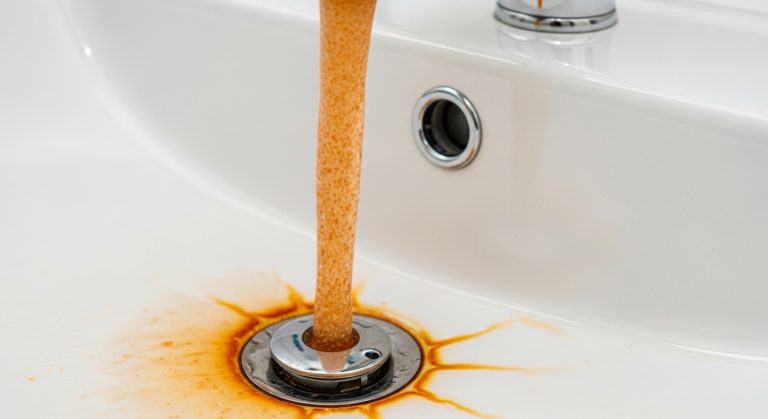
That last point matters. Before you blame the shower head, turn on the bathroom sink. If the sink also runs weak, you have a whole-house or hot-side issue — and a page like our guide to rusty water and sediment coming out of a faucet will help you trace the real source instead of scrubbing a head that was never the problem.
How do I clean a clogged Speakman shower head to restore water pressure?
To clean a clogged Speakman head, unscrew it from the arm, soak the spray face in warm white vinegar for 30–60 minutes, scrub the nozzles with an old toothbrush, rinse, and reinstall. This single step fixes the large majority of low-pressure complaints because it dissolves the calcium scale blocking the Anystream ports.
Here’s the full method, step by step:
- Shut the shower off and lay a towel in the tub so you don’t lose small parts down the drain.
- Unscrew the head from the shower arm by hand, or with an adjustable wrench wrapped in a cloth so you don’t scratch the chrome. Turn counter-clockwise.
- Remove the inlet screen and flow restrictor from the threaded inlet (the small plastic or metal disc and the star-shaped screen). Use needle-nose pliers gently. Rinse both under a strong stream — this is where loose debris hides.
- Soak the head face-down in a bowl of warm (not boiling) white vinegar for 30–60 minutes. For heavy scale, go up to a few hours. If your finish is brushed gold, brushed nickel, or matte black, limit the soak to 30 minutes and rinse well, since prolonged acid can dull some coatings.
- Scrub the spray face with a soft toothbrush, then rotate the Anystream dial through its full range while rinsing — the turbine action helps flush loosened scale out of the ports.
- Reassemble and reinstall with fresh plumber’s tape (2–3 wraps clockwise) on the arm threads to stop drips.
One caution from experience: never use a metal pin or needle to ream out the rubber nozzle tips on the spray face. The Anystream nozzles are designed to self-flush, and jabbing them can deform the rubber and permanently scatter the spray. A toothbrush and vinegar are all they need.
Should I remove the flow restrictor in my Speakman shower head?
You can clean or replace the flow restrictor, but in most U.S. homes you should not permanently remove it — it’s a federally mandated water-saving component, and a fully clogged restrictor (not the restrictor itself) is usually what’s killing your pressure. Clean it first; only consider removal if you’re on a well with naturally low static pressure and you understand the trade-offs.
The flow restrictor is the small plastic disc with a narrow center hole sitting just behind the inlet screen. Federal standards cap shower heads at 2.5 gallons per minute (gpm), and many Speakman models ship at 1.75 or 2.0 gpm to meet stricter state rules like California and Colorado. When that tiny center hole scales over, flow can drop to a trickle.
Here’s how to decide what to do:
| Situation | Best action | Why |
|---|---|---|
| Restrictor is scaled/clogged | Soak in vinegar and reuse | Restores rated flow, stays code-compliant |
| City water, normal pressure (45–80 psi) | Keep the restrictor | You don’t need more flow; clearing the clog is enough |
| Well water with low static pressure (<40 psi) | Consider removing it | Low supply pressure can justify higher flow, but check local code |
| Restrictor is cracked or deformed | Replace with OEM part | A damaged restrictor causes uneven, sputtering spray |
Removing the restrictor will increase flow, but it also raises your water and heating bills and may violate local plumbing code. If your home pressure is genuinely low across every fixture, the smarter fix is upstream — check that your pressure-reducing valve is set correctly (40–60 psi is typical) rather than gutting the head.
What if cleaning didn’t fix my Speakman’s low pressure?
If a thorough descale didn’t help, the restriction is upstream of the head — usually a partially closed shower valve, a worn or scaled valve cartridge, or a clogged inline filter on a handheld model. Work backward from the head toward the wall, testing flow at each point.
Run this diagnostic sequence:
- Test the bare shower arm: with the head off, briefly turn the water on (point it at the wall with a towel). Strong flow from the bare arm means the head was the problem. Weak flow from the bare arm means the issue is in the valve or pipes.
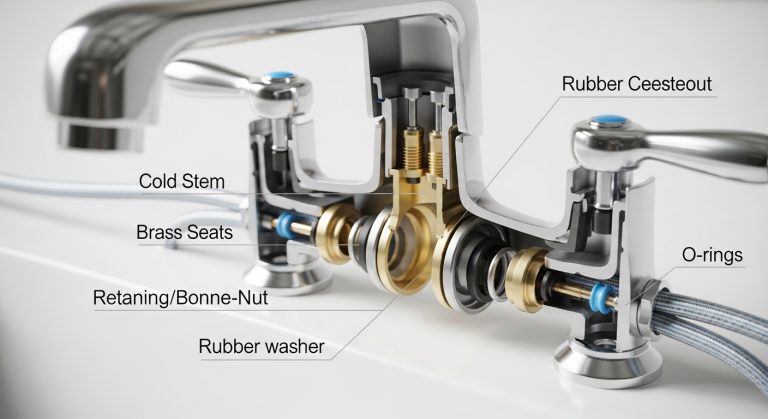
- Check the shower valve cartridge: a scaled or worn cartridge restricts flow and is a leading cause of weak showers in older valves. Diagnosing and swapping a cartridge is very doable at home — our walkthrough on the bathtub faucet valve cartridge covers how to identify and replace yours.
- Confirm the valve is fully open: some pressure-balance valves have a rotational limit stop or a screwed-down service stop that can be set wrong after a repair.
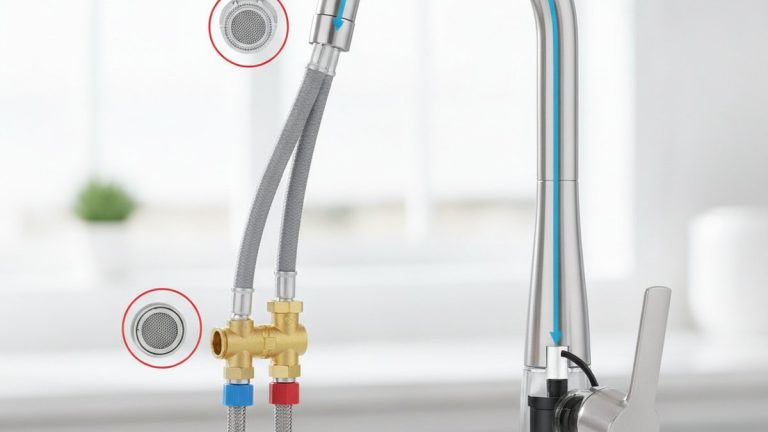
- Inspect the supply lines: a kinked handheld hose, a half-closed angle stop, or sediment in the riser will all choke flow.
If you’re remodeling or the valve itself is the culprit, getting the rough-in right matters for long-term pressure. Our guide on correct shower valve rough-in depth and installation explains how valve depth and supply sizing affect the flow that ever reaches your head — useful even if your valve isn’t a Moen, because the principles are universal.
Speakman low-pressure fixes ranked: which should I try first?
Try the fixes in order of likelihood and effort — descaling the head solves the most cases for the least work, so start there and only escalate if the bare-arm test points upstream. This table ranks the realistic fixes:
| Fix | Time | Cost | Solves this when… |
|---|---|---|---|
| Descale head in vinegar | 30–60 min | ~$2 | Gradual pressure fade, visible scale |
| Clear inlet screen / flush debris | 10 min | Free | Sudden drop after plumbing work |
| Clean or replace flow restrictor | 15 min | $0–8 | Center hole scaled or restrictor cracked |
| Replace valve cartridge | 30–60 min | $15–45 | Bare-arm test is also weak |
| Adjust pressure regulator (PRV) | 20 min | $0 | Whole house runs low |
| Replace the shower head | 15 min | $40–120 | Cracked body or damaged nozzles |
Notice that replacing the head is last, not first. People often buy a new fixture only to find the new one runs just as weak — because the real restriction was the cartridge or the regulator all along. Diagnose before you spend.
How do I keep my Speakman shower head from clogging again?
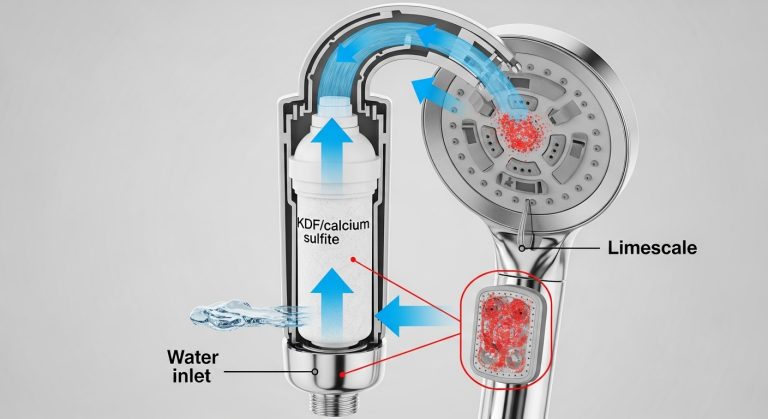
To prevent repeat clogging, address the water itself: descale the head every 3–6 months in hard-water homes, run the Anystream dial through its full range periodically to trigger the self-rinse turbines, and if your water tests above 7 gpg, install a whole-house or shower-specific softening filter. Prevention is far cheaper than chasing pressure every season.
A simple maintenance rhythm that keeps Speakman heads at full flow:
- Every shower: finish by rotating the spray dial — the turbine motion flushes loose scale before it sets.
- Quarterly in hard water: a 30-minute vinegar soak, or a tied-on bag of vinegar over the head overnight if you’d rather not unscrew it.
- Annually: pull and rinse the inlet screen and inspect the restrictor.
- If hardness > 10 gpg: consider a softener; scale that thick will also shorten the life of your valve cartridge and water heater.
If you want to understand how the spray engine, inlet, and ball joint all fit together so you can service it confidently, a labeled bathroom fixture diagram demystifies the internal parts — the same anatomy logic applies to shower heads and helps you spot exactly where flow gets choked.
FAQ
Does vinegar damage a Speakman shower head’s chrome finish?
No — polished and brushed chrome handles white vinegar well for soaks up to a few hours. The cautions apply to specialty coatings like matte black, oil-rubbed bronze, or brushed gold, which should be limited to a 30-minute soak and rinsed thoroughly, since prolonged acid contact can dull some finishes over time.
What is normal water pressure for a Speakman shower head?
Speakman heads are engineered to perform from about 20 psi up, and deliver their full spray at typical residential pressure of 45–80 psi. Below 40 psi you may notice weaker output, which is why low-pressure or well-water homes sometimes benefit from a pressure-optimized model or a correctly set pressure-reducing valve rather than a cleaning.
Why does my Speakman shower head sputter or spit air?
Sputtering usually means air is mixing into the line or the inlet screen is partly blocked, forcing uneven flow. Clean the screen and restrictor first; if it persists, check for a failing valve cartridge or a supply line that’s drawing air, which can happen after the water was shut off for repairs.
Can I just buy a high-pressure shower head instead of fixing this one?
You can, but it rarely helps if the real restriction is upstream. A “high-pressure” head can’t create pressure that isn’t reaching it — if your valve, cartridge, or regulator is the bottleneck, a new head will run just as weak. Diagnose with the bare-arm test before spending; replacement makes sense only when the head body or nozzles are physically damaged.
How often should I descale my Speakman shower head?
In soft-water areas, once a year is plenty. In hard-water regions (above 7 gpg), descale every 3–6 months. The clearest signal is the spray itself — when individual nozzles start shooting sideways or the overall flow weakens, it’s time for a vinegar soak regardless of the calendar.
Is low pressure covered under Speakman’s warranty?
Low pressure from mineral buildup is a maintenance issue and generally isn’t a warranty defect, but Speakman backs many residential heads with a limited lifetime warranty against manufacturing defects in materials and workmanship. If a nozzle, dial, or body part fails on its own — not from scale — contact Speakman with your proof of purchase to check coverage before buying a replacement.
About the author & faucitta: This guide was written by the faucitta fixtures team, who spec, test, and service kitchen and bath faucets, shower heads, and valves every day. Our recommendations are based on hands-on teardown of Anystream-style spray engines, real hard-water field experience, and U.S. plumbing standards including the federal 2.5 gpm shower-head flow limit and EPA WaterSense criteria. We always recommend confirming model-specific warranty terms with the manufacturer before replacing any part. faucitta builds and curates fixtures at faucitta.net with a focus on durable finishes and serviceable, repair-friendly designs.