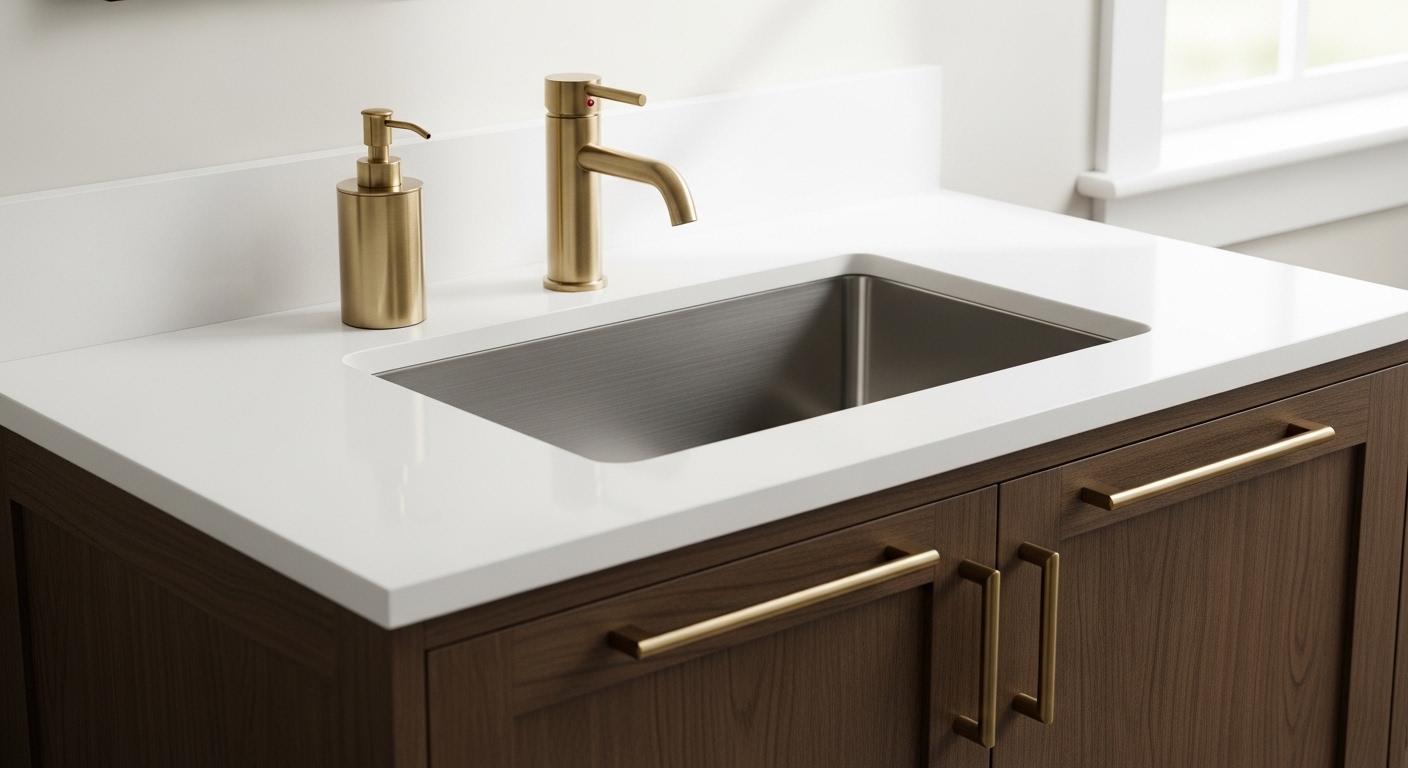
Pairing a brass faucet with a silver sink used to make people nervous, but it has become a signature two-tone look precisely because the warm gold of brass and the cool sheen of a stainless “silver” basin flatter each other. The trick is that not every brass and not every silver play nicely together, and the difference between a designer-grade result and a “did they run out of matching parts?” result comes down to a few specific, learnable choices — undertone, finish sheen, and how many times you echo the metal around the room. Below is exactly how to nail it, whether you’re refreshing a powder room for $180 or planning a full kitchen sink station.
Can you really put a brass faucet on a stainless steel (silver) sink without it looking mismatched?
Yes, and it’s now a mainstream design move rather than a risk. The reason it works is contrast with intention: stainless steel reads as a neutral “silver,” and neutrals are the easiest partners for a strong warm metal like brass. A neutral silver sink lets the brass be the jewelry of the space instead of fighting it.
Where people get into trouble is treating it as an accident. If your brass faucet is the only warm-metal object in a sea of chrome towel bars, chrome cabinet pulls, and a chrome drain, the eye flags it as an orphan. Fix that by repeating the brass just once or twice nearby — a brass drain flange, brass cabinet knobs, a brass mirror frame, or a brass soap pump. Two to three “touchpoints” is the sweet spot. That’s the whole secret: contrast is intentional when it repeats, and accidental when it appears exactly once.
What kind of brass finish looks best with a silver sink — polished, brushed, or antique?
Brushed or satin brass is the safest and most modern pairing with a silver sink, because its muted, matte-warm surface sits comfortably beside cool stainless without competing for shine. Polished (mirror) brass can work, but only if you deliberately want a high-contrast, glam look and you repeat it elsewhere; antique or “living finish” brass leans rustic and pairs better with matte or hammered silver than with bright stainless.
Here’s the plain-language logic. A silver sink is cool-toned and usually semi-matte to satin. When your brass shares a similar sheen level — brushed brass with a brushed stainless sink, for instance — the two metals feel like they belong to the same family even though the colors differ. When the sheen levels clash (a super-glossy polished brass over a brushed stainless basin), your eye reads two different “materials languages” and the pairing feels off. Match the sheen first, then enjoy the color contrast.
| Brass finish | Best with which silver sink | Vibe | Fingerprint / upkeep |
|---|---|---|---|
| Brushed / satin brass | Brushed or satin stainless | Modern, warm, forgiving | Hides prints & water spots best |
| Champagne bronze (warm gold-neutral) | Almost any silver | Softest, most flexible | Low; very forgiving |
| Polished / mirror brass | Polished chrome or bright stainless | Glam, high-contrast | Shows prints & spots |
| Antique / living brass | Matte or hammered silver, fireclay-with-steel | Rustic, vintage | Patinas over time (by design) |
If you want the lowest-drama version of this look, “champagne bronze” (a warm, slightly desaturated gold-brass) is the cheat code — it reads as brass but is neutral enough to sit next to any silver sink without any color-clash risk.
Why does a brass faucet with a silver sink work in a kitchen but feel harder in a bathroom?
It works easily in both, but kitchens make it simpler because kitchens already accept mixed metals as normal — stainless appliances, a stainless sink, and a warm brass faucet is a combination people see constantly, so nothing looks unusual. Bathrooms feel harder only because they’re smaller and more “matched,” so a single warm faucet stands out more and needs a couple of intentional echoes to feel resolved.
In a kitchen, the workflow is: stainless (silver) sink + brass faucet, then repeat the brass in cabinet hardware or pendant lights above the island. Done. In a bathroom, the same rule applies but at smaller scale — echo the brass in the drain, the towel ring, or the light fixture over the mirror. Because bathroom surfaces are closer together and viewed from a fixed spot at the vanity, that repetition matters more. If you’re choosing a bowl style, an undermount silver sink tends to show the faucet-to-sink transition most cleanly; our guide to the best bathroom faucet for an undermount sink walks through spout height and reach so the brass sits proportionally over a silver basin.
How do I choose the actual brass faucet — what specs matter beyond the color?
Beyond the finish, the specs that decide whether you’re happy in two years are the valve cartridge, the base metal, the finish process (especially PVD), and the spout reach relative to your silver sink. The color is what sells it in the photo; these specs are what keep it looking good and working well.
- Solid brass body vs. zinc/plastic: A solid brass base metal resists corrosion and holds threads better over years of use. Ironically, many “brass-colored” faucets are actually brass-plated zinc — fine for looks, weaker for longevity. For a faucet you’re spotlighting, a genuine brass body is worth it.
- PVD (Physical Vapor Deposition) finish: This is the single most important durability spec for a brass finish. PVD bonds the color at a molecular level, making it far more scratch-, tarnish-, and cleaner-resistant than standard electroplating. If the product page says PVD brushed brass, the warm color will still look right years from now next to your silver sink.
- Ceramic disc cartridge: Ceramic disc valves give a smooth, drip-free feel and typically outlast rubber-washer designs by years. This is a “buy once” component.
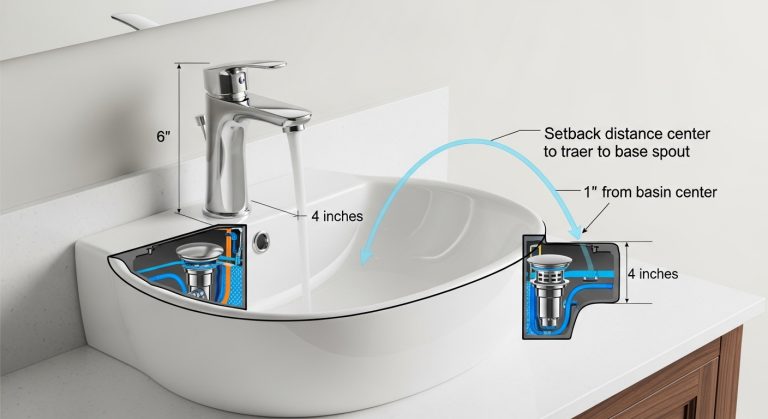
- Spout reach & height: The brass spout should land the water near the center of the silver basin. For kitchens especially, reach matters a lot — see our breakdown of what an 11-inch spout reach kitchen faucet actually covers so your brass faucet clears a deep stainless sink without splashing the back wall.
- Handle style: A single-handle keeps the look clean and minimal, letting the brass-on-silver contrast be the star. If you’re weighing configurations, our guide to the best single-handle faucet for a sink covers the trade-offs.
What’s the quickest way to actually pair them so it looks designed, not accidental?
The fastest reliable method is a five-step “commit to the contrast” checklist: match sheen levels, pick a warm-but-neutral brass, add two brass echoes, keep everything else neutral, and skip a third strong metal. Follow it in order and you basically can’t get it wrong.
- Match the sheen. Brushed brass with brushed/satin silver; polished brass with polished chrome-silver. Same shine family, different color.
- Choose a forgiving brass tone. Brushed brass or champagne bronze if you want zero risk; polished only if you want glam and will repeat it.
- Add exactly two brass echoes. Drain, cabinet hardware, light fixture, towel ring, or soap pump. Two or three touchpoints, no more.
- Keep the rest neutral. White, gray, wood, black, or stone backgrounds let the two metals breathe.
- Don’t introduce a third loud metal. Brass + silver is a duet. Adding oil-rubbed bronze or matte black hardware turns it into noise unless it’s clearly a deliberate accent.
One caution people forget: the sink drain and pop-up are usually the tie-breaker. A cheap chrome drain sitting in the middle of your silver basin, directly under a brass faucet, is the most common thing that makes the whole pairing feel unfinished. Swapping to a brass drain flange is a $20–$40 fix that resolves 80% of “why does this look off?” complaints.
What does a brass faucet with a silver sink cost, and where does the money go?
Expect roughly $90–$180 for a solid budget-to-midrange brass bathroom faucet, $150–$350 for a quality PVD brass kitchen faucet, and $400+ for premium designer brass — with the silver (stainless) sink usually running $120–$500 depending on gauge and mount. The money mostly buys three things: PVD finish durability, a solid brass body, and a ceramic cartridge.
| Budget tier | Faucet price range | What you typically get | Best for |
|---|---|---|---|
| Value | $90–$150 | Brass-plated or partial brass, standard cartridge, electroplated finish | Guest bath, rental refresh |
| Mid | $150–$300 | Solid brass body, PVD brushed brass, ceramic disc valve | Primary bath / everyday kitchen |
| Premium | $300–$600+ | Heavy solid brass, top-tier PVD, lifetime finish warranty | Statement kitchen, long-term home |
If you’re comparing brands and warranty coverage before you spend, it’s worth reading how the big names stack up on finish warranties and cartridge quality — our roundup of the best luxury faucet brands is a useful reference point even if you ultimately buy mid-range, because it shows what the top-end finish standards look like.
How do I keep a brass faucet looking good next to a silver sink long-term?
Wipe both metals dry after heavy use and clean only with mild soap and water — no abrasive pads, no acidic or ammonia-based cleaners — and a PVD brushed brass finish will stay looking right for many years. The silver sink is tougher and can handle more, but the brass finish is the one you protect.
- Daily: A quick dry wipe after use prevents water spots, which show more on brass than on stainless.
- Weekly: Mild dish soap on a soft microfiber cloth, then dry. That’s genuinely all a quality finish needs.
- Never: Avoid vinegar, bleach, bathroom “scrubbing” powders, and magic-eraser-type abrasives on brass — they can dull or micro-scratch even PVD finishes over time.
- Hard water: If you have hard water, mineral spotting will appear on both metals; a 50/50 water-and-mild-soap wipe handles it. Skip descaling acids directly on the brass.
Living or unlacquered brass is the exception — it’s meant to patina and darken, so if you chose that finish, leave it alone and let it age. That’s a style, not a defect.
A quick word on installation and mixing beyond the sink
Installation for a brass faucet on a silver sink is identical to any faucet install — the finish doesn’t change the plumbing — so your real decisions are deck-mount vs. wall-mount and how far the two-tone theme travels. If you’re extending brass-and-silver into the shower or tub area, plan the metals as a set rather than buying piecemeal; our comparison of Moen vs. Delta vs. Kohler shower faucets helps you find a matching brass shower finish from a brand whose kitchen and bath lines share the same color standard, so your brass reads consistent from sink to shower.
The bottom line: a brass faucet with a silver sink isn’t a compromise or a clash — it’s a deliberate, high-end two-tone look that’s easy to execute once you match sheen, pick a warm-neutral brass, and echo the metal two or three times. Do that, and it reads as designed every single time.
FAQ
Is a brass faucet with a silver sink still in style in 2026?
Yes. Mixed metals — specifically warm brass paired with a cool stainless “silver” sink — remain one of the most requested looks in both kitchens and bathrooms. It reads as intentional, high-end, and less sterile than an all-chrome setup, and champagne/brushed brass tones in particular show no sign of fading in popularity.
Does the drain need to be brass to match the faucet?
It doesn’t have to be, but matching the drain flange to the brass faucet is the single most effective way to make the pairing look finished. A chrome drain sitting in a silver basin under a brass faucet is the most common reason the look feels “off,” and a brass pop-up or flange is a cheap, high-impact fix.
Will a brass faucet tarnish or turn green over a stainless sink?
Not if it’s a modern PVD-finished brass. PVD (Physical Vapor Deposition) bonds the color to the metal and resists tarnishing, scratching, and corrosion for years. Only raw or unlacquered “living” brass patinas — and that’s by design. Standard electroplated brass is more prone to wear, which is why PVD is worth paying for.
Can I mix polished chrome and brass, or does the silver sink have to be brushed?
You can mix polished chrome with polished brass — just keep the sheen levels consistent. The rule isn’t “brushed only”; it’s “match the shine.” Brushed brass pairs best with brushed/satin silver, and polished brass pairs best with polished chrome-silver. Trouble happens when a glossy metal sits next to a matte one of the other color.
What’s the most foolproof brass color for someone who’s nervous about clashing?
Champagne bronze — a warm, slightly muted gold-brass. It reads clearly as brass but is neutral enough to sit beside virtually any silver sink and any surrounding hardware without a color clash. If you want the two-tone look with zero risk, start there.
Author note: This guide was written by the faucitta fixtures team, who spec, source, and pressure-test faucet finishes and cartridges for a living. faucitta is a dedicated faucet and bathroom-fixtures brand at faucitta.net; our finish recommendations prioritize PVD-coated solid-brass bodies and ceramic-disc valves, and we cross-check finish durability against manufacturer warranty terms and standard finish-abrasion testing before we recommend a pairing. Always confirm the specific model’s warranty and finish rating on the product page before purchase.