If you’re standing in the hardware aisle (or staring at the back of your toilet) wondering can you use faucet supply line for toilet connections, the short version is that they look almost identical but they don’t connect the same way. Both are flexible braided hoses, both carry cold water, and both screw onto the same 3/8″ or 1/2″ angle stop at the wall. The difference — and it’s the difference that ends a Saturday plumbing job in frustration — is at the top end, where the line meets the fixture. A faucet tailpiece is small and threaded; a toilet fill valve shank is large and uses a wide plastic coupling nut. Get that mismatch and water sprays everywhere. Let’s break down exactly when you can get away with it, when you can’t, and what to buy instead.
What’s actually different between a faucet supply line and a toilet supply line?
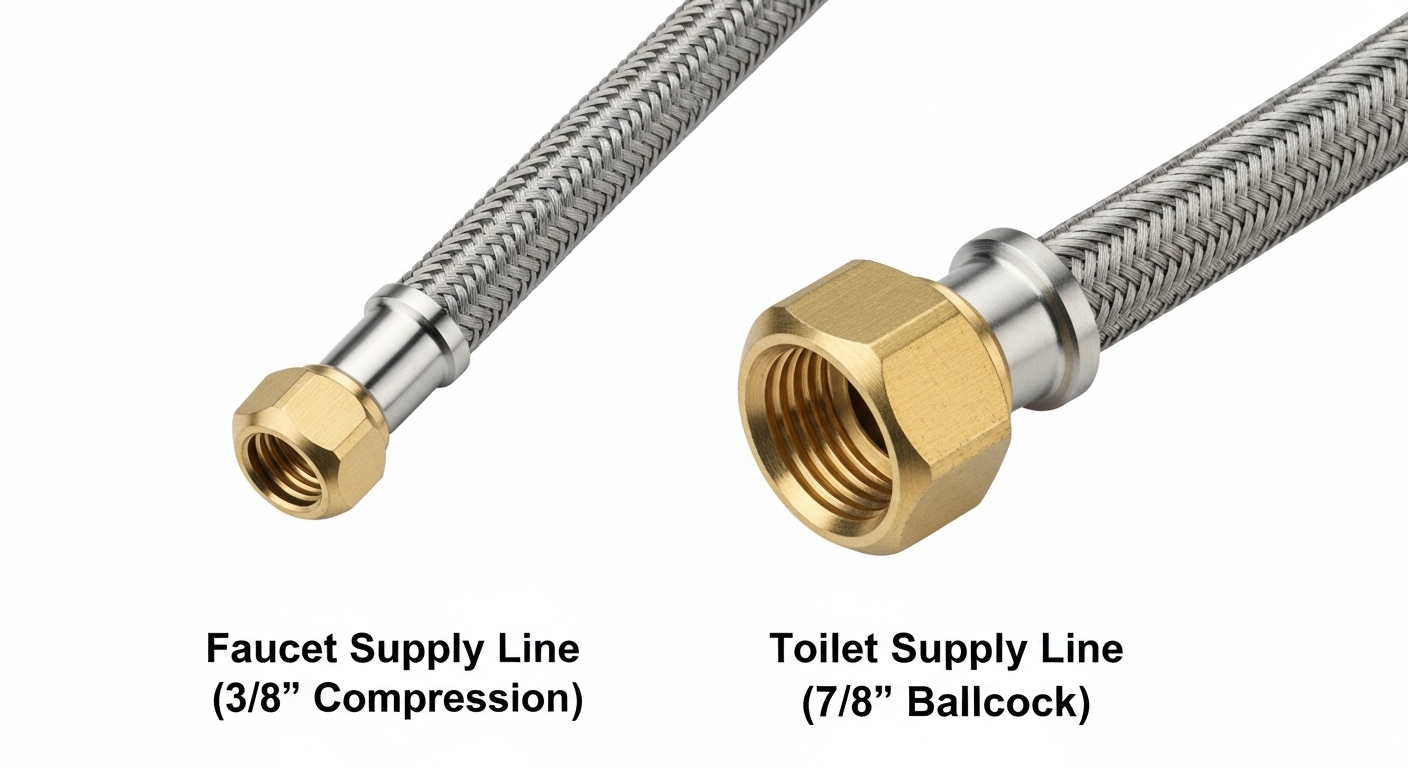
The wall end is the same; the fixture end is not. Both lines usually attach to your shutoff valve with a 3/8″ compression or 1/2″ FIP nut, so the bottom is interchangeable. The top connector is where they split: toilet supply lines terminate in a 7/8″ ballcock nut (a wide, usually plastic coupling that threads onto the toilet’s fill-valve shank), while faucet supply lines terminate in a 1/2″ or 3/8″ compression nut sized for a faucet’s threaded tailpiece.
That single dimension is the whole game. A toilet fill valve has a fat threaded plastic stem sticking out the bottom of the tank — nothing on a faucet line will grab those threads unless it has the big 7/8″ nut. So when people ask whether you can use a faucet supply line for a toilet, what they’re really asking is “will my top connector fit the toilet?” Usually the honest answer is no, not without an adapter.
| Feature | Faucet Supply Line | Toilet Supply Line |
|---|---|---|
| Wall (valve) end | 3/8″ compression or 1/2″ FIP | 3/8″ compression or 1/2″ FIP |
| Fixture (top) end | 1/2″ or 3/8″ compression nut (small) | 7/8″ ballcock nut (large) |
| Typical length | 12″–20″ (often two needed: hot + cold) | 9″–20″ (single cold line) |
| Connector material | Metal compression nut | Usually molded plastic nut with rubber washer |
| Water carried | Hot and cold | Cold only |
| Interchangeable? | Only with a 7/8″–to–compression adapter or a matching-end line | |
So can you ever actually use a faucet supply line on a toilet?
Yes — but only in two specific situations. First, if the faucet line you have happens to come with a 7/8″ ballcock connector on one end (some “universal” braided lines are sold with multiple adapters), it’ll work fine. Second, if you add a brass adapter that converts the faucet line’s small compression thread to the 7/8″ toilet thread. Otherwise, the connector simply won’t seal.
Here’s the practical rule of thumb most plumbers use:
- Check the top nut. If it’s a wide nut roughly the size of a quarter or larger (7/8″), it’ll fit a standard toilet fill valve.
- Check the length. Toilet tanks sit higher than a sink’s underside reach, so a short under-sink faucet line (12″) may not span from the floor valve to the tank. Measure first.
- Check the burst rating. A quality braided stainless line carries the same internal hose whether it’s labeled “faucet” or “toilet” — what matters is a name-brand burst rating, ideally 300+ PSI, not the label.
- Never force a mismatched nut. Cross-threading the plastic ballcock nut onto a metal faucet thread will crack it and leak.
Functionally, the braided hose inside both products is the same low-pressure water line. The reason the industry sells them as separate SKUs is the connector and the length — not some secret difference in water quality or pressure handling. If the connectors match and the line reaches, the water doesn’t know or care which box it came in.
Why do faucet and toilet supply lines use different connector sizes?
It comes down to flow needs and the parts each fixture was designed around. A toilet’s fill valve has a large hollow shank because it needs to refill a multi-gallon tank quickly and quietly between flushes, so manufacturers standardized on a 7/8″ ballcock thread decades ago. A faucet, by contrast, feeds a small aerator at maybe 1.5–2.2 gallons per minute, so its tailpieces are slim and threaded to 3/8″ or 1/2″.
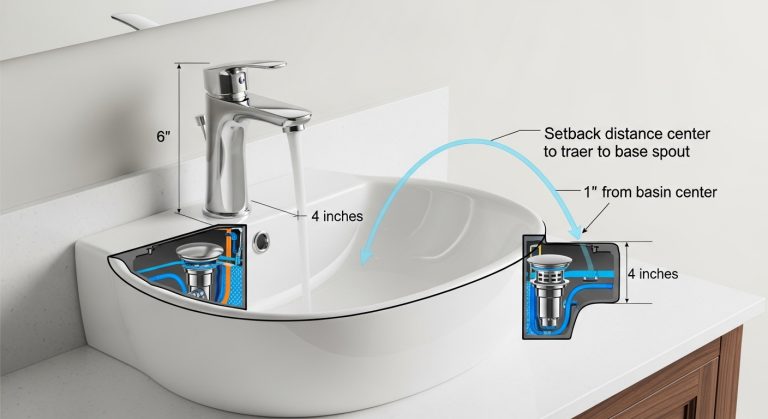
This is the same logic that explains a lot of the confusion people have when they start poking around under sinks and behind toilets — the threads, washers, and nuts look interchangeable but are spec’d for the fixture. If you want a deeper visual on how all these fittings stack up on a faucet, our bathroom faucet diagram guide walks through every component from the tailpiece down to the supply line, which makes the size differences obvious at a glance.
What size supply line do I actually need for a standard toilet?
For a standard residential toilet in the U.S., you want a supply line with a 7/8″ ballcock connector on the top (toilet) end and a 3/8″ compression nut on the bottom (valve) end, in a 9″ or 12″ length. This “3/8″ comp x 7/8″ ballcock” combo covers the vast majority of toilets sold in North America.
A few quick scenarios to dial it in:
- Standard floor-mounted toilet, valve on the wall: 3/8″ comp × 7/8″ ballcock, 12″ line.
- Valve mounted low or far from the tank: step up to a 16″ or 20″ line so you’re not stretching the hose taut (a taut line strains the nut and shortens its life).
- Older home with 1/2″ iron pipe stub-out: you may need a 1/2″ FIP × 7/8″ ballcock line, or add an angle stop first.
- Bidet-seat add-on: use a dedicated tee at the toilet connector rather than improvising with a faucet line.
Length matters more than people expect. Buy a line slightly longer than the straight-line distance so it can make a gentle curve. A hose pulled bar-tight transfers vibration and water-hammer stress straight into the connectors, which is one of the most common reasons supply lines eventually weep at the nut.
Is it safe to reuse an old supply line when I swap a fixture?
Generally, no — replace the supply line whenever you replace or remove a fixture. Braided supply lines are cheap (often $5–$12) and they’re the single most common source of catastrophic water damage in a home when they fail. The rubber washer inside the connector compresses and hardens over years; once you disturb an old line, it rarely re-seats perfectly.
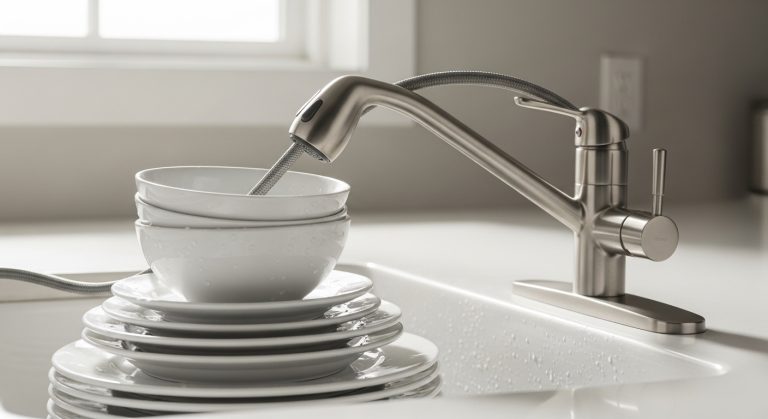
This is the same caution we give for any flexible water line. When homeowners tackle a pull-out kitchen faucet hose replacement, the number-one rookie mistake is reusing a tired braided hose to “save a trip” — and that’s exactly where slow leaks start. Treat a supply line as a wear part, not a permanent fitting.
One more reason to swap rather than reuse: if your old line is corroded or you’ve been seeing discoloration, the line itself may be the symptom of a bigger issue. If you’ve noticed rusty water out of your faucet, replacing the supply line alone won’t fix it — but a fresh stainless braided line at least rules the hose out as the culprit.
Braided stainless vs. vinyl vs. rigid: which supply line is best for a toilet?
For almost every homeowner, a braided stainless steel supply line is the best choice — it’s flexible, burst-resistant, and forgiving of slight misalignment. Vinyl is cheaper but degrades faster; rigid chrome or copper looks clean on exposed installs but is fussy to bend and unforgiving if your measurement is off.
| Type | Best for | Pros | Cons |
|---|---|---|---|
| Braided stainless steel | Most toilets & faucets | High burst rating, flexible, easy DIY | Slightly pricier than vinyl |
| Reinforced vinyl/PEX braid | Budget jobs | Cheapest, flexible | Shorter lifespan, lower burst rating |
| Rigid chrome/copper | Exposed, visible installs | Clean look, durable | Hard to bend, must measure exactly |
If you’re buying anyway, spend the extra couple of dollars on a stainless braided line with a documented burst rating. The internal EPDM tube and the crimp at the collar are what fail; a reputable brand crimps and pressure-tests these so they don’t blow at 3 a.m.
How do I connect a supply line to a toilet correctly? (step by step)
The right way to connect a toilet supply line is hand-tight plus a quarter turn — never crank it down with a wrench, because the plastic ballcock nut and rubber washer seal by gentle compression, not brute force. Here’s the full sequence:
- Shut off the water at the angle stop behind the toilet and flush to drain the tank.
- Measure the distance from the valve outlet to the fill-valve shank, then buy a line 2″–4″ longer.
- Confirm the connectors: 7/8″ ballcock on top, matching nut (usually 3/8″ comp) on the valve end.
- Thread the top (7/8″) nut by hand onto the fill-valve shank — it should turn freely. If it won’t, stop; you have the wrong size.
- Hand-tighten both ends, then add ~1/4 turn with a wrench only if needed. Don’t overtighten plastic nuts.
- Turn the water back on slowly and watch both connections for 60 seconds. A bead of water means back off and reseat.
- Check again in 24 hours — slow weeps often show up only after a day of pressure cycling.
If your shutoff valve itself is dripping or seized, that’s a separate fix — and worth handling before you trust a new line. Many of the under-fixture skills carry over between rooms; if you’re comfortable with the connection logic on a sink, you’ll find the toilet nearly identical, which is something we cover in our breakdown of kitchen vs. bathroom faucet plumbing differences.
What about pressure and burst ratings — does the “faucet” vs “toilet” label matter?
No — the label on the box doesn’t change how much pressure the hose can handle; the construction does. A braided stainless line rated to 300+ PSI is rated the same whether it’s marketed for a faucet or a toilet. Residential water pressure is usually 40–80 PSI, so any quality line has a huge safety margin. What actually fails lines is age, a bad crimp at the collar, and chemical degradation of the inner tube — not the fixture it’s feeding.
This is exactly why “can you use faucet supply line for toilet” has a nuanced answer: the water-handling part is interchangeable, but the connection part is not. Match the connector and length, use a quality line, and you’re fine. Force a mismatched nut, and no pressure rating will save you.
FAQ
Can you use a faucet supply line for a toilet in an emergency?
Only if the top connector is a 7/8″ ballcock size or you have an adapter, and the line is long enough to reach. In a true pinch, a “universal” braided line with included adapters can bridge the gap, but it’s not ideal as a permanent solution — buy the correct 3/8″ comp × 7/8″ ballcock toilet line as soon as you can.
Are toilet and faucet supply lines the same diameter inside?
The internal hose diameter is similar, but the connectors differ. Toilets use a 7/8″ ballcock nut; faucets use a smaller 3/8″ or 1/2″ compression nut. The water-carrying tube inside is comparable, which is why the confusion exists — the difference is at the fitting, not the bore.
What size is a standard toilet supply line connector?
The top (toilet) end is almost always a 7/8″ ballcock connector that threads onto the fill valve’s shank. The bottom (valve) end is typically a 3/8″ compression nut. Common lengths are 9″, 12″, 16″, and 20″.
How often should I replace a toilet supply line?
Replace it every 5–8 years, or any time you remove the toilet, fill valve, or shutoff valve. Braided lines are inexpensive and a failed one can flood a room, so replacing proactively is cheap insurance. Always swap, never reuse, an old line after disturbing it.
Do I need plumber’s tape on a toilet supply line?
No — toilet supply line connectors seal with a built-in rubber washer (cone or flat), not threads, so adding Teflon tape can actually prevent a proper seal. Just hand-tighten plus a slight turn. Save the tape for tapered pipe threads, not compression or ballcock fittings.
Can hard water damage a supply line faster?
Yes — mineral buildup can stiffen the rubber washer and corrode metal nuts over time, shortening a line’s life. If you’re on hard water, lean toward stainless braided lines and inspect the connectors annually for crusting or weeping.
Author note: This guide was written by the faucitta fixtures team, drawing on hands-on installation and replacement of residential supply lines, fill valves, and angle stops across thousands of bathroom and kitchen setups. About faucitta: faucitta designs and supplies faucets, shower systems, and bathroom fixtures, and every braided supply line and connector we stock is pressure-tested and built to meet recognized plumbing standards (cUPC/NSF where applicable) with a manufacturer warranty. When a part affects water safety — like a supply line — we always recommend matching connectors to spec and replacing wear parts on schedule rather than reusing them.