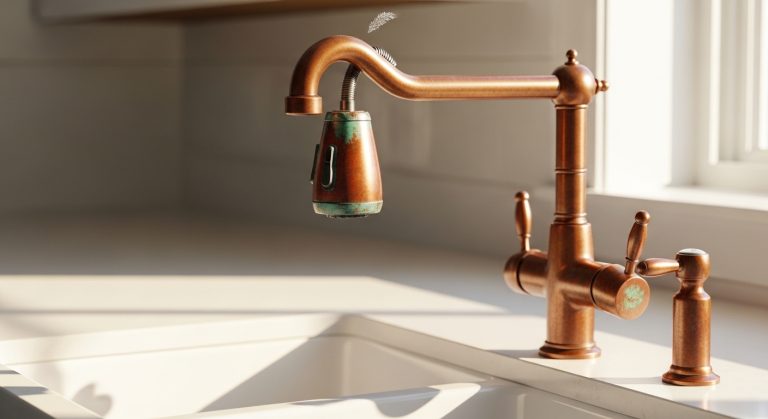
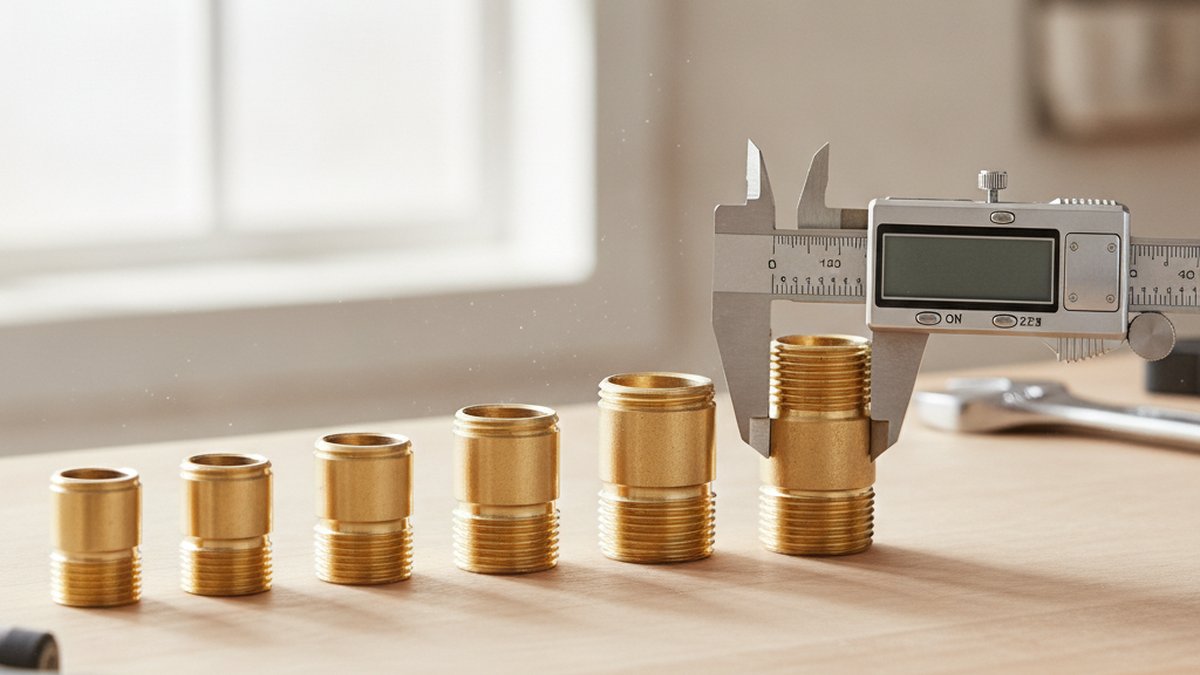
If you’ve been staring at a leak under your sink or a faucet that won’t reach its valve, a brass faucet nipple is very often the small, cheap part that solves it. Despite the odd name, a “nipple” in plumbing just means a short length of pipe threaded on both ends (or one end), and “brass faucet nipple” narrows that down to the brass connectors used at faucets, tub spouts, shower arms, and supply valves. This guide explains exactly what it is, how to pick the right size and thread, when brass beats other materials, and how to install one without creating a new leak.
What exactly is a brass faucet nipple, and how is it different from a coupling or an adapter?
A brass faucet nipple is a short brass pipe with male threads used to extend or connect a faucet to another plumbing component. The difference from other fittings is simple: a nipple has male (external) threads on the outside, a coupling has female (internal) threads to join two male ends, and an adapter changes one thread type or size to another. If you need to thread a faucet body deeper into a wall fitting or bridge a gap between a valve and a spout, you almost always want a nipple.
Here’s where you’ll actually run into them in a bathroom or kitchen:
- Tub spout nipples — the brass or galvanized nipple sticking out of the wall that a slip-on or threaded tub spout mounts onto.
- Shower arm connections — a short brass nipple often sits behind the escutcheon linking the drop-ear elbow to the arm.
- Faucet-to-valve extensions — when a wall-mount or widespread faucet body sits too far from the rough-in valve.
- Supply and hose bib fittings — connecting outdoor spigots, laundry faucets, and utility taps.
Because brass resists corrosion far better than plain steel and machines to clean, precise threads, it’s the standard material for these small pressure-bearing connectors. The trade-off is cost and the need to confirm a lead-free rating for anything carrying drinking water.
What size brass faucet nipple do I need — how do I measure it?
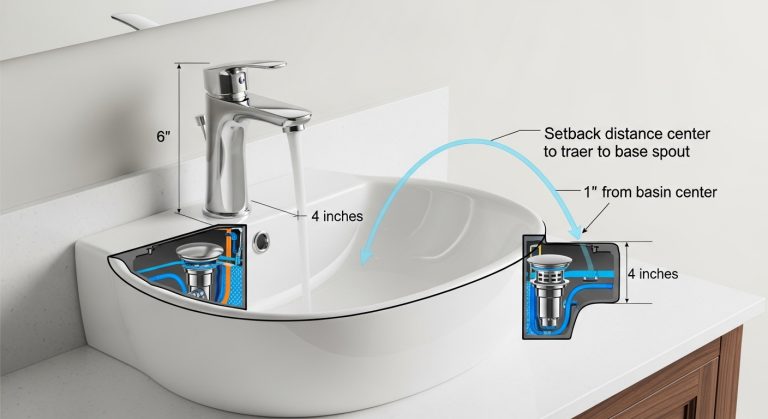
Measure the thread by its nominal pipe size, not by literally putting a ruler across the threads. Most residential faucet nipples are ½” NPT or ¾” NPT, which measure roughly 0.84″ and 1.05″ across the outside of the threads respectively — the “½” refers to the old inner-diameter standard, so the part always looks bigger than its name. Get the nominal size right first, then choose length.
A reliable way to nail the spec:
- Identify the thread diameter. Measure the outer diameter of the male threads with a caliper or tape. About 0.84″ outer diameter = ½”; about 1.05″ = ¾”. A hardware-store thread gauge removes all doubt.
- Confirm the thread type. Tapered pipe threads (NPT) get slightly narrower toward the end and seal on the threads themselves. Straight/compression threads stay parallel and seal with a washer or O-ring. Never force an NPT nipple into a straight port or vice versa.
- Count threads per inch (TPI) if unsure. ½” NPT is 14 TPI; ¾” NPT is 14 TPI as well but wider. This matters most when you’re matching an odd import faucet.
- Measure the length you need to bridge. Nipples are sold by overall length — common sizes run 1″, 1½”, 2″, 3″, 4″, and 6″. “Close nipples” are the shortest possible, fully threaded end to end.
If you’re mixing brass and copper on the same run, the same measuring logic applies to your supply side too — our guide on choosing a copper faucet line walks through matching diameters and connection types so the transition doesn’t leak.
Is a brass faucet nipple better than galvanized steel, chrome, or plastic?
For most faucet applications, solid brass is the best all-around choice: it resists corrosion, handles hot water and pressure, and threads cleanly without seizing. Galvanized steel is cheaper and strong but rusts internally over years and can seize into brass fittings; chrome-plated brass is really just brass with a decorative finish for visible spots; and plastic (usually reinforced nylon or PEX-style) is fine for cold, low-stress connections but not where you want long-term durability or heat resistance.
| Material | Corrosion resistance | Best use | Typical price (per nipple) | Watch-outs |
|---|---|---|---|---|
| Solid brass (lead-free) | Excellent | Potable water, hot lines, faucet bodies, tub spouts | $3–$9 | Confirm lead-free stamp for drinking water |
| Chrome-plated brass | Excellent | Visible connections (shower arms, exposed spouts) | $5–$12 | Plating can scratch; still brass underneath |
| Galvanized steel | Fair | Non-potable, gas, structural runs | $2–$5 | Rusts inside; can seize to brass over time |
| Reinforced plastic/nylon | Good (won’t rust) | Cold-water, low-pressure, temporary fixes | $1–$4 | Not for hot water or high torque |
One practical warning that trips people up: never thread galvanized steel directly into brass in a spot that stays wet. The two metals in contact with water can accelerate galvanic corrosion, and years later that steel nipple can rust-weld itself in place and snap when you try to remove it. If you must join dissimilar metals, use a brass or dielectric union between them.
Where do brass faucet nipples actually get used around the house?
Brass faucet nipples show up anywhere a faucet or fixture needs to be threaded onto a pipe, valve, or wall fitting. The most common real-world jobs are tub spouts, shower arms, wall-mount faucet extensions, and utility or outdoor spigots — basically any connection that carries pressurized water and needs a compact, threaded metal link.
A few concrete scenarios where the right nipple is the whole fix:
- Tub spout won’t sit tight against the wall. The existing wall nipple is too short or too long. Swapping to a correctly measured ½” brass nipple pulls the spout flush.
- Shower head sticks out too far or not far enough. A shorter or longer brass shower-arm nipple adjusts the reach without buying a new arm.
- Wall-mount kitchen or lav faucet doesn’t reach the rough-in. A brass extension nipple bridges the gap so the escutcheon covers the hole cleanly.
- Old spigot or hose bib is corroded at the thread. Replacing the nipple restores a clean sealing surface — closely related to picking the right outdoor faucet hose connector so the whole outdoor run stays leak-free.
If you’re deep into a tub or shower job and the nipple is only one piece of a bigger repair, our step-by-step on replacing bathtub faucet plumbing yourself covers how the nipple fits into the full valve-and-spout assembly.
How do I install a brass faucet nipple without causing a leak?
Seal the threads correctly and don’t overtighten — that’s 90% of it. For tapered NPT nipples, wrap the male threads with PTFE (plumber’s) tape or apply pipe-thread sealant, thread the nipple in hand-tight, then snug it with a wrench about 1–2 additional turns until it’s firm and the fitting points the right way. The seal comes from the tapered threads wedging together, not from cranking it as hard as you can.
A clean, leak-free install, step by step:
- Shut off the water at the fixture or main and open the faucet to relieve pressure.
- Clean the threads on both the nipple and the receiving fitting. Old tape, pipe dope, or debris cause leaks.
- Apply sealant. Wrap PTFE tape 3–4 times clockwise (the direction the nipple will thread in) or brush on a thin, even coat of thread sealant. For NPT only — straight-thread nipples seal with their washer, not tape.
- Hand-thread first, then finish with a wrench. Stop when it’s firm and correctly oriented. Over-torquing brass can crack a fitting or strip the threads.
- Restore water and inspect. Run the fixture and check for weeping at the joint. A slow drip usually means under-tightened or misaligned threads, not a bad part.
If you discover the leak is actually inside the valve rather than at the nipple, that’s a different repair — our walkthrough on replacing a faucet stem when your tap keeps dripping covers the internal parts a nipple can’t fix.
Does the brass finish matter, or is it hidden anyway?
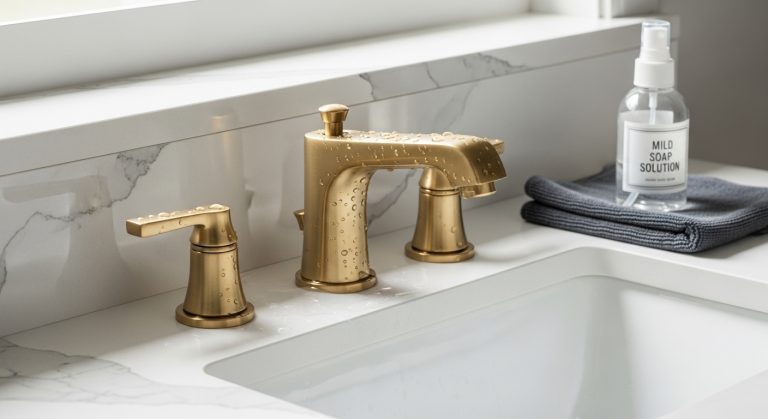
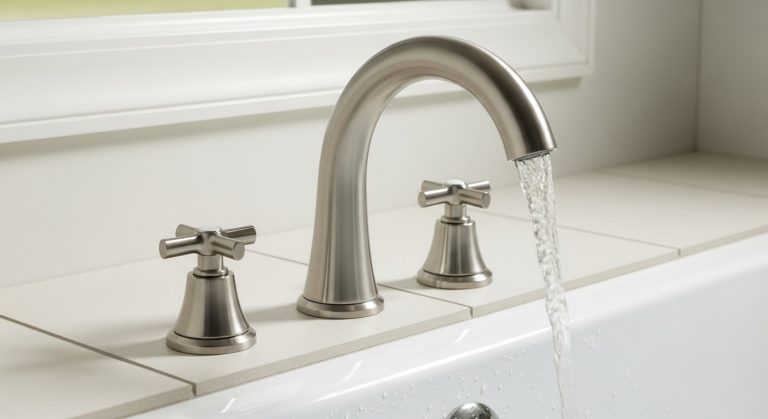
For most faucet nipples the finish doesn’t matter because the part is concealed behind an escutcheon, inside a wall, or under the sink — raw or natural brass is perfectly fine there. Finish only matters when the nipple is visible, such as an exposed shower arm or a wall-mount spout, where you’d match it to your fixture in chrome, brushed nickel, matte black, or brushed gold. In that case, buy a plated brass nipple in the matching finish rather than raw brass.
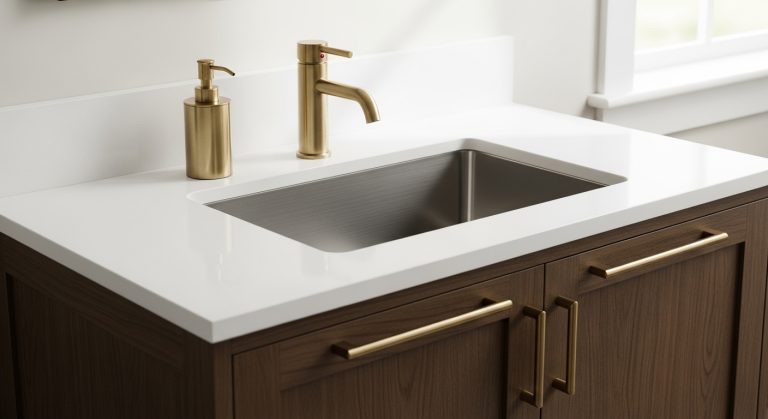
If you’re intentionally going for a warm-metal look where the plumbing shows, brass and gold tones are having a real moment — and they can look great even against contrasting fixtures, which we break down in our piece on pairing a brass faucet with a silver sink. For hidden connections, though, spend your money on solid, lead-free brass and forget about the finish entirely.
How long does a brass faucet nipple last, and what can go wrong?
A quality lead-free brass nipple installed correctly can easily last 20–30 years — often the life of the fixture itself. The failures you do see almost always come from one of three things: dezincification (cheap high-zinc brass leaching zinc and turning pink/porous in aggressive water), galvanic corrosion where brass meets steel, or thread damage from over-tightening. Choosing forged, lead-free, low-zinc brass (often labeled “DZR” — dezincification-resistant) avoids the first problem entirely.
Hard water is the other quiet enemy. Mineral scale builds up inside small-diameter nipples and at threaded joints, gradually restricting flow and making future removal harder. If you’re on hard water, it’s worth thinking about scale resistance across your whole fixture — our guide to the best bathroom faucet for hard water covers materials and cartridge choices that hold up, and the same DZR-brass logic applies to the connectors behind them.
FAQ
What size is a standard brass faucet nipple?
Most residential faucet nipples are ½” NPT, which measures about 0.84″ across the outer threads. Tub spouts, shower arms, and lavatory connections are usually ½”; some kitchen, utility, and outdoor lines use ¾” NPT (about 1.05″ outer diameter). Always confirm with a thread gauge before buying, since the nominal name is smaller than the actual measurement.
Are brass faucet nipples safe for drinking water?
Yes — as long as they’re marked lead-free. Look for compliance with the U.S. Safe Drinking Water Act’s lead-free standard (weighted average ≤ 0.25% lead) and, ideally, NSF/ANSI 61 or 372 certification. Older or non-potable-rated brass can contain higher lead, so don’t reuse mystery fittings on a drinking-water line.
Can I use PTFE tape and pipe dope together on a brass nipple?
You can, and many pros do on tapered NPT threads: a few wraps of PTFE tape plus a thin coat of pipe-thread sealant gives a very reliable seal. Never use tape on straight/compression-thread nipples, though — those seal with a washer or O-ring, and tape can prevent them from seating properly.
Why did my brass nipple leak after I tightened it hard?
Overtightening is a common cause of leaks, not a cure. Cranking a tapered brass nipple too far can crack the female fitting, distort the threads, or push past the sealing sweet spot. Back it out, clean and re-tape the threads, and tighten only 1–2 turns past hand-tight until it’s firm and correctly aimed.
Can I connect a brass nipple directly to a galvanized steel pipe?
It’s best avoided on wet lines. Brass and galvanized steel in contact with water can undergo galvanic corrosion, causing the steel to rust and seize over time. If you must join them, use a brass or dielectric union between the two metals to isolate them and make future removal possible.
Is a brass nipple the same as a faucet extension?
Sometimes, but not always. A brass nipple is one common way to extend a faucet or fixture outward, but purpose-made “extension” kits can also include couplings, adapters, or decorative sleeves. If you simply need to add threaded length between two fittings, a correctly sized brass nipple is usually the simplest, cheapest solution.
The bottom line: how to choose your brass faucet nipple
Pick by spec, not by looks. Match the nominal size (usually ½” or ¾”), confirm the thread type (tapered NPT for most faucet work, straight for compression fittings), measure the exact length you need to bridge, and buy solid lead-free — ideally DZR — brass for anything carrying water. Seal tapered threads with PTFE tape or pipe dope, tighten firmly but gently, and a $5 part will quietly outlast the faucet it’s connected to.
Author note: This guide was written by the faucitta fixtures team, drawing on hands-on faucet and rough-in installation experience across kitchen, bath, and outdoor plumbing. At faucitta (faucitta.net) we specialize in faucets and bathroom fixtures, and we test connectors and fittings against real-world install conditions — thread fit, torque tolerance, and corrosion resistance — rather than spec sheets alone. When buying any brass connector for potable water, choose parts that meet the lead-free standard and carry a manufacturer warranty; a fitting that fails behind a wall costs far more than the part itself.