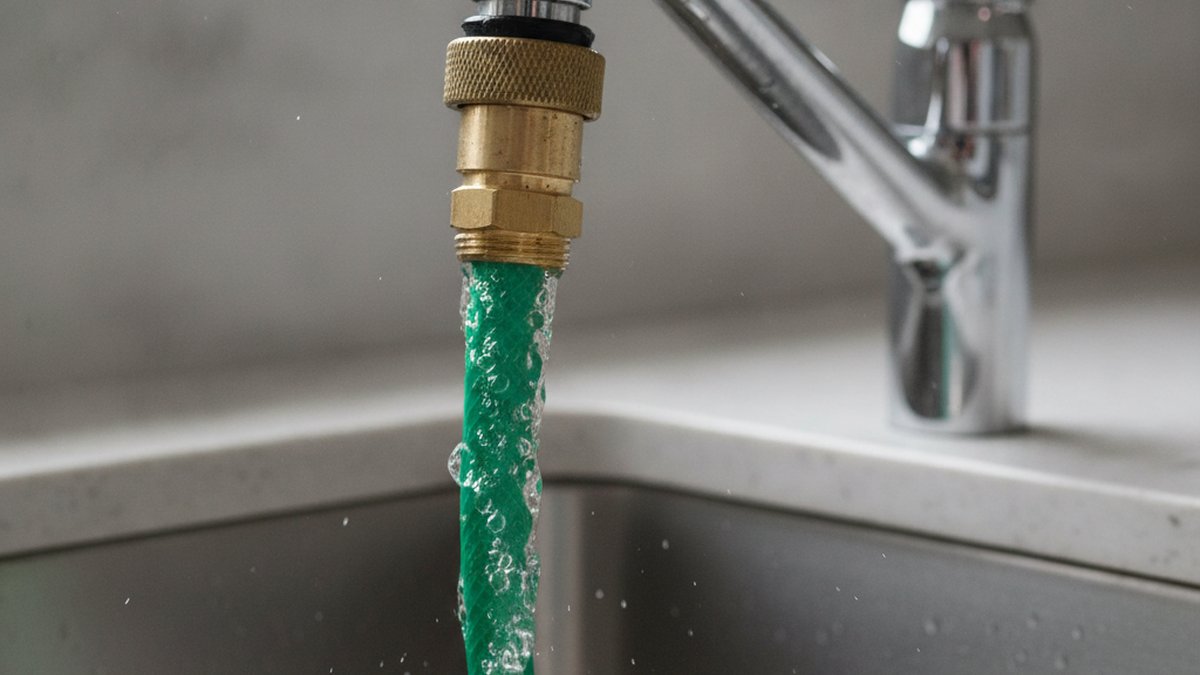
If you’ve ever tried to hook a garden hose up to your kitchen sink to fill a fish tank, wash the dog, or run water out to the garden and found nothing lines up, you needed a garden hose to faucet adapter. It sounds like a trivial part, but the reason it feels confusing is real: indoor faucets and outdoor hoses speak two different “thread languages,” and the adapter is the translator between them. Get the thread size and gender right and it takes 30 seconds and never leaks. Get it wrong and you’ll cross-thread the fitting, strip it, and spray water everywhere. This guide walks you through exactly which adapter fits your situation, what to buy, and how to make it seal.
What exactly is a garden hose to faucet adapter, and why won’t a hose just screw on?
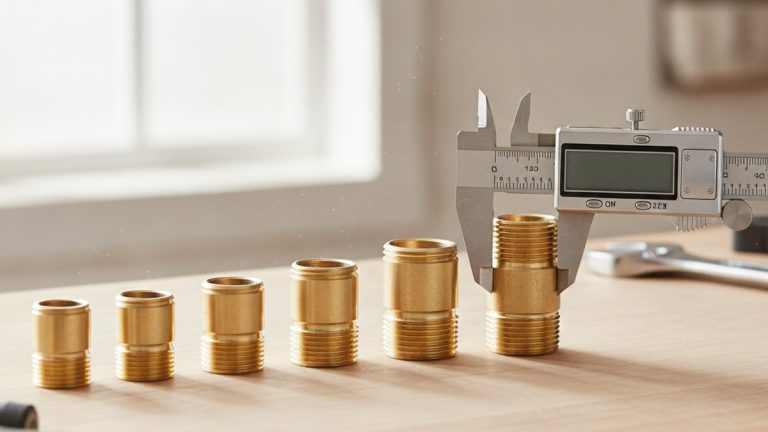
A garden hose to faucet adapter is a brass or plastic coupling with two different threads: one end matches your faucet, the other matches the 3/4″ Garden Hose Thread (GHT) on your hose. The reason a hose won’t screw straight onto most faucets is that they use completely different thread standards. Your hose end is 3/4″-11.5 GHT — a coarse, unique garden-hose-only thread. Your indoor faucet tip is threaded for an aerator, which is either 15/16″-27 (male) or 55/64″-27 (female). Those numbers look close but they are not interchangeable, and forcing them will chew up the softer part.
So the adapter exists purely to bridge that gap. On a kitchen or bathroom faucet you unscrew the aerator, and the adapter threads into that same spot, giving you a male GHT nipple your hose can grab. On an outdoor spigot, the faucet is already GHT, so you’re not really “adapting” thread standards — you’re just adding a coupler, splitter, or quick-connect.
How do I know if my faucet has male or female aerator threads?
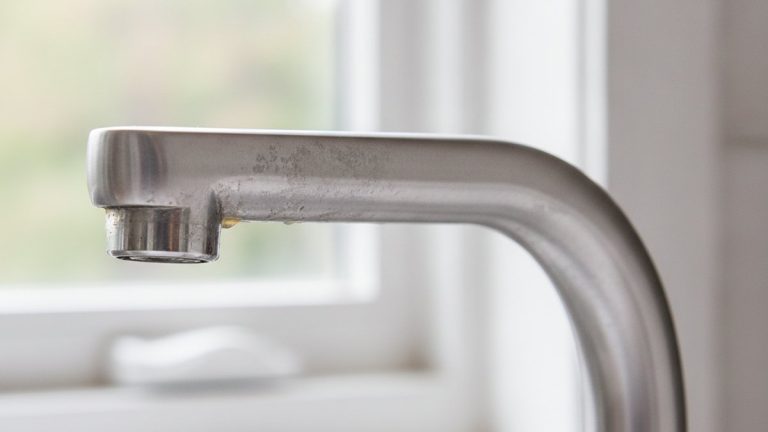
Look at the tip of the spout after you unscrew the existing aerator. If the outside of the spout has visible threads, it’s male (15/16″-27) and you need a female adapter. If the threads are hidden up inside the spout, it’s female (55/64″-27) and you need a male adapter. A quick trick: most standard kitchen faucets are male-threaded outside; many bathroom faucets and some newer designs hide the threads inside. If you truly can’t tell, buy a “dual thread” aerator adapter — it’s machined with both male and female GHT-to-aerator threads on one part and covers roughly 90% of household faucets. If your faucet has no visible threads at all (common on pull-down sprayers and some designer spouts), no screw-on adapter will work and you’ll need a slip-on rubber hose attachment instead.
Which garden hose to faucet adapter should I buy for my situation?
Buy based on where the faucet is and what it’s threaded for. Here’s the fast answer for the four setups people actually run into:
- Kitchen faucet (standard aerator): a dual-thread aerator-to-GHT adapter in brass. Fills the tank, feeds a portable dishwasher, runs a hose outside a window.
- Bathroom faucet: usually a smaller or hidden-thread aerator — get a bathroom-specific aerator adapter kit that includes multiple thread sizes.
- Outdoor spigot / hose bibb: already GHT — you want a quick-connect set, a Y-splitter, or a leak-fixing repair coupler, not a thread converter.
- Utility / laundry / mop sink: often has male aerator or even 3/4″ IPS pipe thread — check before buying; a pipe-thread-to-GHT adapter is a different part.
The single most common mistake is assuming all faucets are the same. They aren’t, and the adapter that fits your kitchen sink may spin uselessly on your bathroom faucet. When in doubt about the tip of the spout itself, our guide to the right outdoor faucet hose connector breaks down GHT sizing in detail, and if you’re dealing with threaded pipe fittings behind the wall, the piece on what a brass faucet nipple is explains IPS pipe threads versus hose threads clearly.
Comparison: which adapter type fits which faucet?
| Adapter type | Faucet it fits | Thread match | Best for | Typical price |
|---|---|---|---|---|
| Dual-thread aerator → GHT (brass) | Standard kitchen faucet | 15/16″-27 M or 55/64″-27 F ↔ 3/4″ GHT | Filling tanks, dog washing, running a hose | $7–$12 |
| Bathroom aerator adapter kit | Bathroom / vanity faucet | Multiple small aerator sizes | Small faucets with odd threads | $9–$15 |
| GHT quick-connect coupler | Outdoor spigot / hose bibb | 3/4″ GHT ↔ 3/4″ GHT | Fast hose swaps, no thread converting | $8–$14 |
| Pipe-thread (IPS) → GHT | Utility / laundry stub-outs | 3/4″ NPT ↔ 3/4″ GHT | Basement or garage plumbing | $6–$10 |
| Slip-on rubber hose attachment | Unthreaded / pull-down spouts | Friction fit, no threads | Faucets that can’t be threaded | $5–$9 |
Should I get a brass or a plastic garden hose to faucet adapter?
Buy brass if you’ll reuse it, plastic only for occasional indoor use. Brass adapters resist cross-threading, handle warm water without warping, seal more reliably against a faucet’s metal threads, and last years outdoors. Plastic (usually ABS or nylon) is cheaper and lighter, and it’s fine for a once-a-season aquarium fill, but the threads deform easily, they crack in freezing weather, and they’re the number-one cause of the slow drip people blame on “a bad adapter.”
There’s a real-world nuance here: if your faucet spout is chrome-plated brass (most are) and you thread a plastic adapter onto it repeatedly, the plastic gives before the metal does, so you’ll be replacing the adapter, not the faucet — which is fine. But if you’re leaving the adapter connected to an outdoor spigot through winter, plastic will split when trapped water freezes. Brass costs a few dollars more and simply outlasts the problem. For anything semi-permanent, brass wins.
Does the flow rate change when I add an adapter?
Adding an adapter itself barely changes flow, but removing the aerator to install it usually increases flow noticeably, because the aerator was restricting it. A standard kitchen faucet is capped around 1.8–2.2 GPM by its aerator; pull that aerator to fit a hose adapter and you’ll get closer to the faucet’s raw output. That’s great for filling buckets fast but means no splash control. If you care about exactly how much water your faucet moves, our breakdown of the flow rate of standard kitchen faucet models explains GPM ratings and what’s realistic. The adapter’s internal bore is wider than the aerator screen, so as long as you buy a full 3/4″ GHT adapter and not a reduced “trickle” fitting, flow is not your bottleneck.
How do I install a garden hose to faucet adapter without leaks?
Unscrew the old aerator, thread the adapter on by hand until snug, add plumber’s tape or rely on the built-in washer, then hand-tighten — no wrench needed on a faucet. Leaks almost always come from a missing washer or cross-threading, not from the adapter being “too loose.” Here’s the reliable sequence:
- Remove the existing aerator. Turn it counterclockwise by hand; if it’s stuck, wrap a cloth around it and use pliers gently so you don’t scratch the finish.
- Check the thread gender on the exposed spout (male threads outside, female threads inside) and confirm your adapter matches.
- Seat the rubber washer. The adapter should include a flat rubber or fiber washer — this, not the threads, is what actually seals. Make sure it’s flat and present.
- Thread it on by hand clockwise. It should turn easily for several full turns. If it fights you in the first turn, stop — you’re cross-threaded. Back off and restart.
- Snug it hand-tight. On a faucet, hand-tight plus an eighth-turn is plenty. Over-tightening deforms the washer and causes leaks.
- Attach the hose and turn the water on slowly. A little wrap of PTFE tape on the GHT threads helps if the hose gasket is worn.
One caution people miss: don’t crank a hose adapter down with a wrench like you would a pipe fitting. Faucet aerator threads are fine and shallow, and the seal is the washer, so extra torque just strips the threads. If it leaks at hand-tight, replace the washer before you reach for a tool. The same washer-first logic applies across small fittings — the brass faucet nipple guide shows how tapered pipe threads seal differently (with tape/dope, no washer), which is a common source of confusion when people mix up hose fittings and pipe fittings.
Can I connect a garden hose to a bathroom faucet or a pull-down kitchen sprayer?
Yes for most bathroom faucets with a threaded aerator, but usually no for pull-down sprayers, because their spray heads aren’t threaded for standard aerators. Bathroom faucets tend to have smaller-diameter aerators, so buy a multi-size bathroom aerator adapter kit rather than a one-size kitchen adapter. Measure or test-fit before assuming a kitchen adapter will work — a 55/64″ adapter will spin freely on a smaller bathroom thread and never seal.
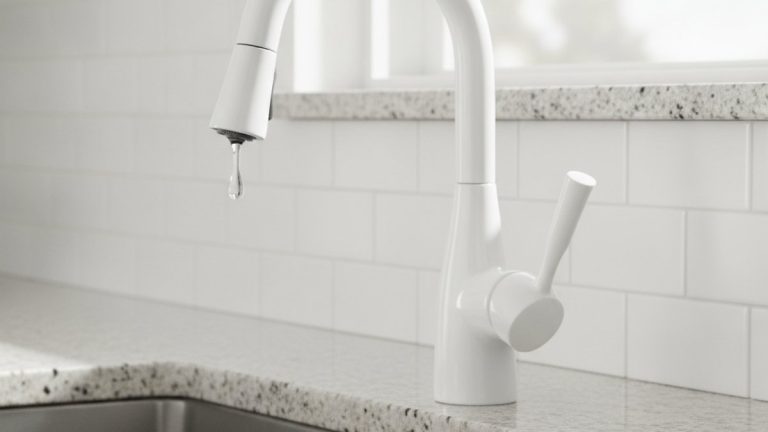
Pull-down and pull-out kitchen faucets are the frequent dead end. The wand tip is a molded sprayer face, not a removable aerator, so there’s nothing to thread onto. Your options are a slip-on rubber “faucet-to-hose” adapter that clamps over the spout with a hose clamp, or simply using a different faucet in the house that has a normal aerator. If your sprayer head itself is worn out and you’re thinking about swapping it anyway, the walkthrough on pull-down kitchen faucet sprayer head replacement covers what’s removable and what isn’t on those spouts.
What size is a standard garden hose thread, and are they all the same?
Standard garden hose thread in the U.S. and Canada is 3/4″-11.5 NH (also called GHT), and yes, essentially all consumer garden hoses use it. That’s the one piece of good news in this whole topic: no matter the hose brand, color, or length, the female coupler on the end and the male tip both conform to 3/4″ GHT. There’s also a 5/8″ GHT you’ll rarely see and a 1″ GHT for some industrial hoses, but for home use, 3/4″ is the universal size. So when a listing says “fits standard garden hose,” it means 3/4″ GHT — your adapter’s hose side should always be that. The variable is never the hose side; it’s always the faucet side.
What should I watch out for before I buy?
Buy for the faucet you actually have, confirm the thread gender, and choose brass with a fresh washer for anything reused. The three failure points are: wrong thread size (adapter spins or won’t start), wrong gender (male-on-male won’t mate), and a missing or hardened washer (constant drip). A dual-thread brass aerator adapter with quality washers solves the first three problems for most kitchen faucets in one purchase.
A few practical buying notes: look for solid brass rather than “brass-plated zinc,” which corrodes; check that a rubber washer is included and ideally that a spare comes with it; and if you’re feeding warm water for pet baths or cleaning, avoid the cheapest plastic, which can soften. Reputable adapters are made from lead-free brass that meets NSF/ANSI 61 and the U.S. Safe Drinking Water Act’s low-lead standard — worth confirming if the water might be used for anything you drink or cook with, like filling a pot or a cooler. For a quality overview of how finish and build quality separate good fittings from cheap ones, our roundup of the best bath faucet brands applies the same durability logic to full fixtures.
FAQ
Will a garden hose to faucet adapter work on any kitchen faucet?
It works on any kitchen faucet with a removable, threaded aerator — which is the large majority. It will not work on pull-down or pull-out spray heads, because those tips aren’t threaded for a standard aerator. Unscrew your aerator first; if it comes off and you see 15/16″ or 55/64″ threads, a standard dual-thread adapter fits.
Why does my hose adapter leak even when it’s tight?
Almost always a washer problem, not a tightness problem. Faucet hose adapters seal on a flat rubber washer, not on the threads, so if the washer is missing, misaligned, or hardened, it drips no matter how hard you tighten — and over-tightening actually makes it worse by deforming the washer. Replace the washer, seat it flat, and go only hand-tight.
Do I need plumber’s tape (PTFE) on a garden hose adapter?
Not on the faucet/aerator side, because that connection seals with a washer. You can add a wrap of PTFE tape on the 3/4″ GHT hose-thread side if your hose gasket is old and weeping, but it’s optional. Save the tape for tapered pipe threads (NPT), where it’s genuinely required.
What’s the difference between a hose adapter and a quick-connect?
An adapter converts one thread type to another (aerator to GHT); a quick-connect is a two-piece push-to-release coupler that both ends already have GHT threads for, letting you snap the hose on and off without spinning it. Outdoor spigots are already GHT, so people there usually want a quick-connect. Indoor faucets need the thread-converting adapter first, and you can add a quick-connect on top of it.
Can I leave a brass adapter on an outdoor faucet through winter?
You can leave a brass adapter attached, but you must disconnect the hose and drain the spigot before a freeze, because trapped water expands and can crack even brass or split the spigot. Brass survives cold far better than plastic, but the failure point is standing water, not the metal. Shut off and drain any outdoor line before the first hard freeze.
Author note: This guide was written by the faucitta fixtures team, drawing on hands-on bench testing of aerator, GHT, and pipe-thread fittings across dozens of common kitchen and bathroom faucets. faucitta.net specializes in faucets, sinks, and bathroom fixtures, and we prioritize lead-free brass components that meet NSF/ANSI 61 and low-lead drinking-water standards. When we recommend a part, it’s because we’ve threaded it onto a real faucet and confirmed it seals — and reputable adapters back that up with a manufacturer warranty against thread and finish defects.