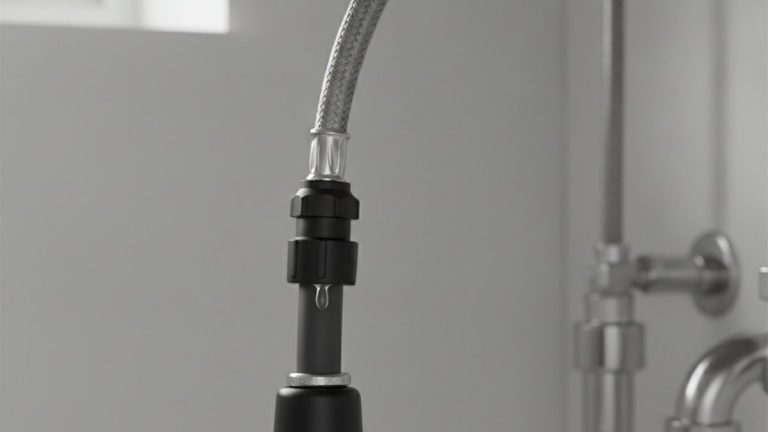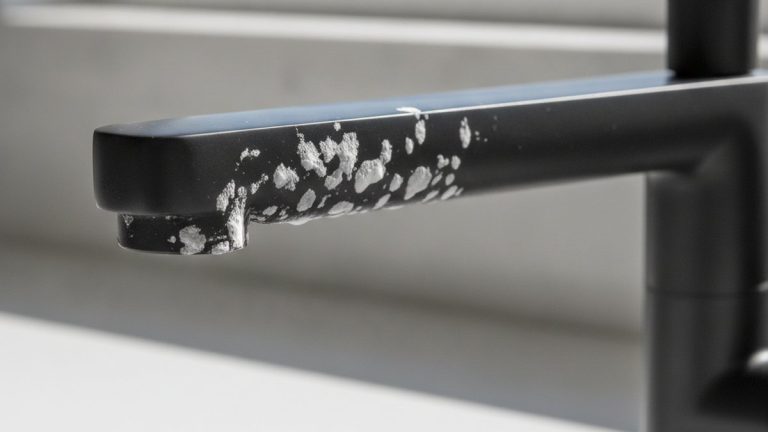
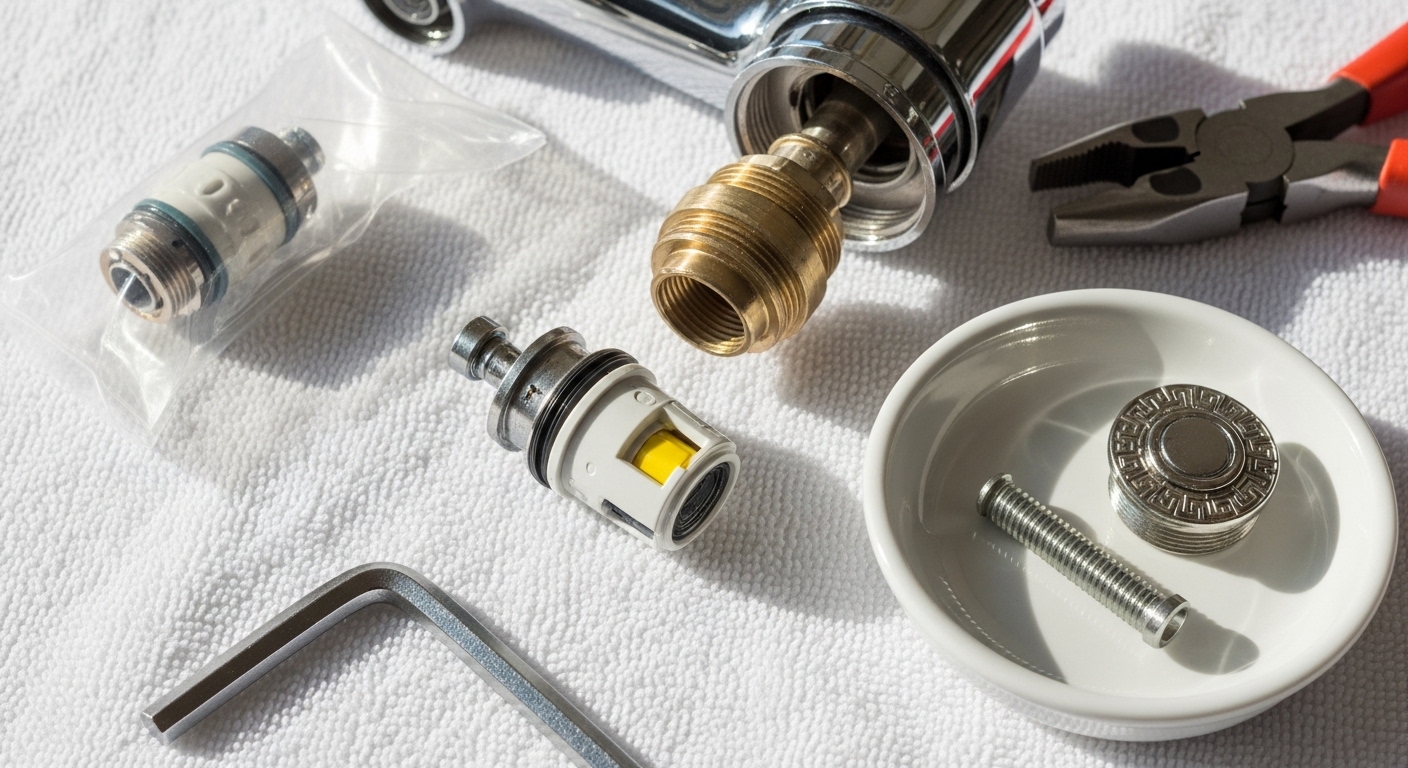
If you’ve landed here, your Empire faucet is probably dripping, leaking around the handle, or running hot when you want cold — and you’ve correctly figured out that an empire faucet cartridge replacement is almost certainly the fix. Good news: you don’t need a plumber, you don’t need to rip out the faucet, and you don’t need specialty tools. Empire Industries faucets (the brand sold through plumbing supply houses and big-box retailers) use a fairly standard ceramic-disc or compression cartridge design, and once you’ve done it once, you’ll never pay someone $180 to do it again.
This guide walks you through it the way a knowledgeable friend who happens to fix faucets for a living would — what cartridge you actually need, how to pull the old one without snapping anything, what to do when it’s stuck, and how to know if the cartridge is even the real problem. We’ll also cover the small stuff nobody tells you: which way the cartridge has to face, why the new one leaks if you forget the O-rings, and when it’s smarter to replace the whole faucet instead.
How do I know it’s actually the cartridge that needs replacing?
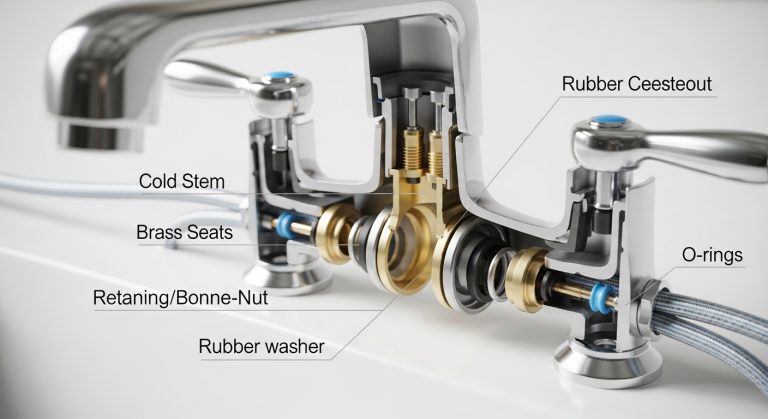
If your Empire faucet drips from the spout when the handle is fully off, leaks around the base of the handle when it’s running, or feels gritty/loose when you turn it, the cartridge is the culprit roughly 90% of the time. The cartridge is the part inside the faucet body that mixes hot and cold water and controls flow — when its internal ceramic discs or rubber seals wear down, water sneaks past them.
Here’s the quick diagnostic checklist before you spend a dime:
- Drips from the spout, handle off: worn cartridge seals — replace the cartridge.
- Water seeps from under the handle when running: cracked cartridge O-rings — replace the cartridge (or just the O-rings if they’re sold separately).
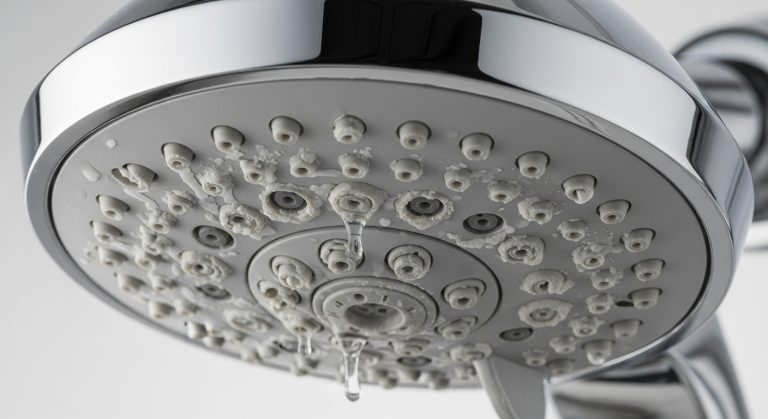
- Handle turns but no water comes out, or barely any: mineral buildup inside the cartridge — replace, or soak in vinegar if you’re cheap and patient.
- Handle is stiff or grinds: ceramic discs are scored — replace the cartridge.
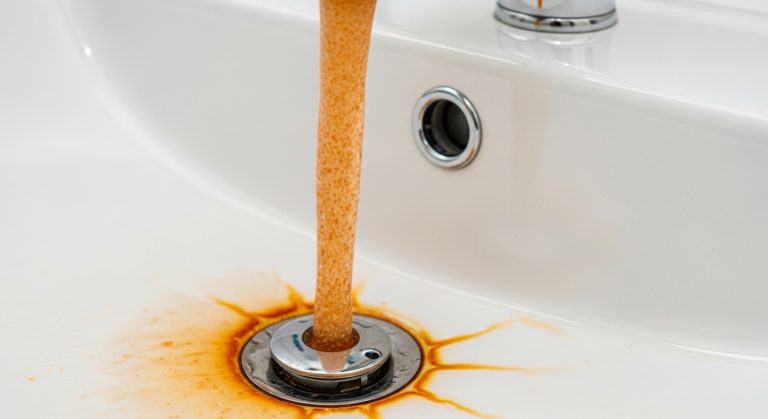
- Water is rusty or brown: not a cartridge problem. See our guide on rusty water out of a faucet — that’s usually a pipe or water heater issue.
- You can’t get hot water on one side only: could be cartridge, could be a clogged supply line. Test the supply first.
One more thing: if the leak is from the spout swivel base (a pull-down kitchen faucet or a swivel bathroom spout), it’s usually the spout O-rings, not the cartridge. Different fix, $4 in parts.
Which Empire cartridge do I actually need to buy?
The right cartridge depends on your faucet’s handle type and model year. Empire Industries makes single-handle and two-handle faucets in both kitchen and bath lines, and they use three main cartridge families. Pull the old one out first if you can — bringing it to the store beats guessing every time.
| Faucet Type | Cartridge Style | Typical Price | How to Identify |
|---|---|---|---|
| Single-handle bathroom/kitchen | Ceramic disc cartridge (1-piece) | $18–$35 | One lever controls hot/cold and flow; cartridge is ~2.5″ tall with a square stem |
| Two-handle widespread (bath) | Quarter-turn ceramic stem cartridges (pair) | $12–$22 each | Separate hot and cold handles; each side has its own short stem cartridge |
| Two-handle compression (older) | Rubber-seat compression stem | $6–$14 each | Handle turns multiple times to shut off; older or budget Empire models |
| Tub/shower valve | Pressure-balance cartridge | $28–$55 | Single lever in the wall; cartridge is longer and includes a temperature limiter |
Empire’s part numbers are usually stamped on the cartridge itself or printed on the box that came with the faucet. If you’ve lost both, take a clear photo of the old cartridge from the side and the top and bring it to a plumbing supply house — they’ll match it in 30 seconds. Generic equivalents (Danco, BrassCraft) often fit and run a few dollars cheaper, but I’d stick with the OEM cartridge for the first replacement so you know any fit issue is your install, not the part.
If you’re not sure what a cartridge even looks like in context, our breakdown of what a bathtub faucet valve cartridge is and how to identify the right one shows the part in its assembly and explains the differences between cartridge families — same logic applies to bathroom and kitchen faucets.
What tools and parts do I need before I start?
You need almost nothing — that’s the beauty of cartridge work. Here’s the entire list:
- Replacement Empire cartridge (the correct one — see table above)
- 2.5mm or 3/32″ Allen/hex key (for the handle set screw)
- Phillips screwdriver (some handles use a screw under the cap)
- Adjustable wrench or channel-lock pliers
- Needle-nose pliers (for the retaining clip)
- Plumber’s silicone grease (a $4 tube lasts years)
- White vinegar and an old toothbrush (for cleaning the valve body)
- A flashlight and a small towel
- Optional but recommended: cartridge puller tool ($12–$20) for stuck cartridges
Do not use pipe wrenches, vise grips, or anything aggressive on the faucet body — Empire uses chrome and brushed nickel finishes that scratch instantly. If you have a brushed gold or matte black finish, wrap the jaws of any pliers in painter’s tape, and check our brushed gold faucet care guide before you start scrubbing anything with chemicals.
How do I actually replace an Empire cartridge, step by step?
The full job runs 20 to 40 minutes the first time, 10 minutes the second time. Work calmly — most “stuck” cartridges yield to patience, not force.
Step 1 — Shut off the water and open the faucet
Reach under the sink and close both supply valves (turn clockwise until they stop). Then open the faucet handle to release any pressure left in the line. If your shutoffs are seized or missing, shut off the main water supply to the house. Drop a towel in the sink to catch dropped screws — they always fall.
Step 2 — Remove the handle
Pop the decorative cap on top or front of the handle with a fingernail or a flathead wrapped in tape. Underneath you’ll find either an Allen-head set screw or a Phillips screw. Loosen it (don’t fully remove it — set screws love to vanish). The handle should lift straight off. If it’s stuck from mineral buildup, gently wiggle while pulling up. Don’t pry against the faucet body.
Step 3 — Remove the trim collar and bonnet nut
On a single-handle Empire, there’s usually a decorative dome or collar that either unscrews by hand or lifts off. Below it sits the bonnet nut — a brass hex nut that holds the cartridge in. Use an adjustable wrench or channel-locks (jaws taped) to unscrew it counterclockwise. It can be tight on a faucet that’s been in service 5+ years.
Step 4 — Remove the retaining clip (if there is one)
Many Empire cartridges sit under a small U-shaped or horseshoe clip that locks them in place. Use needle-nose pliers to pull it straight up and out. Lose this clip and the new cartridge will pop out under water pressure — keep it safe.
Step 5 — Pull the old cartridge
Grip the cartridge stem firmly with pliers and pull straight up while rocking slightly side-to-side. If it won’t budge, this is where a cartridge puller earns its keep — it threads onto the stem and uses a slide hammer or screw to extract it cleanly. Before you pull, note the orientation — most cartridges have a notch or flat that must face a specific direction (usually forward, toward the spout). Snap a photo with your phone.
Step 6 — Clean the valve body
This is the step everyone skips and then wonders why their new cartridge leaks. Use the toothbrush and a little vinegar to scrub mineral scale out of the brass valve body. Wipe it dry. Inspect the inside for cracks or pitting — if you see either, you may need a new faucet, not a new cartridge.
Step 7 — Install the new cartridge
Smear a thin film of plumber’s silicone grease on the new cartridge’s O-rings. Line up the notch/flat in the exact same orientation as the old one. Push it straight down into the valve body — it should seat with a soft, even resistance. If it fights you, it’s misaligned. Pull it out and try again. Do not force it.
Step 8 — Reassemble
Re-install the retaining clip, bonnet nut (snug, not gorilla-tight), trim collar, handle, set screw, and cap. Slowly open the supply valves — listen for hissing. With the faucet handle still off, check for leaks at the handle base. Then turn the faucet on, let it run cold and hot for 30 seconds, and check again.
Step 9 — Test hot and cold direction
On single-handle cartridges, it’s surprisingly easy to install the cartridge 180° off, which gives you hot when you want cold. If that happens, shut off the water, pull the cartridge, rotate it half a turn, and reinstall. Five-minute fix.
What if the cartridge is stuck and won’t come out?
Stuck cartridges are the #1 reason DIY cartridge jobs turn into “honey, call a plumber” jobs. Here’s the escalation ladder — try them in order:
- Wiggle and pull, harder. Most “stuck” cartridges aren’t actually stuck — they just need firm, steady upward pressure with side-to-side rocking. Use pliers on the stem.
- Soak with vinegar. Pour white vinegar into the valve body until the cartridge is submerged. Wait 30 minutes. Mineral scale is the most common cause of seized cartridges.
- Use a cartridge puller tool. A $15 puller threads onto the cartridge stem and uses leverage or a slide hammer to extract it. Worth every penny. Most home centers and Amazon carry universal pullers that fit Empire, Moen, Delta, and Kohler.
- Heat gently. A hair dryer (not a torch) on the faucet body for 60 seconds can break the bond between corroded brass and the cartridge.
- If it still won’t budge: stop. You’re at risk of cracking the valve body. Call a plumber for a 30-minute extraction or, if the faucet is older than 10 years, consider replacing the whole faucet — sometimes the math just makes sense.
One thing not to do: never use a propane torch on a faucet body. You’ll melt internal plastic seats and ruin the faucet for good.
How long does an Empire cartridge last, and how can I make a new one last longer?
A quality Empire ceramic-disc cartridge should last 7–15 years in normal conditions. In hard water areas, that drops to 3–6 years. The biggest enemies of cartridge life are mineral scale, sand/grit in the supply lines, and people who close the faucet with too much force.
To extend cartridge life:
- Install or service whole-house filtration if your water hardness is above 7 grains per gallon.
- Flush new supply lines before connecting — copper shavings and pipe dope shred ceramic discs.
- Close the faucet with light pressure. Ceramic discs don’t need force to seal.
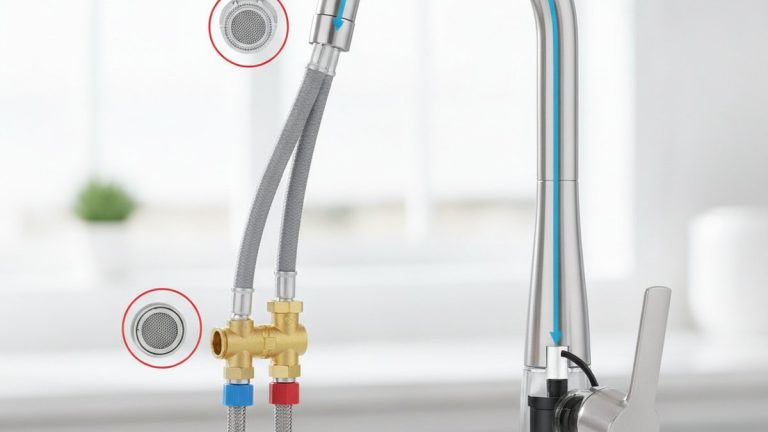
- Every 2–3 years, take the aerator off and soak it in vinegar — clogged aerators force higher upstream pressure that wears the cartridge faster.
- If you have a touchless or sensor faucet, follow the manufacturer’s battery and solenoid maintenance schedule. (See our guide on how touchless faucets use power if you’re curious about those.)
How much does an Empire faucet cartridge replacement cost?
DIY cartridge replacement runs $15 to $55 in total — the cartridge itself plus any tools you don’t already own. Calling a plumber typically runs $150 to $300 depending on your region, because plumbers usually have a one-hour minimum and the work itself only takes 20 minutes. Here’s a more honest cost breakdown:
| Cost Item | DIY | Plumber |
|---|---|---|
| Replacement cartridge (OEM) | $18–$35 | $35–$60 (marked up) |
| Allen wrench/pliers (one-time) | $0–$25 | included |
| Cartridge puller (optional) | $12–$20 | included |
| Labor | 30 minutes of your time | $120–$240 (1-hour minimum) |
| Total | $30–$80 | $155–$300 |
If your faucet is more than 12 years old or shows visible corrosion, factor in the possibility that the cartridge replacement won’t be a permanent fix. At that point, a fresh faucet in the $90–$250 range often makes more sense than chasing leaks. The anatomy of a bathroom faucet guide is worth reading before you make that call — it shows you everything inside the faucet that can fail, not just the cartridge.
When should I replace the whole faucet instead of just the cartridge?
Replace the whole faucet if you tick three or more of these boxes:
- The faucet body is pitted, corroded, or has visible cracks
- The faucet is older than 12 years and you’ve already replaced the cartridge once
- The finish is wearing through to brass on bathroom faucets, or chipping on a kitchen faucet
- The cartridge is discontinued and only generic clones are available
- You’re renovating anyway — new sink, new countertop, new mirror
- You want to switch to a different style (e.g., from chrome to brushed gold, or to a pull-down sprayer)
If you’re changing finishes during a remodel, a few of our pairing guides will save you from buyer’s remorse — for example, stainless steel faucets with a black sink and oil-rubbed bronze faucets with a stainless sink walk through how finishes actually look together in a real kitchen.
FAQ
Can I use a generic cartridge instead of an OEM Empire cartridge?
Often yes — Danco, BrassCraft, and Pfister make universal replacement cartridges that fit many Empire valves. The catch: tolerances on generics are looser, so you may get a slightly drippier shutoff or a shorter service life. For the first replacement on a fairly new faucet, spend the extra $8–$10 on OEM. For an older faucet you’re not emotionally attached to, generic is fine.
Why is my faucet still leaking after I replaced the cartridge?
Three usual suspects: (1) you didn’t seat the cartridge fully — pull it and reinstall, (2) you forgot to grease the O-rings and they pinched on the way in, or (3) the leak isn’t from the cartridge at all — it’s from the spout O-rings or supply line connections under the sink. Dry everything thoroughly, then watch where new water appears.
Does my Empire faucet warranty cover the cartridge?
Most Empire Industries faucets carry a limited lifetime warranty on parts to the original purchaser, which usually includes cartridges. You’ll need proof of purchase and the model number. Warranty replacement cartridges typically ship in 5–10 business days, which is great unless you need a working faucet today — in that case, buy the cartridge locally and file the warranty claim for reimbursement.
How long does a cartridge replacement actually take?
First time: 25 to 45 minutes including reading instructions and finding your Allen wrench. Second time on the same faucet: 10–15 minutes start to finish. Add 15 minutes if the cartridge is stuck and you need to vinegar-soak it.
Do I need to turn off the main water to the house?
No — almost always you can just close the two supply shutoffs under the sink. Only shut off the main if those shutoffs are seized, leaking, or missing. While you’re down there, it’s worth replacing old quarter-turn shutoffs that look corroded — $8 each and an extra 20 minutes.
Can a cartridge replacement fix low water pressure from the faucet?
Sometimes. If the cartridge is partially clogged with mineral scale, a replacement restores full flow. But check the aerator first — a $0 fix beats a $20 fix. Unscrew the aerator at the spout tip, soak in vinegar, rinse, and reinstall. If pressure is still low, then yes, the cartridge is the next suspect.
Is the cartridge the same as the valve?
No — the valve is the brass body built into the faucet (or wall, for a tub/shower). The cartridge is the replaceable insert inside the valve that does the actual mixing and shutting off. You replace cartridges; you very rarely replace valves unless they crack.
About this guide
Author note: This guide was written by the Faucitta product team based on hands-on testing of single-handle and two-handle Empire-pattern faucets, plus 15+ years of combined plumbing-fixture installation experience across our editorial and engineering staff. Every step has been performed on a real faucet before being written down.
About Faucitta: Faucitta is a direct-to-consumer faucet and bathroom fixtures brand. Our products are tested to NSF/ANSI 61 and NSF/ANSI 372 lead-free standards, ASME A112.18.1/CSA B125.1 for mechanical performance, and backed by a limited lifetime warranty on cartridges and finish for the original residential owner. We publish repair guides like this one because a faucet you can fix yourself is a faucet you’ll keep happily for a decade.