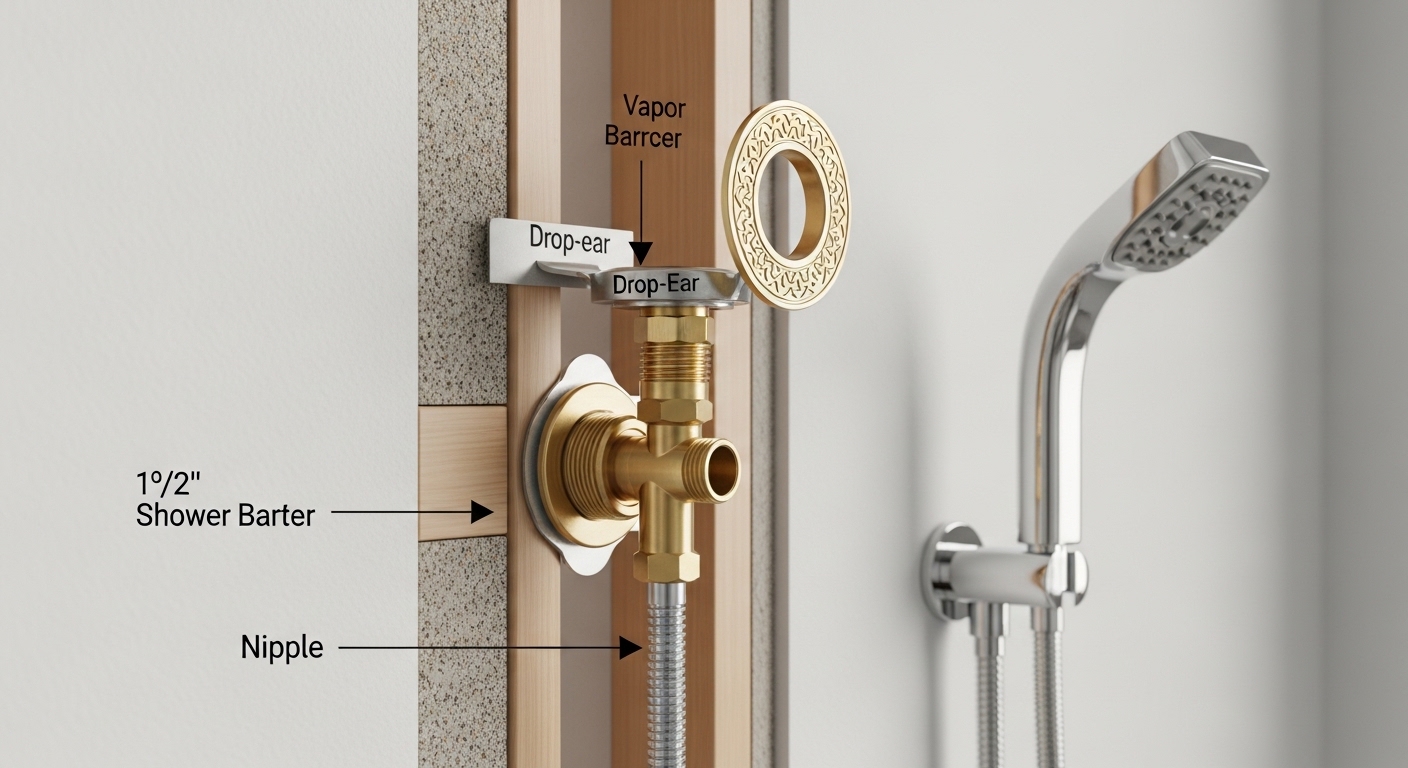
If you’re shopping for a rainfall shower head nipple, you’ve probably already bought a big, gorgeous rain shower head — and then realized it doesn’t come with the little pipe that actually screws it to your plumbing. That short brass extension is the unsung hero of every rainfall shower install. Get the length, thread type, and finish right and the whole thing looks factory-perfect. Get it wrong and you end up with a shower head that hangs too low, sits at a weird angle, or drips at the joint. This guide walks you through exactly what to buy and why.
What exactly is a rainfall shower head nipple, and what does it do?
A shower nipple is a short, double-male-threaded pipe that bridges the gap between the water outlet hidden in your wall or ceiling and the shower arm or shower head on the outside. On a rainfall setup specifically, it matters more than on a standard shower because rain heads are large, heavy, and often mount differently — either on a long arm that curves out from the wall, or on a straight down-pipe from the ceiling.
Think of it as the threaded backbone of the connection. Inside your wall sits a “drop-ear elbow” (a 90-degree fitting anchored to a stud). The nipple threads into that elbow, pokes through the finished wall or ceiling, and gives your shower arm something solid to grab onto. The flange — that chrome or matte-black trim ring — slides over the nipple to hide the drywall hole. No nipple of the right length, no clean connection.
Most residential shower nipples in North America are ½-inch NPT (National Pipe Taper) thread. That’s the near-universal standard for showers, so a ½-inch rainfall shower head nipple will match the overwhelming majority of rain heads and arms sold in the US. Always double-check, though — some imported and high-flow European rain heads use ¾-inch or G½ (BSP) threads, which look nearly identical but will NOT seal correctly against NPT.
Do I actually need a separate nipple, or does the shower head include one?
Most of the time, yes — you need a separate nipple, because the majority of rainfall shower heads ship with the head and sometimes an arm, but not the threaded pipe that anchors into the wall. The exceptions are all-in-one kits that bundle a matching arm, flange, and nipple together.
Here’s the quick way to tell what you’re dealing with:
- Wall-mount rain shower with a swan-neck arm: The long curved arm usually threads directly into the wall elbow — here the arm often replaces the need for a separate nipple, but you may still need a short nipple + coupling if the arm is too long or the wall too deep.
- Ceiling-mount rain shower: This almost always needs a straight nipple (often 6–12 inches, sometimes longer) dropping down from the ceiling elbow. This is the classic “do I have the right nipple?” scenario.
- Rain head mounted flush to the ceiling: Needs a short, precisely-cut nipple so the head sits tight against the flange with no gap.
- Retrofit onto an existing shower arm: You typically don’t add a nipple; you screw the rain head onto the arm you already have.
If you’re unsure what’s hiding behind your wall, it helps to understand the parts map first. A good visual reference like our bathroom faucet diagram guide breaks down how threaded fittings, elbows, and trim pieces stack together — the same logic applies to shower plumbing.
What length and size nipple do I need for my rain shower?
The right length depends on your mount type: wall-mount rain heads usually need a 2–4 inch nipple (or none, if the arm reaches), while ceiling-mount rain heads commonly need 6–18 inches to drop the head to a comfortable height and clear your head when you stand up straight. The rule of thumb: the bottom of the rain head should sit about 84 inches off the floor for average ceilings, and higher if you’re tall.
Measuring is simple but you have to be honest about it. Screw your drop-ear elbow flush into the wall/ceiling framing, then measure from the face of the finished surface (tile or drywall) to where you want the shower arm connection to start. Add roughly ½ inch of thread engagement on each end. That total is your nipple length.
| Mount type | Typical nipple length | Best thread size | Why |
|---|---|---|---|
| Wall-mount, standard arm | 0–4 in (often none) | ½” NPT | Arm usually reaches the elbow on its own |
| Ceiling-mount, 8′ ceiling | 6–8 in | ½” NPT | Drops head to ~84″ comfortable spray height |
| Ceiling-mount, 9–10′ ceiling | 12–18 in | ½” NPT | Compensates for taller ceiling void |
| Flush ceiling rain panel | 1–3 in | ½” NPT | Head sits tight to ceiling, minimal drop |
| High-flow imported rain head | Varies | ¾” NPT or G½ BSP | Larger heads may use bigger bore for flow |
Does a longer nipple reduce my water pressure?
A little, but far less than most people fear. A straight ½-inch nipple — even a 12-inch one — adds negligible friction loss compared to the pressure drop from the rain head’s own flow restrictor or a clogged wall valve. If your rain shower feels weak, the nipple is almost never the culprit. Nine times out of ten it’s a flow restrictor, mineral buildup, or a supply issue upstream, the same way a clogged face plate — not the pipe — is the usual villain when a Speakman shower head has low pressure. Clean the head, check the restrictor, and inspect the valve before blaming the fitting.
What material and finish should a rainfall shower nipple be?
Buy solid brass, and match the finish to your shower head and flange. Brass resists corrosion far better than zinc or plated steel, threads cleanly, and won’t seize into your fittings after a few years of hot water and minerals. A cheap zinc-alloy nipple can corrode, weaken, and crack — and replacing a corroded nipple buried behind tile is a genuinely miserable job.
Finish matters more than people think because part of the nipple is often visible — the exposed section between the flange and the shower arm, especially on ceiling drops. Match it to the rest of your trim:
| Finish | Best paired with | Durability notes |
|---|---|---|
| Polished chrome | Most standard rain heads, glass showers | Extremely durable, easy to clean, hides water spots poorly |
| Brushed nickel | Warm, transitional bathrooms | Hides spots and fingerprints well |
| Matte black | Modern, industrial, spa-style rain showers | Great look; use quality coating or it wears at threads |
| Brushed gold / champagne bronze | Luxury, warm-metal bathrooms | Beautiful but needs gentle, correct cleaning |
| Oil-rubbed bronze | Traditional, rustic baths | Living finish that patinas over time |
If you went with a warm metal like brushed gold, keep in mind these finishes need the right care to stay looking new — the same principles in our brushed gold faucet cleaning guide apply directly to a matching gold shower nipple and flange. Avoid abrasive pads and acidic cleaners that strip the coating.
How do I install a rainfall shower head nipple correctly?
You install it by wrapping the threads with plumber’s tape, hand-threading it into the wall or ceiling elbow, snugging it with a wrench, then sliding on the flange and attaching your arm or head. It’s a 20-minute job with no soldering if the drop-ear elbow is already in place. Here’s the step-by-step:
- Turn off the water at the shower valve or main, and cover the drain so you don’t lose small parts.
- Wrap the threads — apply 3 to 5 clockwise wraps of PTFE (Teflon) plumber’s tape to BOTH ends of the nipple. Wrap in the direction the fitting turns so it doesn’t peel off.
- Thread the nipple into the drop-ear elbow by hand until snug, then give it another quarter-to-half turn with a wrench. Do not overtighten — brass will crack or the elbow can spin loose in the wall.
- Slide the flange over the nipple against the finished wall/ceiling. A dab of clear silicone behind it keeps water from wicking into the wall.
- Attach the shower arm or rain head, again with taped threads. Snug it so the head sits level (for ceiling) or aims correctly (for wall).
- Turn the water back on and test at full pressure for 3–5 minutes. Watch every threaded joint for drips. A weep means re-tape and re-snug.
The most common rookie mistake is skipping the plumber’s tape or wrapping it the wrong direction — that’s what causes the slow drip at the ceiling that shows up as a water stain a week later. The second most common is overtightening and cracking the brass. Snug, not gorilla-tight.
What if the old nipple is corroded or stuck in the wall?
Removing a seized nipple is the trickiest part of any shower retrofit. If it won’t back out with a wrench on the flats (or by gripping the inner bore), a “nipple extractor” tool — a stepped hex bit you drive into the pipe with a ratchet — grabs the inside and unscrews it. Spray penetrating oil first, give it 10 minutes, and turn slowly. If the fitting behind it starts to spin, stop — you may be pulling the elbow loose inside the wall, which turns a $10 fix into an open-wall repair.
Can I use any shower nipple for a rainfall head, or does it have to be special?
Any correctly-sized, solid-brass ½-inch NPT nipple will physically work with the vast majority of rain heads — there’s no such thing as a proprietary “rainfall-only” nipple thread. What makes a nipple right for a rainfall setup is length and finish, not a special design. A rain head is just heavier and often mounted differently, so you choose the nipple to hit the correct height and angle.
That said, two things genuinely matter for rain heads specifically:
- Weight support: Large rain heads (10–16 inch faces) are heavy, especially when full of water. For long ceiling drops, use a schedule-40 brass nipple, not a thin decorative tube, and make sure the elbow is anchored to solid framing — not just to drywall.
- Straightness and angle: For ceiling mounts you want a perfectly vertical drop so the rain falls straight down. For wall mounts, the arm’s angle does the aiming, so the nipple just needs to be the right length.
If you’re doing a bigger valve-and-rough-in project rather than a simple swap, it’s worth understanding how the whole in-wall assembly goes together first. Our shower valve installation walkthrough shows how the valve, elbows, and threaded connections relate — useful context before you pick nipple lengths.
How this article was researched
Author note: This guide was written by the faucitta fixtures team, drawing on hands-on installs of both wall-mount and ceiling-mount rainfall systems and on the questions our support line hears most from DIY installers. About faucitta: faucitta designs and sells bathroom and kitchen fixtures — faucets, shower heads, tub fillers, and the trim and connectors that tie them together — with a focus on solid-brass construction and finishes built to last. Our shower nipples and arms are manufactured to ½-inch NPT standards, pressure-tested before shipping, and backed by a limited warranty against defects in material and finish. As always, if your local plumbing code requires a licensed installer for in-wall work, follow it — and when in doubt about thread type or corrosion inside a wall, call a pro.
FAQ
Is a rainfall shower head nipple the same as a shower arm?
No. A shower arm is the visible, often curved pipe that extends out and holds the head; a nipple is a short, straight, double-threaded connector — usually hidden or partly hidden — that anchors into the wall or ceiling elbow. On many wall-mount setups the arm connects directly and you don’t need a separate nipple. On ceiling drops you almost always need one.
What thread size is a standard rainfall shower nipple?
½-inch NPT is the North American standard and fits the vast majority of rain heads and arms. Some imported high-flow heads use ¾-inch or G½ (BSP) threads instead — these look similar but won’t seal against NPT, so confirm before buying an adapter or nipple.
Do I need plumber’s tape on a shower nipple?
Yes. Wrap 3–5 clockwise turns of PTFE (Teflon) tape on both threaded ends before installing. NPT threads seal by taper compression plus tape; skipping it is the number-one cause of the slow ceiling drip that later shows up as a water stain.
How long should a ceiling-mount rain shower nipple be?
For a standard 8-foot ceiling, 6–8 inches usually drops the head to a comfortable ~84-inch spray height. For 9–10 foot ceilings, go 12–18 inches. Measure from your finished ceiling surface to the desired connection point and add about ½ inch of thread engagement on each end.
Can a longer nipple hurt my rain shower’s water pressure?
Barely. Even a 12-inch straight ½-inch nipple adds almost no measurable friction loss. Weak rainfall pressure is nearly always caused by the head’s flow restrictor, mineral buildup in the face, or a supply/valve issue — not the connecting pipe. Clean the head and check the restrictor first.