If you’ve been searching for a wall mount faucet chrome setup, you’re usually in one of two situations: you’re renovating and want that clean, floating-spout look over a vessel or undermount sink, or your existing plumbing already comes out of the wall and a deck-mounted faucet simply won’t work. Either way, chrome is the finish people gravitate toward — and for good reason. It’s the most reflective, most durable, and most forgiving finish in the whole faucet world, and it’s almost always the cheapest per model. This guide walks you through exactly when a chrome wall mount makes sense, what specs actually matter, and how to avoid the two mistakes that ruin most wall-mount installs.
What exactly is a wall mount faucet, and how is it different from a deck faucet?
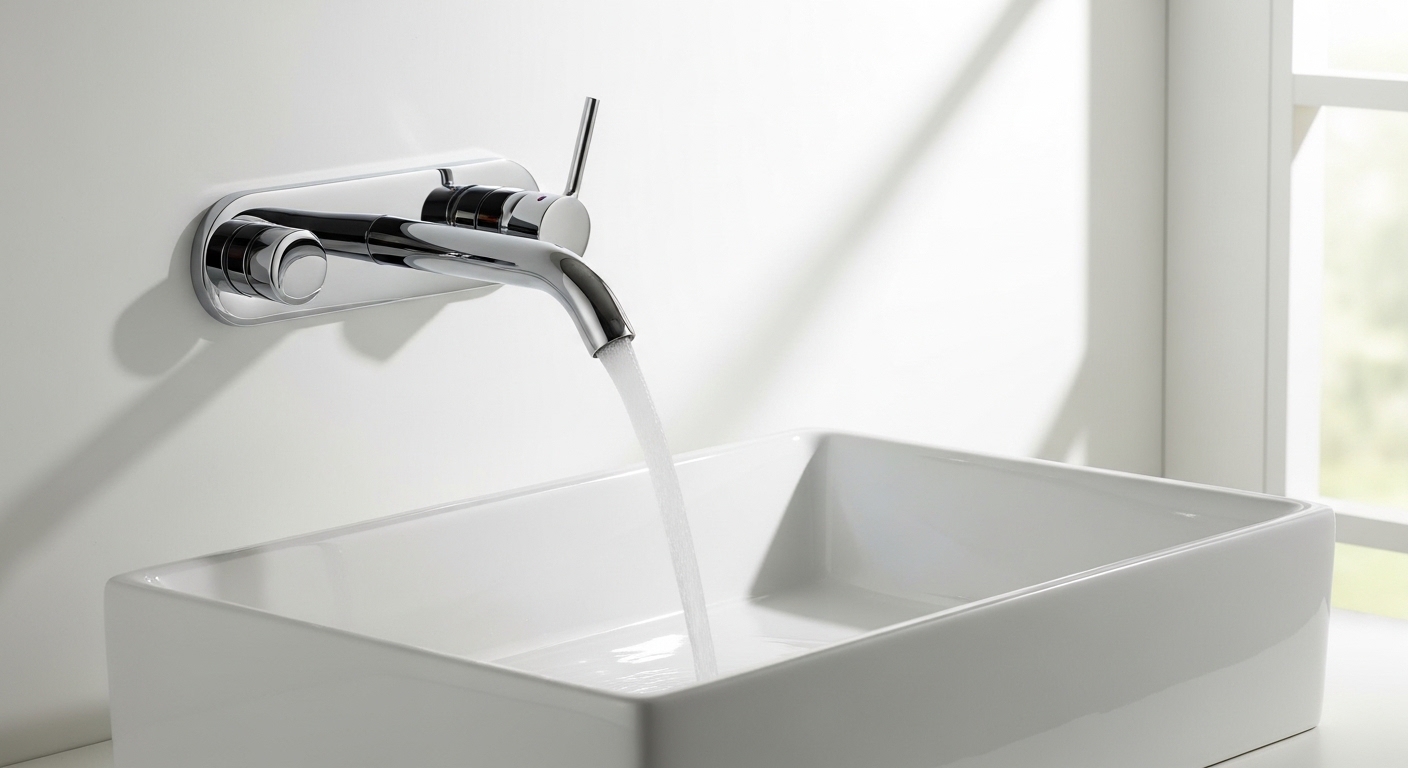
A wall mount faucet is a faucet whose spout and handles are anchored to the wall behind the sink, not to the sink deck or countertop. The water lines and the mixing valve live inside the wall; only the spout, handle(s), and escutcheon (the decorative wall plate) are visible. A regular deck faucet, by contrast, drops down through pre-drilled holes in the sink or counter.
That single difference changes everything downstream. Because the plumbing is hidden, a wall mount gives you a cleaner counter, nothing to seal or scrub around the base, and a spout that appears to float over the basin. It’s the standard look for vessel sinks, freestanding trough sinks, and modern undermount setups where you don’t want holes drilled in a slab of stone. The trade-off: you commit to the spout height and reach at rough-in time, and you generally can’t just swap it out later without opening the wall. If you’re still weighing the two, we break the decision down in detail in our guide on wall mount faucet vs regular deck faucet.
Why do so many people choose chrome over brushed nickel or matte black?
People choose chrome because it’s the most durable, easiest-to-clean, and most affordable faucet finish — and it matches practically anything. Chrome is a hard, bright, mirror-like plating applied over brass or zinc. That mirror surface is genuinely functional: it hides limescale and water spots far better than a satin finish, wipes clean with a damp cloth, and resists the fine scratching that dulls softer coatings.
Here’s the honest comparison so you can decide with your own eyes:
| Finish | Look | Hides water spots? | Durability | Typical price vs chrome |
|---|---|---|---|---|
| Polished chrome | Bright, mirror-like, cool tone | Excellent | Very high (hardest plating) | Baseline (cheapest) |
| Brushed nickel | Warm, satin, muted | Good | High | +10–25% |
| Matte black | Bold, modern, flat | Poor (shows dried droplets) | Medium (coating can chip) | +20–40% |
| Oil-rubbed bronze | Dark, traditional, hand-rubbed | Fair | Medium–high | +15–35% |
Chrome wins on price and cleanability; brushed nickel wins if you want warmth and slightly less obvious fingerprints; matte black wins purely on style if you’re willing to wipe it down more often. If a darker look is calling you instead, compare notes in our piece on whether a matte black tub faucet set is worth buying. But for a wall mount over a busy bathroom or kitchen sink, chrome remains the practical default.
Which spout reach and height do I actually need for my sink?
For most bathroom vessel or undermount sinks, you want a spout that clears the rim by a couple of inches and drops water into the center of the basin — that usually means a spout reach of 5″–7″ and mounting the faucet so the spout sits 3″–6″ above the top of the sink. Get this wrong and water either splashes off the back of the basin or lands too close to the front edge and spatters your counter.
Spout reach is the horizontal distance from the wall to the center of the water stream. It’s the single most important measurement on a wall mount, because unlike a deck faucet you can’t nudge it forward later. A good rule of thumb:
- Vessel sinks (bowl sits on top of the counter): you need extra height so the spout clears the tall rim — measure from the finished wall to the center of your bowl and match the reach to that.
- Undermount sinks: a 5″–6″ reach usually lands the stream dead center; a common sweet spot is the classic 6″ reach model.
- Kitchen and utility sinks: go longer, 8″–10″, so you can fit pots and pans under the spout.
We wrote a whole breakdown of what that number means in practice — see what a 6″ spout reach wall mount faucet really means before you commit. And if you’re pairing this with an undermount basin, our guide to the best bathroom faucet for an undermount sink covers how reach and basin depth work together.
What’s the difference between single-hole and widespread wall mount faucets?
The difference is how the valve is configured behind the wall. A single-hole (single-handle) wall mount uses one mixing cartridge and one lever — simpler to install, fewer connections, cleaner look. A widespread wall mount splits into two separate handles (hot and cold) plus a spout, giving you a traditional look and precise temperature control, but it requires more rough-in plumbing behind the wall and more careful hole spacing.
| Type | Handles | Rough-in complexity | Best for |
|---|---|---|---|
| Single-handle wall mount | One lever | Lower — one valve body | Modern baths, quick temp adjustment, tight spaces |
| Two-handle widespread wall mount | Separate hot & cold | Higher — spaced valves | Traditional styling, precise separate control |
For a first-time wall-mount install, a single-handle chrome model is the more forgiving choice. If you love the symmetry of two cross handles and you’re already opening the wall, the widespread is worth the extra plumbing. Not sure a single-lever will feel right? Our overview of the best single handle faucet for a sink explains how the cartridge affects feel and longevity.
How much should a good chrome wall mount faucet cost in 2026?
Plan on $80–$150 for a solid budget-to-midrange chrome wall mount, $150–$400 for a heavier brass-bodied unit with a ceramic-disc cartridge, and $400+ for designer or high-flow kitchen models. The single biggest hidden cost isn’t the faucet — it’s the in-wall rough-in valve, which is often sold separately and typically runs $40–$120.
Here’s what your money actually buys as you move up:
- Under $100: usually a zinc or thin-brass body with a standard cartridge. Fine for a guest bath or a rental. Chrome plating on these still looks sharp because chrome is inexpensive to apply well.
- $100–$250: solid brass body, ceramic-disc cartridge rated for hundreds of thousands of cycles, better flow control. This is the value sweet spot for a primary bathroom.
- $250–$400+: heavier castings, name-brand cartridges, longer warranties, and higher-flow spouts for kitchen use.
One buying note that trips people up: many wall mount faucets are sold as a “trim kit” (the visible spout and handle) that you pair with a separate rough-in valve. Always check whether your price includes the valve. Budgeting the same way you would for a kitchen — where a great faucet can be had well under $200 — helps; see how we frame value in our best budget kitchen faucet under $200 guide.
How do I install a wall mount faucet without leaks behind the wall?
The key to a leak-free wall mount is getting the rough-in valve set at the correct depth and firmly secured to blocking inside the wall before the finished surface goes up — because once the tile or drywall is closed, fixing a loose or mis-depth valve means opening the wall again. Do the rough-in right and the trim install is genuinely easy.
The general sequence looks like this:
- Set the valve depth. Every valve has a “plaster ground” or depth range printed on it. Mount it so the finished wall surface falls within that window. Too deep and your handles won’t reach; too shallow and the escutcheon won’t sit flush.
- Anchor to solid blocking. Screw the valve body to wood blocking between studs so it can’t shift when someone leans on the handle.
- Connect and pressure-test the supplies. Sweat, crimp, or push-fit your hot and cold lines, then turn the water on and check every joint before you close the wall.
- Close the wall and waterproof. Finish tile or drywall, seal the penetrations, then install the escutcheon, spout, and handle trim.
- Seal the escutcheon. A thin bead of clear silicone behind the wall plate keeps splash water from tracking into the wall cavity.
If you’ve never set an in-wall valve, watch it done end-to-end first — our shower valve installation walkthrough covers the same rough-in-depth and blocking principles that apply to any wall-mounted fixture. The depth-and-blocking logic is identical whether it’s a shower or a wall mount sink faucet.
Does chrome hold up in hard water and high-use bathrooms?
Yes — chrome is actually the best mainstream finish for hard water, because its non-porous, mirror surface lets limescale wipe off instead of etching in. Hard water leaves the same white mineral spots on every finish, but on chrome a quick wipe (or a 50/50 vinegar-and-water spray on stubborn buildup) restores the shine without dulling the surface. Softer, coated finishes like matte black show every dried droplet and can’t be scrubbed as aggressively.
The one thing to avoid on any chrome faucet is abrasive pads or acidic cleaners left to sit — those can eventually cut through the plating. Stick to a soft cloth, mild soap, and occasional diluted vinegar for scale, and a quality chrome wall mount will look new for a decade or more. If you ever notice discoloration coming from the water rather than the surface, that’s a plumbing issue, not the finish — our guide on rusty water out of the faucet explains how to tell the difference and fix it.
Wall mount faucet chrome: who should buy one, and who shouldn’t?
Buy a chrome wall mount faucet if your plumbing already exits the wall, you’re installing a vessel or undermount sink, you want the easiest finish to maintain, or you’re on a budget and want maximum durability per dollar. It’s the practical, timeless pick that suits everything from a minimalist powder room to a busy family bathroom.
Think twice if your plumbing currently comes up through the deck and you’re not prepared to open the wall — retrofitting a wall mount into a deck-plumbed sink is a real project, and a deck faucet may serve you better and cheaper. Also reconsider if your décor is built around warm brass or black hardware and a bright cool chrome would clash; in that case a matching brushed or dark finish (at a small premium) keeps the room cohesive.
FAQ
Can I replace a deck-mounted faucet with a wall mount faucet?
Not easily. A wall mount needs the mixing valve and supply lines inside the wall, so converting from deck to wall usually means opening the wall, running new plumbing, and patching the finished surface. If your sink already has deck holes, the simpler swap is another deck faucet. Convert to wall mount only when you’re renovating and the wall is already open.
What size hole spacing do I need for a chrome wall mount faucet?
It depends on the type. A single-hole wall mount needs one opening for the valve/spout. A two-handle widespread version has a set spread — commonly 8″ center-to-center between the handles — so you must match the trim to the valve spacing exactly. Always buy the trim and rough-in valve as a matched set or confirm they’re compatible before you close the wall.
Is chrome or brushed nickel better for a wall mount faucet?
Chrome is brighter, more durable, cheaper, and better at hiding water spots; brushed nickel is warmer, softer-looking, and slightly better at hiding fingerprints. For a high-use or hard-water bathroom, chrome is the more practical choice. For a warm, traditional palette, brushed nickel blends in more gently. Both are excellent, long-lasting finishes.
How high above the sink should a wall mount faucet be installed?
Mount it so the spout sits about 3″–6″ above the rim of the sink and the water stream lands in the center of the basin. Taller vessel sinks need the faucet mounted higher; shallow undermount basins need it lower. Because you set this at rough-in, dry-fit your sink and measure before you fix the valve position.
Do wall mount faucets leak more than deck faucets?
No — a properly installed wall mount is no more leak-prone than a deck faucet. The difference is that any leak is behind the wall, so it’s harder to spot and access. That’s why pressure-testing every connection before closing the wall and sealing the escutcheon afterward are non-negotiable steps. Do those, and reliability matches any quality deck faucet.
Can I use a chrome wall mount faucet in the kitchen?
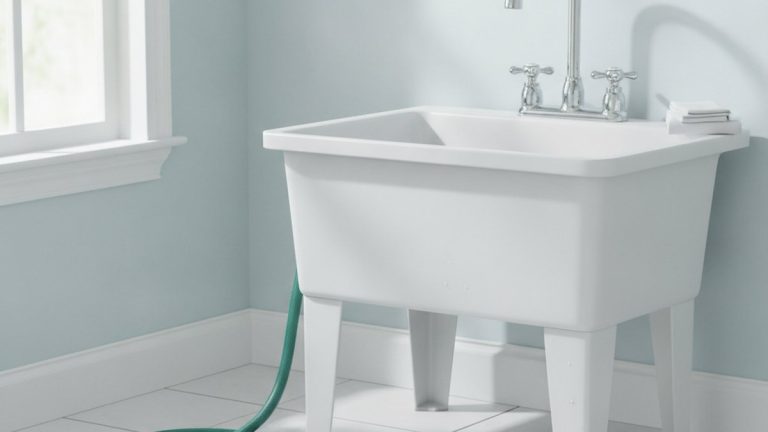
Absolutely. Wall mount faucets are common over farmhouse and utility kitchen sinks, and chrome’s scrub-resistant, spot-hiding surface is ideal for a busy kitchen. Just choose a longer spout reach (8″–10″) and adequate height so you can fit large pots under the stream, and confirm the flow rate suits kitchen tasks.
About the author: This guide was written by the faucitta product team — specialists who spec, install, and pressure-test faucets and bathroom fixtures every week. faucitta curates faucets, shower systems, and sink fixtures with a focus on real-world durability, and every model we recommend is evaluated for cartridge quality, plating standards, and flow performance. Look for faucets that meet recognized low-lead and flow-rate standards (such as ANSI/NSF and WaterSense-labeled flow limits) and carry a manufacturer warranty on the finish and cartridge — a lifetime finish-and-function warranty is a strong sign a chrome wall mount is built to last.